Watering is the single most critical factor in growing healthy, productive tomato plants—and it is also where most gardeners make mistakes. The short answer: Tomatoes need 1 to 2 inches of water per week, delivered through deep, infrequent watering 2 to 3 times per week rather than light daily watering. Water in the early morning at the base of the plant, avoiding wet foliage. Container-grown tomatoes require more frequent watering—often daily or even twice daily in hot weather. The key to success is consistency: keep soil evenly moist but never waterlogged. This comprehensive guide covers everything you need to know about watering tomatoes, from seed to harvest, in garden beds and containers.
Tomato Watering Fundamentals
Before establishing a watering schedule, it is essential to understand what tomatoes need from water and why proper hydration is so critical to their success.
The Role of Water in Tomato Health
Water is essential for every aspect of tomato growth. It transports nutrients from the soil to plant tissues, maintains cell turgor (rigidity) for structural support, and is critical for photosynthesis and fruit development. Tomatoes are composed of approximately 95% water, and fruit development requires significant moisture. Without adequate water, plants experience stunted growth, flower drop, and reduced fruit set. With too much water, roots suffocate and disease flourishes.
Deep vs. Shallow Watering
Tomatoes want deep watering 2–3 times per week, not light watering every day. When you water deeply, moisture penetrates 12–18 inches into the soil, stimulating deep root growth. Deep roots mean plants that handle heat better, resist drought, and produce more fruit. Shallow watering keeps roots near the surface, making plants stress easily in heat and never develop the strong structure that produces abundant fruit.
Key watering principles:
- Water deeply and infrequently (2–3 times per week)
- Moisture should penetrate 12–18 inches into the soil
- Keep soil evenly moist—not too wet and not too dry
- Water at the base of plants, avoiding wet foliage
- Morning watering is best to allow leaves to dry
- Adjust frequency based on weather, soil type, and plant stage
The Relationship Between Water and Flavor
Proper watering directly affects tomato flavor. Consistent moisture allows plants to develop sugars and acids fully, resulting in sweeter, more flavorful fruits. Inconsistent watering—alternating between drought and flooding—causes fruit cracking, blossom end rot, and bland taste. Reducing water slightly as fruits ripen can concentrate sugars and improve flavor. The goal is not to stress plants but to provide steady, even moisture throughout the growing season.
How Tomatoes Use Water Throughout the Day
Tomato plants transpire (lose water through leaves) most rapidly during the heat of the day. Morning watering ensures plants have access to moisture when they need it most. Watering in the evening leaves foliage wet overnight, increasing disease risk. During extreme heat, plants may wilt even when soil is moist because roots cannot take up water fast enough to counteract evaporation. This is a temporary condition and does not necessarily mean the plant needs more water.
Factors That Affect Watering Frequency
There is no single perfect watering schedule for all tomatoes. Several variables determine how often you need to water.
Soil Type
Soil is the most critical factor in determining watering frequency because it retains water differently. Sandy soil drains easily and tomato plants grown in sandy soil need watering three to four times per week. Soils with more clay hold water, so watering once per week is usually sufficient. Loamy soil—a balanced mixture—falls in between. Organic matter like compost improves water retention in sandy soil and drainage in clay soil.
Climate and Weather
The hotter and drier the climate, the more often tomato plants need water. During hot, dry weather, tomatoes in containers may need watering daily or even twice daily. Let the weather be your guide. During the dog days of summer with no rain, increase watering frequency. After a major rainstorm, skip a day or two until the soil dries out again. Wind also increases water needs by accelerating evaporation from soil and plant leaves.
Growth Stage
As your tomato plant grows, its water requirements change. Seeds need evenly moist soil every few days. Young transplants in their first week need water regularly—possibly daily—as roots establish. Mature plants with established roots need deep watering 2–3 times per week. Fruit-bearing plants have the highest water demand, especially as fruits swell. The schedule that worked for seedlings will not work for mature, fruit-laden plants.
In-Ground vs. Container Plants
Tomatoes in the ground have more water reserves to draw from and typically deeper roots. Containers have limited soil volume, dry out faster, and roots cannot spread in search of moisture. Container plants need more frequent watering—often daily in warm weather and sometimes twice daily in heat. Container size matters: smaller pots dry out faster than larger ones. Dark-colored containers absorb heat, drying soil faster.
Signs of Watering Problems
| Symptom | Likely Cause | Solution |
|---|---|---|
| Yellowing lower leaves | Overwatering | Reduce frequency; allow soil to dry |
| Wilting despite wet soil | Overwatering/root rot | Check drainage; reduce water |
| Leaf curl, wilting in afternoon | Underwatering | Water deeply; check soil moisture |
| Blossom end rot (dark spots on fruit) | Inconsistent watering | Maintain even soil moisture |
| Fruit cracking/splitting | Inconsistent watering | Water regularly; mulch to moderate |
| Slow growth, flower drop | Underwatering | Increase watering frequency |
| Fungus or mildew near base | Overwatering/poor drainage | Improve drainage; water less |
Tomato Watering Schedule by Growth Stage
Watering needs change dramatically as tomatoes progress from seed to harvest. Follow this stage-by-stage guide for optimal results.
Seeds and Seedlings
Keep seed-starting mix evenly moist but not waterlogged. Mist seeds every few days or bottom-water when the soil surface feels dry. Do not let seed trays sit in water for longer than 15–30 minutes. Remove any water that collects in trays. Once seedlings emerge, continue to keep the soil consistently moist. Young seedlings have shallow root systems and cannot tolerate drying out. Use a spray bottle or gentle watering to avoid disturbing delicate roots.
Young Transplants (First Week)
During the first week after planting, water regularly as plants adjust to their new homes—this could mean every day if the soil dries out. Water slowly and deeply to encourage roots to grow downward. Create a shallow well around each plant to hold water. After the first week, slowly decrease frequency to encourage deeper root growth. Young tomato plants may need water more often until their roots are strong and deep. Consistent moisture during establishment prevents transplant shock.
Watering frequency by growth stage:
- Seeds: Mist every few days; keep evenly moist
- Seedlings: Water when soil surface feels dry
- First week after transplant: Daily if needed
- Weeks 2–4: Every 2–3 days; encourage deep roots
- Mature plants: 2–3 times per week
- Fruiting plants: As needed; may need daily in heat
- Pre-harvest: Slightly reduce water to concentrate flavor
Mature Vegetative Plants
Once plants are established (after a few weeks), decrease watering frequency. Mature tomato plants in garden beds typically need deep watering 2–3 times per week. Water so that moisture reaches 12–18 inches deep. Consistency is key—do not allow soil to completely dry out or become overly soggy. Expect to give plants between 1 and 1½ gallons of water per week, distributed over two to three watering sessions.
Flowering and Fruiting Plants
During flowering and fruiting, water needs increase significantly. Large leaves, fruit development, and hot days rapidly deplete soil moisture. In garden beds, this may mean watering 2–3 times per week. In containers, daily watering is usually needed, sometimes twice daily in heatwaves. Consistent moisture during fruiting is critical to prevent blossom end rot and fruit cracking. Water in the morning to hydrate plants before the heat of the day sets in.
Best Time to Water Tomatoes
When you water is almost as important as how much you water. Timing affects disease risk, water efficiency, and plant health.
Morning Watering: The Gold Standard
The absolute best time to water tomatoes is in the early morning. Morning watering allows foliage to dry quickly in the sun, minimizing the risk of fungal diseases. It ensures plants have access to moisture throughout the heat of the day, supporting optimal growth and fruit production. Watering early also reduces evaporation loss—more water reaches the root zone rather than evaporating from the soil surface.
Evening Watering: A Second Option
If morning watering is impossible, water in the late afternoon or early evening. Water before the sun goes down so leaves have time to dry out before nightfall. Wet leaves on tomatoes overnight promote fungal diseases. Evening watering should be done early enough that foliage is not wet overnight. Avoid watering at night when leaves remain damp for extended periods.
What to Avoid
Do not water during the hottest part of the day. Watering in peak heat can cause thermal burns on leaves and stems, and rapid moisture loss due to evaporation. The water may evaporate too quickly before roots have time to absorb it. Watering in the middle of the day is inefficient and can stress plants. If you must water during heat, water at the base only, avoiding leaves.
Adjusting for Weather
During heatwaves, water early in the morning and check plants again in the afternoon. If soil is dry or plants show stress, water again in the late afternoon. During cool, cloudy periods, reduce watering frequency. Let the weather be your guide. A rain gauge can help track how much water plants receive from rainfall, allowing you to adjust supplemental watering accordingly.
Best Watering Methods for Tomatoes
How you water matters as much as when and how much. Different methods offer various advantages for tomato cultivation.
Drip Irrigation
Drip irrigation is the best method for watering tomatoes. It delivers water directly to the root zone without wetting foliage, preventing fungal diseases. Drip applies water slowly, allowing deep penetration without runoff. It is consistent and can be automated with a timer. Drip uses less water by targeting only the root zone. Place emitters 4–6 inches from each plant’s stem and use 0.5 to 1 gallon per hour emitters.
Soaker Hoses
Soaker hoses are an effective, low-cost alternative to drip irrigation. Water seeps out of small pores along the length of the hose, delivering water directly to roots. Place soaker hoses 12–18 inches from the central stem on either side of each plant. Soaker hoses keep moisture off leaves, helping to avoid fungal problems. They work best on level ground and for short rows (20–25 feet). Place hoses under mulch to protect them from sunlight breakdown.
Hand Watering
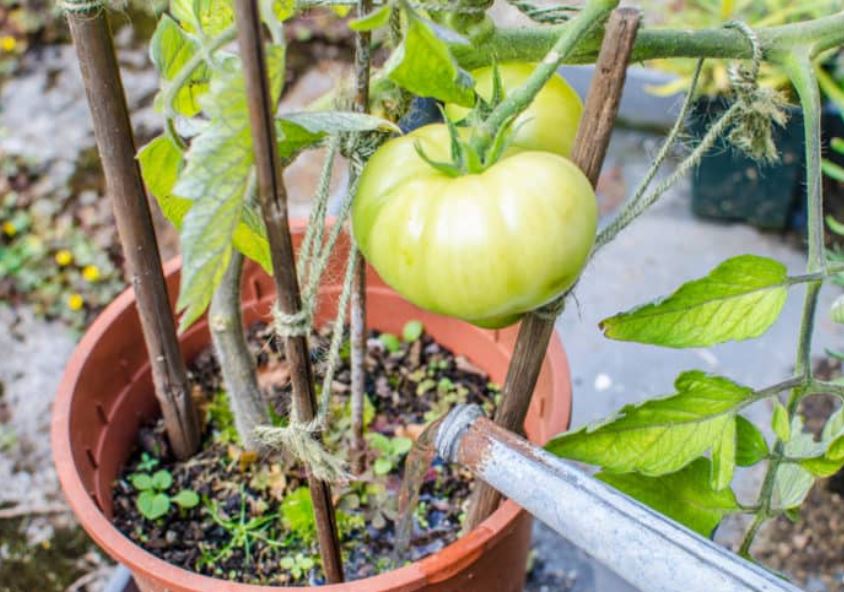
Hand watering with a watering can or hose is effective if done correctly. Water slowly and deeply at the base of each plant, avoiding wetting leaves. A long-spout watering can helps direct water under leaves, not over them. Water until the soil is moist 12–18 inches deep. Hand watering allows you to check each plant individually but is time-consuming for large gardens. Use a gentle stream to avoid disturbing soil or splashing pathogens onto leaves.
Watering method comparison:
- Drip irrigation: Best overall; efficient; disease prevention; can be automated
- Soaker hoses: Good for rows; low-cost; keeps leaves dry; works on level ground
- Hand watering: Good for small gardens; allows individual plant checks; time-consuming
- Sprinklers: Not recommended; wets foliage; promotes disease; inefficient
- Self-watering containers: Excellent for pots; maintains consistent moisture
What to Avoid
Overhead sprinklers are not recommended for tomatoes. Wet foliage invites fungal diseases like early blight and powdery mildew. Sprinklers also waste water through evaporation and wind drift. If you must use a sprinkler, water early in the morning so foliage dries quickly. Never water from overhead in the evening when leaves will remain wet overnight.
How to Check Soil Moisture
Learning to check soil moisture is the most reliable way to determine when to water. Trust your senses, not a fixed calendar schedule.
The Finger Test
The simplest, most effective way to determine if your plant needs water is to touch the soil. Stick your finger 2–3 inches into the soil near the plant base. If the soil feels dry at that depth, it is time to water. If it is still moist, hold off. For containers, check 3–4 cm (about 1.5 inches) deep. For garden beds, check deeper—3 to 6 inches down. This simple test prevents both overwatering and underwatering.
Visual and Tactile Cues
Look for signs that indicate soil moisture status. Dry soil appears lighter in color and may crack at the surface. Moist soil is darker and clumps when squeezed. If soil holds together in a clump when squeezed, it has adequate moisture. If it falls apart, it is too dry. Sandy soil feels gritty; clay soil feels sticky. Learning these cues helps you assess moisture without tools.
Using a Moisture Meter
A hand-held moisture meter can be very helpful in determining when to water. These inexpensive devices (typically 6–8 inches long) give a general indication of soil moisture. Insert the probe into the soil near the plant base and read the moisture level. While not precise, moisture meters take the guesswork out of watering. They are particularly useful for container gardens where soil moisture fluctuates rapidly.
Interpreting Wilting
Wilting is not always a reliable indicator of water need. Tomatoes will wilt during drought or high heat. Check soil moisture first before watering a droopy plant. If soil is still moist, the plant is likely wilting because it cannot take up water fast enough to counteract evaporation—not because it needs more water. If leaves wilt in the morning, tomatoes need immediate slow, deep watering.
Common Watering Mistakes and How to Avoid Them
Even experienced gardeners make watering mistakes. Understanding common errors helps you avoid them and keep your tomatoes healthy.
Overwatering
Overwatering is one of the most common tomato mistakes. Too much moisture leads to fungal diseases, root rot, and split fruit. Overwatered plants may show yellowing leaves, wilting despite wet soil, and squishy roots. Overwatering also causes catfacing or cracking of tomatoes. The solution is to water deeply but less frequently, allowing the top few inches of soil to dry between waterings.
Signs of watering problems:
- Overwatering: Yellowing leaves; wilting despite wet soil; root rot; fungus near base; fruit cracking
- Underwatering: Leaf curl; wilting in afternoon; dry soil below surface; blossom end rot; slow growth
- Inconsistent watering: Blossom end rot; fruit cracking; poor flavor; stressed plants
Underwatering
Underwatering causes leaves to look wilted, blossoms to dry up and fall off, and growth to slow. Underwatered plants show dry, crispy leaves and drooping stems. Leaf curl and wilting in the afternoon are common signs. Severe underwatering leads to fruit drop and reduced yields. The solution is to establish a consistent watering routine and check soil moisture regularly.
Inconsistent Watering
Inconsistent watering—alternating between drought and flooding—is particularly damaging to tomatoes. It exacerbates blossom end rot (dark spots on fruit bottoms). It also causes fruit cracking and splitting. Inconsistent moisture reduces uptake and movement of available calcium. The solution is to maintain even soil moisture throughout the growing season. Mulching helps moderate moisture fluctuations.
Watering the Wrong Way
Watering from overhead wets foliage and promotes fungal diseases. Watering too quickly causes runoff rather than deep penetration. Watering in the heat of the day wastes water through evaporation. Watering at night leaves leaves wet overnight, encouraging disease. The solution is to water at the base in the morning, slowly and deeply.
Watering in Containers vs. Garden Beds
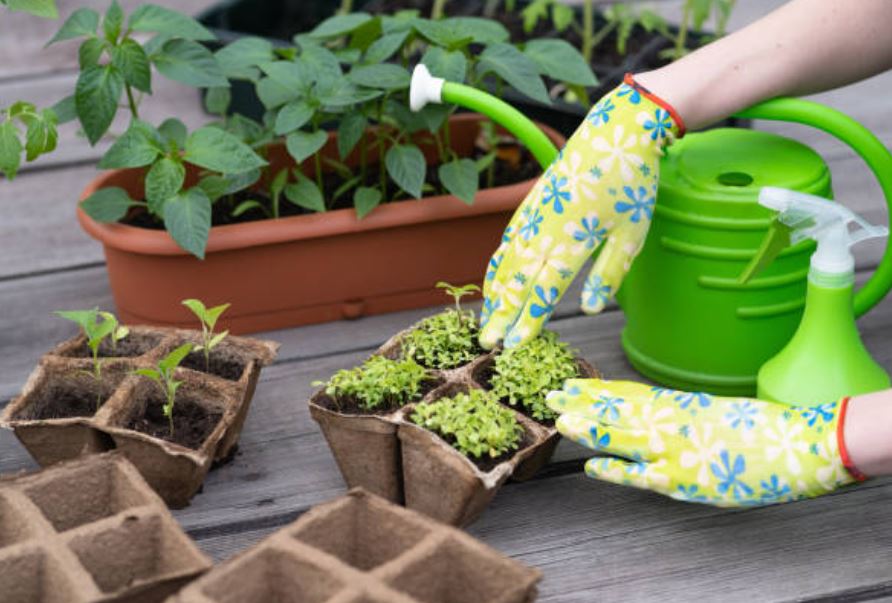
Container tomatoes require a fundamentally different watering approach than in-ground plants. Understanding these differences is critical for success.
Why Containers Dry Out Faster
Container tomatoes dry out faster than garden-bed tomatoes for several reasons. Pots have smaller soil volume and cannot hold as much moisture. Roots are restricted and cannot spread in search of water. Hot decks, patios, and balconies cause faster drying, especially in dark plastic pots. The container itself can heat up like an oven on a sunny afternoon. Container plants rely entirely on you for water.
Container Watering Frequency
Most container-grown tomatoes need water once per day, and sometimes twice daily in hot weather. In spring, water every 2–3 days as plants begin to grow. In summer, daily watering is usually needed—sometimes twice daily in heatwaves. In autumn, scale back to every 2–3 days as temperatures drop. The exact frequency depends on temperature, container size, and soil moisture.
Container Size Matters
Container size directly affects watering frequency. A 5-gallon pot dries out much faster than a roomy planter box. For compact determinate varieties, use at least 10-gallon containers. For full-size indeterminate varieties, use 20-gallon or larger containers. Larger pots hold more moisture and don’t dry out as fast. Fabric grow bags are recommended because they air-prune roots and drain freely.
Watering Technique for Containers
Water containers until it drains from the bottom. This ensures the entire root zone is reached and avoids shallow roots that dry quickly. Water slowly to allow absorption. In summer heat, a large container tomato needs 1–2 gallons of water daily. The soil should be consistently moist—not soggy, not dry. Use mulch like straw or sugarcane on the soil surface to retain moisture. Group pots together to reduce wind exposure.
Mulching and Water Conservation
Mulch is one of the most effective tools for maintaining consistent soil moisture and reducing watering frequency.
Benefits of Mulching
Mulch prevents soil moisture evaporation. It keeps soil cool in hot weather, reducing water loss. Mulch suppresses weeds that compete for water. It prevents soil from splashing onto leaves during rain or watering, reducing disease. A few inches of mulch on the surface, starting 2–3 inches from the stem, significantly diminishes evaporation loss. Mulch helps achieve the even moisture that tomatoes need.
Best Mulch Materials
Straw is an excellent mulch for tomatoes—it is lightweight, allows water penetration, and breaks down slowly. Aged compost adds nutrients while conserving moisture. Shredded leaves are free and effective. Grass clippings (herbicide-free) work well but should be applied in thin layers to prevent matting. Sugarcane mulch is popular for containers. Apply a 3–4 inch layer of mulch around plants after the soil has warmed.
When to Apply Mulch
Apply mulch after the soil has warmed up in late spring or early summer. Applying mulch too early can keep soil cool and delay growth. Wait until plants are established and soil temperatures are consistently warm. For containers, apply mulch immediately after planting to reduce surface evaporation. Replenish mulch as it decomposes throughout the season.
Additional Water Conservation Tips
Group pots together to create a microclimate that reduces wind exposure and evaporation. Use larger pots that hold more moisture. Choose light-colored containers in hot climates to reduce heat absorption. Water deeply to encourage deep roots that are more drought-tolerant. Install drip irrigation for efficient water delivery. Collect rainwater for irrigation when possible.
Frequently Asked Questions About Watering Tomatoes
1. How often should I water tomato plants?
There is no single answer—it depends on soil type, climate, container vs. in-ground, and plant stage. The general rule is 1 to 2 inches of water per week. In garden beds, water deeply 2–3 times per week. In containers, water daily or even twice daily in hot weather. Always check soil moisture before watering—water only when the top 2–3 inches of soil are dry.
2. What is the best time of day to water tomatoes?
The best time to water tomatoes is early morning. Morning watering allows foliage to dry quickly, reducing fungal disease risk. It ensures plants have moisture throughout the heat of the day. If morning is impossible, water in the late afternoon or early evening, but early enough that leaves dry before nightfall. Avoid watering at night or during the hottest part of the day.
3. How do I know if I am overwatering or underwatering my tomatoes?
Overwatered plants show yellowing leaves, wilting despite wet soil, root rot, and fungus near the base. Underwatered plants show leaf curl, wilting in afternoon, dry soil below the surface, and blossom end rot on fruit. The best way to know is the finger test—stick your finger 2–3 inches into the soil. If it is dry at that depth, water. If it is moist, wait.
4. Can tomatoes get too much water?
Yes, overwatering is one of the most common tomato mistakes. Too much water leads to fungal diseases, root rot, and split fruit. Overwatered tomatoes may develop catfacing or cracking. Excessive moisture can cause leaves to wilt and turn yellow. The key is consistent, deep watering that keeps soil evenly moist but never waterlogged.
5. Should I water tomatoes differently when they are fruiting?
Yes, fruiting tomatoes have the highest water demand. Large leaves, fruit development, and hot days rapidly deplete soil moisture. Water consistently during fruiting to prevent blossom end rot and fruit cracking. In garden beds, this may mean watering 2–3 times per week. In containers, daily watering is usually needed—sometimes twice daily in heatwaves. Reduce watering slightly right before final ripening to concentrate sugars and flavor.
6. Is drip irrigation better than hand watering for tomatoes?
Drip irrigation is generally better for tomatoes. It delivers water directly to the root zone without wetting foliage, preventing fungal diseases. Drip applies water slowly, allowing deep penetration without runoff. It is consistent and can be automated. Drip uses less water by targeting only the root zone. Hand watering is effective for small gardens but requires more time and attention to do correctly.
Watering Frequency by Growing Situation
| Growing Situation | Watering Frequency | Key Considerations |
|---|---|---|
| Garden bed (clay soil) | Once per week | Holds moisture longer; check soil before watering |
| Garden bed (loamy soil) | 2–3 times per week | Ideal soil type; water deeply each time |
| Garden bed (sandy soil) | 3–4 times per week | Drains quickly; needs more frequent watering |
| Container (small, 5 gal) | 1–2 times daily | Dries out fast; check moisture daily |
| Container (large, 10+ gal) | Daily in summer | More moisture reserve; still needs daily water |
| Young transplants | Daily if needed | First week; roots are shallow and establishing |
| Mature fruiting plants | 2–3 times per week | Highest water demand; be consistent |
Final Verdict: Mastering Tomato Watering
Watering tomatoes correctly is both an art and a science. The science is understanding the principles: tomatoes need 1 to 2 inches of water per week, delivered through deep, infrequent watering, applied at the base in the morning. The art is learning to read your plants and soil—checking moisture with your finger, observing plant signals, and adjusting to changing weather conditions.
Start by understanding your growing situation. Garden beds with loamy soil need less frequent watering than sandy soil or containers. Container tomatoes require daily attention—often watering once or twice daily in summer heat. Young plants need more frequent watering as roots establish, while mature plants benefit from deep, less frequent watering that encourages deep root growth.
Avoid the most common mistakes: overwatering, underwatering, and inconsistent moisture. Use mulch to retain moisture and moderate soil temperature. Consider drip irrigation for efficiency and disease prevention. Trust the finger test over a fixed calendar schedule. Reduce watering slightly as fruits ripen to concentrate flavor.
With practice, you will develop an intuitive sense of when your tomatoes need water. The reward is healthier plants, fewer disease problems, and sweeter, more flavorful fruits. Whether you are growing in a backyard garden or on a small balcony, mastering tomato watering is the key to a bountiful harvest of the most delicious tomatoes you have ever tasted.

- How to Grow Microgreens Without Soil Indoors: Easy Home Method - October 5, 2026
- Microgreens vs. Sprouts: Key Differences, Nutrition, Safety, and Which One to Eat - October 5, 2026
- 10 Best Garden Tools For Weed Removal 2027 - October 3, 2026