Proper tomato spacing is the foundation of a healthy, productive garden. The short answer: Space determinate (bush) tomatoes 18–24 inches apart in rows 3–4 feet apart. Space indeterminate (vining) tomatoes 24–36 inches apart when staked or caged, and 3–4 feet apart when left to sprawl. Container tomatoes need one plant per pot with 5–15 gallons of soil depending on variety. Proper spacing prevents disease, maximizes yield, and makes harvesting easier.
Why Tomato Spacing Matters
Proper spacing directly impacts plant health, disease resistance, and harvest size.
Air Circulation and Disease Prevention
Good air circulation is the first line of defense against fungal diseases like early blight and powdery mildew. When plants are spaced correctly, leaves dry quickly after rain or watering. Disease-causing pathogens need wet surfaces to attack tomato plants. Crowded plants stay wet longer and are much more prone to fungal and bacterial problems.
Root Competition and Nutrient Access
Tomato plants compete fiercely for water, nutrients, and sunlight when planted too close together. This competition reduces plant size, which in turn reduces the number and size of fruits. A shortage of any one essential resource will limit the plant’s potential. Proper spacing ensures each plant has access to the resources it needs.
Key reasons to space tomatoes correctly:
- Prevents fungal and bacterial diseases through better airflow
- Reduces competition for water, nutrients, and sunlight
- Allows each plant to reach full size and maximum yield
- Makes pruning, watering, and harvesting easier
- Prevents pests from easily moving between touching plants
- Reduces plant stress, which lowers disease vulnerability
Sunlight Exposure
Each tomato plant needs full sun—6 to 8 hours daily—to produce sweet, flavorful fruit. Crowded plants shade each other, reducing photosynthesis and sugar production. The result is smaller plants, fewer fruits, and bland-tasting tomatoes. Proper spacing ensures every leaf receives adequate light for optimal growth.
Easier Garden Maintenance
Harvesting from crowded tomato plants is a frustrating experience—you have to fight through a jungle of stems and leaves to find ripe fruit. Proper spacing makes watering, pruning, staking, and harvesting significantly easier. You can reach each plant without damaging neighboring vines.
Determinate vs. Indeterminate Spacing
The growth habit of your tomato variety is the single most important factor in determining spacing.
Determinate (Bush) Tomatoes
Determinate tomatoes are small, compact plants that grow to a set height, flower, and set all their fruit within a short period—typically 2 to 3 weeks. These are excellent choices for canning and small gardens. Determinate tomatoes can be planted 18 to 24 inches (45–60 cm) apart in the row. Rows should be spaced 3 to 4 feet (90–120 cm) apart.
Spacing guidelines for determinate tomatoes:
- In-row spacing: 18–24 inches (45–60 cm)
- Row spacing: 36–48 inches (90–120 cm)
- Square foot gardening: 0.5–1 plant per square foot
- 4×4 raised bed: 2–4 plants for standard determinates
- Container: 5–10 gallon pot per plant
Indeterminate (Vining) Tomatoes
Indeterminate tomatoes continue to grow, flower, and set fruit until killed by frost. They are vining plants that can reach 10–12 feet or more. Spacing depends on the support system.
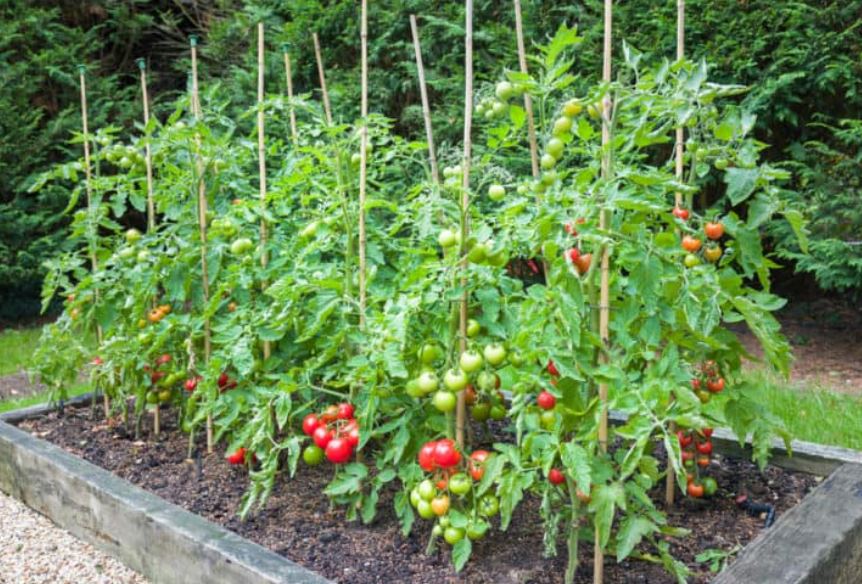
Staked indeterminate tomatoes can be planted 18 to 24 inches (45–60 cm) apart in the row. Caged indeterminate tomatoes need 24 to 36 inches (60–90 cm) apart. Unstaked (sprawling) indeterminate tomatoes need 3 to 4 feet (90–120 cm) apart in all directions.
Spacing guidelines for indeterminate tomatoes:
- Staked: 18–24 inches in-row; 36–48 inches between rows
- Caged: 24–36 inches apart
- Unstaked/sprawling: 36–48 inches apart in all directions
- Square foot gardening: 1 plant per 4 square feet (2×2 block)
- Container: 10–15 gallon pot per plant
Cherry Tomatoes
Cherry tomatoes can be determinate or indeterminate. Space them 24 inches apart to allow enough room for fruit production. Vigorous indeterminate cherry varieties need the same spacing as other indeterminate types—24 to 36 inches apart when supported. Compact patio cherry varieties can be spaced closer at 18–24 inches apart.
Tomato Spacing by Growing Method
| Growing Method | Determinate Spacing | Indeterminate Spacing | Key Notes |
|---|---|---|---|
| In-ground garden | 18–24 in apart; rows 36–48 in | 18–36 in apart; rows 36–48 in | Adjust based on support system |
| Raised beds | 18–24 in apart; rows 24–36 in | 24–36 in apart; rows 36–48 in | Staggered planting maximizes space |
| Square foot gardening | 0.5–1 plant per ft² | 1 plant per 4 ft² (2×2 block) | Patio varieties: 1 per ft² |
| Containers | 5–10 gal pot per plant | 10–15 gal pot per plant | One plant per container; space pots 2–3 ft apart |
Spacing by Growing Method
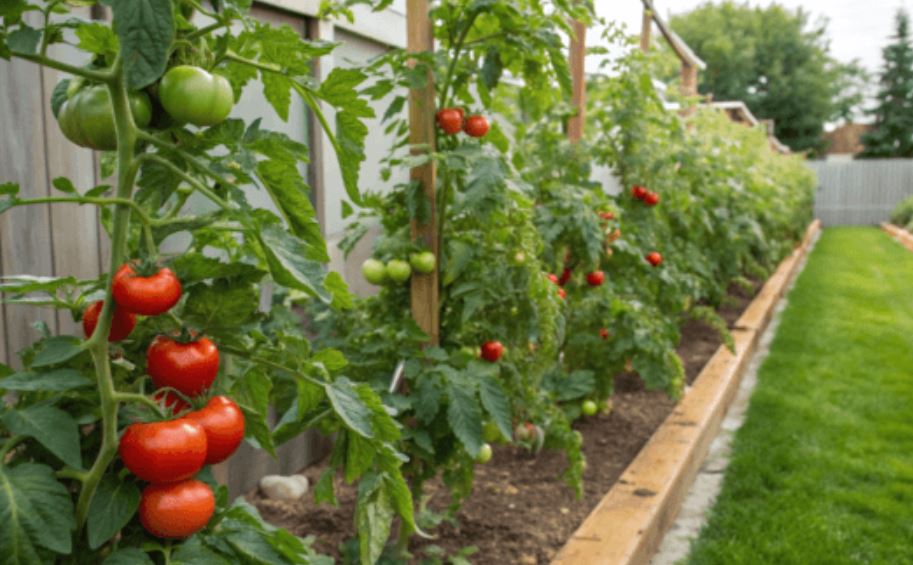
Different growing methods require different spacing approaches. Here is how to space tomatoes in various garden settings.
In-Ground Garden Beds
Planting directly in the ground offers the most flexibility. Space determinate tomatoes 18 to 24 inches apart and indeterminate tomatoes 18 to 36 inches apart, depending on support. Keep rows spaced at least 36 inches apart to make maintenance easier. For indeterminate varieties left to sprawl, space them at least 4 feet apart in all directions.
Raised Beds
Raised beds follow similar spacing to in-ground planting. Space determinate tomatoes 18–24 inches apart in rows 2–3 feet apart. Space indeterminate tomatoes 24–36 inches apart in rows 3–4 feet apart. Raised beds should be at least 12 inches deep for strong root development. Use staggered (diagonal) planting to maximize space in wide beds.
Square Foot Gardening
Square foot gardening divides beds into 1-foot squares. For tomatoes, the general recommendation is 1 tomato plant per 2 square feet. More specifically:
Square foot gardening spacing:
- Patio/dwarf tomatoes: 1 plant per square foot (4 plants per 4×4 bed)
- Determinate tomatoes: 0.5–1 plant per square foot (2–4 plants per 4×4 bed)
- Indeterminate tomatoes: 1 plant per 4 square feet (2×2 block, 4 plants per 4×4 bed with trellis)
Container Growing
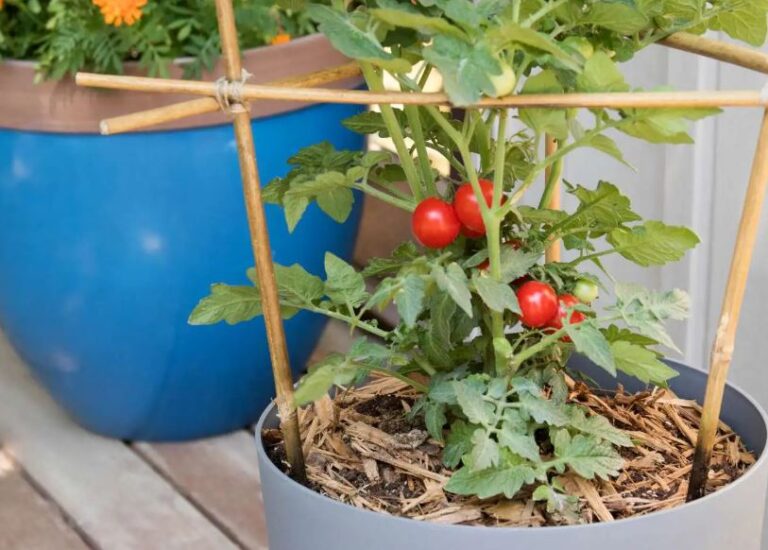
Container tomatoes require careful attention to pot size. One tomato plant per pot is essential—tomatoes need room for extensive root systems.
Container size guidelines:
- Dwarf/patio tomatoes: 5–10 gallon pot
- Determinate tomatoes: 5–7 gallon pot
- Indeterminate tomatoes: 10–15 gallon pot
- Container width: 16–20 inches minimum
Space containers 2–3 feet apart to provide adequate airflow between plants. Fabric grow bags are recommended because they air-prune roots and drain freely.
Trellised and Staked Systems
Trellising allows closer spacing while maintaining airflow. For staked tomatoes, space plants 18–24 inches apart in rows. For trellised rows, plants can be set closer together if trained vertically. Regardless of trellis type, tomato plants still need 2 to 3 feet between plants and rows 3 feet apart. Ensure any trellis can support the weight of a mature plant loaded with fruit.
What Happens If You Plant Tomatoes Too Close Together?
Planting tomatoes too close together invites a cascade of problems that can ruin your harvest.
Increased Disease Risk
Crowded plants have poor air circulation, which means they stay wet longer after rain or watering. This creates ideal conditions for fungal and bacterial diseases. Diseases can easily move from one plant to another when leaves and stems are touching. Reduced airflow also makes it harder for sprays to reach all parts of the plant.
Reduced Plant Size and Yield
Crowded tomato plants cannot grow as large as properly spaced plants. They physically grow into each other and keep each other small. Smaller plants produce fewer tomatoes, and those tomatoes tend to be smaller because the plant lacks sufficient resources. Competition for water, nutrients, and sunlight limits every plant’s potential.
Consequences of overcrowding:
- Poor air circulation increases fungal disease risk
- Plants compete for water, nutrients, and sunlight
- Reduced plant size leads to fewer and smaller fruits
- Increased stress makes plants more vulnerable to pests and diseases
- Pests and diseases spread easily between touching plants
- Harvesting becomes difficult and frustrating
Increased Pest Problems
Crowded plants suffer more stress, and stressed plants are more vulnerable to pests. Pests can easily move from one tomato plant to another when plants are touching. Dense foliage also provides hiding places for insects, making control more difficult.
Difficult Harvest and Maintenance
Harvesting from crowded tomato plants is challenging. You cannot easily reach fruits hidden in dense foliage. Pruning, watering, and staking become difficult when plants are too close together. The frustration of fighting through a jungle of stems and leaves takes the joy out of gardening.
Frequently Asked Questions About Tomato Spacing
1. How far apart should I plant determinate tomatoes?
Plant determinate tomatoes 18 to 24 inches apart in the row. Rows should be spaced 3 to 4 feet apart. In raised beds, space them 18–24 inches apart with rows 2–3 feet apart. Determinate tomatoes are compact and can be planted slightly closer than indeterminate varieties.
2. How far apart should I plant indeterminate tomatoes?
It depends on your support system. Staked indeterminate tomatoes: 18 to 24 inches apart. Caged indeterminate tomatoes: 24 to 36 inches apart. Unstaked (sprawling) indeterminate tomatoes: 3 to 4 feet apart in all directions. Rows should be spaced 36 to 48 inches apart.
3. Can I plant tomatoes 12 inches apart?
Planting tomatoes 12 inches apart is generally too close for most varieties. Even compact determinate varieties need at least 18 inches between plants. Planting 12 inches apart leads to overcrowding, increased disease risk, reduced yield, and difficult maintenance. The only exception might be very small patio or dwarf varieties grown in containers.
4. What is the best spacing for tomatoes in raised beds?
In raised beds, space determinate tomatoes 18–24 inches apart with rows 2–3 feet apart. Space indeterminate tomatoes 24–36 inches apart with rows 3–4 feet apart. Use staggered (diagonal) planting to maximize space in wide beds. Raised beds should be at least 12 inches deep for strong root development.
5. How many tomato plants can I grow in a 4×4 raised bed?
In a 4×4 raised bed, you can grow 2 to 4 determinate tomato plants. For indeterminate tomatoes with strong vertical support, you can grow 4 plants (one per 2×2 block). For compact patio tomatoes, you can grow up to 4 plants (one per square foot). Avoid overcrowding—it is better to have fewer, healthier plants than many struggling ones.
6. Do I need to space tomatoes differently if I use cages?
Yes. Caged indeterminate tomatoes need 24 to 36 inches apart, compared to 18 to 24 inches for staked plants. Cages take up more horizontal space than stakes. For determinate tomatoes, cages do not significantly change spacing requirements—18 to 24 inches remains appropriate.
Tomato Spacing by Variety and Support
| Variety Type | Support Method | In-Row Spacing | Row Spacing |
|---|---|---|---|
| Determinate (bush) | Any | 18–24 in (45–60 cm) | 36–48 in (90–120 cm) |
| Indeterminate | Staked | 18–24 in (45–60 cm) | 36–48 in (90–120 cm) |
| Indeterminate | Caged | 24–36 in (60–90 cm) | 36–48 in (90–120 cm) |
| Indeterminate | Unstaked/sprawling | 36–48 in (90–120 cm) | 48–72 in (120–180 cm) |
| Cherry (compact) | Any | 18–24 in (45–60 cm) | 36 in (90 cm) |
| Cherry (vigorous) | Staked/caged | 24–36 in (60–90 cm) | 36–48 in (90–120 cm) |
Final Verdict: Mastering Tomato Spacing
Proper spacing is one of the simplest yet most impactful decisions you can make for your tomato garden. Start by identifying whether your variety is determinate or indeterminate—this single factor determines the baseline spacing. For determinate tomatoes, aim for 18 to 24 inches apart with rows 3 to 4 feet apart. For indeterminate tomatoes, spacing depends on your support system: 18 to 24 inches for staked plants, 24 to 36 inches for caged plants, and 3 to 4 feet for sprawling plants.
Consider your growing method as well. In-ground beds offer the most flexibility. Raised beds benefit from staggered planting to maximize space. Square foot gardening works well with 0.5 to 1 plant per square foot for determinates and 1 plant per 4 square feet for indeterminates. Containers require one plant per pot with adequate soil volume—5–10 gallons for determinates and 10–15 gallons for indeterminates.
Avoid the temptation to crowd extra plants into your garden. Overcrowding leads to increased disease, reduced yields, and difficult maintenance. Remember that healthier plants with proper spacing will produce more fruit than crowded, stressed plants. The extra space you give each plant pays dividends throughout the growing season—healthier plants, fewer disease problems, easier maintenance, and a more abundant harvest of delicious, homegrown tomatoes.

- How to Grow Microgreens Without Soil Indoors: Easy Home Method - October 5, 2026
- Microgreens vs. Sprouts: Key Differences, Nutrition, Safety, and Which One to Eat - October 5, 2026
- 10 Best Garden Tools For Weed Removal 2027 - October 3, 2026