Sunlight is the engine that powers every aspect of tomato growth—from seedling emergence to fruit ripening. Without adequate light, even the best soil and watering practices cannot produce a bountiful harvest. The short answer: Tomatoes need 6 to 8 hours of direct, unfiltered sunlight daily for optimal growth and production. For the best flavor and highest yields, aim for 8 to 10 hours of direct sun. In hot climates (USDA Zones 9–10), morning sun with afternoon shade prevents heat stress. In northern regions, maximize exposure from dawn to dusk. Seedlings require 14–16 hours of light daily. This comprehensive guide covers everything you need to know about tomato sunlight requirements—from the science of photosynthesis to practical strategies for every growing situation.
Tomato Sunlight Fundamentals
Before optimizing light exposure, it is essential to understand why sunlight is so critical to tomato health and what “full sun” truly means.
The Science of Photosynthesis
Photosynthesis is the process by which plants convert light energy, water, and carbon dioxide into chemical energy—sugars that fuel growth and fruit development. Sunlight drives this process, enabling roots to absorb nutrients and water, which in turn supports above-soil growth. Two byproducts of photosynthesis are sugar (for plant food) and oxygen (for us to breathe). Without sufficient sunlight, tomato plants cannot produce the energy needed for flowering, pollination, and fruit production.
Key sunlight principles:
- Sunlight powers photosynthesis, the foundation of all plant growth
- More sunlight = more sugar production = sweeter, more flavorful fruit
- Sunlight helps dry foliage, reducing fungal disease risk
- Direct, unfiltered light is more valuable than filtered or dappled light
- Light quality matters as much as quantity—bright, direct light is essential
- The most valuable sunlight occurs between 10 a.m. and 4 p.m.
Defining “Full Sun”
Full sun is defined as 6 or more hours of direct, unfiltered sunlight per day. Direct sunlight means rays that are not filtered through trees, buildings, shade sails, or other structures. This definition describes both the quantity and quality of sun exposure. While tomatoes can survive with 6 hours, they truly thrive with 8 to 10 hours of direct sunlight daily.
The Relationship Between Sunlight and Flavor
The connection between sunlight and tomato flavor is direct and powerful. Sunlight drives photosynthesis, which produces sugars that accumulate in developing fruits. More sunlight means more sugar production, resulting in sweeter, more flavorful tomatoes. Insufficient sunlight leads to bland, watery fruit with reduced sugar content. This relationship explains why greenhouse-grown tomatoes often taste different from those ripened in full sun.
Light Intensity and Daily Light Integral (DLI)
For advanced growers, Daily Light Integral (DLI) quantifies the total photosynthetically active radiation reaching plants over 24 hours. Fruiting crops like tomatoes require a DLI of 20 to 30 mol·m⁻²·d⁻¹ for optimal production. High-wire fruiting vegetables such as tomatoes need at least 25–30 mol·m⁻²·d⁻¹. This professional measurement explains why tomatoes need so much light—they are among the highest-light-demanding vegetable crops.
How Much Sun Do Tomato Plants Need?
The amount of sunlight tomatoes need varies by region, climate, and growth stage. Understanding these nuances helps you provide optimal conditions.
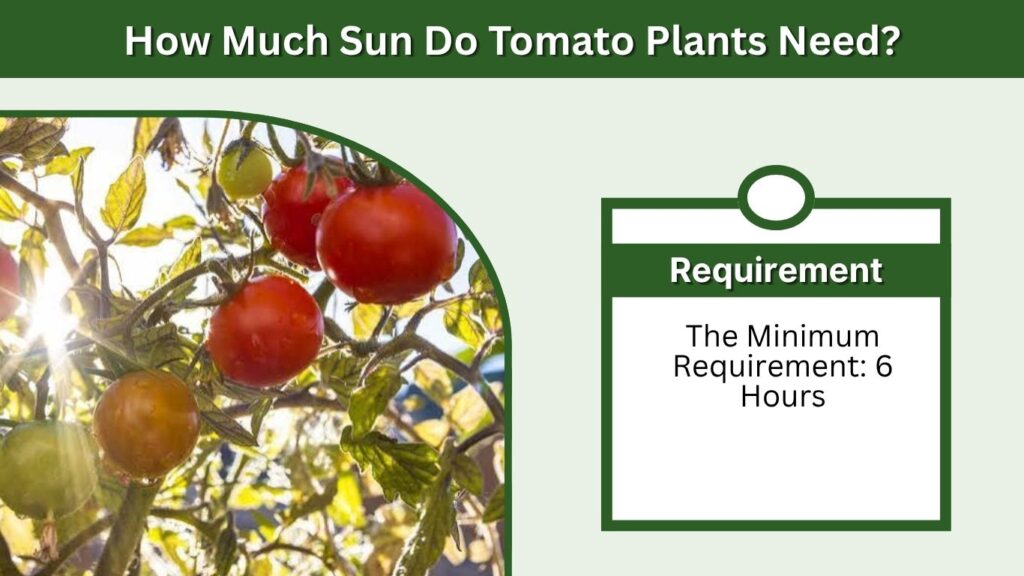
The Minimum Requirement: 6 Hours
Tomatoes need a minimum of 6 hours of direct sunlight daily to produce fruit. However, 6 hours is the absolute baseline—plants will grow and produce, but yields and flavor will be compromised. In northern regions, tomatoes may need even more—8 to 10 hours or more—to compensate for lower light intensity. In tropical or subtropical zones (USDA Zones 9–10), 6 hours may be sufficient because sunlight intensity is higher.
The Optimal Range: 8 to 10 Hours
For the best production and flavor, tomatoes need 8 to 10 hours of direct sunlight daily. University extension services consistently recommend 8 hours as the target. At this level, plants develop strong stems, abundant foliage, and maximum sugar content in fruits. The more sun, the better—up to a point where heat stress becomes a concern.
Sunlight requirements by region:
- Northern regions (cool climates): 8–10+ hours; maximize all-day exposure
- Southern regions (hot climates): 6–8 hours; morning sun preferred with afternoon shade
- USDA Zones 9–10 (tropical): 6 hours sufficient due to higher intensity
- Greenhouse/indoor: 12–16 hours artificial light required
Variety-Specific Differences
Different tomato varieties have slightly different light needs. Cherry tomatoes and smaller-fruited varieties often tolerate slightly less light than large beefsteak types. Heat-tolerant varieties like ‘Heatmaster’, ‘Celebrity’, and ‘Brandywine’ perform better in intense sun. Some heirlooms are more sensitive to extreme heat and benefit from afternoon shade.
The Exception: Extreme Heat
In regions with intense summer heat, too much sun becomes a problem. When daytime temperatures exceed 90°F and nights stay above 75°F, tomatoes may drop flowers and fail to set fruit. In these conditions, afternoon shade—from trees, shade cloth, or structures—can protect plants while still providing sufficient morning light. Morning sun is particularly valuable because it dries dew and reduces disease risk.
Morning Sun vs. Afternoon Sun
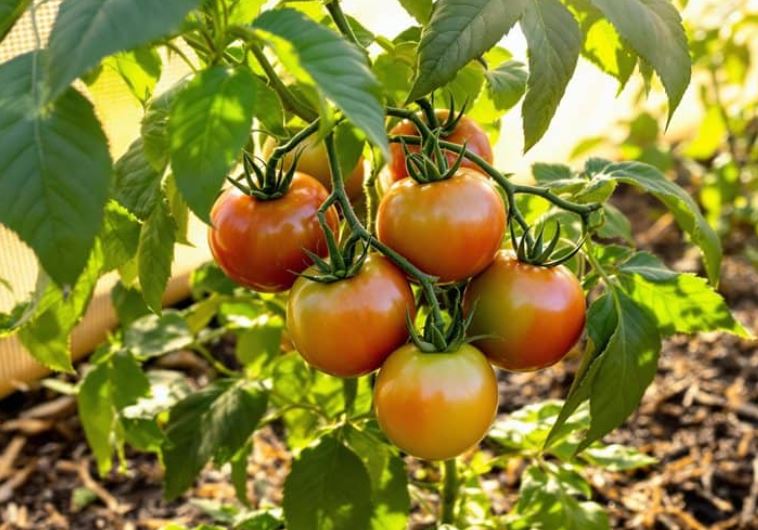
The timing of sunlight exposure matters as much as the total hours. Morning and afternoon sun serve different purposes for tomato health.
Why Morning Sun Matters
Morning sun is uniquely beneficial for tomatoes. It dries dew and moisture from leaves, reducing the risk of fungal diseases like early blight and powdery mildew. Morning light is less intense than afternoon sun, making it gentler on plants. It kickstarts photosynthesis early, allowing plants to produce energy throughout the day. For these reasons, gardeners should prioritize locations that receive strong morning sun.
Afternoon Sun: Benefits and Risks
Afternoon sun provides the intense energy needed for fruit development and ripening. However, mid- to late-afternoon sun is the hottest and most intense of the day. In southern climates, this intensity can lead to blossom drop, sunscald, and poor fruit ripening. The riskiest time is from 2 p.m. to 4 p.m., especially in southern regions. In cooler northern climates, afternoon sun is beneficial and helps compensate for lower overall light intensity.
Morning and Afternoon Combined
For most gardeners, the ideal situation is a location that receives both morning and afternoon sun. This provides the disease-preventing benefits of morning light and the energy of afternoon sun. When you have an option, prioritize locations exposed to morning and early afternoon sun rather than late-day sun. The combination maximizes photosynthesis while managing heat stress.
Regional Recommendations
Northern climates: Provide as much direct sunlight as possible—morning, afternoon, and evening. The lower sun angle and cooler temperatures mean heat stress is rarely a concern. Southern climates: Provide morning sun with filtered sun or light shade in the afternoon. This protects plants from the most intense heat while still meeting minimum light requirements.
Sunlight Requirements by Growth Stage
Tomato light needs change as plants progress from seed to harvest. Understanding these stage-specific requirements optimizes growth at every phase.
Seed Germination
Tomato seeds do not require light to germinate. In fact, some sources suggest darkness may slightly improve germination rates. However, once seeds sprout, light becomes essential. Keep seed-starting mix moist and provide warmth (75–90°F) for optimal germination. Check seeds daily and move them to light immediately after emergence.
Seedling Stage
Once seedlings emerge, they need 14 to 16 hours of bright light daily. This long photoperiod mimics long summer days and keeps seedlings compact and healthy. Without sufficient light, seedlings become leggy—tall, weak, and spindly as they stretch toward light sources. Place grow lights 1–2 inches above seedlings and adjust as they grow. A simple shop light with cool white and warm white fluorescent bulbs works well.
Light needs by growth stage:
- Seeds: No light required for germination
- Seedlings: 14–16 hours daily; bright, direct light
- Vegetative growth: 6–8 hours minimum; 8–10 hours preferred
- Flowering: 6–8 hours minimum; consistent light critical for flower set
- Fruiting: 6–8 hours minimum; light fuels sugar production in fruit
- Ripening: Full sun accelerates ripening and flavor development
Vegetative Growth Stage
During vegetative growth (after transplanting until flowering), tomatoes need full sun—6 to 8 hours minimum, with 8 to 10 hours preferred. At this stage, plants focus on developing strong stems, extensive root systems, and abundant foliage. Sufficient light during vegetative growth prevents legginess and ensures plants have the energy reserves needed for flowering and fruiting.
Flowering and Fruiting Stage
During flowering and fruiting, light remains critical. Insufficient light leads to fewer flowers and reduced fruit set. Sunlight powers the energy-intensive processes of flower development, pollination, and fruit expansion. Consistent light during this stage is essential—fluctuations can cause flower drop. In greenhouses, supplemental lighting during low-light periods improves fruit set and yield.
Signs of Insufficient Sunlight
Recognizing the symptoms of inadequate light helps you take corrective action before plants suffer permanent damage.
Leggy, Spindly Growth
The most obvious sign of insufficient sunlight is leggy growth—tall, thin stems with wide spacing between leaves. Plants stretch toward available light, investing energy in stem elongation rather than sturdy structure. Leggy plants are weak and prone to breaking under the weight of fruit. This symptom is particularly common in seedlings started without adequate light.
Sparse Foliage and Yellowing
Plants without enough sun produce fewer leaves because they lack the resources to create new foliage. Existing leaves may develop a yellow hue due to reduced chlorophyll production. The overall plant appears thin and unhealthy rather than lush and green. Sparse foliage also means less photosynthesis, creating a downward spiral of declining health.
Signs your tomatoes need more sun:
- Leggy, spindly stems stretching toward light
- Wide spacing between leaves on stems
- Sparse foliage with few leaves
- Yellowing leaves (reduced chlorophyll)
- Slow or stunted growth
- Few or no flowers
- Small, bland, or no fruit
Poor Flower and Fruit Production
Insufficient sunlight directly impacts flowering and fruiting. Plants produce fewer flowers because they lack the energy for reproductive development. Fewer flowers mean fewer tomatoes. The fruits that do develop may be small, poorly flavored, or fail to ripen properly. In severe cases, plants may produce no fruit at all.
Stunted Overall Growth
Tomatoes in low-light conditions grow slowly and remain smaller than healthy plants. They never reach their full genetic potential. Leaves are smaller, stems are thinner, and the plant’s overall structure is weak. Even with perfect soil and watering, insufficient sunlight caps the plant’s size and productivity.
Signs of Too Much Sun (Heat Stress)
While tomatoes love sun, excessive sun combined with high temperatures causes distinct problems.
Sunscald on Fruit
Sunscald appears as yellow, white, or pale gray blotches on the side of fruit exposed to direct sun. Affected tissue becomes dry, papery, and sunken. Both green and ripening fruit can be affected. Sunscald occurs when fruit is overexposed to intense sunlight, often after foliage has been lost to pruning or disease. Maintaining adequate leaf canopy provides natural shade for developing fruit.
Blossom Drop
When daytime temperatures exceed 85–90°F and nights stay above 75°F, tomato flowers often drop without setting fruit. This is a stress response—plants sacrifice flowers to conserve energy. Heat-tolerant varieties are less prone to this problem. Providing afternoon shade can reduce temperatures in the plant canopy and prevent blossom drop.
Signs of too much sun/heat:
- Sunscald: white/yellow blotches on sun-exposed fruit
- Blossom drop: flowers fall without setting fruit
- Leaf scorch: brown, crispy edges on leaves
- Wilting despite moist soil (heat stress)
- Poor fruit ripening in extreme heat
Leaf Scorch and Wilting
Excessive sun and heat can scorch leaves, causing brown, crispy edges or patches. Plants may wilt during the hottest part of the day even when soil is moist—this happens when roots cannot take up water fast enough to replace what is lost through transpiration. While temporary wilting is normal, persistent wilting indicates stress that can reduce productivity.
Poor Fruit Ripening
Extreme heat can halt the ripening process. Tomatoes may remain green or develop uneven color. The pigment lycopene (which gives tomatoes their red color) stops being produced above 85°F. Providing shade during the hottest hours can help maintain ripening.
How to Optimize Sunlight for Tomatoes
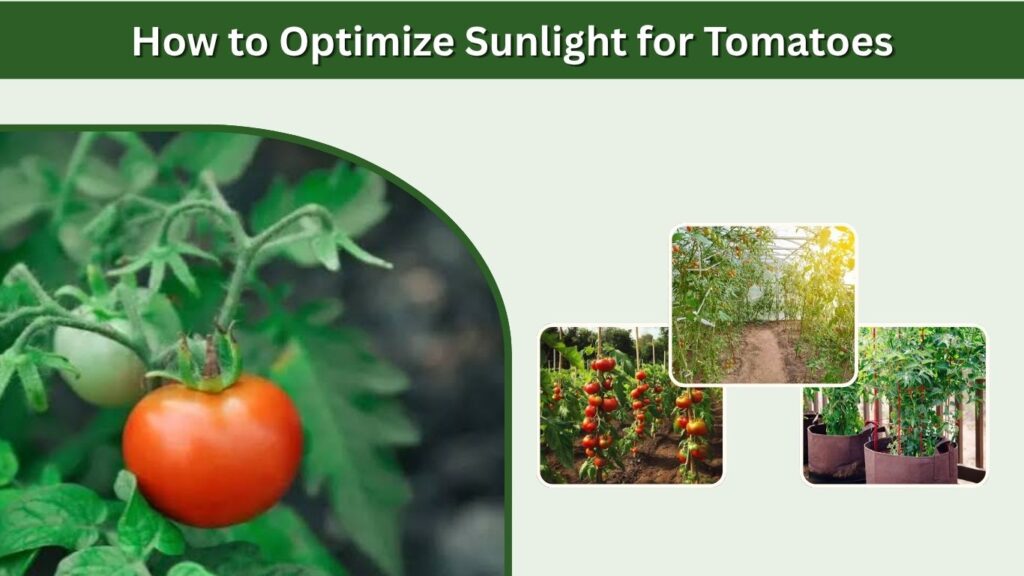
Practical strategies help you maximize the benefits of sunlight while managing heat stress.
Site Selection
Choose the sunniest location available. Observe your garden throughout the day to identify areas that receive the most direct sunlight. Pay attention to changes in sun exposure over the growing season—the sun’s angle shifts, creating different patterns. Avoid planting near trees, buildings, or structures that cast shade. South-facing locations typically provide the best sun exposure.
Managing Shade
In hot climates, provide afternoon shade using shade cloth, row cover material, or natural shade from nearby plants. Clip shade cloth to the west-facing side of supports to protect plants from the most intense afternoon sun. In cooler climates, maximize exposure by planting away from shade sources. Remember that morning shade is never beneficial—morning sun dries dew and prevents disease.
Optimization strategies:
- Choose the sunniest site available
- Avoid trees, buildings, and structures that cast shade
- In hot climates, provide afternoon shade with cloth or natural shade
- Use containers to move plants to follow the sun
- Prune judiciously—maintain leaf canopy to protect fruit from sunscald
- Use reflective mulch to bounce light into lower canopy
Container Mobility
Growing tomatoes in containers offers flexibility to optimize sun exposure. Move containers throughout the day to follow the sun. In hot weather, move containers to afternoon shade. In cool weather, position containers in the sunniest location. Containers also allow you to protect plants from extreme weather by moving them to sheltered locations.
Pruning for Light Management
Pruning affects light penetration. For indeterminate tomatoes, remove excess foliage to allow light to reach developing fruit. However, maintain enough leaf canopy to protect fruit from sunscald. For determinate tomatoes, minimal pruning is recommended—the natural leaf canopy provides adequate shade. Balance is key: too little foliage reduces photosynthesis; too much foliage shades fruit and increases disease risk.
Growing Tomatoes Indoors: Light Requirements
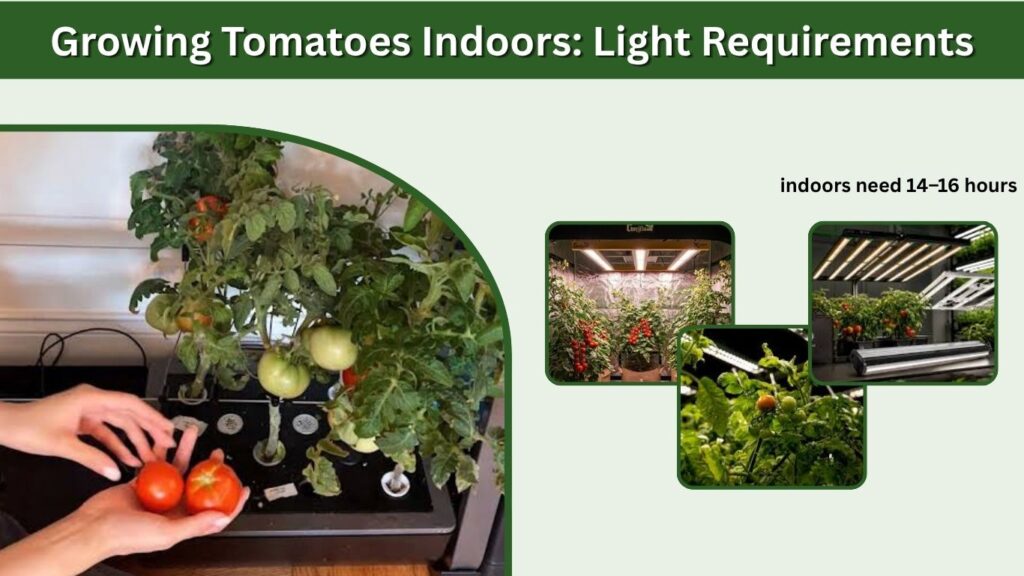
Indoor tomato growing requires artificial lighting to compensate for the absence of natural sunlight.
Indoor Light Duration
Indoor tomatoes need 12 to 16 hours of artificial light daily. This long photoperiod mimics summer daylight hours and supports continuous growth and fruiting. Use a timer to maintain consistent light schedules. Seedlings started indoors need 14–16 hours of light to prevent leggy growth.
Choosing Grow Lights
Full-spectrum LED grow lights are the most effective and energy-efficient option for indoor tomatoes. They provide the right spectrum for growth without excessive heat. Position lights 12–18 inches above plants, adjusting as they grow. Fluorescent shop lights also work well for seedlings. Aim for about 2500 lumens per square foot at plant level.
Light Intensity for Indoor Plants
Indoor tomatoes need bright light. For reference, a DLI of 10.4 to 18.4 mol·m⁻²·d⁻¹ has been studied for compact indoor tomato varieties. While lower than outdoor requirements, indoor lighting must be intense and consistent. If using grow lights, ensure they provide adequate intensity—plants should not stretch toward light sources.
Temperature and Light Balance
Indoor tomatoes need both light and appropriate temperatures. Keep temperatures between 70–80°F during the day. Night temperatures should be cooler—around 60–65°F. The relationship between light and temperature is critical: in poor illumination, correct day and night temperatures become even more important. High temperatures without adequate light cause weak, leggy growth.
Frequently Asked Questions About Tomato Sunlight
1. Can tomatoes get too much sun?
Yes, tomatoes can get too much sun, especially when combined with high temperatures. When daytime temperatures exceed 90°F and nights stay above 75°F, tomatoes may drop flowers, fail to set fruit, and develop sunscald on fruit. In hot climates, afternoon shade is beneficial. The problem is not the sun itself but the heat that accompanies intense sunlight.
2. Can tomatoes grow in partial shade?
Tomatoes can survive in partial shade (4–6 hours of sun), but they will not thrive. Yields will be reduced, plants will be leggy, and flavor will be diminished. Full shade (less than 4 hours) will not produce successful plants or meaningful harvests. For the best results, always choose the sunniest location available.
3. How many hours of sun do tomato seedlings need?
Tomato seedlings need 14 to 16 hours of bright light daily. This long photoperiod prevents leggy growth and produces stocky, healthy plants. If using grow lights, position them 1–2 inches above seedlings. If growing in a sunny window, supplement with artificial light to achieve the required duration.
4. What happens if tomatoes don’t get enough sun?
Insufficient sunlight causes multiple problems: leggy, weak stems; sparse, yellowing foliage; slow or stunted growth; few or no flowers; and small, bland, or no fruit. Plants stretch toward light sources, investing energy in stem growth rather than fruit production. Insufficient sun is one of the most common reasons for poor tomato harvests.
5. Is morning sun or afternoon sun better for tomatoes?
Morning sun is better for disease prevention because it dries dew from leaves. Afternoon sun provides the intense energy needed for fruit development. The ideal situation is a location that receives both morning and afternoon sun. In hot climates, prioritize morning sun with afternoon shade. In cool climates, maximize all-day sun exposure.
6. Do tomato plants need direct or indirect sunlight?
Tomatoes need direct, unfiltered sunlight. Indirect or filtered light (through trees, shade cloth, or structures) does not provide sufficient energy for optimal growth and fruiting. While some afternoon shade is beneficial in hot climates, the majority of light should be direct and unobstructed.
Complete Sunlight Requirements Table
| Factor | Requirement | Details |
|---|---|---|
| Minimum daily sun | 6 hours direct | Baseline for survival and minimal production |
| Optimal daily sun | 8–10 hours direct | Best yields, flavor, and plant health |
| Northern climates | 8–10+ hours | Maximize all-day exposure |
| Southern/hot climates | 6–8 hours | Morning sun with afternoon shade preferred |
| USDA Zones 9–10 | 6 hours sufficient | Higher intensity compensates for shorter duration |
| Seedlings (indoor) | 14–16 hours | Prevents leggy growth |
| Indoor mature plants | 12–16 hours | Artificial light required |
| DLI requirement | 20–30 mol·m⁻²·d⁻¹ | Professional light measurement for fruiting crops |
| Best time of day | Morning + early afternoon | Morning dries dew; afternoon provides energy |
| Disease prevention | Morning sun | Dries foliage, reduces fungal disease |
| Heat stress threshold | Above 90°F day / 75°F night | Blossom drop and sunscald risk |
Final Verdict: Mastering Tomato Sunlight
Sunlight is the foundation of tomato success. The relationship between light and tomato health is direct and powerful—more quality sunlight means sweeter fruit, higher yields, and stronger plants. For most gardeners, the goal is 8 to 10 hours of direct, unfiltered sunlight daily. In northern regions, maximize exposure from dawn to dusk. In southern regions, prioritize morning sun with afternoon shade to prevent heat stress.
Start by selecting the sunniest location in your garden—observe potential sites throughout the day and across the season to understand changing light patterns. Avoid planting near trees or structures that cast shade. For seedlings, provide 14–16 hours of bright light to prevent leggy growth. For indoor growing, use full-spectrum LED lights for 12–16 hours daily.
Watch for signs of insufficient light—leggy growth, sparse foliage, yellowing leaves, and poor fruit production. Also watch for signs of too much heat—sunscald, blossom drop, and leaf scorch. Adjust your approach based on your climate and the specific needs of your varieties.
The extra attention you invest in optimizing sunlight pays dividends throughout the growing season. Healthy, sun-drenched tomato plants produce the sweetest, most flavorful fruits—the kind that make homegrown tomatoes worth all the effort. Whether you are growing in a backyard garden, a raised bed, or a sunny balcony, providing the right amount and quality of sunlight is the single most important step toward a bountiful harvest of delicious, vine-ripened tomatoes.

- How to Grow Microgreens Without Soil Indoors: Easy Home Method - October 5, 2026
- Microgreens vs. Sprouts: Key Differences, Nutrition, Safety, and Which One to Eat - October 5, 2026
- 10 Best Garden Tools For Weed Removal 2027 - October 3, 2026