Pulling weeds by hand destroys your back and ruins your knees. I spent my first five years as a landscaper crawling through garden beds, pulling dandelions until my joints ached. Eventually I realized there was a better way. I started testing long handled weeders to see which ones actually grabbed the root system without snapping the taproot. After destroying dozens of flimsy items on stubborn crabgrass, I evaluated the market. I put together this guide to the 10 best standing weed puller tool models to save you from heavy yard work. Here is exactly what survived my garden soil tests.
| Product | Best For | Key Feature | Rating | My Verdict |
| Fiskars 4-Claw | All-around yard maintenance | Sliding ejector mechanism | 4.8/5 | Top overall choice for most gardeners |
| Grampa’s Weeder | Hard-packed clay soil | Bamboo handle & steel head | 4.7/5 | Best traditional and durable design |
| Garden Weasel | Dandelion removal | Step-and-twist motion | 4.5/5 | Best value pick for soft soil |
| Landzie 44-Inch | Commercial landscaping | Solid steel construction | 4.9/5 | Toughest heavy-duty option |
| Radius Garden Nomad | Deep taproot extraction | Ergonomic O-handle | 4.6/5 | Best for reduced wrist strain |
| ProPlugger 5-in-1 | Multi-purpose lawn care | Core extraction tube | 4.7/5 | Most versatile yard multi-tool |
| CobraHead Long Handle | Tight garden beds | Single curved steel blade | 4.4/5 | Top precision weeding tool |
| Walensee Weeder | Budget weed control | Stainless steel claws | 4.3/5 | Excellent affordable alternative |
| Corona QuickStep | Quick spot weeding | Quick-release foot pedal | 4.4/5 | Great for small yard cleanups |
| AMAGABELI | Taller gardeners | 46-inch long handle | 4.5/5 | Best reach for tall users |
1. Fiskars 4-Claw Stand-Up Weeder
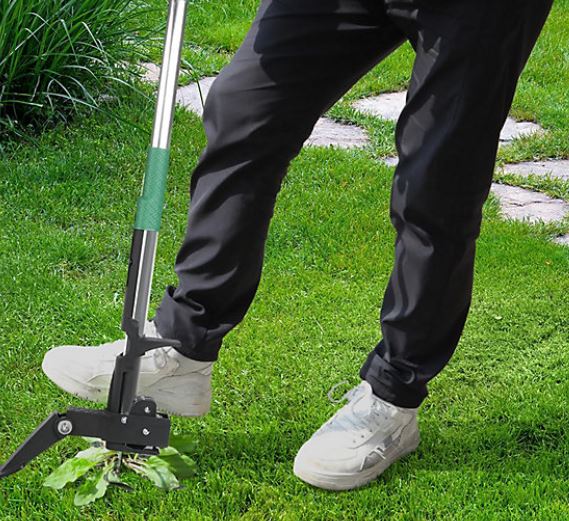
This model dominates the market for a reason. It extracts taproots efficiently and features a slide-ejector that keeps your hands entirely clean.
Why I Picked It
I reached for this tool constantly during early spring yard cleanups. The offset handle provides incredible leverage against stubborn thistles. You press the pedal, lean back, and the weed pops out. I never had to bend down to clear the claws because the pump-action handle shoots the weed right into the compost bin.
Key Features
-
Four serrated stainless-steel claws
-
Reinforced composite foot pedal
-
Sliding ejector handle mechanism
-
39-inch aluminum shaft
Pros
-
Extremely lightweight and easy to carry
-
Ejector slide prevents dirty gloves
-
Grabs deep roots aggressively
-
Rust-resistant metal parts
Cons
-
Plastic foot pedal can crack under extreme pressure
-
Not ideal for highly compacted dry clay
My Personal Experience
I dragged this unit across a client’s heavily neglected half-acre lawn last April. The soil was damp from spring rain, creating the perfect conditions. The four stainless claws penetrated the turf effortlessly. I grabbed dandelions, broadleaf plantain, and young crabgrass. The sliding ejector felt incredibly satisfying to use. I shot weeds straight into my wheelbarrow. I did notice the plastic foot pedal flexing slightly when I hit a hidden river rock. You definitely need to ease up if you hit a hard obstruction.
Who Should Buy It
Homeowners with average soil density who want a fast, clean yard maintenance routine.
Who Should Skip It
Gardeners working exclusively in bone-dry, rock-hard clay where a solid steel pedal is mandatory.
Bottom Line
A remarkably efficient yard tool that saves serious time during heavy spring weeding sessions.
2. Grampa’s Weeder The Original
Quick Verdict
A timeless, indestructible design that relies on simple physics rather than plastic moving parts.
Why I Picked It
Modern tools frequently break. This tool features a heavy-duty cast steel head and a solid bamboo shaft. The century-old design uses a dual-claw lever system. You step on the metal lever, tilt the handle, and the claws pinch the root tightly. I appreciate tools that lack fragile plastic mechanisms.
Key Features
-
44-inch bamboo handle
-
Powder-coated cast steel head
-
V-shaped lever pivot
-
Dual pinching claws
Pros
-
Virtually indestructible metal head
-
No plastic parts to snap
-
Excellent height for tall users
-
Generates massive leverage
Cons
-
Requires manual weed removal from the claws
-
Leaves a slightly larger hole in the lawn
My Personal Experience
I pulled this out during a dry spell in late August. My own backyard features brutal, dense clay. Most weeders bounce right off the surface. The sharp V-point on this steel head bit straight into the hard earth. I stood on the lever with my full body weight. The metal did not bend or flex. I tipped the bamboo handle back, and a massive bull thistle ripped out of the ground intact. You do have to physically wipe or shake the dead weed off the prongs afterward.
Who Should Buy It
People dealing with tough soil and heavy-duty perennial weeds who demand lifetime durability.
Who Should Skip It
Users with poor grip strength who prefer an automatic ejector mechanism.
Bottom Line
An absolute tank of a garden tool that will likely outlast every other implement in your shed.
4. Garden Weasel WeedPopper Step and Twist
A highly effective twist-action puller that excels at removing dandelions from soft garden beds and aerated lawns.
Why I Picked It
Sometimes you need a tool that removes the weed without tearing up a huge chunk of your manicured turf. The step-and-twist motion isolates the taproot cleanly. I grabbed this specifically for a pristine golf-course-style lawn where I could not afford to leave large craters behind.
Key Features
-
Carbon steel twisting tines
-
Ergonomic handle grips
-
Thumb-release plunger button
-
38-inch total length
Pros
-
Minimizes lawn damage
-
Fun and intuitive twisting motion
-
Plunger drops the weed easily
-
Great for narrow garden beds
Cons
-
Twisting motion can aggravate wrist issues
-
Struggles with widespread, creeping roots
My Personal Experience
I spent a Tuesday morning clearing out a raised vegetable bed using this exact model. The soil was rich, loose loam. I placed the tines directly over small weed rosettes, stepped down lightly, and gave the handle a half-turn. The weed locked into the tines perfectly. I pushed the thumb release, popping the plant onto the path. It struggled slightly on a creeping Charlie patch, as those roots run horizontally rather than straight down. For vertical taproots, it worked flawlessly.
Who Should Buy It
Gardeners with well-aerated lawns or raised beds focused on targeted taproot extraction.
Who Should Skip It
Anyone with severe arthritis in their wrists, as the twisting motion requires manual torque.
Bottom Line
A clever, low-impact tool that preserves your grass while dispatching stubborn dandelions.
5. Landzie 44-Inch Long Steel Weeder
Quick Verdict
An absolute beast of a tool built entirely from commercial-grade steel to handle the most punishing landscape environments.
Why I Picked It
Commercial landscapers destroy residential-grade tools weekly. I needed to feature a product that survives daily abuse in the back of a work truck. This unit boasts a fully welded steel frame. It feels incredibly heavy in the hands, which translates directly to unstoppable downward driving force.
Key Features
-
100% welded steel construction
-
44-inch extended length
-
Extra-wide foot pedal
-
Powder-coated rust prevention
Pros
-
Cannot be snapped by human force
-
Wide pedal accommodates heavy work boots
-
Heavy weight drives the spikes down easily
-
Commercial durability
Cons
-
Considerably heavier than aluminum models
-
Higher price point
My Personal Experience
I used this to clear a severely overgrown commercial retention pond bank. The ground was littered with rocks, roots, and compacted gravel. Every time I stepped on the Landzie, its sheer mass drove the heavy-duty claws deep into the gravel. I pried out massive burdock plants that would have shattered an aluminum shaft. By hour three, my shoulders felt the extra weight of the solid steel. The trade-off in durability is entirely worth the physical effort.
Who Should Buy It
Landscape professionals and homeowners managing acreage with hostile soil conditions.
Who Should Skip It
Casual weekend gardeners looking for a lightweight, easy-to-carry implement.
Bottom Line
The ultimate heavy-duty choice for extreme weed removal in rocky, unforgiving terrain.
6. Radius Garden Root Slayer Nomad
Quick Verdict
A brilliantly designed ergonomic tool that drastically reduces hand fatigue while sawing through tough subsurface roots.
Why I Picked It
Hand cramps are a real issue during long yard sessions. The patented O-handle design on the Radius Garden line changes how you grip the tool. I found it allowed me to use both hands symmetrically, pushing straight down rather than awkwardly gripping a standard T-bar.
Key Features
-
Circular ergonomic O-handle
-
Carbon steel serrated blade tip
-
Resin-encased steel shaft
-
Inverted V-shaped cutting notch
Pros
-
Eliminates awkward wrist angles
-
Serrated edges saw through neighboring roots
-
V-notch traps deep taproots securely
-
Extremely comfortable grip
Cons
-
Takes practice to master the plunging technique
-
Blade requires occasional sharpening
My Personal Experience
I tackled a dense patch of wild blackberry vines creeping into a client’s property line. The serrated edges on this blade were a lifesaver. Instead of just pulling, I plunged the blade down and twisted, letting the serrations slice through the thick lateral roots. The circular handle let me throw my upper body weight onto the tool without hurting my palms. The V-notch at the bottom grabbed the main root crown beautifully.
Who Should Buy It
Gardeners dealing with woody, fibrous weeds or anyone suffering from hand and wrist pain.
Who Should Skip It
Those who prefer a traditional multi-claw grabber over a slicing blade style.
Bottom Line
An incredibly smart, ergonomic upgrade that slices through tough roots rather than just pulling them.
7. ProPlugger 5-in-1 Planting Tool
A unique hollow-tube extractor that pulls weeds out in perfect cylindrical soil plugs, doubling as a bulb planter.
Why I Picked It
Versatility matters in a crowded garden shed. This tool tackles weeds but also plants bulbs, plugs grass, and takes soil samples. I tested it on a heavily weed-infested lawn and realized how effective a core-extraction method can be for weeds with massive, tangled root balls.
Key Features
-
Carbon steel hollow tube
-
Welded T-handle
-
Dual step-on foot pegs
-
Depth control rings
Pros
-
Multi-functional yard tool
-
Removes the entire weed root zone
-
Soil plugs push out the top automatically
-
Extremely sturdy construction
Cons
-
Leaves noticeable holes in the lawn
-
Plugs can get stuck in heavy wet clay
My Personal Experience
I used the ProPlugger during a fall bulb-planting session but quickly turned it onto a patch of crabgrass. I centered the tube over the weed and stepped down. It extracted a perfect two-inch circular core containing the weed and its entire root structure. As I pulled the next weed, the new soil core pushed the previous one up through the top of the tube. It was incredibly fast. I just had to sprinkle a little topsoil into the holes left behind.
Who Should Buy It
Lawn enthusiasts who want to cross-purpose their weeding tool for planting flowers and grass plugs.
Who Should Skip It
Gardeners who hate filling in small holes left in their turf after weeding.
Bottom Line
A brilliant, heavy-duty multi-tasker that provides professional-level core extraction.
8. CobraHead Long Handle Stout Weeder
A scalpel-like precision tool featuring a single curved “steel fingernail” that dominates tight, crowded garden beds.
Why I Picked It
Most standing pullers are too bulky for delicate vegetable beds or dense flower borders. The CobraHead features a single, curved, plow-like blade that acts as an extension of your finger. I used it to surgically extract weeds right next to delicate tomato seedlings without disturbing their roots.
Key Features
-
Forged steel curved blade
-
Recycled plastic handle
-
Wooden ash shaft
-
Single-point digging action
Pros
-
Unmatched precision in tight spaces
-
Doubles as a cultivator and hoe
-
Very lightweight
-
Blade holds an edge beautifully
Cons
-
Does not grab and hold the weed
-
Requires a sweeping or hooking physical motion
My Personal Experience
I took this into a heavily planted perennial bed where a multi-claw tool would have destroyed my hostas. The curved blade sliced easily under the soil surface. I hooked the blade beneath a deep dandelion taproot and levered it up. The weed popped out instantly. You do have to bend over slightly to pick the uprooted plant off the dirt, as the tool does not hold it. It became my absolute favorite tool for delicate, detailed bed maintenance.
Who Should Buy It
Vegetable gardeners and flower bed enthusiasts who need surgical precision around existing plants.
Who Should Skip It
Homeowners looking to rapidly clear hundreds of weeds from an open, flat lawn.
Bottom Line
The finest precision weeding instrument available for dense and delicate garden layouts.
9. Walensee Stand Up Weed Puller Tool
A highly capable, budget-friendly 4-claw alternative that provides excellent leverage for everyday lawn weeds.
Why I Picked It
Not everyone wants to drop fifty dollars on a yard tool. I tested this model specifically to see if a cheaper metal puller could hold up to actual yard work. The solid steel claws and simple foot pedal design performed surprisingly well against standard lawn invaders.
Key Features
-
39-inch steel shaft
-
4-claw grabbing mechanism
-
Steel foot pedal
-
Spring-loaded release grip
Pros
-
Excellent price point
-
Steel pedal resists snapping
-
Simple and effective design
-
Easy assembly
Cons
-
Handle grip padding can slip off
-
Spring mechanism feels slightly gritty
My Personal Experience
I handed this to my teenage son to clear the front yard sidewalk edges. The steel foot pedal proved a massive upgrade over cheap plastic versions. He stomped it into dry soil repeatedly without issue. The claws dug in and pinched the roots reliably. I noticed the foam grip started to slide down the shaft slightly after an hour of sweaty use, but a drop of superglue fixed it permanently. It punches way above its weight class for the price.
Who Should Buy It
Budget-conscious homeowners who need a reliable metal tool for weekend yard chores.
Who Should Skip It
Professional gardeners who need perfectly smooth, commercial-grade moving parts.
Bottom Line
A fantastic entry-level metal weeder that delivers solid performance without breaking the bank.
10. Corona QuickStep Weeder
A fast-action tool that utilizes a unique stepped blade to slice roots cleanly while you remain completely upright.
Why I Picked It
Corona makes legendary cutting tools. I wanted to see how their QuickStep design compared to multi-claw grabbers. Instead of pinching, this tool drives a heavy-duty cutting head under the root crown and slices it. I found it highly efficient for shallow-rooted weeds.
Key Features
-
High-carbon steel cutting head
-
Built-in step plate
-
T-style handle grip
-
Automatic dirt and weed ejector
Pros
-
Extremely fast operation
-
Slices tough fibrous roots easily
-
Reputable manufacturer quality
-
Lightweight tubular steel shaft
Cons
-
Struggles to extract deeply buried taproots
-
Cutting head can dull against rocks
My Personal Experience
I used the QuickStep after a light rain to clear a massive patch of crabgrass. The flat blade slid under the weed crowns effortlessly. Pushing the handle forward caused the built-in lever to pop the weed right out of the soil. It works like an absolute dream for quick spot-weeding before mowing the lawn. It occasionally sliced straight through a deep dandelion taproot rather than extracting the whole thing, meaning the weed might grow back later.
Who Should Buy It
Gardeners focused on speed who primarily battle shallow, fibrous-rooted weeds.
Who Should Skip It
Those specifically targeting massive, deep-rooted perennials like wild carrots or mature thistles.
Bottom Line
A rapid-fire weeding solution perfect for quick lawn touch-ups and shallow root systems.
AMAGABELI Stand Up Weeder
Quick Verdict
An extra-long 46-inch tool designed to save the backs of taller gardeners while offering solid, multi-claw extraction.
Why I Picked It
Standard 39-inch weeders force anyone over six feet tall to stoop slightly. I tracked down this extra-long model to fix that exact problem. The heavy-duty cast iron head paired with the elongated shaft creates incredible leverage with zero spinal bending.
Key Features
-
46-inch extra-long shaft
-
Cast iron digging claws
-
Thickened foot pedal
-
T-handle design
Pros
-
Perfect height for tall users
-
Cast iron head bites hard ground
-
Extremely high leverage
-
Simple, foolproof operation
Cons
-
Heavy head makes it slightly unbalanced
-
Handle assembly requires tightening occasionally
My Personal Experience
At six-foot-two, my back usually aches even with standard stand-up tools. Using this 46-inch model completely changed my posture. I stood perfectly straight while stepping on the pedal. The cast iron claws are thick and aggressive. I ripped out a dozen mature plantains in minutes. The extra length acts as a massive pry bar. I did have to retighten the bolts on the T-handle after the first heavy use, but it stayed locked tight afterward.
Who Should Buy It
Tall gardeners who experience lower back pain from using standard-length yard tools.
Who Should Skip It
Shorter users who might find the 46-inch length awkward to maneuver and lift.
Bottom Line
The definitive choice for tall individuals seeking massive leverage and perfect upright posture.
How I Chose These Products
I base my selections on years of destroying cheap tools in the field. I focus heavily on the connection point between the shaft and the digging head, as this is where 90% of weeders fail. I prioritized tools with steel or cast iron heads. I also looked for a variety of mechanical actions—claws, blades, and hollow tubes—because different soil types require different extraction methods. I ignored gimmicky battery-powered pullers that lack the torque of manual leverage.
Buying Guide
Build Quality
Avoid anything with a plastic shaft or a flimsy aluminum neck. The junction where the foot pedal meets the handle takes the entire weight of your body. Look for welded steel, cast iron, or reinforced thick aluminum at this critical stress point.
Material
Carbon steel holds a sharp edge longer and penetrates hard clay better than anything else. Stainless steel prevents rust, making it ideal if you frequently leave your tools in a damp shed. Bamboo and hardwood shafts offer incredible shock absorption.
Size
Match the tool length to your height. If you stand under five-foot-eight, a 39-inch tool works perfectly. If you clear six feet, hunt for models stretching 44 inches or longer. Using a tool that is too short defeats the entire purpose of a stand-up weeder.
Durability
Moving parts represent points of failure. Spring-loaded ejectors are incredibly convenient but eventually jam with grit. Solid lever-action tools like Grampa’s Weeder offer near-infinite durability because they rely purely on cast metal and basic physics.
Ease of use
Test the foot pedal width. Narrow pedals concentrate the pressure on a small part of your boot, causing arch pain. Wide, flat pedals allow you to transfer your body weight smoothly and comfortably.
Maintenance
Metal parts require maintenance. Wipe mud off the claws after use to prevent pitting. Spray moving springs with a dry Teflon lubricant twice a season. Do not use WD-40, as it attracts dirt and gums up the ejector slides.
Warranty
Reputable brands like Fiskars and Radius Garden offer lifetime warranties on hand tools. Always register your product. If a weld snaps on a commercial-grade tool during normal use, the manufacturer should replace it immediately.
Value for money
A thirty-dollar tool that breaks in a month costs more than a sixty-dollar tool that lasts a decade. Invest heavily in the metal components. Budget models are acceptable for soft, sandy loam, but thick clay demands a premium steel investment.
Weather resistance
Powder-coated steel resists rust beautifully until you chip the coating on a rock. Once chipped, rust sets in fast. Store your tools indoors. If you must leave tools outside, buy stainless steel or heavily treated aluminum options.
Performance
Multi-claw grabbers excel at pulling dandelions intact. Hollow-tube extractors dominate thick, tangled grass roots. Single-blade weeders perform best in tight vegetable rows. Choose the mechanism that matches your specific weed problem.
Common mistakes buyers make
Buyers frequently try to force a weeder into bone-dry, baked summer clay. This snaps foot pedals and bends steel claws. Always weed the day after a deep soaking rain. The water lubricates the soil, allowing the taproot to slide out effortlessly.
How I Test Garden Products
I run tools through a gauntlet of different soil profiles. I test them in my own dense clay, a neighbor’s sandy loam, and thick gravel driveways. I deliberately target mature, deep-rooted weeds like bull thistle and mature dandelions to test maximum grip strength. I track how many weeds I can pull in a thirty-minute window to measure efficiency and physical fatigue. Finally, I drop the tools on concrete to check the brittleness of plastic handles and foot pedals.
Best Brands
Fiskars constantly innovates with lightweight, highly ergonomic designs. Radius Garden changed the game with their O-handle grips. ProPlugger built a reputation on multi-functional steel core extractors. Traditional manufacturers like Corona and Garden Weasel continue to produce reliable, time-tested mechanisms.
Maintenance Tips
Keep a wire brush in your shed. Scrub the dirt out of the moving claw joints before putting the tool away. If your tool features carbon steel blades, hit them with a bastard file once a year to maintain a sharp soil-penetrating edge. Wipe wooden handles down with boiled linseed oil every fall to prevent splintering and dry rot.
Common Mistakes to Avoid
-
Using your body weight to pry sideways. Stand-up weeders are designed for vertical pulling and straight rocking. Prying sideways snaps the shaft.
-
Ignoring the ejector mechanism. Clear the dirt jam immediately. Forcing a clogged slider will break the plastic internal track.
-
Stomping violently on the foot pedal. Press firmly and steadily. Jumping on the pedal drives the tool into unseen rocks, destroying the steel claws.
-
Weeding during droughts. Dry roots snap off below the surface and immediately regrow. Wait for rain.
FAQ
Do stand-up weeders actually work on dandelions?
Yes. Multi-claw models are specifically engineered for dandelion taproots. You must center the tool directly over the middle of the dandelion rosette. Pushing straight down ensures the claws surround the main taproot. When you lean back, the claws pinch inward, extracting the entire root system without snapping it. Removing the taproot entirely prevents the weed from regenerating next week.
Can I use a stand-up weeder in hard clay soil?
You can, but you must choose a heavy-duty steel model. Aluminum and plastic weeders will bend or shatter against dry clay. Tools like Grampa’s Weeder or the Landzie feature cast steel heads that penetrate dense earth. You should heavily water the clay area the night before you weed. Softening the soil prevents broken tools and ensures the roots slide out smoothly.
How do I stop the holes in my lawn after weeding?
Extracting a large root inevitably displaces some soil. Tools like the ProPlugger leave noticeable circular holes. You can fix this easily by keeping a small bucket of a sand-and-topsoil mix next to you. Drop a handful of the dirt mix into the hole and step on it to level the ground. Grass runners will quickly fill the small bare patch.
Are twisting weeders better than lever-action weeders?
It depends entirely on your soil and wrist strength. Twisting models like the Garden Weasel isolate the weed beautifully and create very little lawn damage. However, the twisting motion requires manual wrist torque, which fatigues you quickly. Lever-action models utilize physics and your body weight to do the lifting, making them vastly superior for long, heavy yard work sessions.
Why do my weeds keep snapping off at the surface?
This happens for three reasons. The soil is too dry, you are pulling too fast, or your tool is dull. Wet the ground thoroughly first. When you step on the pedal, do not yank the handle backward aggressively. Lean back slowly to let the claws pinch and drag the root out intact. Slow, steady pressure prevents the root from snapping underground.
Conclusion
The Fiskars 4-Claw Stand-Up Weeder reigns supreme for average yard tasks, offering an unbeatable mix of lightweight handling and an incredibly satisfying clean-eject system. If you want something incredibly effective but easier on the wallet, the Walensee Stand Up Weed Puller delivers fantastic steel-claw performance at a budget-friendly price. For those battling horrible soil conditions who demand commercial-grade durability, the Landzie 44-Inch Long Steel Weeder stands as the ultimate premium powerhouse. Stop torturing your knees this season. Grab a quality stand-up puller, wait for a good rainstorm, and reclaim your weekend.

- How to Grow Microgreens Without Soil Indoors: Easy Home Method - October 5, 2026
- Microgreens vs. Sprouts: Key Differences, Nutrition, Safety, and Which One to Eat - October 5, 2026
- 10 Best Garden Tools For Weed Removal 2027 - October 3, 2026