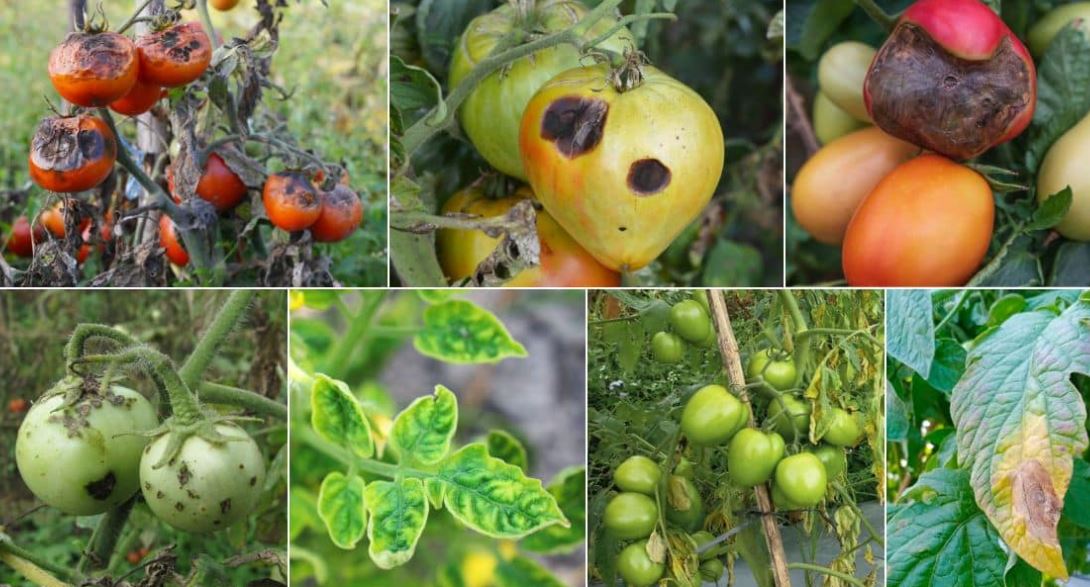
Tomatoes are one of the most popular vegetables grown in home gardens, but they can suffer from numerous diseases throughout the growing season. From fungal infections and bacterial problems to viral diseases and physiological disorders, these issues can quickly affect plant health, reduce harvests, and even kill entire crops.
Fortunately, most tomato diseases show clear symptoms before becoming severe. By learning to recognize leaf spots, wilting, discoloration, and fruit damage early, gardeners can take timely action to protect their plants. This guide explores the 23 most common tomato diseases, including their causes, symptoms, and practical prevention methods to help you grow healthier and more productive tomato plants.
1. Early Blight
What Is Early Blight?
Early blight is a fungal disease caused by Alternaria solani. It usually appears on older tomato leaves during periods of warm temperatures and high humidity.
Key Symptoms
- Brown spots with concentric rings
- Yellow halos around lesions
- Dark lesions on stems
- Sunken spots on fruit
- Premature leaf drop
Causes and Disease Spread
The fungus survives in soil, infected seeds, and plant debris. It spreads through wind, rain splash, contaminated tools, and handling infected plants.
Prevention and Treatment Methods
Prevent early blight by rotating crops regularly, mulching around plants, and removing infected foliage. Fungicides can help reduce severe infections when applied early.
2. Late Blight
What Is Late Blight?
Late blight is caused by Phytophthora infestans and is considered one of the most destructive tomato diseases worldwide.
Key Symptoms
- Water-soaked leaf spots
- White fuzzy growth beneath leaves
- Rapid browning of foliage
- Dark patches on fruit
- Sudden plant collapse
Environmental Conditions That Trigger It
Cool temperatures and prolonged moisture create ideal conditions for late blight outbreaks, especially during rainy periods.
How to Control and Prevent Late Blight
Proper plant spacing, good airflow, and avoiding overhead watering can significantly reduce the risk of infection. Remove affected plants immediately to prevent spread.
3. Septoria Leaf Spot
What Is Septoria Leaf Spot?
Septoria leaf spot is a common fungal disease that weakens tomato plants by causing extensive leaf loss.
Key Symptoms
- Small gray or tan spots
- Dark borders around lesions
- Yellowing lower leaves
- Premature defoliation
- Reduced fruit production
Causes and Disease Spread
The disease spreads through water splash, contaminated tools, and infected garden debris left in the soil.
Best Management Practices
Maintaining good sanitation practices and watering at the base of plants are effective ways to manage Septoria leaf spot. Fungicides may be used during prolonged wet weather.
4. Fusarium Wilt
What Is Fusarium Wilt?
Fusarium wilt is a soil-borne fungal disease that attacks the vascular system of tomato plants, preventing water movement.
Key Symptoms
- Yellowing on one side of the plant
- Wilting during hot afternoons
- Brown streaks inside stems
- Stunted growth
- Gradual plant death
Soil-Borne Transmission Explained
The pathogen can survive in the soil for many years and enters plants through the roots, making it difficult to eradicate once established.
Prevention and Resistant Varieties
Growing resistant varieties and practicing crop rotation are the most effective long-term strategies for preventing Fusarium wilt in home gardens.
5. Verticillium Wilt
What Is Verticillium Wilt?
Verticillium wilt is another vascular disease that resembles Fusarium wilt but is more common in cooler climates.
Key Symptoms
- Yellow lower leaves
- V-shaped leaf lesions
- Slow plant growth
- Wilting despite adequate water
- Reduced yields
Risk Factors and Disease Development
Repeated planting of tomatoes and other susceptible crops in the same location increases the likelihood of infection.
Effective Control Strategies
Gardeners should focus on improving soil health, removing infected plants, and selecting resistant cultivars whenever possible.
6. Bacterial Spot
What Is Bacterial Spot?
Bacterial spot is caused by several species of Xanthomonas and commonly affects tomatoes in hot and humid regions.
Key Symptoms
- Tiny dark leaf spots
- Ragged holes in foliage
- Raised fruit lesions
- Premature leaf loss
- Reduced plant vigor
How Bacteria Spread Between Plants
The bacteria spread through contaminated seeds, rain splash, tools, and direct contact with wet plants.
Treatment and Prevention Tips
Using certified disease-free seeds and practicing good garden hygiene can help minimize bacterial spot outbreaks. Copper-based sprays are often used as a preventive measure.
7. Bacterial Speck
What Is Bacterial Speck?
Bacterial speck is caused by Pseudomonas syringae pv. tomato and thrives during cool, wet conditions.
Key Symptoms
- Black specks on leaves
- Yellow halos around lesions
- Spots on green tomatoes
- Stunted plant growth
- Widespread leaf spotting
Weather Conditions That Favor Infection
Extended periods of rainfall, high humidity, and temperatures between 63°F and 75°F encourage the disease to spread rapidly.
Managing Bacterial Speck Naturally
Natural management methods include improving airflow, removing infected debris, and using drip irrigation to keep foliage dry.
8. Bacterial Canker
What Is Bacterial Canker?
Bacterial canker is a serious disease caused by Clavibacter michiganensis that can infect tomato plants at any stage of growth.
Key Symptoms
- Scorched leaf margins
- Persistent wilting
- Bird’s-eye spots on fruit
- Brown stem discoloration
- Declining plant health
Sources of Infection
Infected seeds, transplants, and contaminated greenhouse equipment are the primary sources of bacterial canker.
Disease Management Techniques
Managing bacterial canker requires strict sanitation practices, immediate removal of infected plants, and the use of certified disease-free planting material.
9. Southern Blight
What Is Southern Blight?
Southern blight is a destructive fungal disease caused by Sclerotium rolfsii. It primarily attacks the stem near the soil line and is most common in hot, humid climates.
Key Symptoms
- White fungal growth at the base of stems
- Rapid wilting of the entire plant
- Brown stem rot near soil level
- Small, mustard-like fungal bodies
- Sudden plant death
Favorable Growing Conditions
Southern blight thrives in warm soils above 80°F and spreads quickly in gardens with poor sanitation and excessive moisture.
Prevention and Soil Management
Prevent southern blight by removing plant debris, rotating crops, and improving soil drainage. Raised beds can also help reduce disease pressure.
10. Anthracnose
What Is Anthracnose?
Anthracnose is a fungal disease that primarily affects ripe and overripe tomatoes, causing fruit rot before or after harvest.
Key Symptoms
- Small circular sunken spots
- Dark, enlarging lesions on fruit
- Soft, decayed areas
- Pink or orange spore masses
- Reduced fruit quality
Causes and Disease Spread
The fungus survives on infected plant material and spreads through splashing water, especially during wet weather.
Treatment Options for Home Gardens
Regular harvesting, mulching, and removing infected fruit can significantly reduce anthracnose. Preventive fungicide applications may also be beneficial.
| Feature | Anthracnose |
|---|---|
| Main Target | Tomato Fruit |
| Pathogen Type | Fungus |
11. Powdery Mildew
What Is Powdery Mildew?
Powdery mildew is a fungal disease recognized by its white, powder-like appearance on tomato foliage.
Key Symptoms
- White powdery coating on leaves
- Yellowing foliage
- Curling leaf edges
- Reduced photosynthesis
- Weak plant growth
Factors That Encourage Infection
Warm days, cool nights, and poor air circulation contribute to powdery mildew outbreaks, particularly in crowded gardens.
How to Prevent Powdery Mildew
Provide adequate spacing between plants and prune excess foliage to improve airflow. Watering at the base of plants can also help minimize infection.
12. Gray Mold (Botrytis)
What Is Gray Mold?
Gray mold, also known as Botrytis, is caused by Botrytis cinerea and affects leaves, stems, flowers, and fruit.
Key Symptoms
- Gray fuzzy mold on plant tissue
- Brown lesions on stems
- Blossom infections
- Fruit rot
- Leaf dieback
Conditions That Promote Botrytis
Cool temperatures, high humidity, and poor ventilation create ideal conditions for gray mold development.
Control Measures and Sanitation
Remove infected plant material promptly and maintain good airflow throughout the growing area. Greenhouse growers should monitor humidity levels closely.
13. Buckeye Rot
What Is Buckeye Rot?
Buckeye rot is a fungal disease that affects tomatoes touching or growing close to the soil surface.
Key Symptoms
- Circular brown rings on fruit
- Water-soaked lesions
- Fruit decay
- Soft, rotten tomatoes
- Increased losses after rainfall
Causes and Moisture-Related Issues
Excessive rainfall and poor drainage encourage the pathogen to spread from the soil onto developing fruit.
Prevention and Treatment Approaches
Use stakes or cages to keep fruit off the ground and apply mulch to prevent soil splash. Promptly remove infected tomatoes from the garden.
14. Blossom End Rot
What Is Blossom End Rot?
Blossom end rot is a physiological disorder caused by inadequate calcium uptake rather than a fungal or bacterial infection.
Key Symptoms
- Dark, sunken area on fruit bottoms
- Leathery black patches
- Premature fruit drop
- Uneven fruit development
- Reduced marketability
Environmental and Watering Factors
Inconsistent watering, drought stress, and root damage often interfere with calcium absorption, leading to blossom end rot.
How to Prevent Future Occurrences
Maintain consistent soil moisture and avoid overfertilizing with nitrogen. Adding organic matter can help improve water retention.
| Cause | Solution |
|---|---|
| Inconsistent Watering | Water Regularly |
| Calcium Uptake Issues | Improve Soil Conditions |
15. Damping-Off
What Is Damping-Off Disease?
Damping-off affects tomato seedlings and is caused by several soil-borne fungi, including Pythium and Rhizoctonia species.
Key Symptoms
- Seedlings collapse suddenly
- Thin, weak stems
- Water-soaked stem bases
- Poor germination rates
- Seedling death
Causes in Seed Starting Mixes
Overwatering, contaminated containers, and poor air circulation are common factors contributing to damping-off.
Preventive Measures for Seedlings
Always use sterile seed-starting mixes and clean containers. Providing adequate light and airflow can greatly reduce losses.
16. Tomato Mosaic Virus (ToMV)
What Is Tomato Mosaic Virus?
Tomato Mosaic Virus is a highly contagious viral disease that affects tomato growth, yield, and fruit quality.
Key Symptoms
- Mottled or mosaic leaf patterns
- Distorted foliage
- Stunted growth
- Reduced fruit production
- Misshapen tomatoes
How the Virus Spreads
The virus spreads through contaminated hands, tools, infected seeds, and contact between healthy and diseased plants.
Prevention and Plant Removal
There is no cure for Tomato Mosaic Virus. The best approach is to remove infected plants immediately and practice strict garden sanitation to prevent further spread.
17. Tomato Spotted Wilt Virus (TSWV)
What Is Tomato Spotted Wilt Virus?
Tomato Spotted Wilt Virus is a viral disease transmitted primarily by thrips. It affects hundreds of plant species and can significantly reduce tomato yields.
Key Symptoms
- Bronze or purple spots on leaves
- Ring patterns on fruit
- Stunted growth
- Wilting shoots
- Reduced fruit production
Role of Thrips in Transmission
Thrips acquire the virus while feeding on infected plants and transmit it throughout the garden as they move from plant to plant.
Integrated Disease Management
Control thrips populations, remove infected plants, and use reflective mulch to discourage insect activity. Resistant varieties are also available.
18. Curly Top Virus
What Is Curly Top Virus?
Curly Top Virus is caused by the Beet Curly Top Virus and is spread by leafhoppers. It is especially problematic in hot, dry regions.
Key Symptoms
- Upward curling leaves
- Thickened leaf veins
- Yellowing foliage
- Stunted plants
- Poor fruit set
Insect Vectors and Transmission
Leafhoppers pick up the virus from infected weeds and transmit it to tomato plants while feeding.
Prevention Strategies
Use floating row covers during peak leafhopper activity and keep weeds under control around the garden to reduce disease pressure.
19. Leaf Mold
What Is Leaf Mold?
Leaf mold is a fungal disease caused by Passalora fulva. It is particularly common in greenhouses and other humid growing environments.
Key Symptoms
- Yellow spots on upper leaf surfaces
- Olive-green mold underneath leaves
- Curling foliage
- Premature leaf drop
- Reduced plant vigor
Greenhouse vs Outdoor Infections
Leaf mold is more severe in enclosed spaces where humidity remains consistently high and airflow is limited.
Managing Humidity and Airflow
Increase ventilation, prune excess foliage, and avoid overcrowding plants. Maintaining humidity below 85% can help prevent outbreaks.
20. Target Spot
What Is Target Spot?
Target spot is a fungal disease caused by Corynespora cassiicola that affects leaves, stems, and fruit.
Key Symptoms
- Circular lesions with concentric rings
- Yellow halos around spots
- Leaf drop
- Stem lesions
- Fruit blemishes
Conditions Favoring Disease Development
Warm temperatures and prolonged leaf wetness are the primary environmental factors associated with target spot.
Prevention and Fungicide Options
Use drip irrigation and apply fungicides preventively in areas where target spot is a recurring problem.
21. Corky Root Rot
What Is Corky Root Rot?
Corky root rot is a soil-borne fungal disease that attacks tomato roots, limiting the plant’s ability to absorb water and nutrients.
Key Symptoms
- Brown, corky roots
- Yellowing leaves
- Stunted growth
- Wilting during warm weather
- Reduced harvests
Soil Conditions That Increase Risk
Cool, wet soils and poor drainage contribute significantly to corky root rot development.
Long-Term Management Practices
Improve drainage, rotate crops, and consider grafted or resistant tomato plants if the disease persists year after year.
22. Pith Necrosis
What Is Pith Necrosis?
Pith necrosis is a bacterial disease that affects the internal tissues of tomato stems, often during periods of rapid growth.
Key Symptoms
- Hollow stems
- Dark stem lesions
- Wilting shoots
- Plant collapse
- Reduced vigor
Causes and Environmental Triggers
Excess nitrogen fertilization, cool temperatures, and high humidity can increase the likelihood of pith necrosis.
Prevention and Cultural Controls
Avoid overfertilizing and maintain balanced growing conditions. Removing infected plants can help reduce bacterial populations in the garden.
23. Sooty Mold
What Is Sooty Mold?
Sooty mold is a fungal growth that develops on the honeydew secretions left behind by sap-sucking insects such as aphids and whiteflies.
Key Symptoms
- Black coating on leaves
- Reduced photosynthesis
- Sticky plant surfaces
- Presence of aphids or whiteflies
- Declining plant appearance
Relationship Between Aphids and Whiteflies
These insects feed on plant sap and produce honeydew, creating the perfect environment for sooty mold to grow.
Eliminating the Underlying Cause
Controlling aphids, whiteflies, and other sap-feeding insects is the most effective way to prevent and eliminate sooty mold from tomato plants.
Frequently Asked Questions
1. What is the most common tomato disease?
Early blight and Septoria leaf spot are among the most common tomato diseases found in home gardens. Both diseases thrive in warm, humid conditions and primarily affect foliage.
2. Can tomato diseases spread to other plants?
Yes. Many fungal, bacterial, and viral diseases can spread to other tomatoes and related plants, including peppers, potatoes, and eggplants.
3. How can I prevent tomato diseases naturally?
Good garden hygiene, crop rotation, proper spacing, mulching, and watering at the base of plants are some of the best natural methods for preventing tomato diseases.
4. Should I remove diseased tomato plants?
If a plant is severely infected with a viral or bacterial disease, removing it is usually the best option to protect healthy plants nearby.
5. Are there disease-resistant tomato varieties?
Yes. Many tomato varieties are bred for resistance to diseases such as Fusarium wilt, Verticillium wilt, and Tomato Mosaic Virus. Look for resistance codes like V, F, N, and T on seed packets and plant labels.

- Is There a Difference Between a Donkey and a Burro? - September 1, 2026
- The Heritage Weed Puller: Pros, Cons, and True Taproot Extraction Explained - August 30, 2026
- Can Grampa’s Weeder Remove Dandelions? Honest Review - August 30, 2026