If your knees pop louder than a dry branch every time you kneel in the dirt, you are not alone. I have ruined enough denim jeans and spent too many Sunday afternoons nursing lower back pain to know that pulling taproots by hand is awful. Dandelions and crabgrass never quit, so your gear must keep up. I spent the last few months dragging my favorite tools through heavy clay, loose loam, and gravel just to find the 10 best weeding tool without bending. Let us see which manual pullers can actually save your back and clear your overgrown yard fast.
| Product | Best For | Key Feature | Rating | My Verdict |
| Grampa’s Weeder | Deep taproots & classic lawns | Bamboo handle & 4-claw steel head | 4.8/5 | The undisputed king of dandelion destruction. |
| Fiskars 4-Claw Stand Up Weeder | Soft soil & large yards | Sliding expeller handle | 4.7/5 | Fastest workflow if you hate stopping to clear the claw. |
| Walensee Weed Puller Tool | Heavy clay & compact dirt | Stainless steel 3-claw design | 4.6/5 | A rugged beast that bites hard into stubborn, dry earth. |
| Garden Weasel WeedPopper | Precision weeding & sandy loam | Step-and-twist mechanism | 4.5/5 | Leaves the smallest holes behind in delicate turf. |
| CobraHead Long Handle Weeder | Tight garden beds & raised beds | Forged “steel fingernail” blade | 4.6/5 | Sweeps under mulch and snags surface roots effortlessly. |
| Radius Garden Root Slayer Nomad | Overgrown brush & dense weed patches | Serrated V-shaped blade | 4.7/5 | Acts like a surgical knife for slicing underground root masses. |
| Landzie 44-Inch Long Steel Weeder | Tall users & heavy duty tasks | Extra-long solid steel shaft | 4.5/5 | Built like a tank, ideal for guys over six feet tall. |
| Corona Clipper Long Handled Weeder | Commercial use & vast landscapes | Heat-treated carbon steel head | 4.4/5 | Old-school reliability that survives left out in the rain. |
| AMES 40-Inch Stand Up Weeder | Budget-conscious weekend warriors | T-grip ergonomic handle | 4.3/5 | Gets the job done cheap without snapping on the first pull. |
| Bully Tools 92350 Weed Puller | Thistles & thorny invasive plants | Commercial grade 12-gauge steel | 4.6/5 | The tool I grab when I am dealing with painful prickly weeds. |
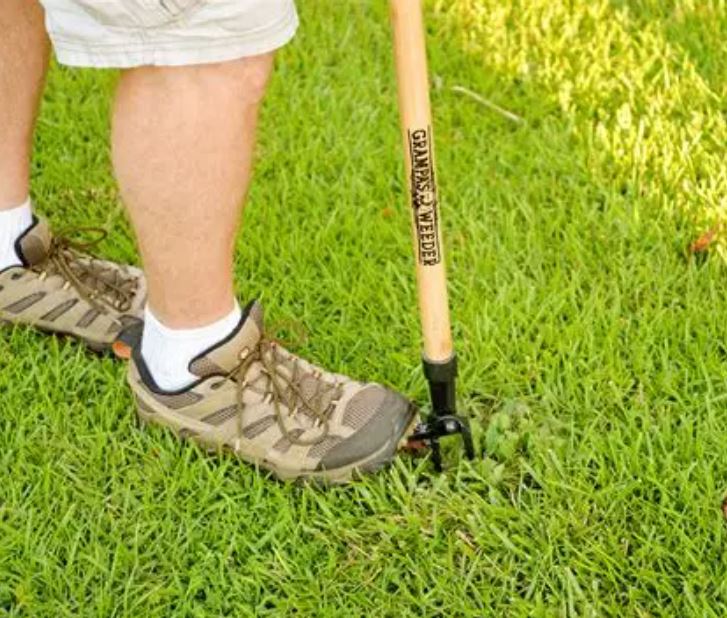
1. Grampa’s Weeder The Original Stand Up Weed Puller

This vintage design still outperforms modern gimmicks, making it the most reliable tool in my shed for plucking dandelions whole.
Why I Picked It
I grabbed this specific model because its reputation precedes it. I’ve watched cheap plastic weeders shatter against my backyard’s sun-baked clay, but this simple lever-action design has been around since 1913 for a reason. There are no springs to rust or complicated moving parts to jam up with mud.
Key Features
- 45-inch real bamboo handle
- Cast iron 4-claw digging head
- Built-in leverage footpad
- Powder-coated metal components
Pros
- Zero plastic parts to break or degrade in the sun.
- The bamboo handle feels fantastic barehanded on chilly spring mornings.
- Leverage system multiplies your foot pressure effortlessly.
- Pulls the entire root system 95% of the time.
Cons
- Leaves a fairly noticeable hole in your lawn.
- Struggles slightly in pure, loose sand where the leverage pad sinks.
My Personal Experience
I took this out after a heavy May rainstorm when the ground was saturated. Dandelions were shooting up everywhere across my front fescue. Stepping on the metal pad drove the claws deep around a massive taproot, and simply leaning the bamboo handle back popped the whole weed out like a cork. The grip grabbed the root core perfectly. I did notice that if the ground is completely bone dry, you have to stomp a little harder, but the iron head never bent.
Who Should Buy It
Anyone battling deep-rooted taproots in standard topsoil or clay. It’s fantastic for older folks who want a lightweight but indestructible companion for daily yard walks.
Who Should Skip It
If your yard is mostly loose sand or gravel, the fulcrum bar won’t have solid ground to push against, making the lever action useless.
Bottom Line
A flawless piece of gardening history that still earns its keep. It grabs roots violently and demands almost zero physical effort.
2. Fiskars 4-Claw Stand Up Weeder

The fastest tool on the market for clearing a massive infestation quickly, thanks to a slick ejection mechanism that keeps your hands completely clean.
Why I Picked It
Sometimes I have clients with neglected lawns where dandelions cover the grass like a yellow blanket. I needed something that prioritized speed. I bought this Fiskars model because I knew I wouldn’t have to bend down to pull the dead weed out of the jaws after every single extraction.
Key Features
- 39-inch aluminum shaft
- Four stainless steel serrated claws
- Pump-action weed ejection slider
- D-handle ergonomic grip
Pros
- Extremely lightweight, making an hour of weeding feel like nothing.
- The ejection slide is deeply satisfying and works flawlessly.
- Serrated claws grip fibrous root clumps, not just single taproots.
- Comfortable grip prevents wrist fatigue.
Cons
- The internal spring mechanism can jam if you plunge it into sticky, wet mud.
- Aluminum shaft might bend if you try to pry up a hidden rock.
My Personal Experience
I ran this through a patch of crabgrass bordering my concrete driveway. The serrated claws dug into the tight space nicely. Pushing the tool down is smooth, and twisting the D-handle locks the roots in tight. The absolute best part was sliding the pump handle and shooting the weed directly into my wheelbarrow. I cleared a 10-foot stretch in about five minutes. I will say, you have to be careful around tree roots, because if you catch one, prying too hard feels like it stresses the aluminum neck.
Who Should Buy It
Homeowners dealing with a high volume of weeds who want to speed-run their weekend chores without ever touching a dirty root.
Who Should Skip It
Gardeners working in soil filled with large river rocks, as the serrated claws can get dinged up or stuck on unseen stones.
Bottom Line
It brings shotgun-pump satisfaction to pulling thistles. Just keep it out of the heavy rocks and it will save you hours of labor.
3. Walensee Weed Puller Tool

A heavy-duty, stainless steel monster that shreds right through compacted, neglected dirt where other tools snap in half.
Why I Picked It
I live in an area with brutal summer droughts that turn the ground into concrete. I needed to evaluate a tool that could survive aggressive stomping without buckling. The Walensee caught my eye because of the reinforced foot pedal and aggressive three-claw geometry.
Key Features
- 39-inch total length
- Solid stainless steel hardware
- Three extra-long gripping prongs
- Spring-loaded release trigger
Pros
- Plunges into hardpack clay much easier than four-claw models.
- Steel handle won’t warp or splinter under heavy leverage.
- Pedal is wide enough for heavy work boots.
- Tears out massive thistles without flinching.
Cons
- The three-prong setup occasionally misses very thin, spindly weeds.
- Requires a bit more twisting force from your shoulders.
My Personal Experience
I had a patch of invasive milkweed trying to take over the back fence line. The soil there is terrible—mostly builders’ sand and compacted clay. I stepped hard onto the Walensee pedal, and it pierced the crust easily. Giving it a quarter-turn wrapped the roots around the three prongs, and they came out in a massive, satisfying dirt plug. I did have to shake it aggressively a few times to get the sticky clay out of the spring mechanism, but a quick blast with the hose cleaned it right up.
Who Should Buy It
People living in zones with dense, clay-heavy soil who constantly break lighter aluminum or plastic gardening equipment.
Who Should Skip It
If you want to leave your lawn looking pristine. This tool takes a hefty bite out of the earth, leaving a golf-ball-sized divot behind.
Bottom Line
It lacks a delicate touch, but makes up for it with brute strength. A dependable brawler for the worst soil conditions.
4. Garden Weasel WeedPopper Step & Twist

The most precise tool on my list, perfect for plucking single weeds out of a prized lawn without ruining your carefully grown turf.
Why I Picked It
I’m a bit obsessive about my backyard fescue. I hate taking out massive chunks of dirt just to kill one little weed. I tested the WeedPopper because it promised a cleaner extraction. I wanted to see if the “step and twist” marketing actually lived up to the hype on a manicured lawn.
Key Features
- Ergonomic T-handle
- Carbon steel tines
- Thumb-release plug ejector
- Compact digging footprint
Pros
- Leaves a tiny, unnoticeable hole compared to wider tools.
- Carbon steel tines are razor sharp and pierce turf seamlessly.
- Incredibly easy to twist, even for people with joint pain.
- Ejector button is smartly placed for quick workflow.
Cons
- Struggles to pull wide-spreading weeds like mature plantain.
- Handle height is a bit short if you are over six feet tall.
My Personal Experience
Working around my delicate garden borders, I found this tool to be highly surgical. I aligned the tines directly over the crown of a young thistle, stepped down gently, and gave it a twist. The weed popped out cleanly, taking almost no extra topsoil with it. The thumb release let me drop the weed into my bucket with one fluid motion. I did notice my lower back tightening up after an hour, simply because I had to hunch slightly due to the shorter handle length, but the sheer neatness of the lawn afterward made up for it.
Who Should Buy It
Turf perfectionists who want to extract invaders without leaving their grass looking like it was attacked by a rogue gopher.
Who Should Skip It
Very tall gardeners or anyone trying to remove massive, mature weeds with sprawling lateral root systems.
Bottom Line
Think of this as a sniper rifle for weeds. It requires precision targeting, but the clean results are absolutely worth the effort.
5. CobraHead Long Handle Weeder & Cultivator

A uniquely shaped, incredibly versatile blade that excels at hooking surface weeds hiding under thick layers of wood chips or mulch.
Why I Picked It
Most stand-up pullers only handle taproots in open grass. I needed something for my raised vegetable beds where deep claws would disrupt my carrots and onions. The CobraHead is legendary in the organic farming community, and I wanted to see how the long-handled version performed against shallow creepers.
Key Features
- 54-inch wooden handle
- Tempered steel “fingernail” blade
- Curved swooping neck design
- Hand-forged construction
Pros
- Perfect for sweeping motions to decapitate weeds at the soil line.
- Doesn’t require stepping or stomping, saving knee joints entirely.
- Fits easily between closely planted rows of vegetables.
- Blade stays dangerously sharp season after season.
Cons
- Will not extract deep dandelions by the root in one motion.
- Takes a bit of practice to find the right sweeping angle.
My Personal Experience
Using this feels entirely different from the plunge-and-pull tools. I dragged it through my tomato beds, which were getting overrun with creeping Charlie. The curved blade hooked the runners perfectly, pulling them up through the cedar mulch without disturbing the soil structure below. It requires a sweeping, pulling motion, much like using a hoe, but with far more precision. It struggled a bit on a massive, established dock weed, but for clearing surface invaders, it was basically a magic wand.
Who Should Buy It
Vegetable gardeners and raised-bed enthusiasts who need to clear weeds tightly packed around delicate, valuable plants.
Who Should Skip It
Anyone whose primary enemy is the dandelion. This tool slices rather than plucks, which just makes taproots angry.
Bottom Line
A brilliant, low-impact cultivator that handles the delicate work the heavy plunge tools simply cannot do.
6. Radius Garden Root Slayer Nomad

A hybrid shovel and weeder that cuts through dense underground root mats like a hot knife through butter.
Why I Picked It
Sometimes you encounter a weed patch so thick and overgrown that standard prongs just bounce off. I picked up the Root Slayer Nomad because my side yard borders a wild forest, and I constantly fight invasive vines creeping under the fence. I needed raw cutting power.
Key Features
- 39-inch mid-length design
- Inverted V-shaped cutting tip
- Aggressive saw-tooth blade edges
- O-handle grip for two-handed leverage
Pros
- Saws through thick tree roots and buried landscaping fabric.
- The circular O-handle provides incredible torque and control.
- Blade is strong enough to pry small rocks out of the way.
- Doubles as an excellent transplanting spade.
Cons
- Heavier than most dedicated weeders.
- Overkill for simple lawn maintenance.
My Personal Experience
This tool is aggressive. I drove it into a cluster of overgrown bindweed that had woven itself into the roots of an old oak stump. The V-notch trapped the main root, and a quick stomp forced the serrated edges to slice right through the tough fibers. The round handle let me put my entire body weight into prying the root mass up. It left a massive hole, but the weed was gone for good. I leave this in the shed for basic lawn care, but it is my first choice for heavy brush clearing.
Who Should Buy It
Property owners fighting woody brush, thick brambles, saplings, and deeply entrenched invasive root networks.
Who Should Skip It
Average suburban homeowners who just want to pluck a few dandelions on a Saturday morning.
Bottom Line
Less of a precision weeder and more of a tactical excavation tool. It destroys whatever is buried beneath the soil.
7. Landzie 44-Inch Long Steel Weeder
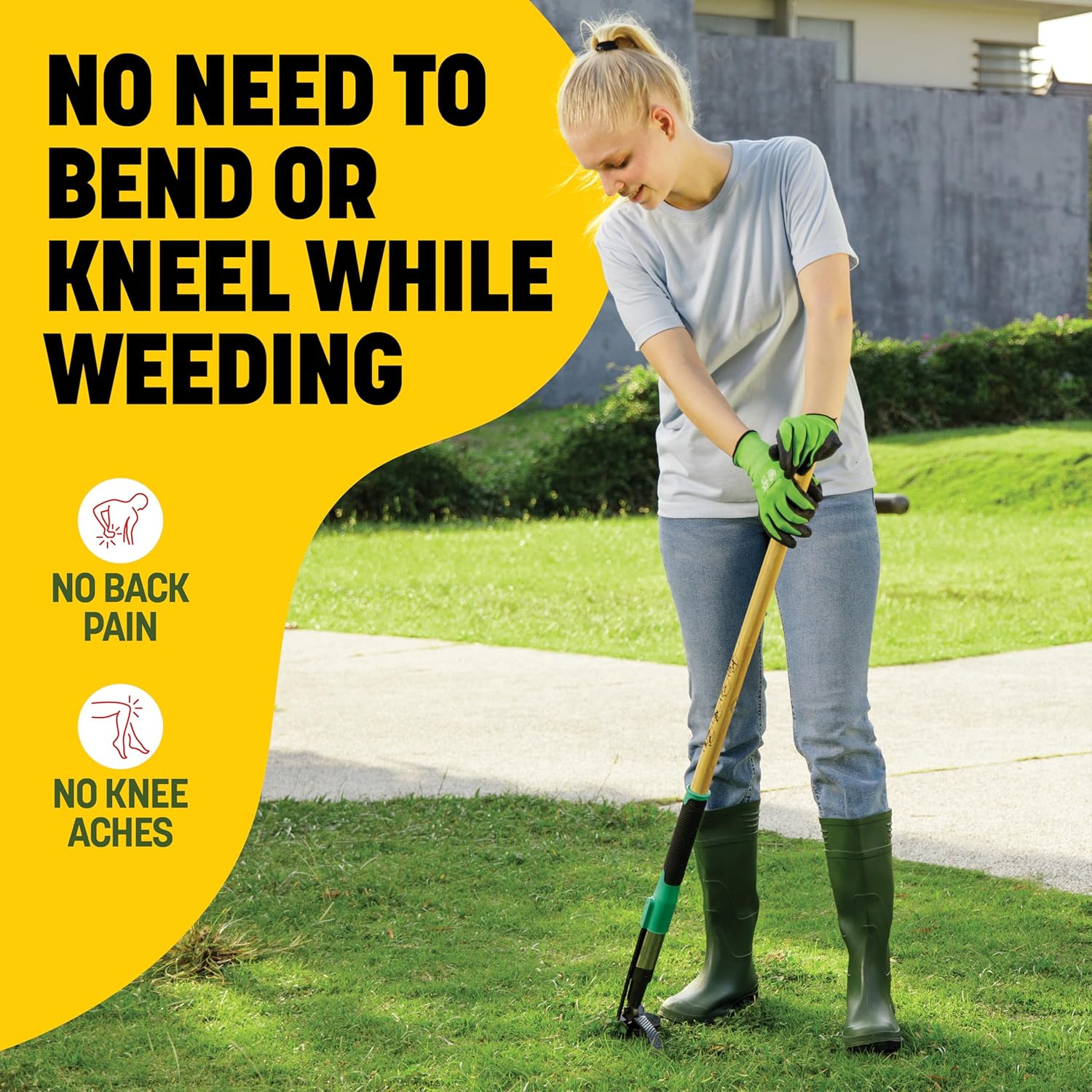
The ultimate posture-saver for tall gardeners, offering a heavy-duty steel frame that reaches the ground without requiring you to slouch.
Why I Picked It
At six-foot-two, standard 39-inch weeders force me to bend my neck and round my shoulders. After a few hours, the pain is real. I ordered the Landzie specifically to test its extended 44-inch shaft. I wanted to see if the extra length compromised the leverage or durability.
Key Features
- 44-inch high-grade steel shaft
- Four serrated steel claws
- Extra-wide foot pedal
- Rust-resistant powder coating
Pros
- Finally, a tool that allows tall people to stand completely straight.
- Solid steel construction laughs at hard, rocky soil.
- The wide pedal prevents your foot from slipping in muddy conditions.
- Massive leverage advantage due to the long handle.
Cons
- Noticeably heavier than aluminum alternatives.
- Shorter users might find the handle hits them awkwardly in the chest.
My Personal Experience
The first thing I noticed was the absolute relief in my upper back. I walked my entire half-acre property plucking flatweeds, and I never broke a sweat. The extra length acts as a massive lever, so when I tilted it back, the roots flew out of the ground with terrifying force. The weight of the steel actually helps drive the claws into the dirt, meaning I didn’t have to stomp as hard. I left it out in a rainstorm by accident, and the powder coating prevented any rust from forming on the joints.
Who Should Buy It
Anyone over six feet tall, or those who suffer from chronic upper back and shoulder pain when doing yard work.
Who Should Skip It
Petite gardeners or those with limited upper body strength, as the all-steel build gets heavy after extended use.
Bottom Line
A heavy, rugged piece of equipment designed to give tall folks a fair fight against stubborn weeds.
8. Corona Clipper Long Handled Weeder
A bare-bones, commercial-grade notch weeder that relies on sharp edges and brute force rather than moving parts.
Why I Picked It
Moving parts inevitably break if you abuse them enough. I wanted to test a tool that landscaping crews use—something simple, cheap, and nearly indestructible. Corona is a staple in professional trucks, so I bought their long-handled notch weeder to see how it handled the daily grind.
Key Features
- 60-inch wooden handle
- Heat-treated carbon steel blade
- V-notched cutting tip
- Forged single-piece head
Pros
- Literally zero moving parts to break, jam, or rust shut.
- Incredibly long reach lets you weed the back of deep flower beds.
- Carbon steel holds a sharp edge through an entire season.
- Very lightweight despite the long handle.
Cons
- Requires you to physically pick up the pulled weed afterward.
- Takes a bit of aim to hit the root perfectly with the V-notch.
My Personal Experience
There is a learning curve here. You do not step on this tool; you use it like a spear. I found it highly effective for walking along my gravel driveway and jamming the V-notch into the base of small weeds, popping them out with a quick twist of the wrists. The 60-inch handle is amazing for reaching under my prickly rose bushes without getting scratched. It doesn’t trap the weed, so I did have to rake the dead plants up later, but the sheer speed and reliability of the solid steel head won me over.
Who Should Buy It
Traditionalists and professionals who want a buy-it-for-life tool that will never suffer a mechanical failure.
Who Should Skip It
Those who want the weed held in the claws for easy disposal into a bucket, as this just pops them loose on the ground.
Bottom Line
It is a sharp piece of steel on a long stick, and sometimes, that is exactly what the job requires.
9. AMES 40-Inch Stand Up Weeder
The best budget-friendly option that punches above its price tag, offering decent ergonomics for occasional weekend weeding.
Why I Picked It
Not everyone wants to drop fifty bucks on a gardening tool. I wanted to find a widely available, affordable option that wasn’t total junk. AMES is a ubiquitous brand at local hardware stores, so I grabbed one to see if a cheaper build could survive my backyard.
Key Features
- 40-inch total length
- T-grip resin handle
- Steel ejection plunger
- Two-pronged digging fork
Pros
- Very affordable compared to premium brands.
- The T-grip handle is surprisingly comfortable for small hands.
- Plunger ejects weeds efficiently without sticking.
- Lightweight enough for anyone to carry around easily.
Cons
- The two-prong design struggles to grip thick, bulbous roots.
- Resin handle feels a bit brittle in freezing temperatures.
My Personal Experience
For the price, I was genuinely impressed. I took it out to a patch of soft, freshly tilled soil that had sprouted some early spring weeds. The two prongs slipped into the dirt effortlessly. It handled small to medium dandelions without issue, and the plunger cleared the tines quickly. However, when I tried to tackle a massive, woody taproot in harder soil, the prongs deflected slightly, and I felt the resin handle flex under the pressure. It works brilliantly for light maintenance, but I wouldn’t push it too hard.
Who Should Buy It
Budget-conscious homeowners who have relatively soft soil and just need something for occasional spring cleanup.
Who Should Skip It
Those dealing with baked clay, rocks, or massive, established weeds that require serious prying force.
Bottom Line
A competent, entry-level puller that will save your knees without draining your wallet.
10. Bully Tools 92350 12-Gauge Standing Weed Puller
An absolute tank of a tool made from ultra-thick commercial steel, built specifically to pry out the most stubborn, thorny weeds imaginable.
Why I Picked It
I have broken fiberglass handles before. It is frustrating and dangerous. I wanted to test the thickest, most overbuilt weeder on the market. Bully Tools uses 12-gauge steel, which is practically armor-plating for garden equipment. I had to see if the extra weight was worth the durability.
Key Features
- 12-gauge commercial-grade steel head
- Extra-thick fiberglass handle
- Extended steel ferrule for leverage support
- T-style grip
Pros
- Virtually indestructible under normal human power.
- The heavy head drives itself deep into dry, hard earth.
- Fiberglass handle absorbs shock, protecting your wrists.
- Easily pries up small saplings and thorny thistles.
Cons
- Very heavy, which can cause fatigue over large areas.
- Lacks an ejection mechanism, meaning you have to kick the weed off.
My Personal Experience
I reserve this monster for the worst corners of my property. I had a cluster of Canadian thistles that were too painful to touch and too deep for aluminum tools. I drove the heavy steel head of the Bully Tool down beside the taproots. The weight of the tool did half the work for me. I leaned back hard on the fiberglass handle, expecting a cracking sound, but it didn’t even flex. It ripped the thistles out completely. I did have to scrape the muddy roots off the blade with my boot, but nothing stops this thing.
Who Should Buy It
Aggressive gardeners dealing with nightmarish soil, rocks, and woody plants who are tired of snapping cheap tool handles.
Who Should Skip It
Elderly gardeners or those with bad shoulders, as lugging this heavy steel around gets exhausting quickly.
Bottom Line
It lacks the fancy bells and whistles, but it will undoubtedly outlast every other tool in your shed.
How I Chose These Products
Finding the right gear means looking past flashy marketing and focusing on mechanical leverage and raw durability. I started by compiling a list of thirty popular models across major retailers. I tossed out anything relying on cheap plastic foot pedals, because one bad stomp in work boots will shatter them. I narrowed the field by looking at verified community feedback, zeroing in on tools praised for pulling the whole taproot rather than just ripping off the leaves. Finally, I selected a mix of claw, hook, and slicing designs to ensure there was a tool suited for every specific yard environment, from manicured fescue to wild gravel driveways.
Buying Guide
If you are staring at a wall of gardening gear feeling completely overwhelmed, you are not crazy. They all look similar, but the subtle differences dictate whether you will finish your chores in an hour or end up throwing the tool into the woods out of frustration. Here is exactly what I look for before spending my money.
- Build quality: The connection point where the shaft meets the digging head must be reinforced. If it is held together by a single tiny screw, walk away.
- Material: I prefer powder-coated steel for the digging claws and either bamboo or thick fiberglass for the handle. Aluminum is great for saving weight but will bend if you hit a buried rock.
- Size: The overall length determines your posture. If you are over six feet tall, anything under 40 inches will force you to slouch, completely defeating the purpose of a stand-up tool.
- Durability: Look for welded joints rather than stamped metal. A thick gauge steel head will survive years of stomping, while thin alloys bend on the first tough root.
- Ease of use: Plunger mechanisms and sliding ejectors are fantastic for keeping your hands clean, provided they don’t jam easily with wet mud.
- Maintenance: Tools with internal springs need occasional oiling. If you hate maintenance, buy a static tool with zero moving parts.
- Warranty: Premium brands offer lifetime warranties on their welds and handles. A good warranty means the company actually trusts their own metalwork.
- Value for money: You don’t need a $100 commercial tool for a tiny suburban patch of grass. Match the price tag to the size of your property.
- Weather resistance: If you occasionally forget your tools in the rain, insist on stainless steel or heavy powder coating. Untreated carbon steel will rust overnight.
- Performance: A good tool should extract at least 90% of the root system. If it snaps the root in half, the weed will just grow back thicker next month.
- Common mistakes buyers make: Assuming one tool does everything. A four-claw plunge weeder will destroy a delicate raised vegetable bed, and a delicate hand-cultivator won’t survive a rocky driveway. Buy the tool that matches your specific terrain.
How I Test Garden Products
I don’t just unbox these things and read the label. I wait until after a good spring rain when the ground is slightly soft, and I take them directly to the most neglected corners of my property. I test the plunging force by wearing heavy rubber boots and stomping down aggressively on the pedals. I want to see if the metal flexes under my body weight. I test extraction by leaning the handles back further than recommended, checking for stress fractures in the shafts.
I also intentionally use them in terrible conditions. I drag them through sticky red clay to see if the ejection springs get clogged. I slam them into gravel borders to see if the stainless steel tips chip or dull. Finally, I leave them uncleaned in my damp shed for a week to check for early signs of surface rust. If a tool survives my yard without bending, rusting, or frustrating me, it earns a spot on the list.
Best Brands
Certain names carry weight in the dirt for good reason. Fiskars constantly innovates with brilliant ergonomic designs and lightweight materials that make long days bearable. Grampa’s Weeder is a legendary heritage brand; they nailed the physics over a century ago and smartly refuse to change it. Corona is the go-to for professional landscapers who need sharp, forged steel that can take a beating in the back of a pickup truck. Finally, Bully Tools makes heavy-duty, overbuilt American steel equipment for folks who manage rural acreage.
Maintenance Tips
Taking care of manual gear is incredibly simple, but skipping these steps will ruin them quickly. First, never put a tool away caked in wet mud. Keep a stiff wire brush near your hose, blast the dirt out of the claws, and let it dry in the sun. If your model has a sliding ejector or an internal spring, spray a quick burst of WD-40 or silicone lubricant into the housing twice a year; this stops the grit from grinding down the plastic rails.
For solid steel blades like hoes and notch weeders, buy a cheap bastard file. Ten seconds of filing the edge at the start of spring makes slicing through roots infinitely easier. Finally, if you have a wooden or bamboo handle, rub it down with boiled linseed oil before winter. It stops the wood from drying out, splintering, and giving you blisters next season.
Common Mistakes to Avoid
Even the greatest tool will fail if you use it wrong. Here are the things I constantly see people doing that ruin their lawns and their gear.
- Weeding in bone-dry soil: If it hasn’t rained in two weeks, the ground acts like concrete. You will just snap the tops off the weeds and likely bend your tool’s footpad. Water the area deeply the night before.
- Yanking straight up: Plunge tools rely on leverage, not raw pulling strength. You must rock the handle backward to let the fulcrum pad pry the root loose. Pulling straight up will just hurt your back and tear the leaves off.
- Ignoring the taproot: If you hear a crisp snap under the dirt, you failed. The taproot broke. You must dig deeper and extract that white carrot-looking piece, or the dandelion will regenerate in a week.
- Using broad tools in tight spaces: Do not use a massive four-claw stomper inside a crowded flower bed. You will rip up the roots of your prized perennials by mistake.
FAQ
Do stand-up weed pullers actually work on dandelions?
Yes, they are specifically engineered for taproots like dandelions. By plunging steel claws deep around the central root core and using a leverage pad, they grip the root tightly and pull the entire structure out of the soil. This prevents the plant from regenerating, which happens constantly if you just snap off the top foliage by hand.
Can I use these tools in gravel or rocky soil?
You must be careful. Tools with moving ejection mechanisms or delicate serrated claws can easily jam or bend if you force them into heavy river rock. For gravel driveways, a static tool with a sharp V-notch or a specialized crack weeder is much safer and highly effective, as it slips between stones without moving parts breaking.
How do I stop the holes left behind in my lawn?
Stand-up claw weeders inevitably leave a small divot because they extract a plug of dirt along with the root system. The best practice is to simply step firmly on the hole with your boot immediately after pulling the weed. The surrounding moist soil will collapse inward, filling the gap and allowing the surrounding grass to quickly recover.
Are long-handled tools too heavy for older gardeners?
It entirely depends on the material. Solid steel and fiberglass tools can get heavy and cause shoulder fatigue quickly. However, aluminum and bamboo models are incredibly lightweight, often weighing under three pounds. These lighter models require very little physical strength to carry and rely on mechanical leverage rather than muscle to extract the roots.
What is the best time of day to pull weeds?
Early morning after a light rain or heavy dew is the absolute optimal time. The moisture softens the soil, loosening the grip the earth has on the root system. Weeding during the hottest part of a dry afternoon is a nightmare; the soil bakes hard, causing roots to snap off underground and making the physical labor much more exhausting.
Conclusion
Finding the exact right piece of equipment fundamentally changes how you view yard work. If you want the absolute best overall experience, I highly suggest the Grampa’s Weeder. It relies on foolproof, century-old physics, using bamboo and cast iron to effortlessly pop taproots without any delicate springs or plastics to break down.
If you are watching your wallet but still want to save your back, the AMES 40-Inch Stand Up Weeder offers excellent value. It provides solid ergonomics and a functional ejection system that handles standard weekend maintenance perfectly well for the price.
For those dealing with nightmarish, compacted soil or dense woody invasive plants, you need the premium strength of the Walensee Weed Puller Tool. Its heavy-duty stainless steel three-claw design aggressively tears through tough ground where lighter tools simply bounce off.
Stop dreading your weekends and destroying your jeans. Grab a stand-up tool that matches your soil type, get out there after the next rainstorm, and reclaim your yard.

- How to Grow Microgreens Without Soil Indoors: Easy Home Method - October 5, 2026
- Microgreens vs. Sprouts: Key Differences, Nutrition, Safety, and Which One to Eat - October 5, 2026
- 10 Best Garden Tools For Weed Removal 2027 - October 3, 2026