Can I Use Just Potting Soil in Raised Beds?
If you’ve ever stood in the garden center staring at bags of potting mix, raised bed mix, topsoil, and compost, you’ve probably asked yourself: can I just use potting soil in my raised bed and call it a day? It’s a fair question. Potting soil is familiar, widely available, and designed to support plant growth. But using it exclusively in a raised bed is a decision that comes with real trade-offs — some you’ll feel immediately, and others that sneak up on you over the course of a growing season.

The short answer is: yes, you technically can use potting soil in a raised bed, but no, it’s generally not the best idea on its own. Understanding why requires a closer look at what potting soil actually is, how raised beds function differently from containers, and what your plants genuinely need to thrive. This article walks through all of it so you can make the most informed decision for your garden.
What Is Potting Soil and How Does It Differ from Raised Bed Mix?
Before deciding whether potting soil is right for your raised bed, it helps to understand what you’re actually buying when you grab a bag off the shelf.
The Composition of Potting Soil
Potting soil is specifically formulated for container gardening. Despite the name, most potting soils contain little to no actual soil at all. Instead, they’re made up of lightweight materials that allow for excellent drainage and aeration inside a confined pot — typically ingredients like peat moss or coconut coir, perlite or vermiculite, and sometimes bark or composted materials. Manufacturers design these blends to be lightweight (so pots aren’t impossibly heavy), to drain quickly (so roots don’t sit in water), and to hold just enough moisture between waterings.
Because containers have limited volume and no connection to the ground beneath them, potting soil is engineered to compensate. It’s dense with air pockets, it often includes starter fertilizers to give new transplants a boost, and it’s usually slightly acidic — a sweet spot for many common vegetables and flowering plants.
How Raised Bed Mix Is Different
Raised bed mix, sometimes called “garden mix” or “mel’s mix” (after the Square Foot Gardening method), is designed with a much larger volume in mind. A typical raised bed holds anywhere from 6 to 24 inches of growing medium, and the mix needs to behave very differently from potting soil at that scale.
A good raised bed mix generally combines three core components in roughly equal parts: compost, for nutrition and microbial life; a coarse material like perlite or coarse sand, for drainage; and a loamy base, which might be topsoil or a blended soil product. Some gardeners follow the popular one-third each formula of compost, peat moss, and coarse vermiculite. The goal is a medium that is nutritious, well-draining, moisture-retentive, and biologically active — one that improves over time as compost breaks down further and beneficial organisms establish themselves.
Why the Distinction Matters
The key functional difference is scale and biology. In a small container, you can get away with an inert, sterile medium because you’re managing moisture and nutrients manually. In a raised bed, you’re essentially trying to create a living ecosystem — a simplified version of healthy garden soil that will support years of planting, improve with each season, and eventually become self-sustaining with good amendments. Potting soil alone doesn’t have the biology, the mineral content, or the long-term stability to do that job well.
What Happens When You Fill a Raised Bed with Only Potting Soil?
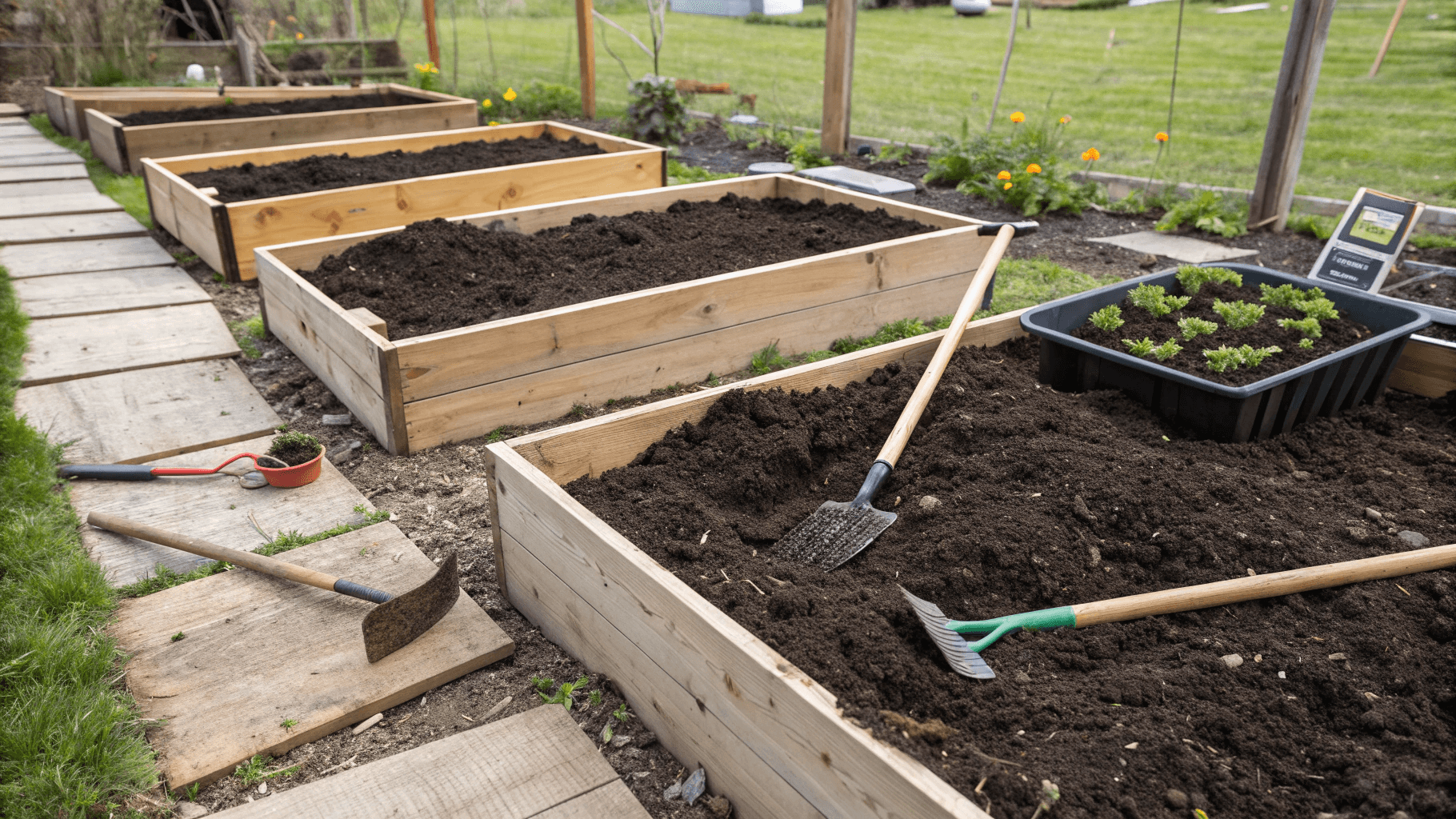
Now that you understand the difference, it’s worth being concrete about what you’d actually experience if you went ahead and filled your raised bed with bagged potting mix.
Rapid Compaction and Settlement
One of the most immediate problems gardeners notice is dramatic settling. Potting soil is full of light, airy materials that compress significantly when wet. A raised bed filled to the brim with potting mix in spring may be 3 to 5 inches lower by midsummer, even without any foot traffic compressing it. Over time, the peat moss and bark break down, the perlite floats to the top or washes to the sides, and you’re left with a dense, less aerated medium that’s harder for roots to penetrate.
Poor Water Retention at Volume
Here’s a paradox: potting soil that drains beautifully in a 12-inch pot can actually become hydrophobic at larger volumes, especially as peat moss dries out. Peat moss, when it dries completely, repels water rather than absorbing it — a phenomenon called hydrophobicity. In a small pot, you’d notice this as water running straight through, and you’d know to soak the pot or re-wet the medium. In a raised bed, the problem hides below the surface. The top few inches might feel moist while the deeper layers are bone dry, leading to stressed plants despite regular watering.
Nutrient Depletion
Most commercial potting soils include a small amount of starter fertilizer — typically enough for 4 to 6 weeks of growth. After that, the mix is essentially inert. In a container, you’d compensate with regular liquid fertilizing. But in a raised bed, gardeners often expect the soil itself to support plant nutrition more autonomously, the way healthy garden soil does through microbial activity, organic matter decomposition, and natural nutrient cycling. Potting soil has none of those systems. You’ll find yourself fertilizing far more frequently than you would with a well-composted bed mix, and deficiencies can still sneak up on you mid-season.
The Cost Problem
Filling a raised bed with bagged potting soil is expensive. A standard 4×8 foot raised bed that’s 12 inches deep holds roughly 32 cubic feet of material — or about 240 gallons. At typical prices for quality potting mix, filling that bed can cost significantly more than using a custom blend of topsoil, compost, and amendments. For one or two small beds, the cost difference might be manageable. For anyone building multiple beds or working with larger dimensions, the expense of potting soil alone quickly becomes prohibitive.
When Using Potting Soil in a Raised Bed Makes Sense
There are legitimate scenarios where potting soil plays a useful role in raised bed gardening — just rarely as the sole ingredient.
Topping Off and Filling Small Gaps
When you’re adding a few inches to an existing raised bed that’s settled, or filling in around newly transplanted starts, potting mix works well as a top-dressing or gap-filler. It’s easy to work with, blends smoothly with existing media, and provides a light, friable surface that seedlings appreciate during germination.
Rooftop Gardens and Weight-Restricted Structures
If your raised bed is sitting on a rooftop, balcony, or deck with weight limits, a lightweight potting mix might genuinely be your best option — even at scale. In these situations, using standard topsoil or compost could structurally compromise the surface beneath the bed. Potting mix’s low density becomes an asset rather than a liability. You’ll need to compensate for its nutritional shortcomings with regular amendments, but the weight savings are real and necessary.
Short-Term or Single-Season Growing
If you’re setting up a temporary raised bed for one growing season — a rental situation, a container-style “bed” that’s actually a fabric bag or large planter, or an experiment before committing to a permanent installation — potting mix is a fine choice. The concerns about long-term compaction, biology, and sustainability are less relevant when you’re not planning to run the bed for years.
Blending with Other Materials
The most practical use of potting mix in a raised bed is as one component in a blend. Many experienced gardeners mix 30 to 50 percent potting soil with topsoil, compost, and other amendments to get the best of both worlds — the lightness and drainage of potting mix combined with the nutrition, biology, and long-term stability of compost and good soil.
The Ideal Raised Bed Soil Mix: What to Use Instead
If potting soil alone isn’t the answer, what is? Here’s a look at what goes into a genuinely excellent raised bed growing medium.
The Core Ingredients for a High-Performance Bed
A well-built raised bed mix should include:
- Compost (25–50%): This is the foundation of any great raised bed. Well-aged compost provides slow-release nutrition, feeds beneficial soil microbes, improves moisture retention, and gets better with every season. Use a combination of homemade compost, mushroom compost, and aged manure if you can.
- Topsoil (25–30%): High-quality topsoil provides mineral content and a natural soil matrix that potting mixes lack. Look for screened topsoil without clay clumps.
- Perlite or coarse vermiculite (15–25%): These materials maintain drainage and aeration, especially important in a deep bed where lower layers can become compacted.
- Peat moss or coconut coir (15–20%): Either one improves moisture retention and texture. Coconut coir is the more sustainable option and doesn’t have peat’s hydrophobicity issues.
Adjusting for Your Climate and Crops
The ideal ratios shift depending on where you live and what you’re growing. Gardeners in hot, dry climates benefit from more moisture-retentive materials like coir and extra compost. Those in rainy, humid regions should lean toward more perlite and coarser drainage materials to prevent waterlogging. Root vegetables like carrots and parsnips appreciate a mix with very little clay and more coarse material to allow straight downward growth. Leafy greens and herbs are more forgiving of a wider range of blends.
Amending and Improving Over Time
One of the real advantages of a raised bed over a container is that you can keep improving the growing medium year after year. Each fall, top-dress with 1 to 2 inches of finished compost. Every few years, add a fresh layer of topsoil or refresh the perlite. Over time, a well-maintained raised bed becomes richer and more productive than it was when you first built it — something that simply never happens with potting soil used alone.
How to Amend Potting Soil If It’s Already in Your Bed
If you’ve already filled your raised bed with potting soil and you’re working with what you have, all is not lost. There are practical steps you can take to improve the situation.
Adding Compost to Boost Biology and Nutrition
Work in as much finished compost as you can — ideally 30 to 40 percent of the total volume. Compost introduces the microbial life that potting soil lacks, provides slow-release nutrients, and improves the overall structure of the medium. If mixing isn’t possible without disturbing established plants, top-dress with an inch or two and let worms and rain work it in over time.
Incorporating Topsoil for Mineral Content
Mixing in some screened topsoil — even 20 to 25 percent of the bed volume — goes a long way toward giving your plants the mineral content and natural soil matrix they’d get from a more conventional bed mix. Blend it in with a fork or broadfork, taking care not to disturb root systems.
Using Slow-Release Organic Fertilizers
Since potting soil’s starter nutrients exhaust quickly, supplement with granular slow-release organic fertilizers worked into the top few inches of the bed. Products based on feather meal, bone meal, kelp, or fish hydrolysate provide a broader nutritional profile and feed the soil biology as they break down.
Mulching the Surface
Applying a 2-inch layer of organic mulch — straw, wood chips, shredded leaves — over the bed surface slows moisture evaporation, moderates soil temperature, and as it breaks down, contributes organic matter that improves the potting mix over time. This is especially important in a potting-soil-heavy bed that’s prone to drying out quickly.
Final Verdict: Should You Use Just Potting Soil in a Raised Bed?
The honest answer is that using only potting soil in a raised bed is a workable short-term solution, but it’s not the path to a thriving, sustainable garden. The compaction, cost, poor water behavior at volume, and lack of biological activity all work against you over time. You’ll spend more money, do more work, and get less impressive results than you would with a more thoughtfully blended medium.
The better approach is to use potting soil as one ingredient in a balanced blend — or to build your raised bed mix from scratch using compost, topsoil, and drainage materials. If you’re already committed to a potting-soil-filled bed, the amendments described above will meaningfully improve your results. Either way, knowing what your raised bed actually needs is the first step toward growing food and flowers that genuinely thrive.
The goal of any raised bed is to give your plants better conditions than they’d find in the ground — better drainage, better aeration, more nutrition, more control. With the right mix, a raised bed delivers on all of that. With potting soil alone, you’re only getting part of the way there.

- 10 Best Garden Hose For Small Yard 2026 - October 17, 2026
- 10 Best Garden Hose For Siphoning 2026 - October 16, 2026
- 10 Best Garden Hose For Small Garden 2026 - October 16, 2026