Fertilizing tomatoes at the right time is the single most important factor between a modest harvest and a truly bountiful one. The short answer: Fertilize tomatoes at planting with a balanced granular fertilizer, switch to a liquid fertilizer weekly when the first flowers appear, side‑dress every 3–4 weeks throughout the season, and stop fertilizing 4–6 weeks before the first expected frost. For container tomatoes, feed weekly during flowering and fruiting. This guide provides a complete, stage‑by‑stage schedule to ensure your tomatoes get the right nutrients at exactly the right time.
When to Start Fertilizing Tomatoes
Timing the first fertilizer application correctly sets the foundation for healthy root development and vigorous growth.
At Planting: The Foundation Feed
When you transplant seedlings into the garden or a larger pot, work a granular fertilizer with a balanced formula such as 10-10-10 or 5-5-5 into the surrounding soil. Place the fertilizer in the bottom of the hole, then cover it with clean dirt to prevent direct contact with the roots. This slow‑release approach provides steady nutrition during establishment. For extra calcium, add crushed eggshells to the planting hole.
Key timing milestones for tomato fertilization:
- At planting: Apply balanced granular fertilizer (10-10-10 or 5-5-5) in the planting hole
- 10–14 days after planting: Apply nitrogen‑containing complexes to stimulate active growth
- At first flowers: Switch to liquid fertilizer applied weekly
- When first fruits enlarge: Side‑dress with nitrate‑nitrogen fertilizer
- Every 3–4 weeks: Side‑dress throughout the growing season
- 4–6 weeks before frost: Stop all fertilization
The First Two Weeks: Establishment Stage
From day 7 to day 25 after transplanting, the focus is on root establishment and healthy shoot initiation. During this period, phosphorus, zinc, calcium, magnesium, sulphur, and potassium are most critical. A high‑phosphorus starter fertilizer supports strong root development. Apply a starter solution at the base of each plant at transplant time.
10–14 Days After Planting: The First Boost
Once plants have completed their adaptation period and show no signs of wilting, apply a nitrogen‑containing complex to stimulate active growth. This first boost supports the development of a strong canopy before flowering begins. One treatment may be all that is needed in the first month after transplanting.
Avoid Fertilizing Too Early
Never fertilize seedlings before they have developed their first set of true leaves. Young seedlings do not need fertilizer and can be burned by excess nutrients. Wait until transplanting to begin your fertilization program.
When to Fertilize During the Growing Season
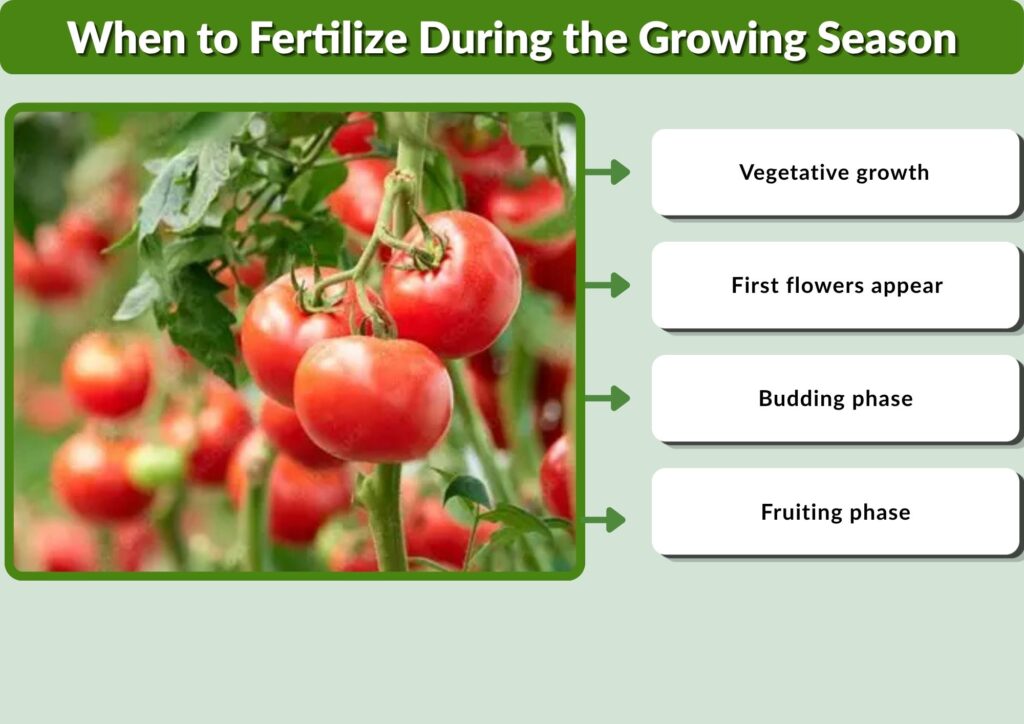
As tomato plants progress through distinct growth stages, their nutrient needs change. Each stage demands a different fertilizer approach.
Vegetative Growth Stage (Weeks 3–6)
From day 30 to day 60 after transplanting, the plant focuses on canopy development and balanced vegetative growth. During this stage, nitrogen, potassium, calcium, and micronutrients are most important. Apply a nitrogen‑rich fertilizer every 3–4 weeks to support leaf and stem development. Common ratios include 8‑4‑6 to 10‑5‑5 applied as side‑dressing about 2–3 weeks after transplant.
Flowering Stage: The Critical Switch
When you see the first flowers appear, it is time to switch to a liquid fertilizer applied at least once a week. At this stage, reduce nitrogen and increase phosphorus and potassium to support bloom and fruit set. Liquid fertilizers are preferred because they are easily absorbed and quickly reach needy plants. During the budding phase, switch to phosphorus fertilizers that promote root system strengthening and bud formation.
Fertilizer timing by growth stage:
- Vegetative growth (weeks 3–6): Nitrogen‑rich fertilizer every 3–4 weeks
- First flowers appear: Switch to liquid fertilizer; apply weekly
- Budding phase: Phosphorus fertilizers for root and bud development
- Flowering phase: Foliar feed with boric acid to maintain fruit set
- Fruit set: Side‑dress when first fruits begin to enlarge
- Fruiting phase: Potassium fertilizers for sugar content and storage quality
Fruit Set and Enlargement Stage
When the first cluster of fruit begins to enlarge, side‑dress with a fertilizer high in nitrate nitrogen. Calcium nitrate is an excellent choice, applied at the rate of one pound per 100 feet of row and repeated every 10 days to two weeks. This timing ensures that developing fruits receive adequate calcium to prevent blossom end rot.
Fruiting and Ripening Stage
During fruiting, apply potassium fertilizers to increase sugar content in the fruits and improve their storage qualities. Potassium is essential for fruit size, color, and flavor. Continue fertilizing every 3–4 weeks during this stage. For indeterminate varieties that fruit over many weeks, sustained feeding is essential.
How Often to Fertilize Tomatoes
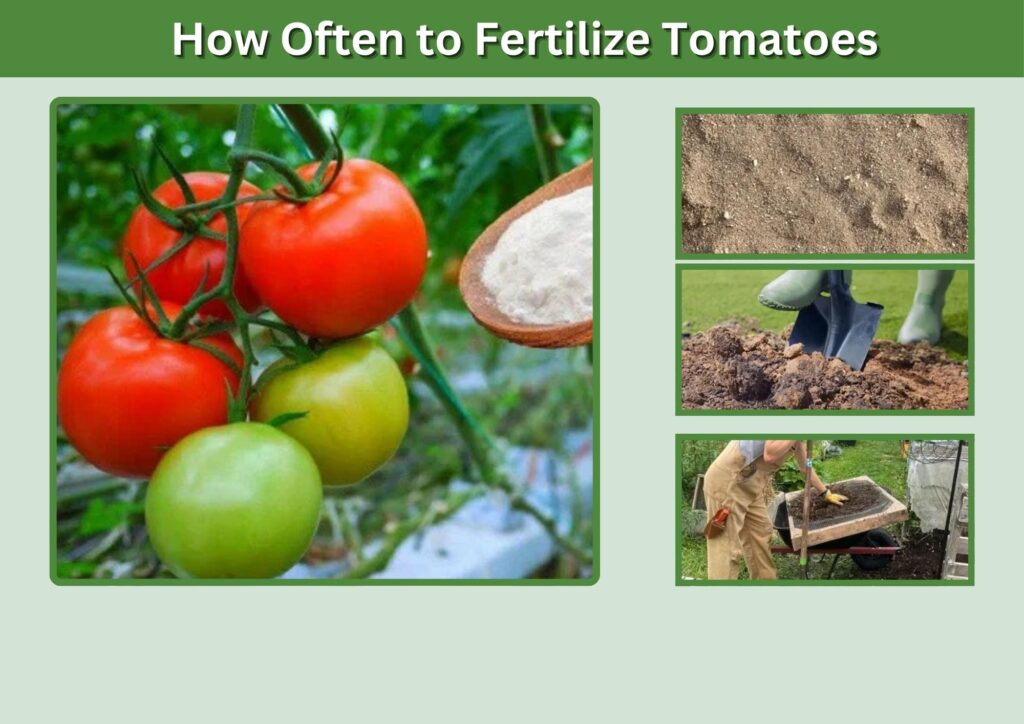
Fertilizer frequency depends on your soil type, growing method, and the plant’s growth stage.
In‑Ground Tomatoes: General Frequency
For in‑ground tomatoes, fertilize every 3–4 weeks throughout the growing season. If you have sandy soil, fertilize every 3–4 weeks; if you have clay soil, every 4–6 weeks is sufficient. Sandy soil drains quickly and nutrients leach faster, requiring more frequent applications. Clay soil holds nutrients longer, so less frequent feeding is needed.
Container Tomatoes: More Frequent Feeding
Container tomatoes need more frequent fertilization because nutrients wash out with frequent watering. Feed container tomatoes every 1–2 weeks early in the season, then weekly during flowering and fruiting. In grow bags and containers, water‑soluble fertilizers often need to be applied every 7–10 days at label strength. Start regular fertilizer applications between two to six weeks after planting, depending on the potting media and watering schedule.
How often to fertilize:
- In‑ground (sandy soil): Every 3–4 weeks
- In‑ground (clay soil): Every 4–6 weeks
- Containers (early): Every 1–2 weeks
- Containers (flowering/fruiting): Weekly
- Grow bags: Every 7–10 days
- During heavy fruiting: Every 2–3 weeks with liquid feed
Side‑Dressing Schedule
Side‑dress tomatoes every three to four weeks throughout the season. The first side‑dress application should be made one to two weeks before the first tomato ripens. Apply again two weeks after picking the first ripe tomato. A third application should be made one month after the second side‑dressing.
Adjusting Based on Plant Response
Feed every 3–4 weeks early on, depending on plant response. If plants are dark green and growing vigorously, you may not need additional fertilizer. If leaves are pale or growth is slow, increase feeding frequency. One treatment may be all that is needed in the first month after transplanting.
Fertilizer Frequency: Container vs. In‑Ground
| Growing Method | Early Season | Flowering/Fruiting | Key Considerations |
|---|---|---|---|
| In‑ground (sandy soil) | Every 3–4 weeks | Every 3–4 weeks | Nutrients leach faster; more frequent feeding needed |
| In‑ground (clay soil) | Every 4–6 weeks | Every 4–6 weeks | Holds nutrients longer; less frequent feeding |
| Containers | Every 1–2 weeks | Weekly | Nutrients wash out with frequent watering |
| Grow bags | Every 7–10 days | Every 7–10 days | Even faster drying; more frequent feeding needed |
| Raised beds | Every 3–4 weeks | Every 3–4 weeks | Similar to in‑ground; adjust based on soil type |
When to Stop Fertilizing Tomatoes
Knowing when to stop fertilizing is just as important as knowing when to start. Late fertilization can harm your plants and reduce yields.
Stop 4–6 Weeks Before First Frost
Stop fertilizing tomatoes at least two to four weeks before the first expected frost. Fertilizers, especially those high in nitrogen, encourage new growth. This new growth is tender and susceptible to frost damage. Stopping fertilization allows plants to focus energy on ripening existing fruit rather than producing new foliage.
Regional Timing
The right time to stop fertilizing can be as early as July in some regions, whereas for others, stopping around Labor Day is a good rule of thumb. In general, cease all fertilization at the end of summer to prevent plants from becoming over‑fertilized or stressed. Late fertilizing delays fruit formation and can lead to fertilizer burn.
Signs It Is Time to Stop
When fruits begin to ripen and the season is winding down, reduce or stop fertilizer applications. Too much nitrogen at this stage encourages new growth instead of fruit ripening. If you notice lush green growth with few ripening fruits, it is a sign that you should stop fertilizing.
What to Do Instead
Instead of fertilizing late in the season, focus on maintaining even soil moisture to support fruit ripening. Apply a final side‑dressing of compost in late fall for a slow‑release nutrient boost, but avoid high‑nitrogen fertilizers that stimulate unwanted growth.
When Is the Best Time of Day to Fertilize?
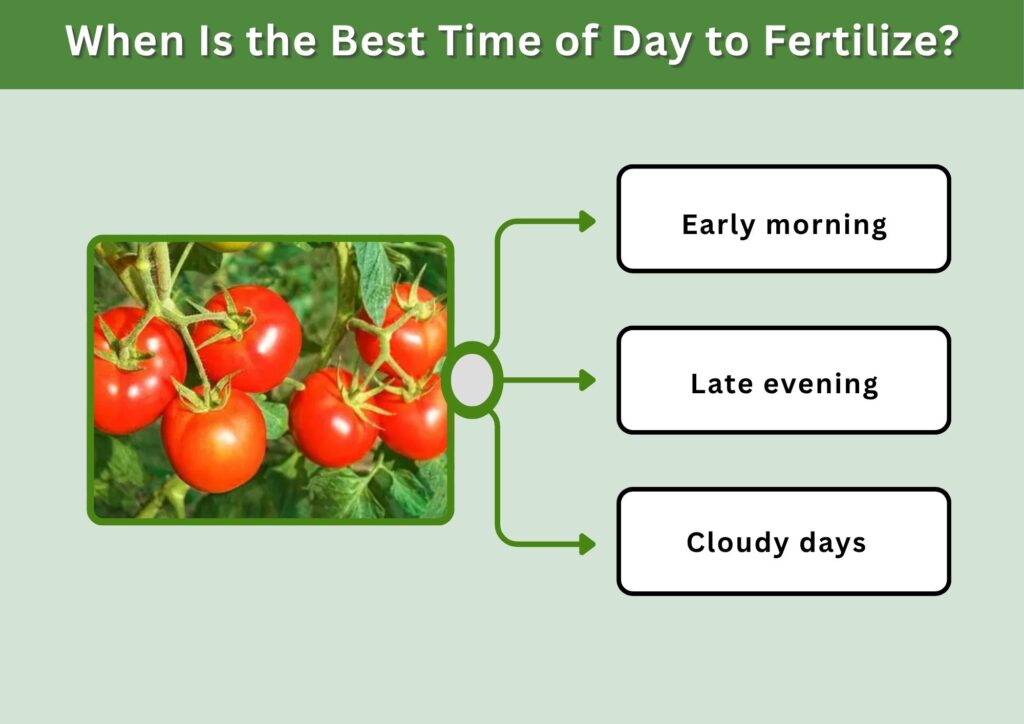
The timing of fertilizer application within the day affects how well plants absorb nutrients and whether they suffer damage.
Early Morning: The Best Choice
The best time to fertilize is early in the morning. Morning application allows plants to absorb nutrients throughout the day when they are actively photosynthesizing. It also gives foliage time to dry if any fertilizer touches leaves. Water plants after fertilizing to wash nutrients down to the roots.
Late Evening: A Good Alternative
Late evening is the second‑best option. Fertilizing in the cooler evening hours minimizes stress on plants and reduces the risk of leaf burn. Avoid fertilizing during the heat of the day.
Best time of day to fertilize:
- Early morning: Best option; allows absorption throughout the day
- Late evening: Good alternative; cooler temperatures reduce stress
- Avoid: Mid‑day heat; fertilizer can burn leaves
- Cloudy days: Also suitable; less evaporation stress
What to Avoid
Never fertilize vegetable plants during the heat of the day. Fertilizer applied in hot afternoon sun can burn leaves if it touches them. Apply fertilizer on soil that is already moist. Water your plants after you fertilize to wash nutrients down to the roots.
Applying Fertilizer in Hot Weather
Avoid heavy applications during heat waves or drought. Apply fertilizer during cooler parts of the day. If temperatures are extreme, consider reducing the fertilizer concentration or skipping an application until conditions improve.
Frequently Asked Questions About Fertilizing Tomatoes
1. When should I start fertilizing tomato plants?
Start fertilizing at planting time with a balanced granular fertilizer worked into the planting hole. Apply a starter solution at transplant. For seedlings, wait until they have developed their first set of true leaves before any fertilizer application. One treatment may be all that is needed in the first month after transplanting.
2. How often should I fertilize tomato plants?
For in‑ground tomatoes, fertilize every 3–4 weeks. In sandy soil, fertilize every 3–4 weeks; in clay soil, every 4–6 weeks. For container tomatoes, fertilize every 1–2 weeks early, then weekly during flowering and fruiting. Side‑dress every three to four weeks throughout the season.
3. When should I switch from nitrogen to phosphorus/potassium fertilizer?
Switch when you see the first flowers appear. At this stage, reduce nitrogen and increase phosphorus and potassium. Too much nitrogen at flowering results in lots of foliage but very little fruit. Use a liquid fertilizer for faster absorption during this critical period.
4. When should I stop fertilizing tomatoes?
Stop fertilizing 4–6 weeks before the first expected frost. In most regions, this means stopping around late summer or early fall. Fertilizers high in nitrogen encourage new growth that is susceptible to frost damage. Stopping fertilization allows plants to focus on ripening existing fruit.
5. What is the best time of day to fertilize tomatoes?
The best time is early morning. Late evening is also acceptable. Avoid fertilizing during the heat of the day, as fertilizer can burn leaves in hot afternoon sun. Apply fertilizer on moist soil and water after application.
6. Do container tomatoes need different fertilizing timing than garden tomatoes?
Yes. Container tomatoes need more frequent fertilization because nutrients wash out with frequent watering. Feed containers every 1–2 weeks early, then weekly during flowering and fruiting. In‑ground tomatoes typically need fertilizer every 3–4 weeks. Start regular fertilizer applications two to six weeks after planting containers.
Tomato Fertilizer Schedule by Growth Stage
| Growth Stage | Timing | Fertilizer Type | Frequency | Key Nutrient Focus |
|---|---|---|---|---|
| Planting | Day 1 | Balanced granular (10-10-10 or 5-5-5) | At planting | Phosphorus for roots |
| Establishment | Days 7–25 | High‑phosphorus starter | At transplant + 7–10 days | Phosphorus, Zinc, Calcium |
| Vegetative Growth | Days 30–60 | Nitrogen‑rich (8‑4‑6 to 10‑5‑5) | Every 3–4 weeks | Nitrogen for canopy |
| Flowering | First flowers appear | Liquid fertilizer (lower N, higher P & K) | Weekly | Phosphorus for blooms |
| Fruit Set | First fruits enlarge | Nitrate‑nitrogen (calcium nitrate) | Every 10–14 days | Calcium for fruit development |
| Fruiting | Throughout fruiting | Potassium‑rich fertilizer | Every 3–4 weeks | Potassium for flavor and storage |
| End of Season | 4–6 weeks before frost | Stop fertilizing | N/A | Allow fruit ripening |
Final Verdict: Mastering Fertilizer Timing
Fertilizing tomatoes at the right time is the cornerstone of a productive harvest. Start at planting with a balanced granular fertilizer to support root establishment. Apply a nitrogen‑rich fertilizer every 3–4 weeks during vegetative growth. When the first flowers appear, switch to a liquid fertilizer applied weekly. Side‑dress every 3–4 weeks throughout the season. For containers, feed weekly during flowering and fruiting. Stop fertilizing 4–6 weeks before the first expected frost to allow fruits to ripen fully.
The key is matching fertilizer type and frequency to the plant’s growth stage. Too much nitrogen at flowering delays fruit set; too little potassium during fruiting reduces flavor. Apply fertilizer in the early morning on moist soil, and water after application. With proper timing, your tomatoes will reward you with larger fruits, sweeter flavor, and a truly bountiful harvest.

- How to Grow Microgreens Without Soil Indoors: Easy Home Method - October 5, 2026
- Microgreens vs. Sprouts: Key Differences, Nutrition, Safety, and Which One to Eat - October 5, 2026
- 10 Best Garden Tools For Weed Removal 2027 - October 3, 2026