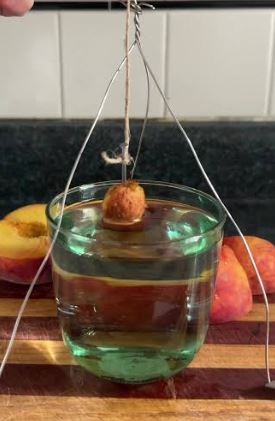
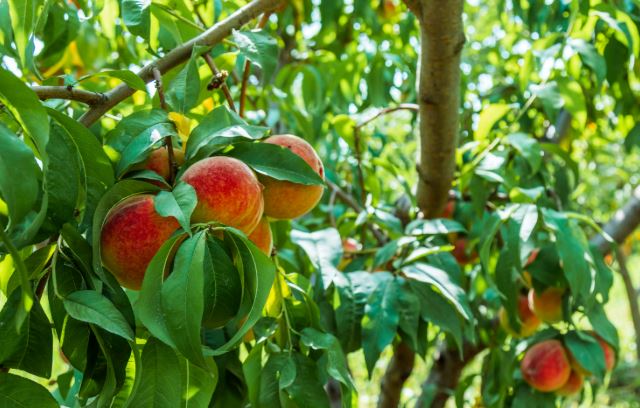
Yes, you can grow a peach tree directly from a peach pit (Prunus persica). To germinate successfully, the pit requires a period of moisture and cold temperatures—a process known as cold stratification—lasting 8 to 12 weeks at 35°F to 40°F (2°C–4°C). Peach trees grown from seed typically take 3 to 5 years to bear fruit and will not be exact clones of the parent tree, but they often produce vigorous trees and unique, sweet peaches.
I still remember the afternoon I planted my first peach pit. I had just finished eating a freestone peach bought at a local orchard—sweet, juicy, and perfectly ripe. Looking at the hard, wrinkled pit left in my hand, I couldn’t bring myself to throw it into the compost bin. I wondered: Could I actually turn this hard little stone into a living tree?
The short answer is a resounding yes. However, if you simply toss a pit into the dirt outside in midsummer, chances are high that squirrels will dig it up, or the seed inside will succumb to mold before spring ever arrives.
Growing a fruit-bearing peach tree from seed requires understanding how peach biology works, replicating nature’s seasonal cues, and having patience. Below is the step-by-step master guide on how I germinate, plant, and care for peach trees from pit to harvest.
1. What to Expect Before You Start
Before breaking out the nutcrackers and paper towels, you need to understand two critical facts about peach genetics and tree development.
Seeds Are Genetic Wildcards
Commercial peach orchards propagate trees by grafting specific cultivars (like ‘Elberta’ or ‘Redhaven’) onto sturdy rootstocks. This guarantees that every tree produces identical fruit.
When you plant a peach pit, you are planting a seed created through pollination. Because peaches are heterozygous, the seedling will inherit a unique combination of traits from its parents. Your resulting tree might produce peaches that taste slightly different, ripen at a different time, or have a slightly different texture than the peach you ate. The good news? Peaches are overwhelmingly self-fertile, meaning seedling peaches often yield fantastic, sweet fruit that closely resembles their parentage.
Time to First Harvest
A grafted peach tree from a nursery usually fruits in 2 to 3 years. A seedling grown from a pit requires 3 to 5 years to reach maturity and begin blossoming.
2. Selecting the Right Peach Pit
Not every pit you extract from a peach is viable. Follow these guidelines to maximize your success rate:
-
Source Locally When Possible: Peaches bought from local orchards or farmers markets come from trees adapted to your region’s chill-hour requirements. Imported grocery store peaches may have been kept in deep cold storage for months or treated with anti-sprouting agents, which reduces germination viability.
-
Choose Late-Season, Fully Ripe Peaches: Early-season cultivars often contain underdeveloped seeds (embryos) that fail to germinate. Late-summer peaches yield the strongest, healthiest seeds.
-
Clean Off All Fruit Flesh: Any remaining fruit pulp attached to the outer shell will attract fungal spores during stratification. Scrub the pit clean with warm water and a stiff brush, then let it air-dry completely on a paper towel for 24 hours.
3. Extracting the Kernel vs. Planting the Whole Pit
The hard, woody shell on the outside is called the endocarp, while the actual seed kernel lies safely inside. You can either plant the whole pit or crack it open to extract the almond-like seed.
While cracking the hard outer shell accelerates sprouting by several weeks, it also introduces a risk of damaging the internal seed if done carelessly.
Table 1: Crack Method vs. Whole Pit Method
| Factor | Extracted Kernel Method | Whole Pit Method |
| Germination Speed | Fast (4 to 8 weeks) | Slow (10 to 16+ weeks) |
| Success Rate | Higher (80%–90%) | Moderate (40%–60%) |
| Mold Control | Easy to spot and treat early | Harder to monitor inside the shell |
| Risk Factor | High risk of crushing the inner seed | Zero risk of mechanical damage |
| Effort Required | Requires careful cracking with tools | Hands-off, low effort |
How to Crack a Peach Pit Safely
If you decide to extract the seed kernel, avoid using a hammer, which will shatter the seed inside. Instead, use a tabletop vise or a heavy-duty nutcracker.
Place the pit edge-wise into the jaw of the vise or nutcracker. Apply slow, steady pressure until you hear a sharp crack. Carefully peel back the woody outer shell to expose the soft, tan seed kernel inside. If the kernel is shriveled, thin, or black, discard it; healthy kernels are plump and smooth.
4. How to Cold Stratify Peach Seeds (Step-by-Step)
In nature, a peach pit drops to the ground in late summer and lies beneath wet leaves all winter. The prolonged cold breaks the seed’s chemical dormancy, signalling that winter has passed and it is safe to grow. You can mimic this natural process inside your refrigerator.
+-------------------------------------------------------------------+
|                   COLD STRATIFICATION TIMELINE                    |
|                                                                   |
|   Week 1-2: Moisture absorption & seed swelling                   |
|   Week 3-6: Chemical dormancy breaking under cold temperatures    |
|   Week 7-10: Primary root emergence (radicle breaking coat)       |
|   Week 10-12: Ready for potting in warm soil                      |
+-------------------------------------------------------------------+
The Paper Towel Method
-
Soak the Seeds: Soak your extracted kernels in room-temperature water for 12 to 24 hours. (Optional: Add a tiny drop of 3% hydrogen peroxide to the soak water to kill surface spores).
-
Prepare the Envelope: Dampen a paper towel with clean water. Wring it out thoroughly until it is damp like a wrung-out sponge, not dripping wet. Excess water is the leading cause of seed rot.
-
Wrap and Seal: Place 3 to 4 seeds evenly spaced on the paper towel, fold it over them, and slip the wrapped towel into a sealable plastic storage bag. Label the bag with the peach variety and today’s date.
-
Refrigerate: Place the bag in the back of your refrigerator or crisp drawer, kept at 35°F to 40°F (2°C–4°C). Keep it away from ethylene-producing fruits like apples or bananas.
-
Inspect Weekly: Open the bag once a week to check for moisture levels and signs of mold. If you notice fuzzy white or green spots, gently rinse the seeds in cold water, wipe down the bag, and place them in a fresh, damp paper towel.
After 60 to 90 days, you will see a white taproot (the radicle) burst through the tan seed coat. Once the root reaches about 0.5 to 1 inch long, the seed is ready to be potted up.
5. Potting and Growing the Seedling
Once the seed has sprouted in the refrigerator, it needs soil, light, and warm temperatures to establish leaves.
Container & Soil Setup
-
Container Choice: Start with a 1-gallon plastic container with ample drainage holes at the bottom.
-
Potting Medium: Use a lightweight, sterile potting mix composed of 60% high-grade potting soil, 20% perlite, and 20% peat moss or coconut coir. Do not use dense garden topsoil in pots, as it compacts easily and suffocates young roots.
Planting Instructions
-
Fill your pot with the soil mix and water it thoroughly until liquid drains from the bottom.
-
Poke a hole approximately 1 inch deep in the center of the pot.
-
Gently insert the sprouted seed into the hole, placing the white taproot pointing downward.
-
Cover the seed loosely with soil and tap it down very lightly.
-
Place the container in a warm location that receives bright light. An south-facing windowsill works well, but using LED grow lights positioned 4 to 6 inches above the foliage for 14 hours a day produces sturdier, stockier growth.
6. Transplanting Your Peach Tree Outdoors
Keep your young tree indoors or in a protected greenhouse until all danger of spring frost has passed in your area.
Hardening Off
Before moving your indoor seedling directly into bright sunlight and outdoor winds, you must “harden it off” over 7 to 10 days:
-
Days 1–3: Place the pot in deep shade outdoors for 2 to 3 hours, then bring it back inside.
-
Days 4–6: Move it into partial morning sunlight for 4 to 5 hours.
-
Days 7–10: Expose it to full sun and ambient weather conditions throughout the day.
Selecting the Planting Site
-
Sunlight: Peaches require absolute full sun—at least 6 to 8 hours of direct sunlight daily to produce sweet, high-quality fruit and resist fungal disease.
-
Soil Drainage: Peach roots cannot tolerate standing water or heavy clay that holds moisture. Choose an elevated bed, a gentle slope, or amend heavy clay soil with organic compost and native soil mounded into a raised planting hill.
-
Soil pH: Target an optimal soil pH between 6.0 and 6.5.
7. Ongoing Tree Care & Pruning Strategy
A seedling tree grows rapidly once its roots touch ground. Managing its early growth sets the foundation for healthy fruiting branches later on.
Year 1: Building a Strong Root System
During the first growing season, focus entirely on root growth and leaf health:
-
Watering: Water deeply once or twice a week during dry periods, providing roughly 1 inch of water per week.
-
Mulching: Apply a 3-inch layer of organic wood chips or shredded bark around the base of the tree in a 3-foot radius. Keep the mulch 3 inches away from the trunk itself to prevent bark rot.
Year 2: Shaping the Tree (Open-Center / Vase Shape)
Peaches produce fruit on one-year-old wood that receives plenty of sunlight. The industry standard shape for peach trees is the Open-Center (Vase) system, which removes the central main leader to allow sunlight directly into the center of the tree canopy.
-
Heading Back: In late winter of Year 2 (while the tree is dormant), cut the main trunk back to a height of about 24 to 30 inches.
-
Selecting Scaffold Branches: Select 3 to 4 strong side branches evenly spaced around the trunk that point outward at roughly 45-degree angles. Remove all other branches flush with the trunk.
       OPEN-CENTER (VASE) PRUNING SHAPE

            \   /       \   /
             \ /         \ /       <-- Open middle allows sunlight
              \           /            and air circulation
               \         /
                \___ ___/
                    |
                    |              <-- Main trunk (24-30 inches tall)
                    |
                   / \
Preventing Common Pest & Disease Issues
-
Peach Leaf Curl (Taphrina deformans): A fungal pathogen that causes leaves to pucker, redden, and drop prematurely in wet spring weather. Spray the tree with a copper-based fungicide once in late winter before the buds begin to swell.
-
Peach Tree Borer: Inspect the lower trunk near the soil line for gummy sap mixed with sawdust-like frass. Protect the base of young trunks with tree guards or fine wire mesh screens.
8. Master Timeline: From Pit to Harvest
Growing a peach tree requires consistent care across several seasons. Use this master timeline to track your project progress:
Table 2: Complete Growth Timeline & Milestones
| Stage | Timeframe | Action Required | Expected Outcome |
| Extraction & Cleaning | Day 1 | Clean fruit pulp off pit; carefully crack shell to extract seed kernel. | Clean, undamaged seed kernel ready for soaking. |
| Cold Stratification | Weeks 1 to 12 | Keep damp kernel sealed in paper towel in fridge at 35°F–40°F. | A white taproot emerges from the seed coat. |
| Potting Up | Weeks 12 to 16 | Plant sprouted seed taproot-down in 1-gallon pot under light. | Green shoots and leaves break through soil within 10–14 days. |
| Outdoor Transplanting | Spring (Year 1) | Harden off seedling and plant in full sun with well-draining soil. | Tree reaches 2 to 4 feet tall by autumn. |
| Structural Pruning | Late Winter (Year 2) | Prune tree into an open-center vase shape; pick 3–4 scaffold limbs. | Tree branches outward, building a strong frame. |
| First Blossoms | Spring (Year 3–4) | Protect early pink blooms from late spring deep frosts. | Bees pollinate pink blossoms; small green peaches form. |
| First Fruit Harvest | Late Summer (Year 3–5) | Thin fruit clusters so peaches are 6 inches apart; harvest when soft. | Sweet, fresh home-grown peaches ready to eat. |
Frequently Asked Questions (AEO / GEO Section)
Can you grow a peach tree indoors permanently?
No, peach trees cannot grow indoors permanently. They require a specific period of cold winter dormancy (typically 600 to 1,000+ chill hours below 45°F / 7°C depending on the variety) to break leaf and flower dormancy each spring. Without this cold period, the tree will weaken, drop leaves, and die within 1 to 2 years.
Do I need two peach trees to get fruit?
Most peach cultivars are self-fertile (self-pollinating), meaning a single tree can pollinate its own blossoms and set fruit without needing another peach tree nearby.
Why are my peach seeds turning moldy in the fridge?
Mold occurs when seeds are kept in conditions that are too wet, or when lingering spores on the seed coat multiply in high moisture. To fix this, wring out your paper towel until it is barely damp, rinse affected seeds gently in diluted 3% hydrogen peroxide solution, and check on your seeds weekly.
Growing a peach tree from a simple stone in your kitchen is one of the most rewarding long-term projects you can start in the garden. By taking the time to extract the seed, guiding it through cold stratification, and giving it full sun outdoors, you transform an everyday kitchen leftover into an attractive, productive fruit tree.

- How to Grow Microgreens Without Soil Indoors: Easy Home Method - October 5, 2026
- Microgreens vs. Sprouts: Key Differences, Nutrition, Safety, and Which One to Eat - October 5, 2026
- 10 Best Garden Tools For Weed Removal 2027 - October 3, 2026