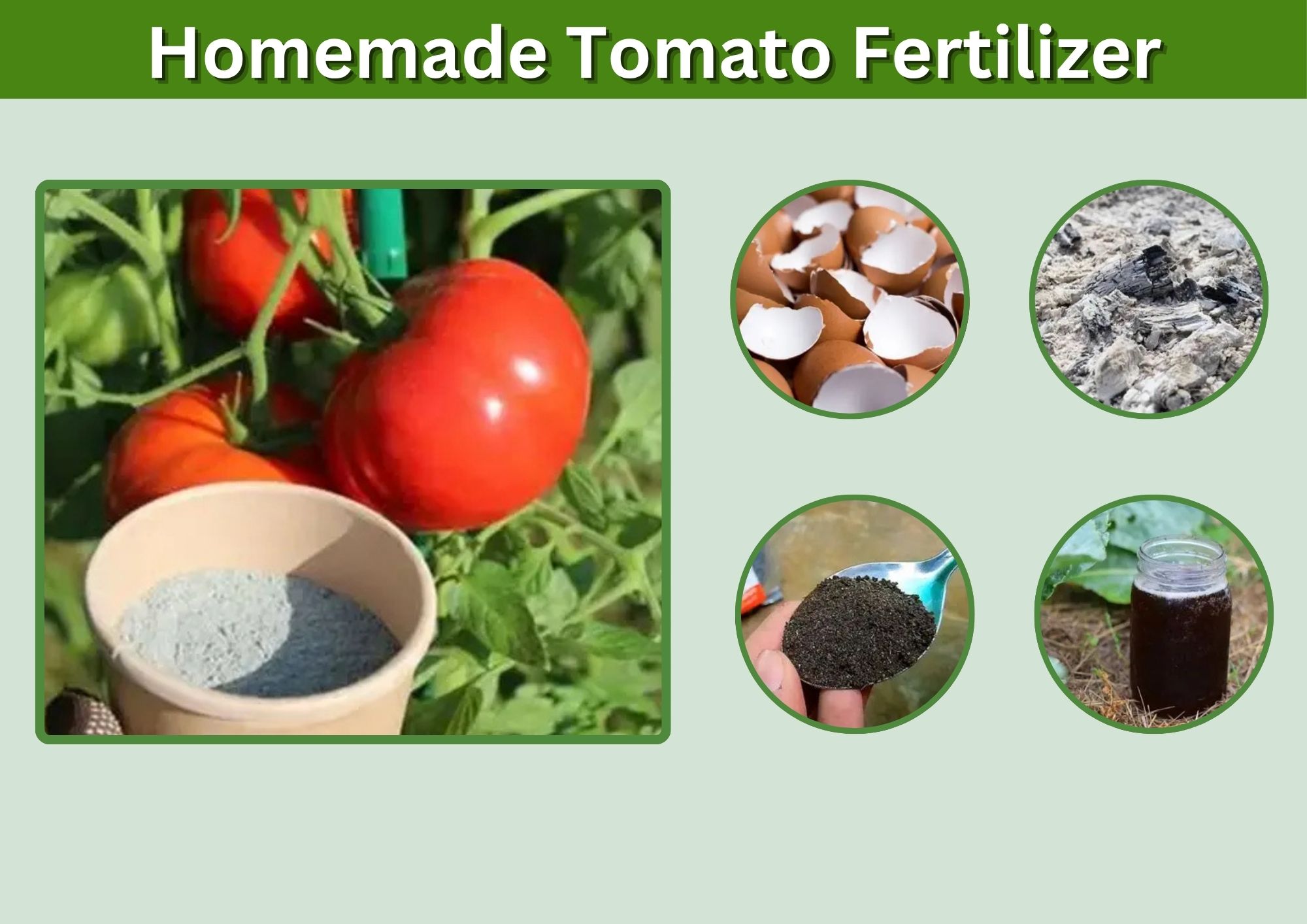
Store-bought synthetic fertilizers can be expensive and may contain chemicals you would rather keep out of your garden. The short answer: The best homemade tomato fertilizers combine kitchen scraps and natural amendments—eggshells for calcium (prevents blossom end rot), banana peels for potassium (boosts fruiting), coffee grounds for nitrogen (supports leafy growth), and Epsom salt for magnesium (enhances chlorophyll production). Compost tea, fish emulsion, and balanced dry mixes of bone meal, blood meal, and kelp meal provide complete nutrition. Apply these natural fertilizers every 2–4 weeks throughout the growing season, switching from nitrogen-rich feeds early to potassium-heavy formulas during flowering and fruiting.
Why Make Your Own Tomato Fertilizer?
Creating your own fertilizer offers numerous advantages over store-bought options, from cost savings to environmental benefits.
Cost-Effectiveness
Commercial organic fertilizers can be expensive, especially when you have multiple tomato plants. Making your own fertilizer from kitchen scraps and common amendments is far more economical. Many ingredients—eggshells, banana peels, coffee grounds—are items you would otherwise throw away. By repurposing these materials, you reduce waste and save money simultaneously.
Environmental Benefits
Homemade fertilizers reduce reliance on synthetic chemicals and minimize packaging waste. Using kitchen scraps and natural amendments supports sustainable gardening practices. Fish emulsion made from fish scraps, for example, recycles waste that would otherwise end up in landfills. Natural fertilizers also feed beneficial soil microorganisms that improve soil health over time.
Key benefits of homemade tomato fertilizer:
- Significantly cheaper than commercial organic fertilizers
- Repurposes kitchen scraps that would otherwise be wasted
- Eliminates synthetic chemicals from your garden
- Reduces packaging waste from store-bought products
- Supports beneficial soil microorganisms
- Allows precise control over nutrient balance
- Produces sweeter, more flavorful tomatoes
Complete Control Over Ingredients
When you make your own fertilizer, you know exactly what goes into it. You can tailor the nutrient balance to your specific soil conditions and plant needs. If your soil test shows low potassium, you can add extra banana peels or wood ash. If calcium is deficient, increase eggshells. This customization is impossible with one-size-fits-all commercial products.
Better Flavor and Plant Health
Organic, homemade fertilizers release nutrients slowly, matching how tomato roots naturally take them up. This gradual release prevents the sudden salt stress that can occur with synthetic quick-fix formulas. The steady nutrient supply improves sugar development in fruit, so your tomatoes taste sweeter and more complex. Plants fed with balanced homemade fertilizers also show improved disease resistance.
Understanding Tomato Nutrient Needs
Before mixing any fertilizer, it is essential to understand what tomatoes need and when they need it.
The NPK Ratio Explained
Every fertilizer label displays three numbers representing the percentage by weight of nitrogen (N), phosphorus (P₂O₅), and potassium (K₂O). Nitrogen builds leaf and stem tissue—too much delays flowering. Phosphorus supports root development, flowering, and fruit set. Potassium improves fruit size, color, and stress tolerance.
Nutrient roles in tomato growth:
- Nitrogen (N): Drives leaf and stem growth; essential for chlorophyll
- Phosphorus (P): Supports root development, flowering, and fruit set
- Potassium (K): Improves fruit size, flavor, color, and disease resistance
- Calcium (Ca): Prevents blossom end rot; strengthens cell walls
- Magnesium (Mg): Central to chlorophyll production
- Sulfur (S): Supports protein synthesis and enzyme function
Nutrient Needs by Growth Stage
Vegetative growth (early season): Higher nitrogen for leaf and stem development. Flowering stage: Reduce nitrogen, increase phosphorus for bloom support. Fruiting stage: Increase potassium for fruit size, flavor, and quality. The ideal NPK ratio for tomatoes is typically between 5-10-10 and 10-20-20, depending on the growth stage.
The Calcium Connection
Calcium is critical for preventing blossom end rot—the dark, sunken spots that appear on the bottom of tomato fruits. Eggshells are an excellent source of calcium. Crushed eggshells added to the soil release calcium slowly throughout the growing season. For quicker results, make eggshell powder or tea.
The Magnesium Factor
Magnesium is the central atom in chlorophyll, the molecule that makes plants green and enables photosynthesis. Epsom salt (magnesium sulfate) provides a readily available source of magnesium. A monthly Epsom salt solution can green up tomato plants and improve overall vigor.
Essential Ingredients for Homemade Tomato Fertilizer
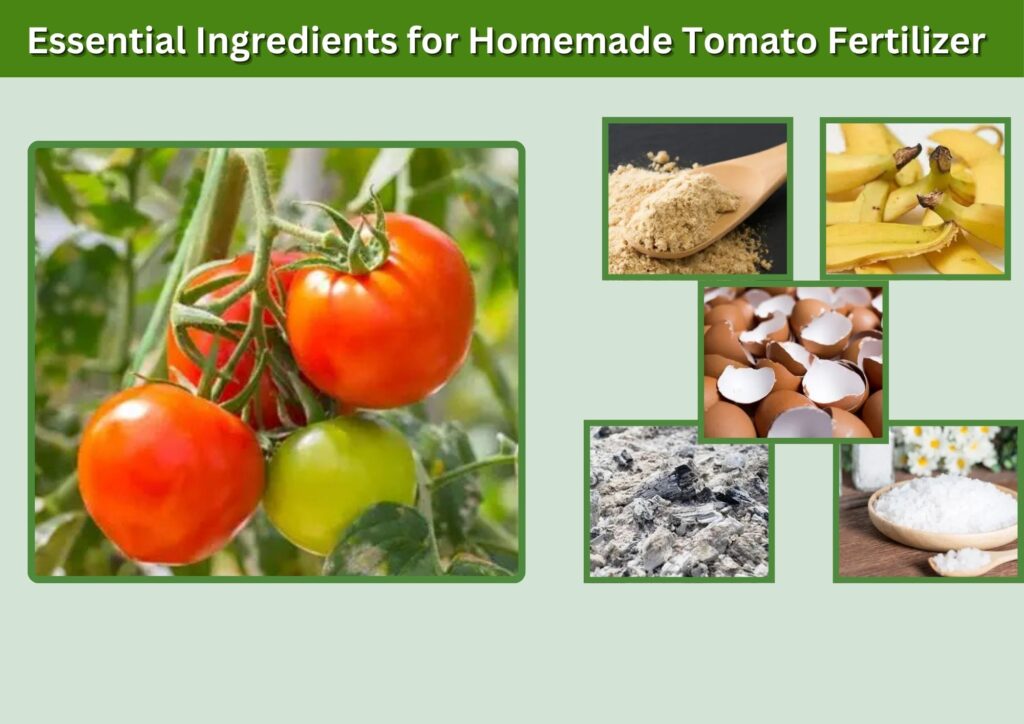
Understanding each ingredient’s role helps you create balanced, effective fertilizers tailored to your plants’ needs.
Eggshells: Calcium Powerhouse
Eggshells are full of calcium, which strengthens cell walls and prevents blossom end rot. To prepare, wash eggshells, dry them in the oven at 325°F for about an hour, then crush into a fine powder. Mix powder into soil or sprinkle around the base of plants every few weeks. NPK ratio: approximately 0-4-0 (phosphorus and calcium).
Common homemade fertilizer ingredients:
- Eggshells: Calcium; prevents blossom end rot; NPK ~0-4-0
- Banana peels: Potassium, magnesium, phosphorus, calcium; NPK ~0-1-5
- Coffee grounds: Nitrogen; improves soil structure; NPK ~2-0.3-0.2
- Epsom salt: Magnesium and sulfur; boosts chlorophyll
- Fish emulsion: Balanced nitrogen, phosphorus, potassium; NPK ~2-4-1
- Bone meal: Phosphorus and calcium; NPK ~3-15-0
- Blood meal: Concentrated nitrogen; NPK ~12-0-0
- Kelp meal: Potassium and trace minerals; NPK ~1-1-2
- Wood ash: Potassium and raises pH; NPK ~0-1-3
- Compost: Balanced nutrients; improves soil structure
Banana Peels: Potassium for Fruiting
Banana peels are packed with potassium, magnesium, phosphorus, and calcium, but contain almost no nitrogen. They are perfect for the flowering and fruiting stages when potassium demand is highest. To make banana peel fertilizer, chop peels and steep in water for several days, then use the infused water to water plants. Alternatively, bury chopped peels directly in the soil around plants.
Coffee Grounds: Nitrogen Boost
Coffee grounds are a good source of immediate nitrogen. They also improve soil drainage and enrich soil structure. Use used coffee grounds by mixing them into the soil or steeping in water to make a compost tea. Apply monthly for best results. NPK ratio: approximately 2-0.3-0.2.
Epsom Salt: Magnesium and Sulfur
Epsom salt (magnesium sulfate) provides magnesium for chlorophyll production and sulfur for protein synthesis. Dissolve 1 tablespoon of Epsom salts in a gallon of water and use the solution once a month to water tomato plants. This simple addition can green up plants and improve overall vigor.
Fish Emulsion: Complete Liquid Feed
Fish emulsion is made from fermented fish scraps and provides balanced nutrition with an NPK rating of around 2-4-1. It contains nitrogen, phosphorus, potassium, calcium, magnesium, and sulfur. To make your own, fill a bucket with fish scraps and water, cover, and let ferment for several weeks. Dilute the resulting liquid before applying. Fish emulsion is ideal for container-grown tomatoes and poor soils.
Bone Meal: Phosphorus for Roots and Blooms
Bone meal is a slow-release source of phosphorus (approximately 3-15-0) essential for root development, flowering, and fruit production. Mix 1–2 tablespoons into the planting hole for each transplant. It also provides calcium, which helps prevent blossom end rot.
Blood Meal: Quick Nitrogen
Blood meal is a concentrated source of nitrogen (approximately 12-0-0 to 14-0-0). Side-dress 1–2 tablespoons per plant mid-season for a leafy growth boost. Avoid overuse—too much nitrogen reduces fruiting. Blood meal is best used during the vegetative growth stage.
Kelp Meal: Trace Minerals and Potassium
Kelp meal provides potassium (approximately 1-1-2) along with essential trace minerals and growth hormones. It boosts plant resilience and productivity. Mix into soil at planting or use as a side-dressing. Liquid kelp can also be used as a foliar spray for quick absorption.
Wood Ash: Potassium and pH Adjustment
Wood ash is a good source of potassium (approximately 0-1-3) and also raises soil pH. Use sparingly—too much can make soil too alkaline. Add a cup of wood ash to your homemade fertilizer mix to boost potassium and phosphorus levels.
Compost: The All-Round Builder
Compost is the single best soil amendment. It provides balanced nutrients, improves soil structure, and supports beneficial microorganisms. Use it as a base for other homemade fertilizers or as a top-dressing around plants.
Homemade Fertilizer Recipes and Application Guide
| Recipe | Ingredients | Best For | Preparation | Application Frequency |
|---|---|---|---|---|
| Dry Mix | Bone meal, blood meal, kelp meal, compost, worm castings | All stages | Mix dry ingredients; store airtight | 1–2 tbsp/plant every 4–6 weeks |
| Compost Tea | Compost or manure + water | All stages | Steep 3–7 days; strain; dilute 1:3–1:8 | Every 1–2 weeks |
| Banana Peel Tea | Banana peels + water | Flowering/fruiting | Steep 1–2 weeks; dilute | Weekly during fruiting |
| Fish Emulsion | Fish scraps + water + molasses | All stages | Ferment 1 month; strain; dilute | Every 2–4 weeks |
| Manure Blend | Manure compost, eggshells, coffee, wood ash, Epsom salt | All stages | Mix with water; steep days; dilute | Every 4–6 weeks |
5 Best Homemade Tomato Fertilizer Recipes
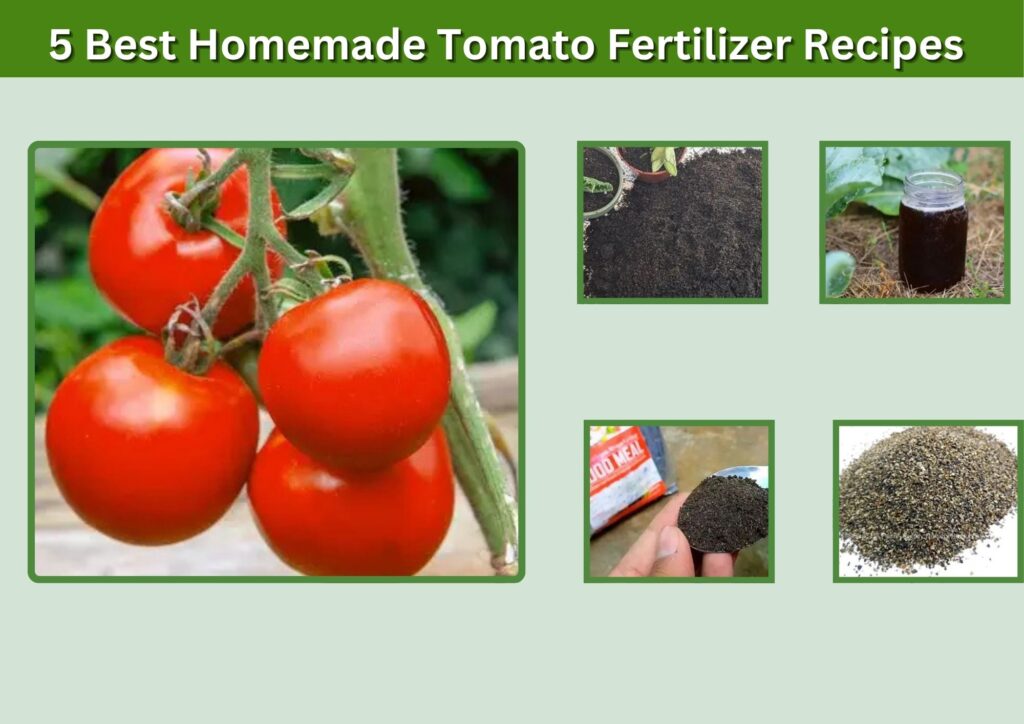
Here are five proven recipes for homemade tomato fertilizers, each designed for different growth stages and application methods.
Recipe 1: All-in-One Dry Fertilizer Mix
This complete dry mix provides balanced nutrition for the entire growing season. Combine 2 cups worm castings, 2 cups compost, 1 cup bone meal, 1 cup blood meal, 1 cup kelp meal, and 1 cup alfalfa meal in a large container. Mix well and store in an airtight container. Apply 1–2 tablespoons around each plant every 4–6 weeks, lightly working into the soil surface.
Recipe 1: Complete Dry Mix
- 2 cups worm castings
- 2 cups compost
- 1 cup bone meal (phosphorus and calcium)
- 1 cup blood meal (nitrogen)
- 1 cup kelp meal (potassium and trace minerals)
- 1 cup alfalfa meal (nitrogen and growth hormones)
- Mix thoroughly; apply 1–2 tbsp per plant every 4–6 weeks
Recipe 2: Liquid Fertilizer Tea (Compost Tea)
Compost tea is a nutrient-rich liquid fertilizer made by steeping compost or manure in water. Fill a five-gallon bucket one-third full with mature compost or well-aged manure. Add water to the top and let steep for several days, stirring occasionally. For a faster version, use a mesh bag filled with compost submerged in water. Dilute the resulting tea before applying: one part tea to three to eight parts water.
Recipe 3: Banana Peel and Dandelion Fertilizer
This potassium-rich liquid fertilizer is perfect for the flowering and fruiting stages. Fill a five-gallon bucket with a lid with banana peels and dandelions. Add water to cover the materials. Let steep for one to two weeks. If left for a week, dilute at one part tea to eight parts water; after two weeks or more, dilute at one to fifteen. Apply around the base of plants.
Recipe 4: Chicken Manure and Eggshell Blend
This nutrient-dense mix is ideal for gardeners with access to poultry manure. Combine 1/3 gallon chicken manure compost, 12 baked and crushed eggshells, 1 cup coffee or tea grounds, 1 cup wood ash, and 1/2 cup Epsom salts in a bucket. Fill with water, stir, and let sit for a few days. Dilute with water as needed before applying around plants.
Recipe 5: Fish Emulsion Fertilizer
Make your own fish emulsion from fish scraps. Fill a five-gallon bucket with a ratio of about three parts water to one part fish scraps. Add brown sugar or molasses to speed fermentation and untreated sawdust for aeration. Cover and leave outside, burping occasionally. After about a month, the fish will break down into a concentrated liquid. Dilute two tablespoons of fish liquid to a gallon of water before applying to soil.
When to Apply Homemade Fertilizer
Timing your fertilizer applications correctly ensures your tomatoes get nutrients when they need them most.
At Planting Time
Incorporate compost, bone meal, and worm castings into the planting hole or surrounding soil at transplant time. This provides a slow-release nutrient foundation for the entire growing season. Mix some of your homemade fertilizer with soil at the bottom of the planting hole before adding a layer of unfertilized soil on top.
Vegetative Growth Stage (First 4–6 Weeks)
Apply nitrogen-rich fertilizers like blood meal or compost tea every 2–3 weeks during early growth. This supports leaf and stem development. Use liquid feeds like fish emulsion or compost tea at half-strength to avoid burning young plants.
Flowering Stage
When the first flowers appear, switch to potassium-rich formulas like banana peel tea or wood ash amendments. Reduce nitrogen to prevent excessive foliage at the expense of flowers. Apply every 1–2 weeks during active growth.
Application timing summary:
- At planting: Bone meal, compost, worm castings in planting hole
- Vegetative growth: Nitrogen-rich feeds every 2–3 weeks
- Flowering: Potassium-rich feeds every 1–2 weeks
- Fruiting: Potassium-heavy feeds every 2–3 weeks
- Stop: 4–6 weeks before first frost
Fruiting Stage
Continue potassium-rich feeding throughout fruit development. Apply banana peel tea, kelp meal, or wood ash every 2–3 weeks. Potassium supports fruit size, color, and flavor. Stop fertilizing 4–6 weeks before the first expected frost to allow fruits to ripen fully.
Frequency Guidelines
Apply liquid homemade fertilizers every 4–6 weeks throughout the growing season. For compost tea, apply every 1–2 weeks during active growth. Use the “little and often” approach for best results. Always water plants before applying any fertilizer to prevent root burn.
How to Apply Homemade Fertilizer
Proper application technique ensures nutrients reach the root zone without damaging the plant.
Soil Drench Method
Pour liquid fertilizer slowly around the base of each plant, avoiding the leaves. For compost tea, mix one part tea with three to four parts clean water and pour slowly around the root zone. This puts nutrients and microbes into the upper soil layer where roots are most active.
Side-Dressing Method
For dry fertilizers, apply in a circle 3–4 inches away from the plant stem. Lightly mix into the soil surface. Water thoroughly after application to help nutrients reach the root zone.
Foliar Spray Method
Some liquid fertilizers can be applied as foliar sprays for quick nutrient absorption. Dilute fish emulsion or kelp extract according to instructions and spray on leaves. Apply in the early morning or late evening to avoid leaf burn. Always test a small area first.
Application best practices:
- Water plants before applying fertilizer
- Apply dry fertilizers 3–4 inches from the stem
- Pour liquid fertilizers slowly around the root zone
- Avoid splashing liquid fertilizer on leaves
- Apply in the early morning or late evening
- Use the “little and often” approach
- Rotate fertilizer types for balanced nutrition
Application Frequency
Apply dry homemade fertilizers every 4–6 weeks. Apply liquid feeds every 1–2 weeks during active growth. For container tomatoes, feed weekly because nutrients leach out with frequent watering.
Safety Precautions
Always dilute concentrated homemade fertilizers before applying. Stronger solutions risk root burn from nutrient overload. Water plants before and after applying fertilizer. Monitor plant health and adjust feeding as needed.
Frequently Asked Questions About Homemade Tomato Fertilizer
1. What is the best homemade fertilizer for tomatoes?
The best homemade fertilizer combines several ingredients. The most important are eggshells (calcium), worm castings (balanced nutrition), fish parts or bone meal (phosphorus), blood meal (nitrogen), wood ashes (potassium), compost, seaweed meal, coffee grounds, and banana peels. Epsom salts and banana peels further enhance soil fertility. A balanced dry mix of bone meal, blood meal, and kelp meal provides complete nutrition.
2. How often should I apply homemade fertilizer to tomatoes?
Apply liquid homemade fertilizers every 4–6 weeks throughout the growing season. For compost tea and other liquid feeds, apply every 1–2 weeks during active growth. Use the “little and often” approach for best results. For dry mixes, apply every 4–6 weeks.
3. Can I use banana peels as fertilizer for tomatoes?
Yes, banana peels make excellent fertilizer for tomatoes. They are packed with potassium, magnesium, phosphorus, and calcium, but contain almost no nitrogen. To use, chop peels and steep in water for several days, then use the infused water to water plants. Alternatively, bury chopped peels directly in the soil around plants. This is particularly beneficial during flowering and fruiting.
4. How do I make compost tea for tomatoes?
To make compost tea, fill a five-gallon bucket one-third full with mature compost or well-aged manure. Add water to the top and let steep for several days, stirring occasionally. For a cleaner version, place compost in a mesh bag and submerge in water. Dilute the resulting tea before applying: one part tea to three to eight parts water. Apply around the root zone every 1–2 weeks.
5. Is Epsom salt good for tomato plants?
Yes, Epsom salt (magnesium sulfate) provides magnesium and sulfur. Magnesium is central to chlorophyll production, and sulfur supports protein synthesis. Dissolve 1 tablespoon of Epsom salts in a gallon of water and use the solution once a month to water tomato plants. This simple addition can green up plants and improve overall vigor. Only use if soil testing confirms magnesium deficiency.
6. Can I use coffee grounds as fertilizer for tomatoes?
Yes, coffee grounds are a good source of immediate nitrogen. They also improve soil drainage and enrich soil structure. Use used coffee grounds by mixing them into the soil or steeping in water to make a compost tea. Apply monthly for best results. Coffee grounds also contain small amounts of phosphorus and potassium.
7. How do I prevent blossom end rot with homemade fertilizer?
Blossom end rot is caused by calcium deficiency. Eggshells are an excellent source of calcium. Crush dried eggshells into powder and mix into soil or sprinkle around the base of plants every few weeks. Bone meal also provides calcium. Maintaining even soil moisture is equally important—inconsistent watering prevents calcium uptake even when soil calcium is adequate.
Quick Reference Tables
Table 1: Homemade Fertilizer Ingredients and Their Benefits
| Ingredient | Primary Nutrient | NPK Approx. | Best Use | Application |
|---|---|---|---|---|
| Eggshells | Calcium | 0-4-0 | Prevents blossom end rot | Powder into soil; every few weeks |
| Banana peels | Potassium | 0-1-5 | Flowering and fruiting | Steep in water; apply weekly |
| Coffee grounds | Nitrogen | 2-0.3-0.2 | Vegetative growth | Mix into soil or compost tea; monthly |
| Epsom salt | Magnesium | 0-0-0 | Chlorophyll production | 1 tbsp/gallon; monthly |
| Fish emulsion | Balanced NPK | 2-4-1 | All stages | Dilute and apply; every 2–4 weeks |
| Bone meal | Phosphorus | 3-15-0 | Root development | Mix into planting hole |
| Blood meal | Nitrogen | 12-0-0 | Leafy growth | Side-dress 1–2 tbsp; mid-season |
| Kelp meal | Potassium | 1-1-2 | Fruiting and trace minerals | Mix into soil or foliar spray |
| Wood ash | Potassium | 0-1-3 | Fruiting and pH adjustment | Sprinkle sparingly; mix into soil |
| Compost | Balanced | Variable | All stages | Top-dress or mix into soil |
Final Verdict: Feeding Tomatoes Naturally
Homemade tomato fertilizers offer a cost-effective, sustainable, and highly effective way to nourish your plants. The key is understanding what each ingredient provides and when to use it. Eggshells deliver calcium to prevent blossom end rot. Banana peels provide potassium for flowering and fruiting. Coffee grounds offer nitrogen for leafy growth. Epsom salt supplies magnesium for chlorophyll production. Fish emulsion, bone meal, blood meal, and kelp meal round out the nutrient profile.
Start with a balanced dry mix at planting time. Use nitrogen-rich feeds during vegetative growth. Switch to potassium-heavy formulas when flowers appear. Apply liquid feeds every 1–2 weeks during active growth. Stop fertilizing 4–6 weeks before the first frost. The extra care you invest in homemade fertilization pays dividends—healthier plants, sweeter fruit, and soil that improves year after year. Whether you have a sprawling garden or a small balcony container, these natural, homemade fertilizers will help you grow the best tomatoes you have ever tasted.

- 10 Best Garden Hose For Cold Weather 2026 - October 14, 2026
- 10 Best Garden Hose For Car Washing 2026 - October 14, 2026
- 10 Best Garden Hose Brands 2026 - October 14, 2026