Raised Garden Bed Soil vs Garden Soil: What’s the Difference and Which One Do You Need?
Walk into any garden center and you’ll find bags labeled “raised bed mix,” “garden soil,” “topsoil,” and “potting mix” sitting side by side — often at very different price points, with descriptions that seem to blur together. If you’ve ever wondered whether the distinction actually matters, the short answer is yes. Choosing the wrong product can lead to compacted roots, waterlogged plants, and a garden that underperforms all season long.
What Is Raised Garden Bed Soil?

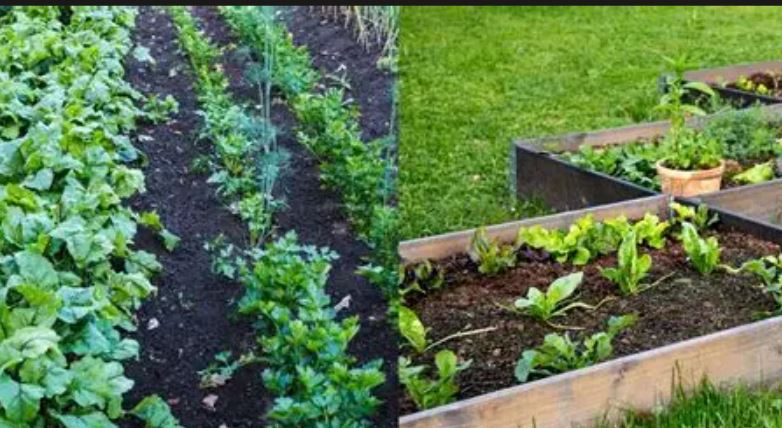
Raised garden bed soil — commonly called raised bed mix — is a blended growing medium engineered for elevated, enclosed beds that sit completely above the native ground. Because a raised bed is physically isolated, the soil inside must perform without any of the natural support systems found beneath an in-ground garden. No subsoil to buffer moisture, no inherited microbial ecosystem, no mineral-rich earth below. The mix has to bring all of those qualities on its own.
The Core Ingredients in a Raised Bed Mix
A quality raised bed mix is built from three foundational layers:
- Compost (25–50%): Aged plant material, manure, or food scraps broken down into dark, crumbly, nutrient-dense matter. Compost feeds soil biology, supplies broad-spectrum nutrients, and improves both moisture retention and drainage at the same time.
- Structural amendments (15–25%): Perlite, coarse vermiculite, or aged bark that creates and maintains air pockets throughout the medium so roots can breathe and excess water moves freely downward.
- Loamy base (25–35%): Either a blended topsoil or a coir-and-peat foundation that provides body, mineral content, and the physical stability that lighter amendments alone cannot offer.
How Raised Bed Mix Behaves in Practice
Because raised bed mix contains little to no clay-heavy native soil, it resists compaction even after repeated watering cycles. It warms up faster in spring than in-ground soil, which gives seeds and transplants a meaningful head start. The open pore structure means roots encounter far less resistance as they push outward and downward, which directly translates to bigger, more productive plants.
How Raised Bed Mix Improves Over Time
One of the defining advantages of a good raised bed mix is that it gets better with age — not worse. As the compost fraction continues to break down, it feeds a growing population of beneficial microorganisms: bacteria, fungi, nematodes, and earthworms that collectively improve soil structure, suppress disease, and cycle nutrients back into plant-available forms. Each season you add fresh compost on top, the ecosystem deepens. After two or three years, a well-maintained raised bed often outperforms even a premium bagged mix in terms of plant vigor and yield.
Signs You Have the Right Raised Bed Mix
You’ll know your raised bed mix is working when water drains cleanly within 30 to 60 seconds of a heavy watering rather than pooling on the surface. Roots should be visible throughout the full depth of the bed when you pull a plant at season’s end — not just confined to the top few inches. The medium should feel light, crumbly, and moist but never soggy or sticky between your fingers.
What Is Garden Soil?
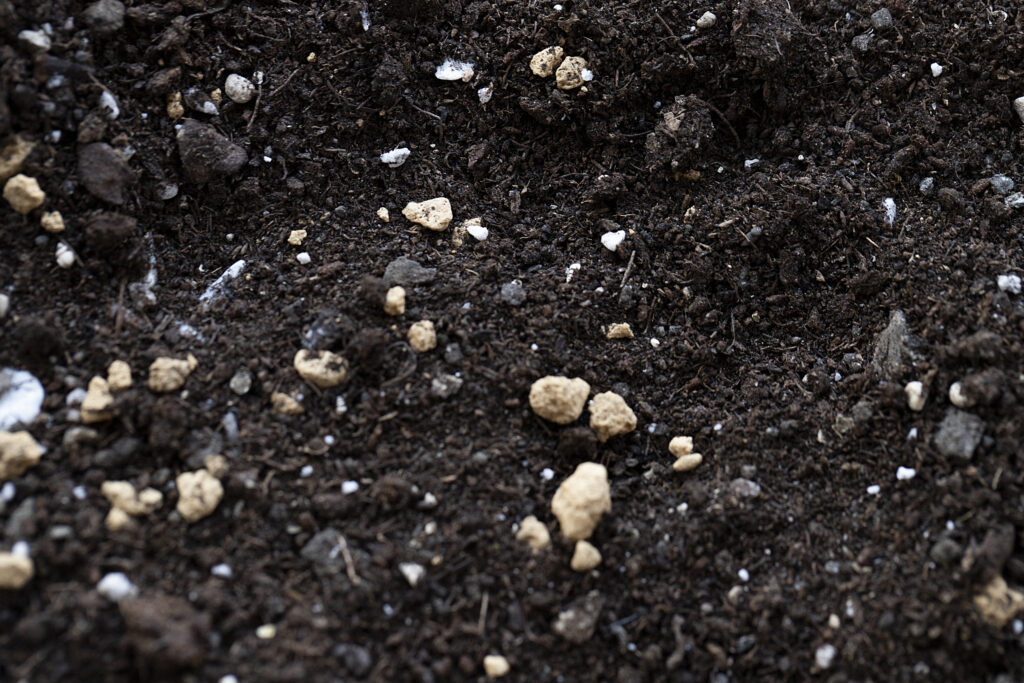
Garden soil is a fundamentally different product serving a different purpose. It’s designed to be mixed into or spread across existing in-ground beds, where it works alongside native soil to improve texture, drainage, and nutrition. You are not meant to fill a raised bed or container with it — you’re meant to blend it with what’s already in the ground.
What Garden Soil Is Actually Made Of
Most commercial garden soil products are a blend of topsoil and compost, sometimes with added sand or bark to improve workability. The topsoil component brings:
- Mineral content: Clay, silt, and sand particles that anchor plants and provide micronutrients
- Physical weight: Helps the amended area integrate with surrounding native soil rather than sitting as a separate, disconnected layer
- Moisture buffering: Clay particles retain water during dry spells, reducing irrigation needs in open beds
The compost fraction adds nutrition and microbial life, while the overall blend creates a heavier, denser medium that works well when incorporated into earth.
How Garden Soil Behaves in Confined Spaces
Because garden soil contains actual mineral soil — often with a meaningful clay fraction — it behaves very differently from raised bed mix when placed in an enclosed container or bed. It compacts readily under the weight of repeated watering. It drains slowly when wet. And when it dries out, it can contract and harden into dense clumps that roots struggle to penetrate. These are not design flaws in an open, in-ground setting, where surrounding soil structure and freely moving earthworms compensate. In a raised bed, there is no compensation mechanism.
The Weight Factor
Garden soil is significantly heavier per cubic foot than raised bed mix — sometimes two to three times as dense. In an open garden bed, this is irrelevant. But for raised beds built on decks, rooftops, or any load-bearing surface, using garden soil can create a structural risk. Even at ground level, the sheer physical effort of working dense, compacted garden soil in an elevated bed makes routine tasks like transplanting, direct sowing, and seasonal amendment considerably harder than they need to be.
Where Garden Soil Genuinely Excels
Used correctly, garden soil is an excellent and cost-effective product:
- Tilling into existing vegetable patches to improve texture and nutrition before planting season
- Spreading over a new lawn area to establish a fertile seed bed
- Enriching flower borders and perennial beds by blending into the top 6 to 8 inches of existing soil
- Backfilling around transplanted shrubs and trees where the native soil is poor or heavily compacted
Key Differences Between Raised Bed Soil and Garden Soil
Placing both products side by side reveals how purpose-built each one is — and why substituting one for the other creates predictable, avoidable problems.
Drainage and Aeration
Raised bed mix is formulated to maintain open pore space through repeated watering cycles. The perlite and coarse vermiculite physically prop the structure open even as organic matter breaks down. Garden soil, with its clay fraction, progressively closes that pore space in a confined environment. Plants in a poorly draining raised bed will show wilting, yellowing leaves, and eventual root rot — even when the surface appears dry — because the lower layers stay saturated and oxygen-depleted.
Nutrient Density and Self-Sufficiency
Raised bed mixes carry a higher compost load because they have to be nutritionally self-sufficient. There is no surrounding native soil for roots to reach into, no deep mineral reservoir below. Garden soil products are nutritious, but they’re designed to work synergistically with existing earth — not to carry the full nutritional load in isolation. A raised bed filled with garden soil will show deficiencies faster and more severely than one filled with a proper raised bed mix, even if both started with similar nutrient readings.
Microbial Life and Soil Biology
Premium raised bed mixes are often formulated to actively support a diverse soil microbiome from day one. The higher compost fraction means more food for bacteria and fungi. The lighter structure means more oxygen for aerobic organisms. Garden soil’s biology is partly inherited from wherever the topsoil component was originally harvested — and in a confined raised bed, without the earthworms and open-system cycling of a ground-level plot, that biology often struggles to establish robustly.
Long-Term Performance and Cost Efficiency
Over a three-to-five year horizon, raised bed mix is the more cost-efficient choice for raised beds despite its higher upfront price. Garden soil used in a raised bed compacts, loses drainage, and requires costly correction — excavating, amending, or fully replacing the medium. Raised bed mix, top-dressed with compost each fall, gets progressively better and rarely needs wholesale replacement. For in-ground use, the calculation reverses: garden soil is the economical and appropriate choice, and using raised bed mix at scale in an open garden is an expensive way to accomplish something a standard topsoil-compost blend handles just as well.
Which One Should You Use and Where?
The decision is straightforward once you understand what each product is designed to do. The right choice protects your investment in seeds, plants, and infrastructure — and it sets up the kind of garden that rewards you rather than frustrates you.
Use Raised Bed Mix For
Any growing environment that is elevated, enclosed, and physically separated from native ground soil:
- Traditional wooden or cedar raised beds
- Galvanized metal stock tank gardens
- Fabric grow bags and felt planters
- Elevated rooftop or balcony planter boxes
- Deep container beds in tight urban spaces
Use Garden Soil For
Any growing situation where the medium will be blended into or laid over existing in-ground soil:
- Tilling into vegetable garden rows before spring planting
- Amending flower borders and perennial beds
- Establishing new lawn areas or overseeding bare patches
- Backfilling around newly planted trees and shrubs
- Improving heavily compacted or nutrient-depleted in-ground beds
The Most Common and Costly Mistake
The mistake most first-time raised bed gardeners make is using garden soil to fill their beds because it looks more substantial and costs less per bag. It’s a reasonable-sounding shortcut that leads to a genuinely frustrating first season: beds that shed water on the surface while staying waterlogged below, plants that grow slowly and show nutrient deficiencies by July, and a medium that hardens into something resembling compacted clay by August. Fixing a raised bed filled with the wrong soil means removing and replacing significant volume — far more work and expense than buying the right product from the start.
Blending as a Budget Strategy
If cost is a real constraint, a practical middle-ground approach is to blend garden soil with raised bed mix rather than using either product exclusively. A ratio of roughly 40 percent garden soil, 40 percent raised bed mix, and 20 percent additional compost gives you a workable raised bed medium that performs acceptably without the full cost of premium mix alone. It won’t drain or aerate quite as well as a pure raised bed blend, but it’s far superior to garden soil used on its own — and it gives you a foundation to improve with compost top-dressing each subsequent season.
The Practical Takeaway
The garden center naming can be genuinely misleading — “garden soil” sounds universal, and “raised bed mix” sounds like a niche specialty product. In reality, they serve distinct, largely non-interchangeable roles tied directly to where and how they’ll be used. Match the product to the growing environment, and your plants will reward you from the first week of the season. Use the wrong one, and you’ll spend the summer troubleshooting problems that the right bag of soil would have prevented entirely.
Raised beds deserve raised bed mix. In-ground gardens deserve garden soil. That single decision — made correctly at the start of the season — is one of the most cost-effective and high-impact choices you can make as a gardener.

- 10 Best Garden Hose For Washing Car 2026 - October 17, 2026
- 10 Best Garden Hose For Vegetable Garden 2026 - October 17, 2026
- 10 Best Garden Hose For Farm Use 2026 - October 17, 2026