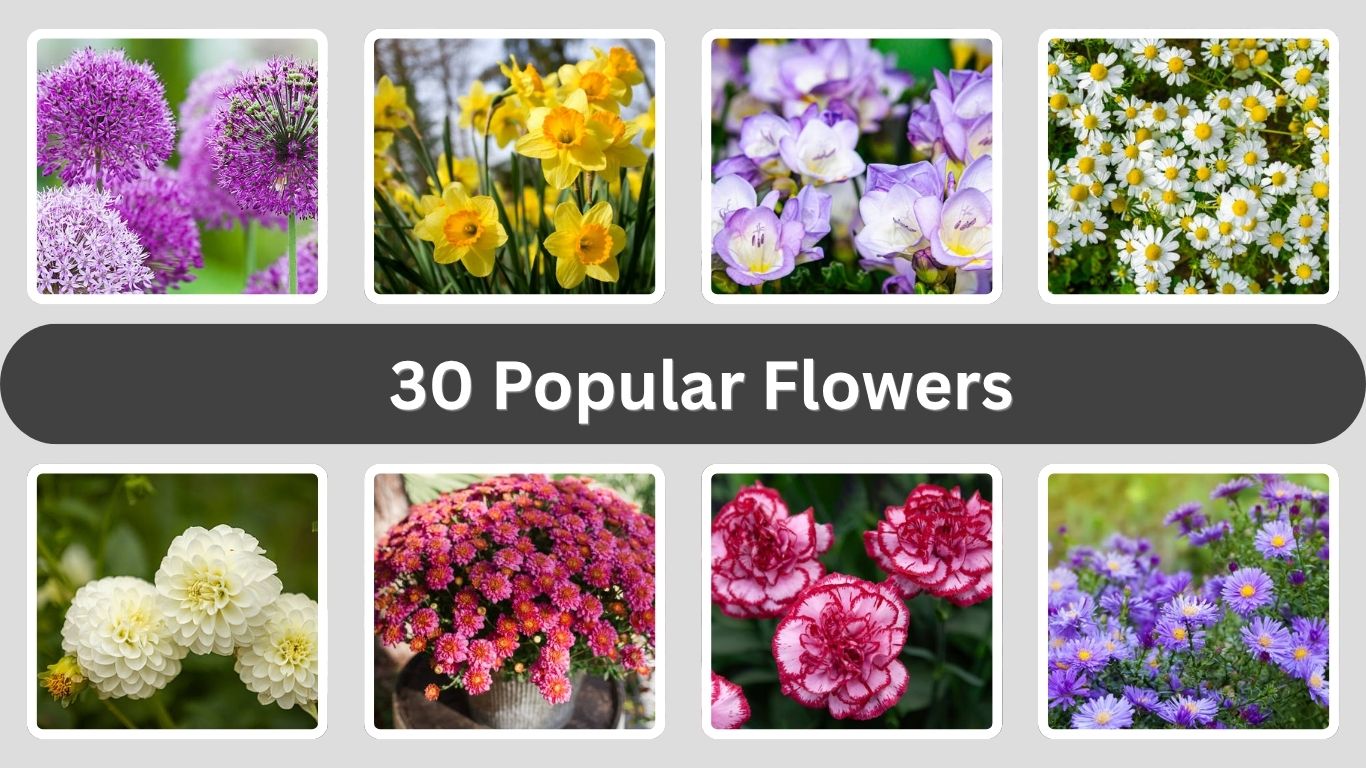
Flowers are everywhere. In gardens, weddings, funerals, birthday cards, and kitchen tables. But most people only know a handful by name.
That changes today.
This guide covers 30 of the most popular flowers in the world. For each one, you get the origin, colors, vase life, best occasions, and symbolism. No filler. No fluff. Just the facts you need to identify, grow, gift, or appreciate every flower on this list.
Whether you are a gardener, a florist, or someone who just wants to sound knowledgeable at the flower shop, this list is for you.
1. Allium
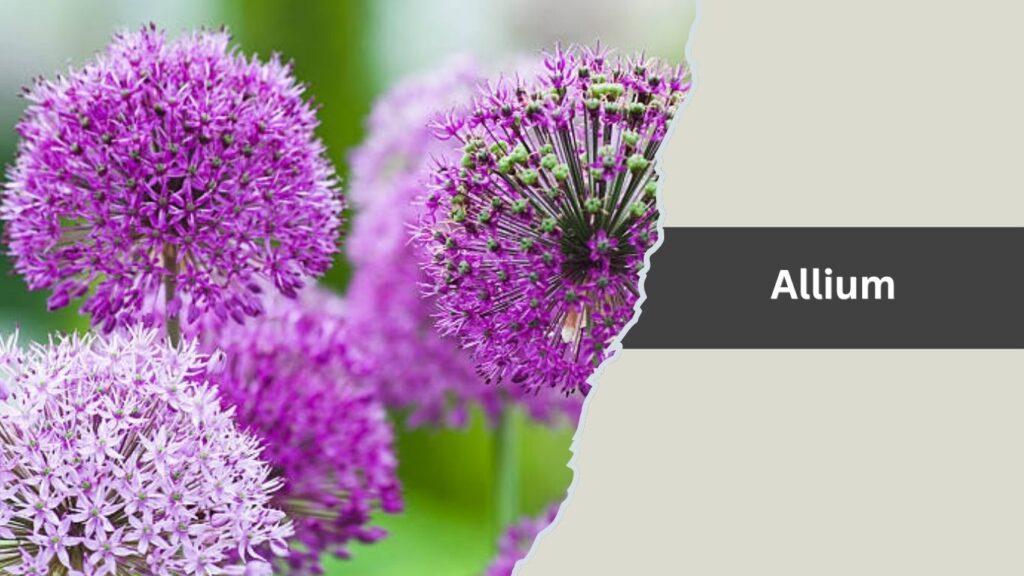
The ornamental cousin of your kitchen onion
Most people recognize onions and garlic. Few recognize their stunning ornamental relative. The allium flower turns a humble bulb into one of the most striking blooms in any garden or bouquet.
Origin
Allium flowers are native to the Northern Hemisphere. You find them growing naturally across North America, Pakistan, and the Mediterranean region. Some species grow as far south as Africa and South America, but the majority thrive in cooler northern climates.
Carl Linnaeus first documented the allium plant in 1753. Since then, botanists have identified over 500 different species within the genus, spread across 51 genera worldwide. That makes allium one of the most diverse flowering plant groups on the planet.
Allium belongs to the Amaryllidaceae family, the same family as daffodils and snowdrops. It shares its genus with some of the most common vegetables in your kitchen including onions, garlic, leeks, and chives.
What It Looks Like
Allium flowers grow on tall, straight stems with a globe-shaped flower head sitting at the top. That round cluster of tiny blooms is what makes allium instantly recognizable. The flower heads range from a few centimeters to over 15 centimeters in diameter depending on the species.
The colors stay within a soft, elegant range:
- Lilac
- Pink
- Purple
- White
The stems are clean and upright, which makes allium a favorite for both garden borders and cut flower arrangements. They add height and structure without overwhelming other flowers around them.
Vase Life
Allium is a strong performer in a vase. With proper care, cut allium flowers last up to two weeks. That is longer than many popular cut flowers like tulips or ranunculus.
To extend their vase life:
- Cut stems at a 45-degree angle before placing in water
- Change the water every two days
- Keep them away from direct sunlight and heat sources
- Remove any leaves that sit below the waterline
One thing to note: allium stems carry a faint onion-like scent when first cut. This fades within a day or two once the flower is in fresh water.
Symbolism
Allium carries a rich set of meanings across different cultures and traditions:
- Unity. The globe-shaped flower head, made up of dozens of tiny individual blooms clustered together, represents people coming together as one.
- Good fortune. In many cultures, gifting allium is considered a positive omen for the recipient’s future.
- Prosperity. Allium is associated with financial and personal success, making it a thoughtful gift during major life milestones.
- Patience. Allium bulbs take time to establish and bloom. This slow, steady growth reflects the value of patience.
- Humility. Despite its connection to prosperity, allium keeps its roots in the earth, literally and symbolically.
Best Occasion
Because allium symbolizes good fortune and prosperity, it fits specific life moments better than most flowers. Consider allium for:
- Birthdays. Especially milestone birthdays like 30, 40, or 50.
- Graduations. Allium says “your hard work is about to pay off.”
- Work promotions. Few flowers communicate professional success as clearly as allium.
- New business openings. A bouquet of allium signals a prosperous start.
Allium works well on its own or paired with roses, peonies, or eucalyptus for a fuller arrangement.
Growing Allium
Allium is planted from bulbs, just like tulips and daffodils. Plant bulbs in autumn for spring and early summer blooms. They prefer:
- Full sun to partial shade
- Well-drained soil
- Minimal watering once established
One important warning: allium is toxic to both humans and animals if ingested. If you have pets or young children, plant allium in raised beds or areas they cannot reach. Dogs and cats are particularly sensitive to allium toxicity, which affects their red blood cells.
Despite this, allium is a low-maintenance, high-impact flower that rewards patient gardeners with spectacular blooms year after year.
2. Anemone
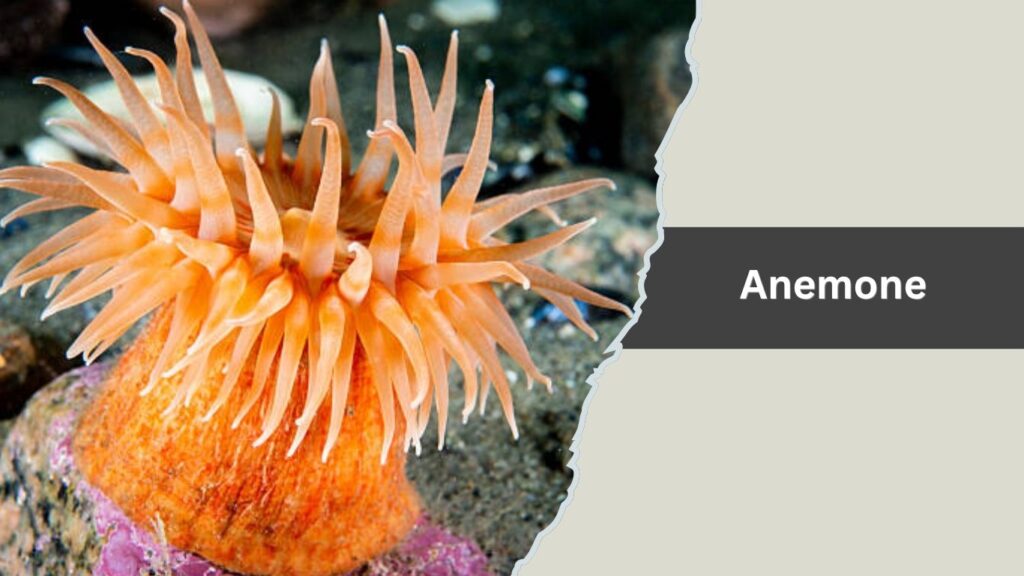
The wildflower that looks like it belongs in a painting
Anemone stops people in their tracks. Its bold, dark center surrounded by delicate petals creates a contrast that few flowers match. It looks wild and refined at the same time.
Origin
Anemone is native to the Mediterranean region, including southern Europe, the Middle East, and parts of North Africa. The name comes from the Greek word “anemos,” meaning wind. Ancient Greeks believed the flower only opened when the wind blew, earning it the nickname “windflower.”
There are about 120 species within the anemone genus. The flower has been cultivated for centuries and appears in ancient Greek and Roman mythology, often linked to the goddess Aphrodite and stories of lost love.
What It Looks Like
Anemone has wide, cup-shaped petals surrounding a striking dark center. The contrast between the petals and the center is what makes it stand out in any arrangement.
Colors include:
- Deep red
- White
- Blue
- Purple
- Pink
Stems are slender but upright. Flower heads sit alone at the top of each stem, giving arrangements a clean, uncluttered look.
Vase Life
Anemone lasts 4 to 7 days as a cut flower. It is shorter-lived than some flowers on this list, but its visual impact makes it worth including in arrangements.
To get the most from cut anemones:
- Re-cut stems before placing in water
- Use cold water, not room temperature
- Keep them in a cool room away from fruit bowls (ethylene gas from fruit shortens their life)
- Anemones open and close with light, so expect movement throughout the day
Symbolism
Anemone carries a layered set of meanings:
- Protection. In many cultures, anemone was worn or carried to ward off evil and illness.
- Anticipation. The flower’s habit of opening with light and closing in darkness connects it to expectation and waiting.
- Forsaken love. In Greek mythology, anemone grew where the blood of Adonis fell, linking it to grief and lost love.
- Fragility. Its short vase life and delicate petals symbolize the fleeting nature of beauty.
Best Occasion
- Sympathy arrangements
- Get well soon bouquets
- Spring weddings
- Bohemian or wildflower-style arrangements
Anemone pairs well with ranunculus, eucalyptus, and sweet peas.
Growing Anemone
Anemone grows from corms, which are bulb-like structures planted in autumn for spring blooms or in spring for autumn blooms. They prefer:
- Partial shade to full sun
- Moist, well-drained soil
- Regular watering during growth
Anemone is toxic if ingested. Keep away from pets and children.
3. Aster
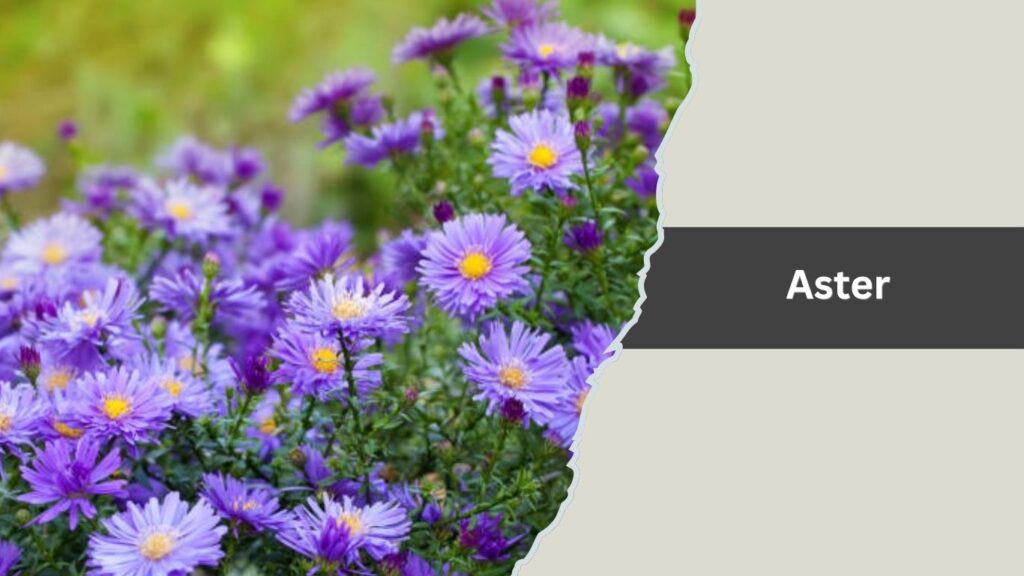
The star-shaped bloom that extends summer into autumn
When most garden flowers fade in late summer, aster takes over. It fills the gap between summer blooms and the first frost with color and structure.
Origin
Aster is native to Europe and Asia, with the majority of species originating from North America. The name comes from the Greek word for “star,” a reference to the flower’s distinctive shape.
There are over 180 species of aster. The flower has been used in traditional medicine across Europe and Asia for centuries. Native American tribes used certain aster species to treat fevers and skin conditions.
Aster is the birth flower for September, making it one of the most gifted autumn flowers.
What It Looks Like
Aster looks like a daisy with a yellow center surrounded by long, narrow petals that radiate outward like rays. The overall effect is a clean, star-like shape.
Colors include:
- Purple (most common)
- Pink
- White
- Red
- Blue (rare in nature)
Plants grow between 30 centimeters and 1.2 meters tall depending on the variety. They produce multiple flower heads per stem, which makes them excellent for mass planting and cut flower arrangements.
Vase Life
Cut asters last 5 to 10 days in a vase. They are reliable performers that hold their shape well.
Tips for extending vase life:
- Cut stems at an angle and place immediately in water
- Remove lower leaves to prevent bacterial growth
- Change water every two days
- Keep away from direct heat
Symbolism
- Patience. Asters bloom late in the season, after a long period of growth.
- Love. In Victorian times, asters were placed on altars to the gods as a symbol of devotion.
- Wisdom. The flower is associated with experience and knowledge gained over time.
- Faith. Aster represents trust and confidence in what lies ahead.
Best Occasion
- September birthdays
- Anniversaries, especially later ones that reflect long commitment
- Teacher appreciation gifts
- Autumn weddings
Aster pairs well with sunflowers, dahlias, and ornamental grasses in arrangements.
Growing Aster
Aster is a perennial that comes back year after year. It is one of the easiest flowers to establish in a garden.
Preferences:
- Full sun
- Well-drained soil with moderate moisture
- Deadheading (removing spent blooms) encourages more flowers
Plant aster in spring for autumn blooms. Divide clumps every two to three years to keep plants healthy and flowering well.
4. Bird of Paradise
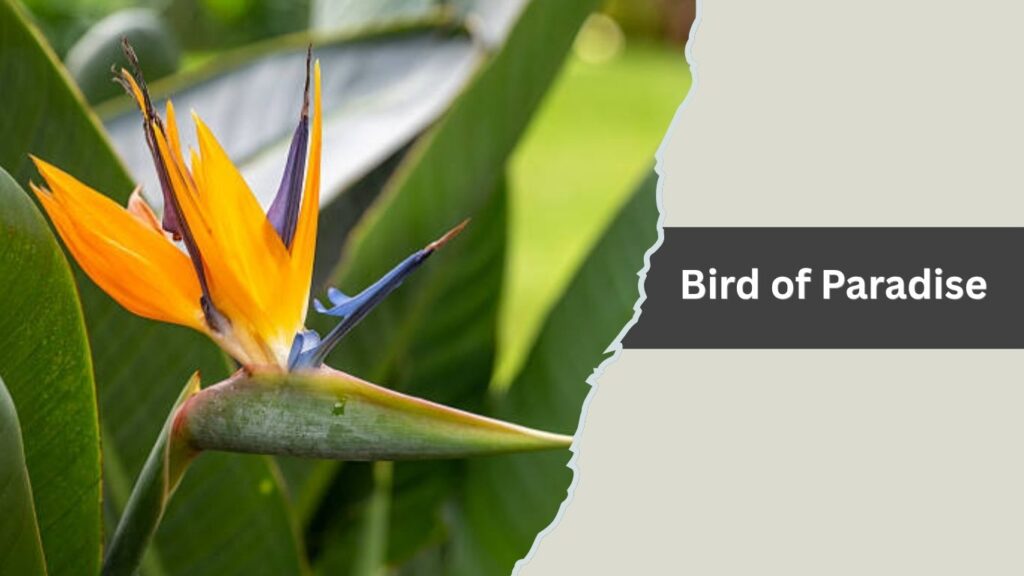
The most dramatic flower on this list
Bird of paradise does not blend in. Its bold orange and blue colors and unusual shape make it the centerpiece of any arrangement. One stem is enough to transform a room.
Origin
Bird of paradise is native to South Africa. Its scientific name is Strelitzia reginae, named after Queen Charlotte of Mecklenburg-Strelitz, consort of King George III of Britain.
The plant was introduced to Europe in 1773 when botanist Sir Joseph Banks brought specimens to the Royal Botanic Gardens at Kew in London. Since then it has spread to tropical and subtropical regions worldwide.
Today, bird of paradise grows abundantly in California, Australia, and across South America, where the climate mirrors its native South African habitat.
What It Looks Like
The flower looks exactly like its name suggests. A rigid horizontal spathe (the green bract) acts as the “beak,” from which orange petals and vivid blue tongue-like structures emerge. The overall shape resembles a tropical bird in flight.
Colors:
- Orange and blue (most common variety)
- White and blue (Strelitzia nicolai, the giant white bird of paradise)
Stems grow tall, often reaching 90 centimeters to 1.5 meters. This makes bird of paradise one of the tallest cut flowers available.
Vase Life
Bird of paradise has an exceptional vase life of 2 to 3 weeks. Individual flowers open sequentially from the spathe, meaning a single stem continues producing new blooms over time.
To care for cut bird of paradise:
- Re-cut stems under water to prevent air locks
- Use a deep vase to support tall stems
- Change water twice a week
- Gently pull each new flower head from the spathe as it matures to encourage the next one to open
Symbolism
- Joy. The vibrant colors signal celebration and happiness.
- Paradise. The flower evokes exotic beauty and freedom.
- Faithfulness. In some cultures it represents loyalty in relationships.
- Good perspective. It symbolizes looking at life from a positive angle.
Best Occasion
- Housewarming gifts
- Tropical or modern weddings
- Corporate arrangements and office lobbies
- Milestone birthdays
- Any occasion where you want maximum visual impact
Bird of paradise works as a statement piece on its own or with palm leaves and tropical foliage.
Growing Bird of Paradise
Bird of paradise thrives in warm climates. In cooler regions, it grows successfully as an indoor plant.
Outdoor requirements:
- Full sun
- Sandy, well-drained soil
- Minimal watering once established
- Protection from frost
Indoor growing:
- Bright indirect light
- Water deeply but infrequently
- Feed with a balanced fertilizer in spring and summer
Plants take 3 to 5 years to bloom from seed. Buy established plants for faster results.
Bird of paradise is mildly toxic to pets and humans if ingested.
5. Carnation
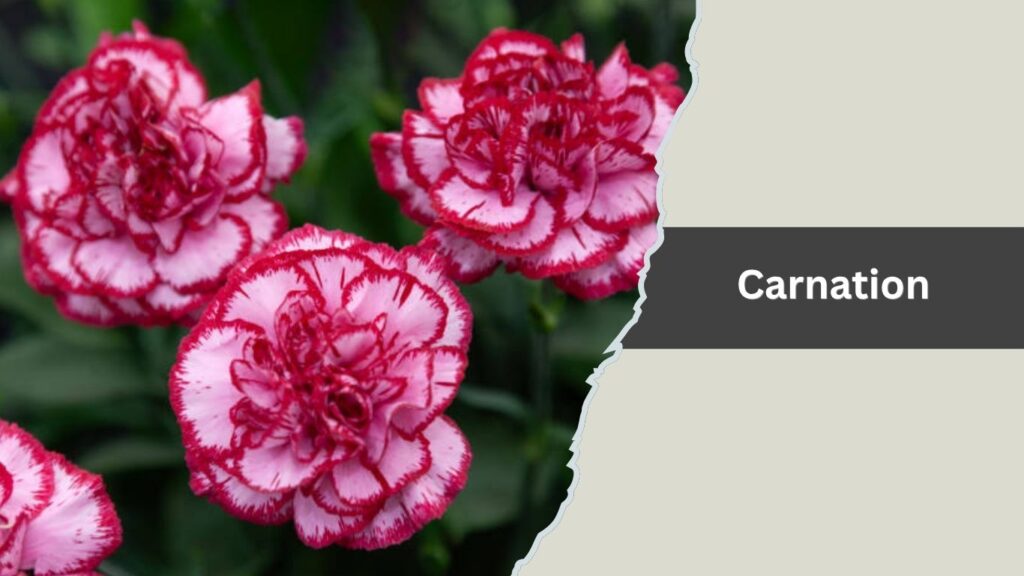
The world’s most widely sold cut flower
Carnations outsell nearly every other cut flower on the planet. Florists buy them by the millions. Despite their reputation as a “cheap” flower, carnations are sophisticated, long-lasting, and loaded with meaning.
Origin
Carnation, scientific name Dianthus caryophyllus, originates from the Mediterranean region. The exact origin is debated but most evidence points to Greece and southern Europe as its native habitat.
Carnations have been cultivated for over 2,000 years. Ancient Greeks and Romans used them in garlands and ceremonial decorations. The name “Dianthus” comes from the Greek for “divine flower.”
Today, Colombia, China, and the Netherlands are the world’s largest producers of commercial carnations.
What It Looks Like
Carnations have layered, ruffled petals with distinctively fringed edges. The blooms are dense and rounded. Stems are long with narrow, blue-green leaves.
Colors include nearly the full spectrum:
- Red
- Pink (many shades)
- White
- Yellow
- Orange
- Purple
- Burgundy
- Bi-color varieties
This wide color range makes carnations one of the most versatile flowers for arrangements of any style.
Vase Life
Carnations are outstanding in a vase. They last 2 to 3 weeks, making them one of the longest-lasting cut flowers available.
Care tips:
- Cut 1 to 2 centimeters off stems every few days
- Use flower food in the water
- Remove leaves below the waterline
- Keep in a cool location away from direct sun and heat
Symbolism
Carnation meaning changes by color:
- Red carnation. Deep love and admiration
- Pink carnation. A mother’s love, gratitude
- White carnation. Purity, luck, innocence
- Yellow carnation. Disappointment or rejection (avoid for romantic occasions)
- Purple carnation. Capriciousness, unpredictability
- Striped carnation. Refusal or regret
Best Occasion
- Mother’s Day. Pink and red carnations are the traditional Mother’s Day flower worldwide.
- Anniversaries. First anniversary gifts traditionally include carnations.
- Funerals and sympathy. White carnations are widely used in funeral arrangements.
- Graduations. Red carnations congratulate achievement.
Growing Carnation
Carnations grow as perennials in warm climates and annuals in colder regions.
Requirements:
- Full sun (at least 4 to 6 hours daily)
- Well-drained, slightly alkaline soil
- Regular watering without waterlogging
- Staking for taller varieties
Pinch back young plants to encourage bushy growth and more blooms. Deadhead spent flowers regularly throughout the season.
6. Chrysanthemum
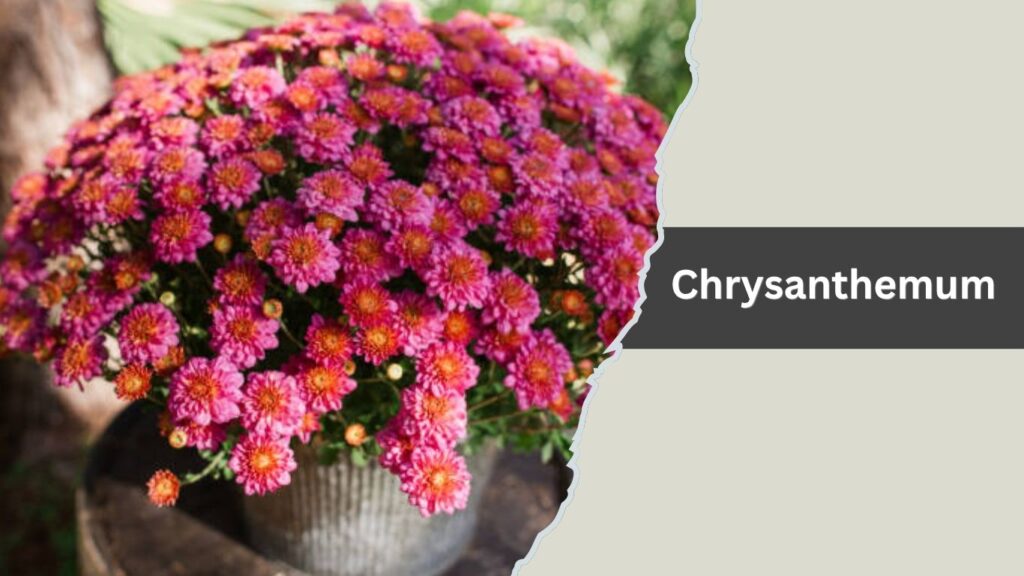
The flower that means something different in every country
Few flowers carry as much cultural weight as the chrysanthemum. In Japan, it sits on the imperial crest. In Europe, it decorates cemeteries. In China, it symbolizes longevity. Knowing the cultural context matters before you gift one.
Origin
Chrysanthemum originates from China, where it has been cultivated since at least the 15th century BC. It was introduced to Japan in the 8th century AD, where it became a national symbol.
The name comes from the Greek words “chrysos” (gold) and “anthemon” (flower). The chrysanthemum was introduced to Europe in the 17th century and quickly became a staple of autumn gardens.
There are over 40 wild species and thousands of cultivated varieties worldwide.
What It Looks Like
Chrysanthemums come in many forms: pompom, spider, single, spoon, and button varieties. Each has a distinct shape.
The most common forms seen in florist shops have dome-shaped heads with tightly packed petals.
Colors include:
- Yellow (the original wild color)
- White
- Red
- Pink
- Orange
- Purple
- Burgundy
- Bronze
Vase Life
Chrysanthemums last 2 to 3 weeks as cut flowers, one of the best vase lives of any flower.
Care tips:
- Strip all leaves below the waterline
- Use sharp, clean scissors for cutting stems
- Change water every two to three days
- Keep away from ethylene-producing fruit
Symbolism
Meaning varies strongly by culture:
- China. Longevity, good luck, rejuvenation
- Japan. The imperial family, perfection, nobility
- United States. Happiness, positivity, love
- Europe (especially France, Belgium, Italy). Death and grief. Avoid gifting in these countries
- General Western meaning. Loyalty, honesty, devoted friendship
Best Occasion
- Asian celebrations. New Year, festivals, housewarming
- Birthdays in November. Chrysanthemum is the November birth flower
- Get well gifts. In the US and UK, chrysanthemums signal warmth and care
- Avoid for European recipients. Unless specifically for a funeral
Growing Chrysanthemum
Chrysanthemums are hardy and adaptable, which is why they are among the world’s most widely grown flowers.
Requirements:
- Full sun
- Rich, well-drained soil
- Regular watering (do not let soil dry out completely)
- Pinching back in early summer to encourage bushy plants
Most chrysanthemums bloom in autumn. Plant in spring and let them establish over summer for the best autumn display.
7. Dahlia
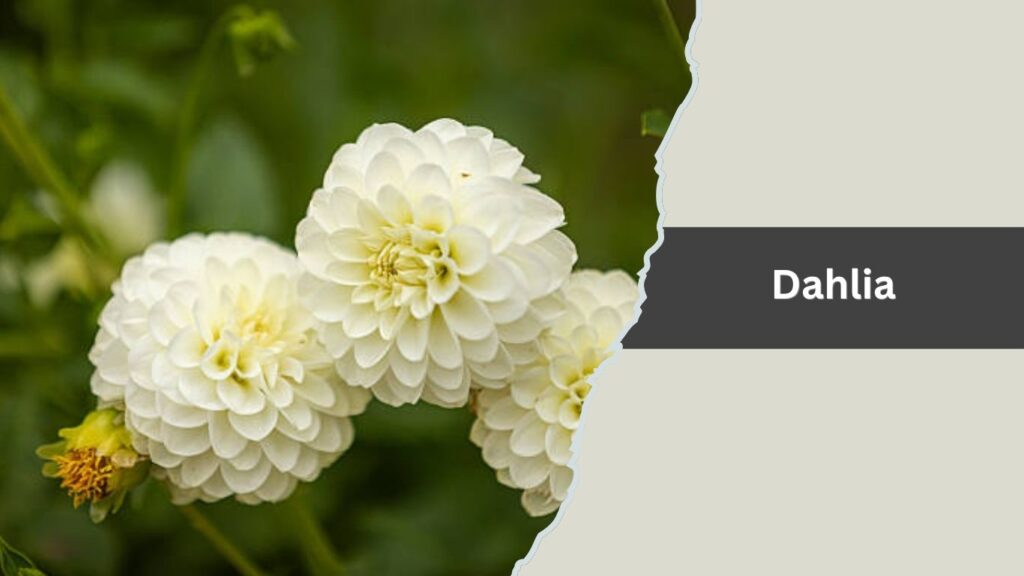
The show-off of the flower world
Dahlias demand attention. Their dense, geometric blooms and wide color range make them a favorite for weddings, gardens, and Instagram feeds alike. No two dahlia varieties look quite the same.
Origin
Dahlia is native to Mexico and Central America. It was first cultivated by the Aztecs, who used it as a food source and for medicinal purposes. Spanish conquistadors brought it to Europe in the 16th century.
It was named after the Swedish botanist Anders Dahl in 1791. Mexico declared the dahlia its national flower in 1963.
There are over 42 species of dahlia and more than 57,000 registered cultivars. They range from compact bedding plants to dinner-plate dahlias with blooms over 30 centimeters across.
What It Looks Like
Dahlias come in more forms than any other flower on this list:
- Pompom (small, perfectly round)
- Ball (larger rounded heads)
- Cactus (spiky, reflexed petals)
- Dinner plate (enormous flat blooms)
- Single (simple, daisy-like)
- Anemone (cushioned center)
Colors cover almost the full spectrum:
- Red, pink, orange, yellow, white, purple, burgundy, bi-color
- The only color dahlias cannot produce is true blue
Vase Life
Dahlias last 3 to 8 days as cut flowers. They are shorter-lived than some flowers, but their visual impact compensates.
Tips for longer vase life:
- Cut stems early in the morning when plants are hydrated
- Immediately place in cold water
- Re-cut stems and change water daily
- Keep in a cool room
Symbolism
- Dignity. Dahlias represent standing tall and maintaining grace under pressure.
- Elegance. Their complex structure signals refinement and taste.
- Inner strength. Dahlias grow through summer heat and bloom until frost. They represent resilience.
- Change. The flower is associated with transitions and new chapters in life.
Best Occasion
- Weddings (a top choice for bridal bouquets)
- Birthdays in August (dahlia is the August birth flower)
- Anniversaries
- Congratulations arrangements
Dahlias pair well with greenery, roses, and cosmos.
Growing Dahlia
Dahlias are grown from tubers planted in spring after the last frost.
Requirements:
- Full sun (minimum 6 hours daily)
- Rich, well-drained soil
- Regular watering and feeding with a low-nitrogen fertilizer
- Staking for tall varieties
- In cold climates, dig up tubers each autumn and store indoors over winter
Deadhead regularly to keep plants producing new blooms throughout summer and autumn.
8. Daisy
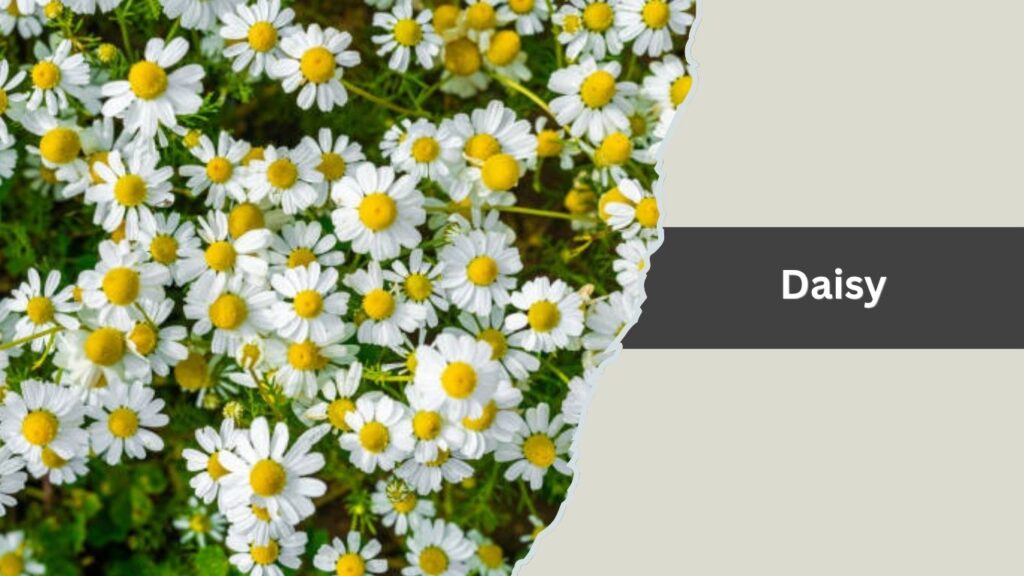
The flower everyone recognizes and almost everyone loves
Few flowers are more universally recognized than the daisy. Its simple white petals and yellow center appear on everything from children’s drawings to luxury wallpaper. It is the definition of cheerful.
Origin
The common daisy, Bellis perennis, is native to western, central, and northern Europe. The name “daisy” comes from the Old English “daes eage,” meaning “day’s eye,” because the flower opens at dawn and closes at dusk.
Daisies have been used in folk medicine for centuries to treat bruises, inflammation, and coughs. They spread naturally across temperate regions and are now found on every continent except Antarctica.
What It Looks Like
The classic daisy has white petals arranged around a bright yellow disk center. The petals are long and narrow, the center is round and domed.
Colors vary by species:
- White with yellow center (classic)
- Pink
- Yellow
- Red
- Bi-color
Shasta daisies are the large-flowered variety commonly found in florist shops. African daisies come in bold oranges and purples. Gerbera daisies are the giant, vibrant variety used in commercial bouquets.
Vase Life
Gerbera daisies (the florist variety) last 7 to 10 days in a vase. Common garden daisies last 5 to 7 days.
Care tips:
- Gerbera daisy stems are prone to bacterial blockage. Re-cut daily.
- Use only 5 to 7 centimeters of water in the vase. Gerberas dislike deep water.
- Keep in bright, indirect light
Symbolism
- Innocence. The simple, clean look of a daisy represents purity and youth.
- New beginnings. Daisies bloom in spring, linking them to fresh starts.
- Cheerfulness. Yellow-centered daisies signal happiness and optimism.
- Loyal love. In Celtic tradition, daisies were associated with faithful love.
Best Occasion
- New baby gifts
- Get well soon bouquets
- Children’s birthdays
- Spring celebrations
- Casual everyday gifting
Daisies work well in wildflower arrangements with lavender, cornflowers, and sweet peas.
Growing Daisy
Daisies are among the easiest flowers to grow from seed.
Requirements:
- Full sun to partial shade
- Average, well-drained soil
- Moderate watering
- Direct sow seeds in spring or early autumn
Most daisies self-seed freely once established. This means they spread year after year with minimal effort. Divide clumps every two to three years to maintain vigor.
9. Daffodil
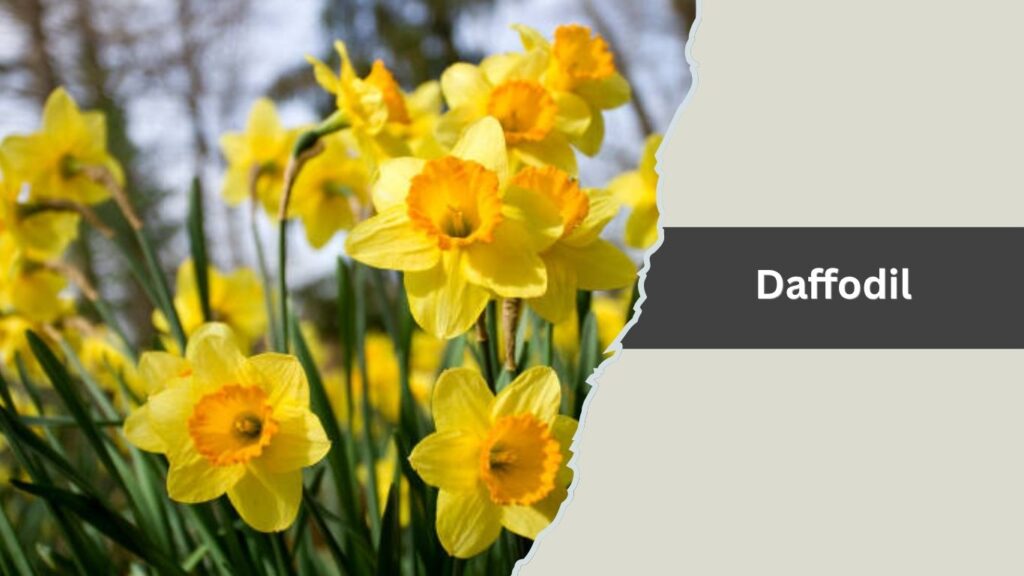
The flower that signals the end of winter
When daffodils appear, winter is over. They are one of the first flowers to bloom each spring and one of the most recognizable flowers in the world. Bright, cheerful, and resilient, they push through cold soil before any other plant dares to bloom.
Origin
Daffodil, scientific name Narcissus, originates from the Mediterranean region, specifically the Iberian Peninsula (Spain and Portugal). The name comes from the Greek myth of Narcissus, a young man who fell in love with his own reflection.
There are approximately 50 wild species and over 13,000 registered cultivars. Daffodils were introduced to Britain by the Romans and have been cultivated in Europe for centuries.
Wales adopted the daffodil as its national flower, and it is traditionally worn on St. David’s Day (March 1).
What It Looks Like
The classic daffodil has six petals surrounding a central trumpet-shaped corona. The contrast between the petals and the corona is what defines the flower’s look.
Colors:
- Yellow (the most iconic)
- White with yellow or orange corona
- Pale cream
- Bi-color with contrasting corona
- Rare pink-coronaed varieties
Stems are hollow, upright, and leafless. Daffodils grow in clusters or as single stems from bulbs.
Vase Life
Cut daffodils last 5 to 7 days in a vase. However, there is one critical rule:
Do not mix daffodils with other flowers when first cut. Freshly cut daffodil stems release a sap called narcissus sap that is toxic to other flowers. It will shorten the life of roses, tulips, and other cut flowers significantly.
To mix daffodils safely in an arrangement:
- Condition them alone in water for 24 hours first
- Rinse the stems before adding to a mixed arrangement
- Never re-cut daffodil stems in a mixed vase
Symbolism
- New beginnings. Spring blooming makes daffodils the ultimate symbol of fresh starts.
- Rebirth. They represent hope after a difficult period.
- Unrequited love. The Narcissus myth connects daffodils to self-love and longing.
- Good luck. In Wales and China, a daffodil blooming in the new year brings twelve months of good fortune.
Best Occasion
- Spring birthdays (especially March, when daffodil is the birth flower)
- Easter and spring celebrations
- Get well soon gifts
- Sympathy arrangements in spring
- New home or new job gifts
Growing Daffodil
Daffodils are one of the most reliable and low-maintenance bulbs you can plant.
Requirements:
- Full sun to partial shade
- Well-drained soil
- Plant bulbs in autumn, pointy end up, at three times the depth of the bulb
- Minimal care once established
Daffodils naturalize over time, meaning clumps grow larger each year. After flowering, leave the foliage in place for at least six weeks. The leaves feed the bulb for next year’s blooms.
Important: all parts of the daffodil are toxic to humans and animals if ingested.
10. Freesia
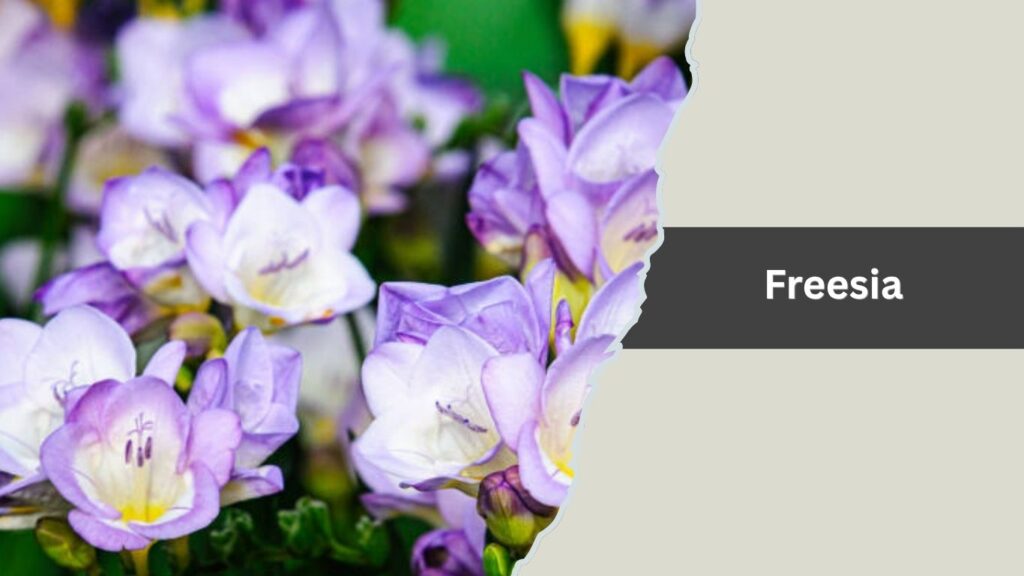
The flower with the most recognizable scent in the world
Ask a florist which flower has the best fragrance and freesia comes up every time. Its clean, fresh, slightly citrus scent is unmistakable. It is one of the most popular ingredients in luxury perfumes worldwide.
Origin
Freesia is native to the eastern coast of South Africa, where it grows naturally in the Cape Floristic Region. It was first described by botanist Christian Friedrich Ecklon in the early 19th century and named after German physician Friedrich Heinrich Theodor Freese.
Commercial freesia cultivation began in the Netherlands in the 20th century. Today the Netherlands, Kenya, and Colombia are the largest producers. Over 300 cultivars exist across 16 recognized species.
What It Looks Like
Freesia stems are slender with a distinctive bend at the top, from which trumpet-shaped flowers hang in a row. Each stem produces multiple blooms that open sequentially.
Colors:
- White (the most fragrant variety)
- Yellow
- Pink
- Orange
- Red
- Purple
- Lavender
- Bi-color
The flowers are small and delicate but packed tightly together on arching stems, creating an elegant, layered look.
Vase Life
Freesias last 7 to 10 days as cut flowers. Because multiple buds open over time, the arrangement looks fresh for most of that period.
Care tips:
- Re-cut stems at an angle and place in cool water immediately
- Change water every two days
- Keep away from heat and direct sunlight
- As lower flowers fade, remove them to let upper buds open cleanly
Symbolism
- Friendship. Freesia is one of the strongest floral symbols of trust between friends.
- Innocence. White freesias in particular represent purity and openness.
- Trust. Gifting freesias signals confidence in a relationship.
- Thoughtfulness. The careful arrangement of freesia buds represents attention to detail and consideration.
Best Occasion
- Birthdays between close friends
- Weddings (freesias are among the most popular wedding flowers for their scent)
- Thank you gifts
- Mother’s Day arrangements
- Any occasion where fragrance matters as much as appearance
Freesias pair beautifully with roses, ranunculus, and lily of the valley in bouquets.
Growing Freesia
Freesias grow from corms planted in autumn in warm climates or in spring in cooler regions.
Requirements:
- Full sun
- Sandy, well-drained soil
- Moderate watering (do not overwater)
- Shelter from strong winds
In cold climates, grow freesias in pots indoors or in a greenhouse. Bring corms indoors before the first frost and store in a cool, dry place over winter.
Freesia is non-toxic to humans and most pets, making it one of the safer options for households with animals.
11. Gardenia
The flower that fills a room before you even see it
Gardenia announces itself with scent. Walk into a room with a single gardenia bloom and you know it immediately. Its fragrance is rich, creamy, and intensely floral. Paired with glossy dark green leaves and pure white blooms, gardenia is one of the most visually and aromatically striking flowers in existence.
Origin
Gardenia is native to tropical and subtropical regions of Africa, Asia, Madagascar, and the Pacific Islands. The most widely cultivated species, Gardenia jasminoides, originates from China and Japan.
The flower was named after Scottish-American naturalist Dr. Alexander Garden in 1760 by botanist Carl Linnaeus. It was introduced to Europe and North America in the 18th century, where it quickly became a symbol of refinement and elegance.
In China, gardenia has been used in traditional medicine for over a thousand years to treat inflammation, anxiety, and fever.
What It Looks Like
Gardenia blooms are creamy white to ivory, with tightly spiraled petals that open into a full, rounded flower. The petals have a waxy, almost artificial-looking texture that makes them look sculpted rather than grown.
Colors:
- Creamy white (most common)
- Pale yellow as blooms age
The contrast between the bright white flowers and the deep, glossy green leaves is one of the most striking combinations in the plant world. Flowers range from 5 to 12 centimeters across depending on the variety.
Vase Life
Gardenia is one of the more delicate cut flowers. Blooms last 1 to 3 days once cut. However, as potted plants they bloom repeatedly over several weeks.
Tips for extending cut gardenia life:
- Handle petals as little as possible. Touching the petals causes brown bruising almost immediately.
- Cut stems early in the morning
- Place in cool water in a shaded location
- Float single blooms in a shallow bowl of cool water for a centerpiece that lasts a day or two
Symbolism
- Secret love. Victorians used gardenia to communicate secret admiration that could not be spoken openly.
- Purity. The white blooms represent clarity and innocence.
- Joy. Gardenia signals deep personal happiness.
- Refinement. The flower has long been associated with elegance and good taste.
Best Occasion
- Weddings and bridal hair arrangements
- Valentine’s Day gifts for romantic partners
- Dinner table centerpieces
- Anniversaries
- Gifts for someone who appreciates luxury and detail
Growing Gardenia
Gardenia is considered a challenging plant to grow, but the reward is worth the effort.
Requirements:
- Bright indirect light indoors or partial shade outdoors
- Acidic, well-drained soil (pH 5.0 to 6.0)
- High humidity
- Consistent watering without waterlogging
- Feed with an acid fertilizer every two to four weeks during the growing season
Gardenias dislike temperature fluctuations and drafts. Keep indoor plants away from heating and air conditioning vents. Yellowing leaves usually signal a pH or nutrient problem rather than overwatering.
Gardenia is toxic to dogs and cats if ingested.
12. Hydrangea
The flower that changes color based on your soil
Hydrangea is one of the few flowers that responds directly to its environment. Plant the same hydrangea in two different gardens and you get two different colors. This biological quirk makes it endlessly fascinating.
Origin
Hydrangea is native to Asia and the Americas. The oldest fossil evidence of hydrangea dates back 40 to 65 million years. Most popular garden varieties originate from Japan and China.
The name comes from the Greek “hydor” (water) and “angos” (jar or vessel), referring to the cup-shaped seed capsules. Japanese horticulturalists have been cultivating hydrangeas since the 8th century.
European botanists first documented hydrangea during the 18th century expeditions to Japan and China. Today there are over 75 recognized species.
What It Looks Like
Hydrangeas produce large, dome-shaped or cone-shaped flower heads made up of dozens of smaller individual florets clustered together. This creates a full, lush, almost cloud-like appearance.
Colors:
- Blue (acidic soil, pH below 6)
- Pink (alkaline soil, pH above 7)
- Purple (neutral soil or mid-range pH)
- White (color unaffected by soil pH)
- Cream
- Lime green
The mophead hydrangea (large rounded clusters) and lacecap hydrangea (flat clusters with a ring of larger florets around a center of smaller ones) are the two most common forms in gardens and florist shops.
Vase Life
Hydrangeas last 5 to 10 days as cut flowers but require more attention than most. They wilt quickly if not properly conditioned.
Critical care steps:
- Cut stems at a 45-degree angle
- Immediately plunge into water up to the neck of the flower head
- If hydrangeas wilt, submerge the entire flower head in cool water for 30 minutes to revive
- Change water daily
- Mist flower heads lightly with water each day
Symbolism
- Gratitude. Hydrangeas are one of the primary flowers for expressing sincere thanks.
- Heartfelt emotion. Their full, generous blooms represent abundance of feeling.
- Understanding. The flower signals empathy and being truly seen by another person.
- Perseverance. Hydrangea plants can live for decades, representing long-term commitment.
Best Occasion
- Thank you gifts
- Weddings (one of the most popular wedding flowers globally)
- Mother’s Day
- Housewarming gifts
- Summer garden parties
Hydrangeas pair well with roses, peonies, and eucalyptus in large, lush arrangements.
Growing Hydrangea
Hydrangeas are long-lived garden shrubs that reward proper planting with years of blooms.
Requirements:
- Partial shade (morning sun, afternoon shade works best)
- Moist, well-drained, fertile soil
- Regular watering, especially in dry periods
- Mulch around the base to retain moisture
To change the color of blue or pink hydrangeas, adjust soil pH. Add garden lime to make soil more alkaline for pink blooms. Add aluminum sulfate to increase acidity for blue blooms. White hydrangeas do not respond to pH changes.
Prune after flowering rather than in spring to avoid cutting off next year’s buds.
13. Iris
Named after the Greek goddess of the rainbow
The iris earned its name honestly. With colors spanning nearly every shade in the visible spectrum, the iris is one of the most varied and visually complex flowers on this list. Its three upright petals and three drooping petals create an architectural look unlike any other flower.
Origin
Iris is native to the Northern Hemisphere, with species found across Europe, Asia, and North America. The genus contains over 300 species. The name comes from Iris, the Greek goddess of the rainbow and a messenger between gods and humans.
The iris has been cultivated for at least 3,000 years. Ancient Egyptians placed irises on the foreheads of sphinxes. French kings adopted the fleur-de-lis, a stylized iris, as their royal emblem. Florence, Italy takes its name from the Latin “florentia,” linked to the abundance of irises in the region.
What It Looks Like
The iris has a distinctive structure: three upright petals called “standards” and three drooping or spreading petals called “falls.” Many varieties have intricate veining, color gradients, and a contrasting “beard” of fine hairs along the center of the falls.
Colors:
- Purple and violet (the most classic)
- Blue
- White
- Yellow
- Orange
- Pink
- Brown
- Near-black
- Bi-color and tri-color varieties
Bearded irises are the tall, showy garden variety. Dutch irises are the slender, upright variety sold by florists.
Vase Life
Cut irises last 5 to 7 days. They are often sold in bud, opening gradually over several days.
Care tips:
- Buy or cut irises when buds are showing color but not yet open
- Place in cool water immediately after cutting
- Change water every two days
- Remove spent blooms to allow remaining buds to open
Symbolism
- Royalty. The historical connection to French kings gives iris a regal quality.
- Wisdom. Iris was the messenger of the gods, linking the flower to knowledge and clarity.
- Faith and hope. Common in religious art and stained glass across Europe.
- Courage. Purple irises specifically represent bravery.
- Eloquence. The flower represents the ability to communicate beautifully.
Best Occasion
- 25th wedding anniversary (the iris is the traditional 25th anniversary flower)
- Graduation gifts
- Gifts for teachers, mentors, or advisors
- Spring birthdays (iris is the February birth flower along with violet)
- Condolence arrangements
Growing Iris
Bearded irises grow from rhizomes (thick horizontal roots) planted near the soil surface. Dutch irises grow from bulbs.
Requirements:
- Full sun (minimum 6 hours daily)
- Well-drained soil
- Plant rhizomes so the top surface sits just above soil level
- Divide rhizomes every three to four years to maintain flowering
Irises are drought-tolerant once established. Overwatering and poor drainage are the most common causes of failure. All parts of the iris plant are toxic if ingested.
14. Lavender
The most versatile plant on this list
Lavender is not just a flower. It is an essential oil, a culinary ingredient, a medicinal herb, and a garden staple. The purple-blue spikes and silvery foliage are recognized worldwide. The scent is one of the most studied in aromatherapy for its calming effects.
Origin
Lavender is native to the Mediterranean region, including southern Europe, North Africa, and western Asia. It has been cultivated for over 2,500 years. The Romans used lavender in their baths, which is where the name originates, from the Latin “lavare,” meaning to wash.
Today, France (especially the Provence region) and Bulgaria produce the most lavender commercially. There are 47 recognized species within the Lavandula genus.
What It Looks Like
Lavender grows as a bushy, woody-stemmed plant with narrow silver-green leaves. Flower spikes grow upright from the plant, lined with tiny tubular flowers arranged in whorls.
Colors:
- Blue-purple (the classic lavender color)
- Deep violet
- Pale lilac
- Pink (certain varieties)
- White
Plants range from compact 30-centimeter dwarf varieties to 90-centimeter tall varieties like Lavandula angustifolia.
Vase Life
Fresh lavender lasts 7 to 14 days in a vase. Dried lavender lasts for months and retains its scent for up to a year.
To dry lavender:
- Cut stems just before flowers fully open
- Bundle stems together and hang upside down in a warm, dry location with good air circulation
- Leave for two to four weeks until completely dry
Dried lavender in small sachets repels moths from wardrobes and keeps drawers smelling fresh.
Symbolism
- Calm. Lavender is universally associated with relaxation and peace.
- Devotion. In Victorian flower language, lavender represented distrust but this meaning has shifted entirely to devotion and loyalty in modern usage.
- Purity. Its history in cleansing rituals links lavender to purification.
- Serenity. Lavender fields are one of the most calming visual landscapes in nature.
- Healing. Its medicinal and aromatherapy history connects it strongly to wellness.
Best Occasion
- Get well soon gifts
- Self-care and relaxation gifts
- Wedding favors (dried lavender sachets)
- Housewarming gifts
- Mother’s Day
- Sympathy arrangements
Lavender pairs beautifully with roses, wildflowers, and eucalyptus.
Growing Lavender
Lavender is drought-tolerant and low-maintenance once established.
Requirements:
- Full sun (at least 6 hours daily)
- Alkaline, well-drained, sandy or gravelly soil
- Minimal watering once established
- Hard pruning after flowering prevents woody, leggy growth
Lavender struggles in heavy clay or waterlogged soil. If your soil is heavy, plant in raised beds or containers with added grit. In cold climates, choose hardy varieties like Lavandula angustifolia rather than tender French lavender varieties.
Lavender is safe for humans but mildly toxic to dogs and cats in large quantities.
15. Lily
One of the oldest cultivated flowers in human history
Lilies have been cultivated for at least 3,000 years. They appear in ancient Egyptian tomb paintings, Greek mythology, and Christian iconography. Today they are one of the top five most popular cut flowers worldwide.
Origin
Most lily species originate from temperate regions of the Northern Hemisphere, particularly China, Japan, and Korea. The genus Lilium contains about 100 species spread across Asia, Europe, and North America.
Lilies were highly prized in ancient civilizations. The Minoans of Crete depicted lilies in frescoes over 3,500 years ago. The white Madonna lily has appeared in Christian art for centuries as a symbol of the Virgin Mary.
Commercial lily cultivation is centered in the Netherlands, which produces over 2 billion lily bulbs annually for global export.
What It Looks Like
True lilies (Lilium) grow on tall, straight stems with multiple large blooms. Each flower has six petals with prominent stamens and pistils extending outward.
Common types:
- Oriental lily. Large, fragrant, white or pink blooms with recurved petals. The most fragrant variety.
- Asiatic lily. Upward-facing blooms in bold colors. Little to no fragrance.
- Trumpet lily. Long, tube-shaped flowers with strong fragrance.
- Tiger lily. Orange petals with dark spots, recurved petals.
- Stargazer lily. Deep pink with white edges and strong fragrance.
Colors include white, yellow, orange, pink, red, purple, and bi-color varieties.
Vase Life
Lilies last 10 to 14 days as cut flowers, one of the longest vase lives of any cut flower.
Critical care note:
- Remove the orange pollen-covered anthers (the small pods on the stamens) immediately after opening. Lily pollen stains fabric, skin, and surfaces permanently and is extremely difficult to remove. Do not brush the pollen off. Use a tissue to pull the entire anther off before it opens.
Other care tips:
- Re-cut stems on arrival
- Remove lower leaves
- Change water every two days
- Buds open sequentially, extending the display period
Symbolism
Meaning varies by color:
- White lily. Purity, virtue, sympathy
- Yellow lily. Happiness, gratitude, warmth
- Orange lily. Passion, confidence, pride
- Pink lily. Admiration, femininity, prosperity
- Red lily. Love and passion
- Tiger lily. Wealth and positivity
Best Occasion
- Sympathy and funeral arrangements (white lilies)
- Weddings (white and blush varieties)
- Mother’s Day (pink and white)
- Birthdays in May (lily is the May birth flower along with hawthorn)
- Get well soon gifts
Growing Lily
Lilies grow from bulbs planted in autumn or spring depending on variety.
Requirements:
- Full sun to partial shade
- Rich, well-drained soil
- Keep bulbs cool and roots shaded
- Water regularly during the growing season
Important warning: lilies are highly toxic to cats. Even small amounts of pollen, petals, or water from a lily vase can cause acute kidney failure in cats. If you have cats, avoid lilies entirely.
16. Lily of the Valley
The most expensive flower per stem on this list
Lily of the valley commands a high price because it is nearly impossible to cultivate at scale. It grows in the wild, is harvested seasonally, and does not respond well to conventional commercial production. A single stem at a florist can cost more than a full rose bouquet during off-season months.
Origin
Lily of the valley, scientific name Convallaria majalis, is native to the cool temperate regions of the Northern Hemisphere. It grows wild across Europe, Asia, and parts of North America.
The name “majalis” means “of May” in Latin, reflecting its traditional spring blooming season. It is the national flower of Finland and the official birth flower for May.
In France, lily of the valley (muguet) is given as a gift on May 1, Labor Day, a tradition dating back to 1561 when King Charles IX received the flower as a good luck charm and began distributing it to the ladies of the royal court each year.
What It Looks Like
Lily of the valley is small and delicate. A single arching stem carries six to twelve tiny bell-shaped flowers hanging downward in a row. Broad, lance-shaped green leaves frame the stems.
The flowers are almost exclusively white. A rare pink variety exists but white remains the standard.
Despite its small size, the flower’s structure is considered one of the most perfect in nature. Each tiny bell is uniform, clean, and precisely formed.
Vase Life
Lily of the valley lasts 5 to 7 days as a cut flower.
Care tips:
- Keep stems in cold water
- Mist daily with cool water
- Store in the coolest part of the room
- Avoid placing near fruit or other flowers producing ethylene gas
Symbolism
- Happiness returning. The traditional meaning across Europe is the return of happiness after a period of difficulty.
- Purity. The pure white bells represent innocence and spiritual clarity.
- Humility. The downward-hanging bells represent modesty and groundedness.
- Good luck. Particularly in French tradition.
- Love. A favorite in bridal bouquets for centuries.
Best Occasion
- Weddings (one of the most sought-after bridal flowers in history, used in royal bouquets including Princess Diana and Kate Middleton)
- May birthdays
- May Day and spring celebrations in Europe
- Sympathy arrangements
- Romantic gestures
Growing Lily of the Valley
Lily of the valley spreads by underground rhizomes and can become invasive once established.
Requirements:
- Deep shade to partial shade
- Moist, humus-rich soil
- Cool temperatures
- Plant rhizome “pips” in autumn
This is one of the few popular garden flowers that genuinely prefers shade. It naturalizes under trees where little else will grow.
Critical warning: every part of lily of the valley is extremely toxic to humans and animals. The plant contains cardiac glycosides that can cause severe heart problems if ingested. Handle with care and wash hands after touching.
17. Lotus
The flower that grows from mud and produces one of the most perfect blooms in nature
The lotus grows in muddy, shallow water. Its roots are anchored in mud at the bottom. Its stem rises through the water. And at the top, a perfectly clean, unblemished bloom opens each morning. No mud sticks to the petals. This is why it became the world’s most powerful symbol of spiritual awakening.
Origin
The sacred lotus, Nelumbo nucifera, is native to Asia and Australia. It has been cultivated in China, India, Egypt, and Southeast Asia for thousands of years.
In ancient Egypt, the blue lotus held deep religious significance and appeared in hieroglyphics and tomb paintings. In Hinduism and Buddhism, the lotus is the most sacred flower, representing enlightenment and divine beauty. The lotus is the national flower of both India and Vietnam.
Lotus seeds found in dry lake beds have germinated after over 1,000 years, making the lotus one of the most resilient plants on earth.
What It Looks Like
The lotus flower rises above the water surface on a long, sturdy stem. The bloom is large, with many broad petals arranged in concentric layers around a central seed pod.
Colors:
- Pink (the most sacred and common)
- White
- Red
- Yellow
- Blue (the Egyptian blue lotus is technically a water lily, Nymphaea caerulea, but closely associated with lotus symbolism)
The large, circular leaves repel water completely due to a microscopic surface structure, a property known as the lotus effect. Water droplets roll off carrying dirt with them.
Vase Life
Lotus flowers last 3 to 5 days as cut flowers. They are not commonly sold as cut flowers in florist shops because of their short life and the difficulty of transporting them.
Dried lotus seed pods last indefinitely and are widely used in dried flower arrangements and home decor.
Symbolism
- Enlightenment. Rising from murky water to produce a perfect bloom represents the journey from ignorance to spiritual awakening.
- Rebirth. The lotus closes each night and reopens each morning, representing daily renewal.
- Purity. The flower’s ability to remain clean despite growing in mud.
- Non-attachment. In Buddhist philosophy, the lotus represents existing in the world without being defined by it.
- Resilience. The longevity of lotus seeds and the plant’s ability to thrive in harsh conditions.
Best Occasion
- Spiritual gifts
- Yoga or meditation practitioners
- Recovery and new beginnings
- Gifts marking major life transitions
- Home decor arrangements using dried seed pods
Growing Lotus
Lotus grows in water gardens, ponds, or large containers filled with water.
Requirements:
- Full sun (minimum 6 hours daily)
- Still or slow-moving water
- Plant in heavy loam soil at the bottom of the pond or container
- Water temperature above 21°C (70°F) for blooming
- Fertilize monthly during the growing season
Lotus is frost-sensitive. In cold climates, bring containers indoors or store tubers in a frost-free location over winter.
The lotus is non-toxic and all parts of the plant are edible. Lotus roots, seeds, and leaves are used in Asian cuisine.
18. Marigold
The flower that works as hard as it looks
Marigolds do two jobs simultaneously. They provide months of vibrant color in the garden and act as a natural pest deterrent that protects neighboring plants. Few flowers deliver this level of practical value alongside visual impact.
Origin
Marigold, genus Tagetes, originates from Mexico and Central America. The Aztecs cultivated marigolds for ceremonial, medicinal, and practical purposes long before European contact.
Spanish conquistadors brought marigolds to Europe in the 16th century. From Europe, they spread to Africa and Asia, where they became deeply embedded in local cultures. In India, marigolds are now so widely used in religious ceremonies and garlands that India is one of the world’s largest marigold producers.
In Mexico, marigolds (cempasuchil) are the essential flower of Dia de los Muertos (Day of the Dead) celebrations. Their strong scent is believed to guide the spirits of the deceased back to the living world.
What It Looks Like
Marigolds produce dense, rounded flower heads with tightly packed petals. The blooms range from small pompom-like buttons to large, full heads over 10 centimeters across.
Colors:
- Golden yellow
- Orange
- Burnt orange
- Rust red
- Cream white (in certain varieties)
- Bi-color yellow and red
The French marigold (Tagetes patula) is the compact, widely grown bedding variety. The African marigold (Tagetes erecta) produces the largest blooms.
Vase Life
Marigolds last 7 to 14 days as cut flowers. Their strong scent (which some people find unpleasant) is less noticeable once the stems are conditioned.
Care tips:
- Remove lower leaves completely to reduce the scent and bacterial growth
- Change water every two days
- Cut stems early in the morning
Symbolism
- Passion. The fiery colors represent intense emotion and desire.
- Creativity. Orange and yellow marigolds are associated with inspiration and original thinking.
- Grief. In Mexican and Indian cultures, marigolds represent both the joy of life and the sorrow of death.
- Positive energy. In Hinduism, marigolds represent the sun and are used in offerings to gods.
- Protection. Their pest-repelling properties in the garden translate symbolically to protection from harm.
Best Occasion
- Dia de los Muertos altars and celebrations
- Hindu festivals and religious offerings
- Diwali celebrations
- Sympathy arrangements in some cultures
- Garden gifts for practical gardeners
Growing Marigold
Marigolds are one of the easiest flowers to grow from seed and one of the most rewarding for beginning gardeners.
Requirements:
- Full sun
- Average, well-drained soil
- Moderate watering
- Direct sow seeds after the last frost
Marigolds bloom continuously from early summer until the first hard frost. Deadhead spent blooms regularly to encourage constant flowering. Plant near tomatoes, peppers, and other vegetables to deter aphids, whiteflies, and nematodes.
Marigolds are non-toxic to humans but mildly toxic to dogs and cats if consumed in large quantities.
19. Orchid
The largest plant family on earth
With over 28,000 species and more than 300,000 registered hybrids, orchids are the largest flowering plant family on the planet. They grow on every continent except Antarctica. Yet despite this abundance in nature, the orchid retains an aura of exclusivity and sophistication that no other flower matches.
Origin
Orchids have been on earth for approximately 76 to 84 million years, making them one of the oldest flowering plant families. They are found in virtually every habitat from arctic tundra to tropical rainforest.
The orchids most commonly seen in florist shops and homes are Phalaenopsis (moth orchids), originating from Southeast Asia, China, and Australia. Vanilla planifolia, the source of commercial vanilla flavoring, is an orchid native to Mexico.
Ancient Chinese and Greek civilizations cultivated orchids for medicinal purposes. The name comes from the Greek “orchis,” referring to the shape of the root tubers.
What It Looks Like
Orchid flower structure is highly varied across species. Common florist orchids have the following features:
- Phalaenopsis (moth orchid). Large, flat, rounded blooms on arching sprays. Most common houseplant variety.
- Cymbidium. Multiple blooms per stem, waxy texture, bold colors. Common in corsages.
- Dendrobium. Clusters of smaller flowers on tall, cane-like stems.
- Cattleya. Large, fragrant blooms with ruffled edges. The classic corsage orchid.
Colors across orchid species cover nearly every possibility including:
- White, pink, purple, yellow, orange, red, green, brown, near-black and bicolor combinations
Vase Life
Cut orchid stems last 1 to 2 weeks. Potted Phalaenopsis orchids bloom for 2 to 4 months on a single spike, making them one of the longest-blooming houseplants available.
Cut orchid care:
- Re-cut stems under water
- Use a clean vase with fresh water
- Keep away from fruit (ethylene-sensitive)
- Mist lightly each day
Potted orchid care:
- Water once a week by soaking the pot and allowing it to drain completely
- Keep in bright indirect light
- Feed with a diluted orchid fertilizer monthly
- After blooming, cut the spike just above a node to encourage a second bloom
Symbolism
- Luxury. Orchids have historically been rare and expensive, linking them to wealth.
- Beauty. The diversity and perfection of orchid blooms represent beauty in all its forms.
- Strength. Orchids survive in some of the harshest environments on earth.
- Love. In China, orchids represent fertility and love. In ancient Greece they were associated with virility.
- Refinement. The orchid signals sophisticated taste and attention to detail.
Best Occasion
- Corporate gifts and office environments
- Housewarming gifts (potted Phalaenopsis)
- Valentines Day and romantic occasions
- Milestone birthdays
- Any occasion where you want a gift that lasts weeks rather than days
Growing Orchid
Growing orchids successfully depends on the species, but Phalaenopsis (the most common) is genuinely beginner-friendly.
Requirements:
- Bright indirect light (no direct sun)
- Bark-based orchid potting medium, not standard soil
- Water once a week, allow to drain fully
- Temperature between 18°C and 27°C (65°F to 80°F)
- Humidity above 50 percent
Repot every one to two years using fresh orchid bark. Roots that grow outside the pot are normal and healthy. Do not stuff them back in.
Most orchids are non-toxic to humans and pets.
20. Peony
The most requested wedding flower of the last decade
Search any wedding blog or bridal inspiration board and peonies dominate. Their full, ruffled blooms, soft color palette, and gentle fragrance made them the defining wedding flower of the 2010s and they have not relinquished that position. Florists consistently cite peony as the single most requested flower for bridal bouquets worldwide.
Origin
Peonies are native to Asia, Southern Europe, and western North America. China is considered the primary origin point, where peonies have been cultivated for over 2,000 years. The tree peony (Paeonia suffruticosa) was grown in Chinese imperial gardens as early as the Han dynasty (206 BC to 220 AD).
The peony reached Europe through the Silk Road trade routes and became a prized garden plant by the 17th century. The flower is named after Paeon, the physician of the Greek gods, who used peony roots in medicine.
Today, the Netherlands and New Zealand are major commercial suppliers, with peony season running from late spring through early summer in the Northern Hemisphere.
What It Looks Like
Peonies produce the largest and most densely petaled blooms of any flower on this list. A single fully opened peony can have dozens to hundreds of petals layered in concentric rings.
Common forms:
- Single. One row of petals around a visible center of stamens.
- Semi-double. Multiple rows of petals with visible stamens.
- Double. Fully packed petals with no visible center. The most popular florist form.
- Bomb. A flat outer ring of petals surrounding a dome of tightly packed inner petals.
Colors:
- Blush pink (most popular)
- White
- Deep rose
- Red
- Coral
- Magenta
- Yellow (rare, found in tree peonies)
Vase Life
Peonies last 5 to 7 days in a vase when purchased in bud and allowed to open at room temperature.
Tips to maximize vase life:
- Buy or cut peonies when buds are soft but still closed
- Store in the refrigerator if you need to keep them fresh before an event
- Re-cut stems and place in cool water immediately
- Ants on peony buds in the garden are normal and beneficial. They feed on nectar and cause no harm.
To slow opening: keep in a cool room or refrigerator. To speed opening: place in warm water in a warm room.
Symbolism
- Romance. Peonies are one of the strongest symbols of romantic love, second only to roses.
- Prosperity. In Chinese culture, peonies represent wealth and good fortune. They are called the “king of flowers” in China.
- Honor. The flower signals respect and nobility.
- Good marriage. Peonies are a traditional Chinese symbol of a happy, prosperous marriage.
- Bashfulness. In Western tradition, the full, rounded bloom nodding on its stem represents shyness and modesty.
Best Occasion
- Weddings (the single most popular use)
- Anniversaries (particularly 12th anniversary)
- Valentines Day
- Mother’s Day
- Spring birthdays (peony season is May and June)
Peonies pair beautifully with garden roses, sweet peas, eucalyptus, and ranunculus.
Growing Peony
Peonies are long-lived perennials. A well-planted peony can outlive the gardener who planted it, with some plants known to bloom for over 100 years.
Requirements:
- Full sun (minimum 6 hours daily)
- Rich, well-drained, fertile soil
- Plant roots with the eyes (red buds) no more than 2 to 5 centimeters below the soil surface. Planting too deep prevents flowering.
- Space plants 90 centimeters to 1.5 meters apart
- Stake tall varieties to prevent blooms from drooping to the ground
Peonies are slow to establish. Expect little or no bloom in the first year and increasing performance from year two onward. Do not move established peonies. They resent disturbance and may take years to recover.
Peonies are mildly toxic to dogs, cats, and horses.
21. Poppy
The flower that carries the weight of history
Few flowers carry as much emotional and historical significance as the poppy. It grows wild across battlefields. It appears on war memorials. It is worn on lapels every November. Yet in a garden, it is simply one of the most beautiful wildflowers in the world.
Origin
Poppies belong to the family Papaveraceae and are native to Europe, Asia, and North Africa. The opium poppy, Papaver somniferum, has been cultivated for at least 5,000 years. Ancient Sumerians called it “hul gil,” meaning the joy plant.
The red field poppy, Papaver rhoeas, became the symbol of World War I remembrance after growing prolifically across the disturbed soil of battlefields in Flanders, Belgium. Canadian physician Lieutenant Colonel John McCrae immortalized this connection in his 1915 poem “In Flanders Fields.”
There are over 120 species within the Papaver genus, spread across temperate and cold regions of the world.
What It Looks Like
Poppies have thin, tissue-paper-like petals that look almost too delicate to exist. The petals surround a prominent dark center of stamens and a distinctive seed pod.
Colors:
- Red (the most iconic)
- Orange
- Pink
- White
- Purple
- Yellow
- Bi-color and picotee varieties
Oriental poppies produce the largest blooms, sometimes reaching 15 centimeters across. Iceland poppies are the florist variety, with long stems and a wide color range. Field poppies are smaller and more delicate.
Vase Life
Poppies last 5 to 7 days as cut flowers but require careful conditioning.
Critical care step:
- Immediately after cutting, sear the cut end of the stem in a flame for 10 to 15 seconds or dip in boiling water for 30 seconds. This seals the stem and prevents the milky sap from leaking, which would shorten vase life dramatically.
- Place immediately in cold water after searing
- Keep in a cool location away from heat
Symbolism
- Remembrance. The red poppy is universally recognized as a symbol of those who died in war, particularly World War I and II.
- Sleep and peace. The opium poppy’s sedative properties linked it historically to sleep, rest, and eternal peace.
- Imagination. In some traditions, poppies represent the free-ranging, creative mind.
- Consolation. Poppies offer comfort in grief and loss.
- Resurrection. In ancient Egyptian culture, poppies were placed in tombs to represent life after death.
Best Occasion
- Remembrance Day and memorial events
- Sympathy arrangements
- Wildflower wedding bouquets
- Spring and summer garden arrangements
- Gifts for history enthusiasts or veterans
Growing Poppy
Most poppies grow easily from seed sown directly into the ground.
Requirements:
- Full sun
- Well-drained, average to poor soil (rich soil produces too much foliage and fewer flowers)
- Direct sow seeds in autumn or very early spring as poppies need cold stratification to germinate
- Thin seedlings to 30 centimeters apart
Field poppies and Californian poppies self-seed freely. Once established, they return year after year without replanting. Oriental poppies are perennials that die back after flowering and regrow each spring.
Poppies are toxic to humans and animals if ingested.
22. Rose
The most sold, most gifted, most painted flower in human history
No flower comes close. Roses account for approximately 35 percent of all cut flower sales worldwide. Over 3 billion roses are sold every Valentine’s Day in the United States alone. With over 300 species and 30,000 cultivars, the rose has dominated human culture for thousands of years and shows no sign of relinquishing its position.
Origin
Roses are native to Asia, with smaller populations originating from Europe, North America, and parts of Africa. Fossil evidence of roses dates back 35 million years.
The ancient Chinese cultivated roses over 5,000 years ago. Rose cultivation spread westward through Persia and reached ancient Greece and Rome. The Romans used roses extensively in celebrations, scattering petals at festivals and using rose water in baths and fountains.
During the Wars of the Roses in 15th-century England, the red rose represented the House of Lancaster and the white rose represented the House of York. The Tudor rose, combining both, became the national flower of England.
Today, Ecuador, Kenya, Colombia, and the Netherlands are the world’s largest commercial rose producers. Ecuador’s high altitude and equatorial light produce some of the largest, most perfect rose blooms in the world.
What It Looks Like
Roses produce layered blooms on thorned stems with pinnate leaves. The number of petals and the form of the bloom varies dramatically by variety.
Common forms:
- Hybrid tea. The classic long-stemmed florist rose with a high-centered, spiral bloom. One bloom per stem.
- Spray rose. Multiple smaller blooms per stem.
- Garden rose. Full, densely petaled blooms resembling peonies. David Austin roses are the most famous variety.
- Climbing rose. Long canes that grow over structures.
- Miniature rose. Compact plants with small blooms.
Colors cover almost the entire spectrum:
- Red, pink, white, yellow, orange, peach, cream, lavender, burgundy, bi-color
- True blue and true black roses do not exist in nature. These are achieved through dyeing or genetic modification.
Vase Life
Roses last 7 to 10 days in a vase with proper care.
Care tips:
- Cut stems at a 45-degree angle under water to prevent air entering the stem
- Remove all leaves that will sit below the waterline
- Use flower food in the water
- Re-cut stems every two to three days
- Keep away from fruit, direct sun, and heat sources
- Store in a cool room overnight to extend life
Symbolism
Rose meaning is strongly tied to color:
- Red rose. Deep romantic love and passion. The universal symbol of love.
- Pink rose. Admiration, gratitude, gentle affection. Deep pink signals appreciation; light pink signals grace.
- White rose. Purity, new beginnings, sympathy. Common in weddings and funerals.
- Yellow rose. Friendship, warmth, caring. Not romantic in most Western cultures.
- Orange rose. Enthusiasm, desire, fascination. A bridge between yellow friendship and red love.
- Lavender rose. Love at first sight, enchantment.
- Burgundy rose. Unconscious beauty, deep devotion.
- Peach rose. Sincerity, gratitude, genuineness.
The number of roses given also carries meaning in many cultures. One rose means “you are the one.” Twelve roses is a classic declaration of love. Twenty-five signals congratulations. Fifty represents unconditional love.
Best Occasion
Roses suit nearly every occasion, but specific colors work better for specific moments:
- Valentine’s Day. Red roses are non-negotiable for millions of people worldwide.
- Weddings. White, blush, and cream roses are the most widely used wedding flowers globally.
- Funerals and sympathy. White roses are the standard choice.
- Birthdays. Any color matching the recipient’s personality.
- Anniversaries. Red roses for romantic anniversaries. Yellow for longstanding friendships.
- Apologies. White or soft pink roses signal sincerity.
Growing Rose
Roses require more attention than most flowers on this list but reward consistent care with months of blooms.
Requirements:
- Full sun (minimum 6 hours daily)
- Rich, well-drained, fertile soil
- Deep, regular watering at the base of the plant (avoid wetting the leaves)
- Annual feeding with a rose-specific fertilizer
- Pruning in late winter or early spring
Common rose problems:
- Black spot. A fungal disease causing black spots on leaves. Treat with a fungicide and improve air circulation.
- Aphids. Remove with a strong jet of water or use an insecticidal soap spray.
- Rose rust. Orange pustules on leaf undersides. Remove affected leaves and treat with a fungicide.
Modern shrub roses and David Austin varieties tend to be more disease-resistant than older hybrid teas. Choose disease-resistant varieties if you want lower maintenance.
Roses are non-toxic to humans. The hips (fruit) are edible and high in vitamin C. Roses are mildly toxic to dogs and cats.
23. Sunflower
The flower that always faces the sun
Sunflowers track the sun. Young sunflower plants turn to face east in the morning and follow the sun westward throughout the day, a process called heliotropism. Once fully mature, they fix their gaze east permanently. This behavior is one of the most captivating biological processes in the plant world and one of the reasons sunflowers feel alive in a way other flowers do not.
Origin
Sunflower, Helianthus annuus, is native to North America. Archaeological evidence shows Native Americans cultivating sunflowers as a crop plant over 3,000 years ago in present-day Arizona and New Mexico.
Spanish explorers brought sunflowers to Europe in the early 16th century. From Spain, they spread rapidly across Europe and into Russia, where they became a major commercial crop. Russia and Ukraine remain the world’s largest producers of sunflower oil today.
The name Helianthus comes from the Greek “helios” (sun) and “anthos” (flower).
What It Looks Like
The classic sunflower has a large, circular disk of brown or black seeds surrounded by bright yellow ray petals. The disk can reach 30 centimeters in diameter in large varieties.
Colors beyond the classic yellow:
- Pale cream to white (Vanilla Ice, White Lite varieties)
- Orange (Autumn Beauty varieties)
- Burgundy and rust red (Velvet Queen, Moulin Rouge)
- Bi-color with red and yellow petals
- Brown-centered with orange petals
Dwarf varieties grow to 30 to 60 centimeters. Giant varieties like Mammoth Russian can exceed 3 meters.
Vase Life
Sunflowers last 6 to 12 days as cut flowers.
Care tips:
- Cut stems early in the morning before the heat of the day
- Re-cut stems at an angle and place immediately in deep, warm water
- Change water every two days
- Remove leaves below the waterline
- Sunflowers are heavy drinkers. Check water levels daily.
Symbolism
- Adoration. Sunflowers always face the light, representing devoted, unwavering love.
- Loyalty. The sunflower’s consistent tracking of the sun symbolizes faithfulness.
- Happiness. The bright yellow color and upright posture radiate positivity.
- Longevity. Sunflower seeds feed wildlife and humans alike, representing abundance and life continuing.
- Resilience. Sunflowers grow in poor soil, withstand heat, and bloom prolifically without much care.
Best Occasion
- Birthdays (especially summer and autumn)
- Get well soon gifts
- Housewarming arrangements
- Graduations
- Informal weddings and outdoor celebrations
- Thank you gifts
Sunflowers pair well with zinnias, dahlias, and ornamental grasses.
Growing Sunflower
Sunflowers are among the easiest flowers to grow from seed and one of the most rewarding for children and beginner gardeners.
Requirements:
- Full sun (at least 6 to 8 hours daily)
- Well-drained soil, tolerant of poor fertility
- Direct sow seeds after the last frost, 2 to 3 centimeters deep
- Space large varieties 60 centimeters apart
Sunflowers are fast growers. Mammoth varieties can go from seed to bloom in 70 to 80 days. No deadheading is required for annuals. At the end of the season, leave the seed heads in place for birds or harvest seeds for next year.
Sunflowers are non-toxic to humans. They are mildly toxic to dogs and cats in large quantities.
24. Sweet Pea
The flower with the most delicate fragrance in the garden
Sweet pea holds a dedicated following among gardeners and florists who consider it the most beautiful cut flower for informal, romantic arrangements. Its ruffled petals, climbing habit, and exceptional fragrance make it a seasonal treasure that people plan their entire spring gardens around.
Origin
Sweet pea, Lathyrus odoratus, is native to Sicily and southern Italy. It was first described by a Sicilian monk, Father Francis Cupani, in 1697 and introduced to Britain shortly afterward. British horticulturalists spent the following centuries developing the wide range of cultivated forms available today.
Henry Eckford, a Scottish horticulturalist, created many of the first large-flowered varieties in the late 19th century. Sweet peas became enormously fashionable in Edwardian England and have maintained a devoted following ever since.
What It Looks Like
Sweet pea flowers have a distinctive butterfly-like shape with a large upper petal (the standard) and two lower wing petals enclosing the keel. Stems are slender and climbing, using tendrils to grip supports.
Colors:
- Pink (every shade from blush to deep rose)
- Purple and violet
- White
- Cream
- Red
- Coral
- Lavender
- Bi-color and striped varieties
Each stem produces three to five flowers, giving arrangements a light, airy quality that heavier flowers cannot achieve.
Vase Life
Sweet peas last 4 to 6 days as cut flowers. Their short life is their main limitation, but no florist considers this enough reason to avoid them.
Care tips:
- Cut stems as soon as flowers open, ideally in the morning
- Place immediately in cold water
- Keep in the coolest room in the house
- Do not place near fruit or in a heated room
- Change water daily
Symbolism
- Blissful pleasure. Sweet peas represent simple, pure enjoyment and happiness.
- Goodbye. In Victorian flower language, sweet peas meant departure and farewell, often gifted at the end of a visit.
- Thank you. They signal appreciation for kindness received.
- Delicate beauty. The fragile, ruffled petals represent refined beauty that does not last forever.
Best Occasion
- Spring and early summer weddings
- Thank you gifts
- Birthday bouquets
- Farewell gifts
- Gifts for gardeners and flower lovers
Sweet peas pair beautifully with roses, peonies, and ranunculus in romantic arrangements.
Growing Sweet Pea
Sweet peas are a cool-season annual that performs best in spring before summer heat arrives.
Requirements:
- Full sun to light shade
- Rich, deeply dug, well-drained soil
- Support structure to climb (trellis, wigwam, or fence)
- Regular watering
- Regular cutting. The more you cut, the more the plant produces.
Sow seeds in autumn (in mild climates) or in early spring indoors for the best performance. Soak seeds in water for 24 hours before planting to soften the hard seed coat and speed germination. Pinch out the growing tip when seedlings reach 10 centimeters to encourage bushy growth and more flowering stems.
Important warning: sweet pea seeds and pods are toxic if eaten. Do not confuse with edible garden peas.
25. Tulip
The flower that caused the world’s first financial bubble
In 17th-century Holland, tulip bulb prices rose so high that a single rare bulb cost more than a house in Amsterdam. This period, known as Tulip Mania (1634 to 1637), was the world’s first recorded speculative market bubble. It collapsed in 1637 and ruined thousands of investors. Today, the tulip remains the national symbol of the Netherlands and one of the most widely recognized flowers on earth.
Origin
Tulips are native to Central Asia and the Middle East, with the greatest diversity found in Kazakhstan and surrounding regions. They were cultivated by Ottoman Turks for centuries before European traders brought them west in the 16th century.
The name “tulip” comes from the Turkish word “tülbend,” meaning turban, a reference to the flower’s shape. The Ottomans considered the tulip sacred and used it extensively in art, textiles, and architecture. The period of Ottoman cultural flourishing in the early 18th century is actually known as the Tulip Era.
The Netherlands became the world center of tulip cultivation in the 17th century and remains the largest producer today, growing over 2 billion tulip bulbs annually.
What It Looks Like
The classic tulip has six smooth petals forming a cup or goblet shape on a single, upright stem. As the flower matures, petals open wider and eventually reflex outward.
Common forms:
- Single early. Classic cup shape, early blooming.
- Double. Multiple layers of petals resembling a peony.
- Parrot. Deeply fringed and ruffled petals with streaked colors.
- Fringed. Fine, crystal-like fringing along petal edges.
- Triumph. The most common cut flower variety. Strong stems, mid-season blooms.
- Viridiflora. Green markings or streaks on the petals.
Colors cover nearly the full spectrum:
- Red, yellow, orange, pink, white, purple, burgundy, black (near-black varieties like Queen of Night)
- Bi-color and multicolor varieties
- No true blue tulip exists in nature
Vase Life
Tulips last 5 to 10 days in a vase. They are one of the few cut flowers that continue growing after being cut, sometimes by several centimeters in the vase.
Care tips:
- Place in cold water immediately after cutting
- Keep in a cool room. Warmth shortens vase life significantly.
- Tulips are phototropic. They bend toward light sources. Rotate the vase regularly for straight stems or embrace the curve.
- Do not mix with daffodils without conditioning daffodils separately first (see flower 9).
- Use only a few centimeters of water rather than filling the vase.
Symbolism
Meaning varies by color:
- Red tulip. True love and passionate devotion.
- Yellow tulip. Cheerful thoughts and sunshine. Once symbolized hopeless love in Victorian times, now represents happiness.
- White tulip. Forgiveness, respect, purity.
- Purple tulip. Royalty, admiration, abundance.
- Pink tulip. Affection, good wishes, caring.
- Black tulip. Power, elegance, mystery.
- Variegated tulip. Beautiful eyes (a traditional compliment).
Best Occasion
- Spring birthdays
- Valentine’s Day (particularly red tulips)
- Easter and spring celebrations
- Apologies (white tulips)
- Get well soon gifts
- Housewarming gifts
Growing Tulip
Tulips are planted as bulbs in autumn for spring blooms.
Requirements:
- Full sun
- Well-drained soil. Bulbs rot in waterlogged conditions.
- Plant at a depth three times the height of the bulb
- Plant in October or November in the Northern Hemisphere
In mild climates, tulip bulbs need a cold period to bloom. If winters are warm, pre-chill bulbs in the refrigerator for 6 to 8 weeks before planting.
Tulips in most gardens perform best in their first year. Many gardeners treat them as annuals and plant fresh bulbs each autumn for reliable blooms. All parts of the tulip are toxic to humans and animals if ingested. Tulip bulb sap also causes a skin condition called “tulip fingers” in gardeners who handle them frequently. Wear gloves when planting.
26. Violet
The flower Shakespeare wrote about more than any other
Violet appears in more Shakespeare plays than any other flower. It features in Hamlet, A Midsummer Night’s Dream, The Winter’s Tale, and Othello. For centuries, violets were among the most beloved flowers in European culture and one of the most widely used in cooking, perfumery, and medicine. Their small size and deep color make them one of the most quietly beautiful flowers in existence.
Origin
Violet, genus Viola, contains over 500 species found across temperate regions of the Northern Hemisphere. The sweet violet, Viola odorata, is native to Europe and Asia and is the species most associated with perfumery and culinary use.
Ancient Greeks and Romans used violets in wine, salads, and garlands. The city of Athens used the violet as its emblem. Violets were widely grown in medieval monastery gardens for medicinal use, treating respiratory problems, headaches, and skin conditions.
Violet is the birth flower for February along with the iris.
What It Looks Like
Violet flowers are small with five petals arranged asymmetrically. The lower petal often has fine veining or a contrasting center marking that acts as a guide for pollinators.
Colors:
- Deep violet purple (the most classic)
- Pale lavender
- White
- Yellow
- Cream
- Bi-color (viola species produce particularly wide color ranges)
Plants are low-growing, rarely exceeding 15 to 20 centimeters in height. They spread by runners and self-seeding, forming dense ground-covering mats over time.
Vase Life
Cut violets are rarely seen in florist shops due to their small size and short vase life of 3 to 5 days. They are more commonly used as garden plants, posies, or floating in shallow bowls of water.
When used as cut flowers:
- Bundle multiple stems together into small nosegay-style posies
- Place in a very small amount of cool water
- Mist daily
- Keep in a cool location
Symbolism
- Faithfulness. Violets have represented loyalty and steadfast devotion across cultures for centuries.
- Modesty. Their small, downward-facing flowers suggest humility and quiet grace.
- Love. In Greek mythology, Zeus transformed his lover Io into a cow and created violets as food for her. The flower became linked to forbidden and secret love.
- Remembrance. Medieval Europeans associated violets with memory and remembrance of the dead.
- Spiritual wisdom. The deep purple color links violets to spiritual understanding and intuition.
Best Occasion
- February birthdays
- Valentine’s Day (particularly for understated romantic gestures)
- Sympathy posies
- Gifts for elderly recipients who have a historical connection to the flower
- Wedding table decorations as small scattered arrangements
Growing Violet
Violets are hardy, low-maintenance plants that spread naturally once established.
Requirements:
- Partial shade (they dislike intense summer sun)
- Moist, humus-rich soil
- Moderate watering
- Plant in spring or autumn
Sweet violets (Viola odorata) are the fragrant species worth growing for their scent. Violas and pansies are closely related and far easier to find in garden centers. They bloom over a much longer period than true violets.
Violets are edible. The flowers are used to decorate salads, crystallized as cake decorations, and used to flavor liqueurs and confectionery. Leaves are also edible and were traditionally used in salads.
27. Water Lily
The flower that inspired Impressionism
Claude Monet spent the last 30 years of his life painting water lilies at his garden in Giverny, France. He produced over 250 water lily paintings, including the enormous panoramic murals now displayed at the Orangerie in Paris. A single plant inspired one of the most celebrated bodies of work in art history.
Origin
Water lilies, family Nymphaeaceae, are ancient flowering plants found on every continent except Antarctica. They have been on earth for approximately 130 million years. Fossil water lilies have been found in Cretaceous deposits alongside dinosaur fossils.
The white water lily, Nymphaea alba, is native to Europe and parts of Asia and Africa. The American white water lily, Nymphaea odorata, grows naturally across North America. Tropical water lilies with their vivid colors originate from warmer regions of Africa, Asia, and South America.
Victoria amazonica, the giant water lily of the Amazon basin, produces leaves up to 3 meters in diameter capable of supporting the weight of a child.
What It Looks Like
Water lily flowers float on the surface of still water or rise just above it on short stems. The flowers open during the day and close at night or in overcast conditions.
Colors:
- White (the most widespread species)
- Pale pink to deep rose
- Yellow
- Purple and violet
- Blue (tropical varieties)
- Red (tropical varieties)
The round, flat leaves (lily pads) float beside or beneath the flowers. Their waxy surface repels water in the same way as the lotus.
Vase Life
Water lilies are rarely used as cut flowers because they close when removed from their natural environment and are difficult to maintain. Floating blooms in a shallow bowl of water lasts 2 to 3 days.
For floating arrangements:
- Cut the stem just below the bloom
- Float in a shallow, wide bowl of cool water
- Keep in bright light to encourage the flower to remain open
- Replace water daily
Symbolism
- Purity. Like the lotus, water lilies grow from muddy water to produce perfect blooms.
- Peace. The still water environment and calm appearance of water lilies represent tranquility.
- Enlightenment. In Buddhist and Hindu traditions, water lilies carry similar spiritual meanings to the lotus.
- Rebirth. In ancient Egyptian culture, the blue lotus (actually a water lily) represented creation and the sun god Ra.
- Pleasure. The ancient Egyptian blue water lily contained psychoactive compounds used in ceremonial contexts, linking it to altered states and pleasurable experiences.
Best Occasion
- Meditation and yoga spaces
- Water feature gardens
- Spa and wellness environments
- Gifts for those with garden ponds
- Floating centerpieces for outdoor events near water
Growing Water Lily
Water lilies are the centerpiece plants of garden ponds and water features.
Requirements:
- Full sun (minimum 6 hours daily)
- Still or slow-moving water
- Plant in heavy clay or aquatic compost in baskets placed on the pond floor
- Hardy varieties suit ponds in temperate climates year-round
- Tropical varieties need water temperatures above 21°C (70°F) and must be brought indoors before frost
Divide water lily clumps every two to three years when they outgrow their container or begin crowding the surface. In summer, cut back excessive leaf coverage to maintain open water surface and allow light to penetrate for pond wildlife.
Water lilies are mildly toxic to cats and dogs if ingested in large quantities.
28. Wisteria
The flower that takes over everything and makes it beautiful
Wisteria is a vine that can pull guttering off walls, crack masonry, and swallow entire garden structures. Gardeners plant it anyway because when wisteria blooms, it produces one of the most spectacular flowering displays in the plant world. Cascading clusters of flowers hanging in dense, fragrant curtains from bare branches in spring are worth every challenge the plant presents.
Origin
Wisteria is native to China, Japan, Korea, and the eastern United States. The two most cultivated species are Wisteria sinensis (Chinese wisteria) and Wisteria floribunda (Japanese wisteria).
The plant was introduced to Europe in the early 19th century and became an immediate sensation in formal gardens. It was named after Caspar Wistar, an American anatomist, by botanist Thomas Nuttall in 1818.
In Japan, wisteria (fuji) has been cultivated for centuries and features prominently in Japanese art, poetry, and the spring festival calendar. The Ashikaga Flower Park in Tochigi, Japan, displays wisteria tunnels over 150 years old that attract visitors from around the world each spring.
What It Looks Like
Wisteria produces long, pendulous clusters called racemes filled with densely packed small flowers. Chinese wisteria racemes reach 20 to 30 centimeters. Japanese wisteria racemes can exceed 1.5 meters.
Colors:
- Lilac blue (the most common)
- Pale mauve
- White
- Pink
- Deep purple
- Rarely, pale yellow
The flowers open progressively from the base of the raceme upward. The fragrance is sweet, grape-like, and powerful enough to carry across a garden on still days.
Vase Life
Wisteria racemes are not suitable as long-lasting cut flowers. Individual clusters last 3 to 5 days when cut and placed in water. They are mainly enjoyed in situ on the plant rather than as cut flowers.
For arrangements:
- Cut racemes in the morning with as long a stem as possible
- Place immediately in deep cold water
- Keep in a cool location
- Enjoy for a few days as a dramatic, fragrant arrangement
Symbolism
- Long life. In Japan, wisteria’s longevity and vigor represent a long, full life.
- Romance. The cascading flowers suggest tenderness and flowing emotion.
- Devotion. Wisteria clings to whatever it grows on and does not let go.
- Welcome. Wisteria growing over a doorway in Japanese culture signals a welcoming home.
- Sensitivity. The delicate flowers on powerful, woody stems represent strength paired with gentle feeling.
Best Occasion
- Garden gifts (established plants or young specimens in pots)
- Spring celebration decorations
- Wedding ceremonies with outdoor or garden settings
- Home and garden photography
- Dried flower crafts using pressed wisteria flowers
Growing Wisteria
Wisteria requires firm management but rewards attentive gardeners with spectacular results.
Requirements:
- Full sun (at least 6 hours daily)
- Fertile, well-drained soil
- Very strong support structure. A mature wisteria can weigh hundreds of kilograms.
- Two pruning sessions annually:
- Summer: Cut new growth back to five leaves after flowering.
- Winter: Cut the same shoots back to two or three buds.
Buy grafted plants rather than seed-grown specimens. Seed-grown wisteria can take 20 years to flower. Grafted plants flower within three to five years.
Wisteria is toxic to humans, dogs, cats, and horses. All parts of the plant, particularly the seeds and pods, can cause severe gastrointestinal symptoms.
29. Yarrow
The flower soldiers carried into battle
Yarrow, Achillea millefolium, takes its scientific name from Achilles, the Greek hero of the Trojan War. According to legend, Achilles used yarrow to treat the wounds of his soldiers on the battlefield. Archaeological evidence supports a real history of yarrow as a medicinal plant. Neanderthal burial sites dating back 60,000 years have been found containing yarrow pollen, suggesting the plant was used by our closest relatives long before modern humans developed medicine.
Origin
Yarrow is native to the Northern Hemisphere, found naturally across Europe, Asia, and North America. It grows in meadows, roadsides, and open grasslands, often considered a wildflower or even a weed in agricultural settings.
Despite its humble growing conditions, yarrow has earned a respected place in both the garden and the florist shop. Its flat-topped flower clusters, feathery foliage, and exceptional vase life make it a practical and beautiful cut flower.
What It Looks Like
Yarrow produces flat-topped clusters (corymbs) of tiny individual flowers held together densely on stiff, upright stems. The leaves are deeply divided and feathery, giving the plant an airy, wild appearance.
Colors:
- Golden yellow (the wild species color)
- White
- Pale pink to deep rose
- Red
- Coral and salmon
- Lilac
- Cream
Plants grow 60 to 90 centimeters tall. The flat flower heads are 5 to 10 centimeters across and long-lasting both on the plant and in a vase.
Vase Life
Yarrow is one of the best performers on this entire list for vase life. Fresh yarrow lasts 10 to 14 days. Dried yarrow retains its shape and color for months, making it ideal for dried flower arrangements and wreaths.
To dry yarrow:
- Cut when flowers are fully open
- Bundle stems and hang upside down in a warm, airy location
- Allow two to four weeks to dry completely
- The color deepens and intensifies slightly as it dries
Symbolism
- Healing. Its medicinal history makes yarrow one of the strongest botanical symbols of recovery and health.
- Courage. The association with Achilles and battlefield medicine links yarrow to bravery.
- Everlasting love. Chinese divination tradition used yarrow stalks in I Ching readings, connecting the plant to fate and lasting commitment.
- Protection. Across European folk traditions, yarrow was hung in doorways and carried to protect against evil and illness.
Best Occasion
- Get well soon arrangements
- Wildflower and meadow-style weddings
- Dried flower wreath making
- Gifts for gardeners and herbalists
- Summer garden arrangements
Yarrow pairs exceptionally well with lavender, echinacea, grasses, and other wildflowers.
Growing Yarrow
Yarrow is one of the most tough, drought-tolerant, and low-maintenance flowers you can grow.
Requirements:
- Full sun
- Poor to average, well-drained soil (rich soil causes floppy growth)
- Minimal watering once established
- Divide clumps every two to three years
Yarrow spreads by rhizomes and self-seeding. In fertile garden soil it can become invasive. Deadhead to prevent excessive self-seeding if this is a concern. It is deer-resistant and attracts beneficial insects including lacewings, hoverflies, and ladybirds, making it an excellent companion plant for vegetable gardens.
Yarrow is safe for humans and has a long history of culinary and medicinal use. It is mildly toxic to dogs, cats, and horses.
30. Zinnia
The easiest flower on this list to grow from seed
Zinnia is the reward flower. Plant seeds in spring, water occasionally, and by midsummer you have an explosion of bold color that continues until the first hard frost. Few flowers deliver this level of return for this little investment. They are the first flower most children successfully grow and the last flower standing in autumn gardens.
Origin
Zinnias are native to Mexico, Central America, and parts of South America. They are named after German botanist Johann Gottfried Zinn, who first documented the plant in the 18th century.
Zinnias were brought to Europe in the mid-18th century. Early introductions were considered unremarkable, but selective breeding over the following centuries transformed them into the wide-petaled, vibrant-colored garden flowers seen today.
NASA grew zinnias aboard the International Space Station in 2016, making them one of the first flowering plants successfully cultivated in space.
What It Looks Like
Zinnias produce single or double flower heads on stiff, upright stems. The blooms are bold and flat-faced with ray petals surrounding a central disk.
Common forms:
- Single. One row of petals around a visible center.
- Double. Multiple rows of petals creating a full, dahlia-like bloom.
- Cactus-flowered. Petals twist and roll for a spiky, textured look.
- Pompom. Small, rounded, densely petaled flower heads.
Colors:
- Red, orange, yellow, pink, white, purple, coral, salmon, lime green, bi-color and multicolor varieties
- Zinnias produce some of the most vivid, saturated colors of any flower in the garden
Dwarf varieties grow 20 to 30 centimeters tall. Giant varieties like Benary’s Giant reach 90 centimeters with blooms up to 12 centimeters across.
Vase Life
Zinnias last 7 to 12 days as cut flowers.
Care tips:
- Cut stems when blooms are fully open. Unlike many flowers, zinnias do not continue opening once cut.
- Check that the bloom is ready by gently shaking the stem. If the head wobbles, it is not ready. If it stays firm, cut it.
- Re-cut stems at an angle and place in warm water
- Change water every two days
- Remove all leaves below the waterline
Symbolism
- Friendship. Zinnias are one of the primary symbols of lasting friendship and affection between friends.
- Remembrance. Zinnias represent thinking of absent friends and loved ones.
- Endurance. Their extremely long blooming season represents persistence and sustained effort.
- Daily remembrance. Victorian flower language assigned zinnias the meaning of thinking of a friend every day.
Best Occasion
- Gifts between close friends
- Informal summer birthday arrangements
- Children’s birthday parties (bright colors, easy to grow together as a gift)
- Get well soon bouquets
- Late summer and autumn arrangements when other flowers have faded
Zinnias pair well with sunflowers, dahlias, and cosmos in bright, informal arrangements.
Growing Zinnia
Zinnias are the benchmark beginner flower. If you have never grown anything from seed, start here.
Requirements:
- Full sun (8 hours or more daily)
- Average, well-drained soil
- Direct sow seeds after the last frost, 6 millimeters deep
- Space plants 15 to 45 centimeters apart depending on variety
- Water at the base of the plant. Wet leaves and petals encourage powdery mildew.
The key rule with zinnias: cut them constantly. The more you cut, the more the plant produces. A zinnia plant left to set seed stops producing new blooms. Cut regularly and your plants will flower continuously for three to four months.
Zinnias are non-toxic to humans and pets, making them one of the safest flowers for households with children and animals.
Final Word
You now have the complete picture on 30 of the most popular flowers in the world. From the ancient symbolism of the lotus to the battlefield history of yarrow, from the two-week vase life of carnations to the delicate three-day window of gardenia, every flower on this list has a story worth knowing.
Use this guide before you buy, before you plant, or before you give. The right flower for the right moment makes a difference. Now you know which one to choose.

- 10 Best Garden Hose For Freezing Weather 2026 - October 15, 2026
- 10 Best Garden Hose For Sun Exposure 2026 - October 15, 2026
- 10 Best Lightweight Garden Hose For Elderly 2026 - October 15, 2026