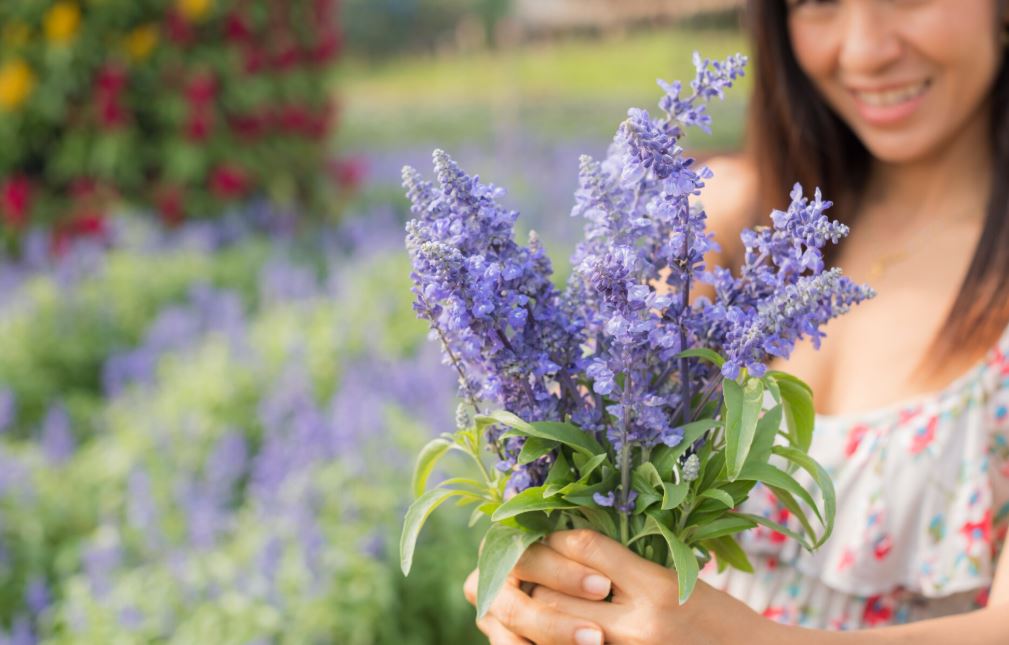
Lavender is one of the most loved flowering herbs in the world—famous for its calming fragrance, purple blooms, and low-maintenance nature. But if you’re gardening in Canada, one big question comes up: is lavender perennial in Canada? The short answer is yes—but it’s not that simple. Lavender can be perennial in many parts of Canada, but its survival depends heavily on your climate zone, the variety you choose, and how well you protect it during harsh winters.
In this guide, you’ll learn exactly how lavender behaves in Canadian conditions, which types survive best, and what you need to do to make sure your plants come back year after year.
What Does “Perennial” Mean in Gardening?
Before diving deeper, it’s important to understand what “perennial” actually means.
A perennial plant is one that lives for more than two years and regrows every spring after going dormant in winter. This is different from:
- Annuals – live for one season and die (e.g., petunias)
- Biennials – take two years to complete their lifecycle
Lavender is technically a perennial herb, but in colder climates like parts of Canada, it doesn’t always behave that way. If conditions aren’t right, it may die over winter—making it act like an annual.
Is Lavender Perennial in Canada?
Yes, lavender can be perennial in Canada, but only under the right conditions.
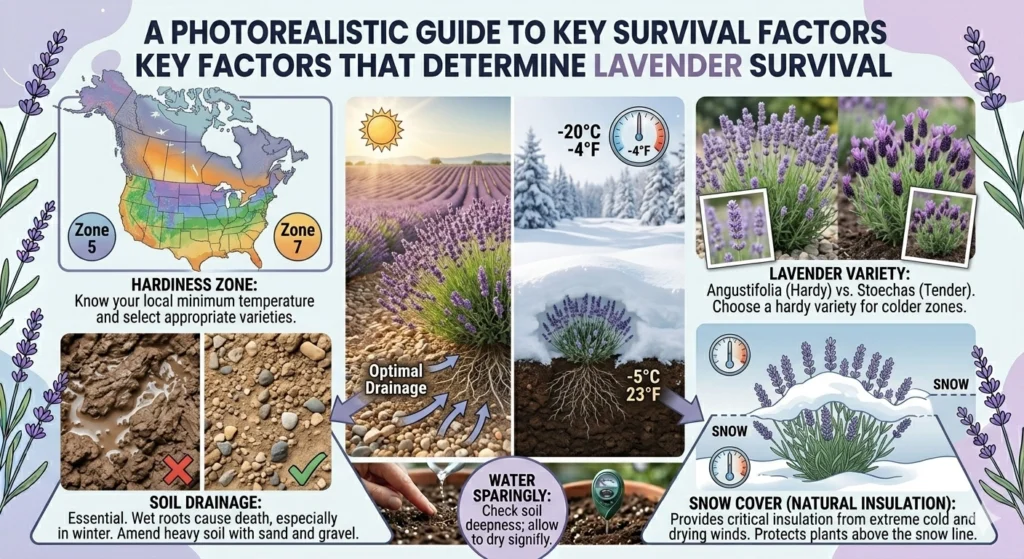
Key Factors That Determine Survival:
- Hardiness zone
- Winter temperature extremes
- Soil drainage
- Snow cover (natural insulation)
- Lavender variety
In milder regions like coastal British Columbia or southern Ontario, lavender easily survives and comes back each year. However, in colder areas such as the Prairies or northern regions, it requires extra care—or may not survive at all.
Simple Rule:
- Zones 5–8 → Lavender grows as a true perennial
- Zones 3–4 → Possible, but needs protection
- Below Zone 3 → Very difficult outdoors
Canadian Hardiness Zones Explained for Lavender
Canada’s climate varies widely, so understanding your plant hardiness zone is crucial.
General Lavender Suitability:
- Zone 5–6 (Southern Ontario, BC, coastal regions)
→ Ideal for most hardy lavender varieties - Zone 4 (parts of Alberta, Manitoba, Quebec)
→ Can grow with winter protection - Zone 3 and below (Prairies, northern regions)
→ High risk of winter kill
Biggest Challenge in Canada:
Lavender doesn’t usually die from cold alone—it dies from wet, frozen soil. Poor drainage is the #1 killer.
Best Lavender Varieties That Survive Canadian Winters

Not all lavender is created equal. Choosing the right type makes the difference between success and failure.
1. English Lavender (Best Choice)
- Most cold-hardy
- Survives down to Zone 4 (sometimes Zone 3 with care)
- Compact and fragrant
🌿 Popular Types:
- Hidcote Lavender – Deep purple flowers, very hardy
- Munstead Lavender – Early blooming and reliable
❌ Less Suitable Varieties:
- French Lavender – Sensitive to cold
- Spanish Lavender – Not winter-hardy in Canada
👉 If you want lavender to come back every year, always choose English varieties.
Will Lavender Come Back Every Year in Canada?
This is the question most gardeners care about.
✔️ Yes, lavender will come back every year IF:
- You plant a cold-hardy variety
- Soil drains well (no standing water)
- Plant gets full sun
- Winter protection is provided in colder zones
❌ It may NOT come back if:
- Roots stay wet during winter
- You plant non-hardy varieties
- There is poor airflow or heavy clay soil
Signs Your Lavender Will Survive:
- Healthy woody base
- Strong root system
- No waterlogging before winter
In colder regions, even hardy lavender can sometimes behave like a short-lived perennial (lasting 2–4 years).
How to Grow Lavender Successfully in Canada (Step-by-Step)
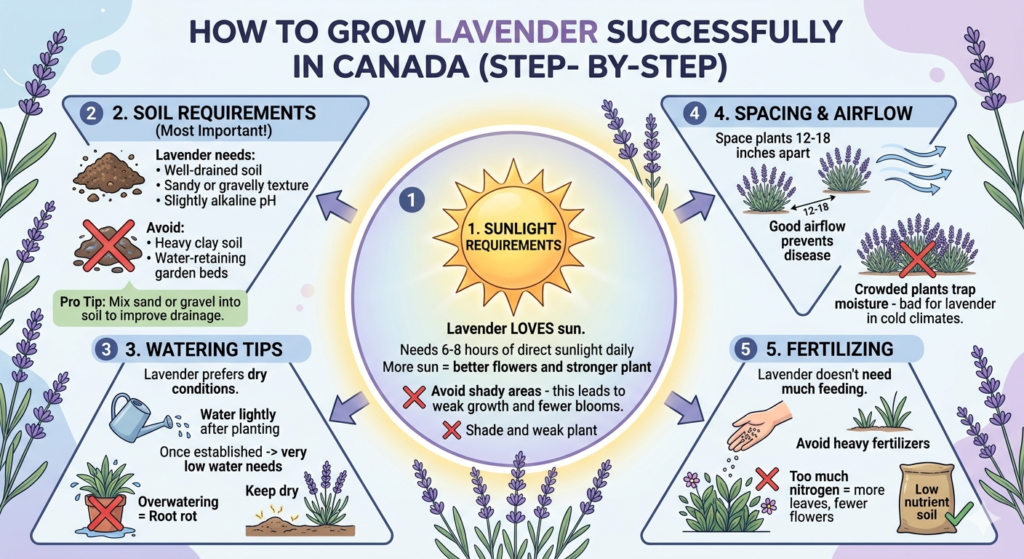
Growing lavender in Canada isn’t hard—you just need to follow the right method.
1. Sunlight Requirements
Lavender LOVES sun.
- Needs 6–8 hours of direct sunlight daily
- More sun = better flowers and stronger plant
- Avoid shady areas—this leads to weak growth and fewer blooms.
2. Soil Requirements (Most Important!)
This is where most gardeners fail.
Lavender needs:
- Well-drained soil
- Sandy or gravelly texture
- Slightly alkaline pH
Avoid:
- Heavy clay soil
- Water-retaining garden beds
Pro Tip: Mix sand or gravel into soil to improve drainage.
3. Watering Tips
Lavender prefers dry conditions.
- Water lightly after planting
- Once established → very low water needs
- Overwatering = Root rot (plant death)
4. Spacing & Airflow
- Space plants 12–18 inches apart
- Good airflow prevents disease
Crowded plants trap moisture—bad for lavender in cold climates.
5. Fertilizing
Lavender doesn’t need much feeding.
- Avoid heavy fertilizers
- Too much nitrogen = more leaves, fewer flowers
How Climate Impacts Lavender Growth in Canada
Canada’s winters are the real test.
Snow Can Help!
- Snow acts as insulation
- Protects roots from extreme cold
But Winter Moisture Is Dangerous
- Freeze-thaw cycles damage roots
- Wet soil causes rot
That’s why raised beds or sloped planting areas work best.
Why Some Lavender Plants Fail in Canada
Many beginners struggle—but it usually comes down to a few common mistakes:
- Planting in poorly drained soil
- Choosing the wrong variety
- Overwatering
- Planting in shade
- Not preparing for winter
Fix these, and your success rate increases dramatically.
Growing Lavender in Pots (Canada-Friendly Option)
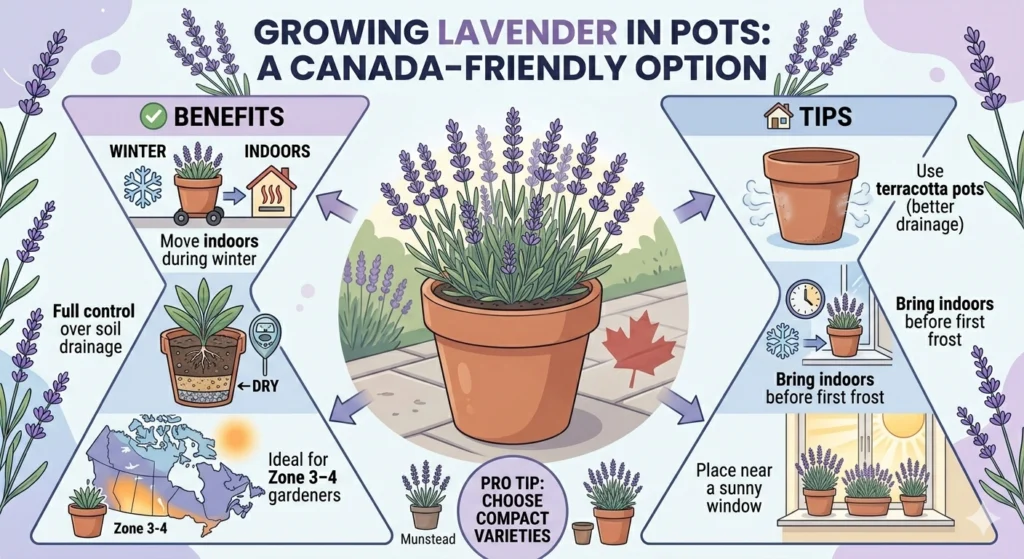
If your climate is too harsh, containers are a smart solution.
Benefits:
- Move indoors during winter
- Full control over soil drainage
- Ideal for Zone 3–4 gardeners
Tips:
- Use terracotta pots (better drainage)
- Bring indoors before first frost
- Place near a sunny window
How to Protect Lavender in Canadian Winters
Winter protection is the deciding factor between lavender that returns every spring and plants that fail after one season. In much of Canada, cold alone is not the main threat—excess moisture and freeze-thaw cycles are what damage roots.
Choose the Right Planting Location
- Plant lavender in a slightly raised area or slope so water drains away from the roots
- Avoid low spots where snowmelt collects
- Raised beds are ideal in colder regions
Mulching the Right Way
Mulch helps regulate soil temperature, but using the wrong material can trap moisture.
- Use dry, airy mulch such as straw, pine needles, or small gravel
- Apply mulch after the ground begins to freeze
- Keep mulch away from the base of the plant to prevent rot
Avoid heavy, wet mulch like compost or leaves directly on the crown.
Use Snow as Natural Insulation
Snow cover can actually protect lavender by insulating it from extreme cold.
- Do not remove snow from garden beds
- Consistent snow cover is beneficial
- Areas with little snow may need extra mulch protection
Protect from Winter Wetness
- Ensure soil drains well before winter begins
- Stop watering in late fall
- Avoid covering plants with plastic, which traps moisture
Container Plants in Winter
If lavender is grown in pots:
- Move containers to a sheltered location (garage, shed, or indoors)
- Keep soil slightly dry, not wet
- Provide light if kept indoors
How to Prune Lavender for Cold Climates
Pruning is essential for keeping lavender healthy, compact, and capable of surviving Canadian winters.
When to Prune
- Light pruning after flowering in summer
- Avoid heavy pruning late in fall
- Stop pruning at least 6–8 weeks before the first frost
How to Prune Properly
- Cut back about one-third of the plant
- Never cut into old woody stems
- Maintain a rounded shape
Why Pruning Matters
- Prevents woody, weak growth
- Encourages new blooms
- Improves airflow and plant structure
Common Pruning Mistakes
- Cutting too late in the season
- Cutting too deep into woody growth
- Skipping pruning entirely
Improper pruning can reduce winter survival and lead to leggy plants.
Common Problems Growing Lavender in Canada (And Solutions)
Even experienced gardeners face challenges with lavender in cold climates. Understanding these problems helps you fix them quickly.
Problem 1: Lavender Dies After Winter
Cause: Poor drainage or root rot
Solution:
- Improve soil with sand or gravel
- Plant in raised beds
- Avoid overwatering before winter
Problem 2: No Flowers or Weak Blooms
Cause: Lack of sunlight or too much fertilizer
Solution:
- Move plant to full sun location
- Reduce fertilizer use
Problem 3: Woody, Leggy Growth
Cause: Lack of pruning
Solution:
- Prune regularly each year
- Maintain compact shape
Problem 4: Yellowing Leaves
Cause: Overwatering or poor drainage
Solution:
- Let soil dry out
- Improve drainage immediately
Problem 5: Plant Looks Dead in Spring
Cause: Late dormancy or winter damage
Solution:
- Wait until late spring before removing
- Check for green growth at the base
Lavender can be slow to recover, especially in colder zones.
Growing Lavender Indoors or in Pots in Canada
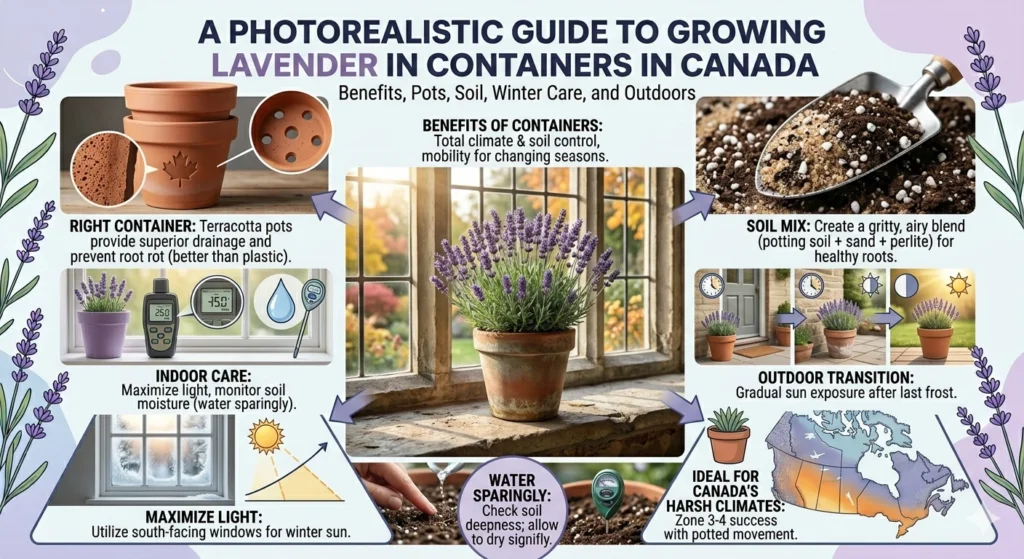
For gardeners in colder regions, growing lavender in containers is often the most reliable method.
Choosing the Right Container
- Use pots with drainage holes
- Terracotta pots are best because they dry quickly
- Avoid plastic containers that retain moisture
Soil Mix for Containers
- Use a well-draining mix (potting soil + sand or perlite)
- Avoid dense or moisture-retaining soil
Indoor Care During Winter
- Place near a south-facing window
- Provide at least 6 hours of light
- Water sparingly
Transitioning Outdoors
- Move plants outside after the last frost
- Gradually expose to sunlight (hardening off)
Container growing allows better control over climate and soil conditions.
Companion Plants for Lavender in Canadian Gardens
Lavender grows best alongside plants that prefer similar dry, sunny conditions.
Good Companion Plants
- Rosemary
- Thyme
- Sage
- Sedum
- Yarrow
These plants share similar needs:
- Low water
- Full sun
- Well-drained soil
Plants to Avoid
- Moisture-loving plants like hostas
- Shade-loving flowers
Mixing incompatible plants can lead to watering issues and poor growth.
FAQs: Is Lavender Perennial in Canada?
Is lavender perennial in Ontario, Canada?
Yes, lavender is perennial in most parts of Ontario, especially in Zones 5 and 6. Choosing hardy varieties like English lavender improves success.
Can lavender survive Canadian winters?
Yes, but survival depends on variety, drainage, and winter protection. English lavender has the best cold tolerance.
Does lavender come back every year in Zone 3?
It can, but it is difficult. Extra protection, mulch, and well-drained soil are required. Many gardeners grow it in containers instead.
What type of lavender is best for Canada?
English lavender varieties such as Hidcote and Munstead are the best choices for cold climates.
Can I grow lavender indoors in winter?
Yes, lavender can be grown indoors if it receives enough sunlight and is not overwatered
Final Thoughts
Lavender can absolutely be a perennial in Canada, but success depends on making the right choices from the start. Selecting a cold-hardy variety, planting in well-drained soil, and protecting plants during winter are the most important steps.
Gardeners in milder regions can enjoy lavender returning year after year with minimal effort. In colder zones, extra care such as mulching, pruning, and container growing can make all the difference.
If you understand your local climate and adjust your growing methods accordingly, lavender can thrive and become a long-lasting, beautiful part of your Canadian garden.

- 10 Best Garden Hose For Hose Reel 2026 - October 15, 2026
- 10 Best Garden Hose For High Flow Rate 2026 - October 15, 2026
- 10 Best Garden Hose For Full Sun 2026 - October 15, 2026