25 Types of Peperomia: A Plant Lover’s Guide to Every Variety
Peperomias are the perfect “human friend” houseplants. Why? Because they forgive you if you forget to water them, thrive in low light, and come in an incredible variety of shapes and textures. From leaves that look like watermelon rinds to wrinkled, raisin-like foliage, there’s a Peperomia for every shelf.
Below, you will find 25 types of Peperomia with easy-to-recognize names and descriptions to help you build your dream indoor jungle.
1. Watermelon Peperomia (Peperomia argyreia)
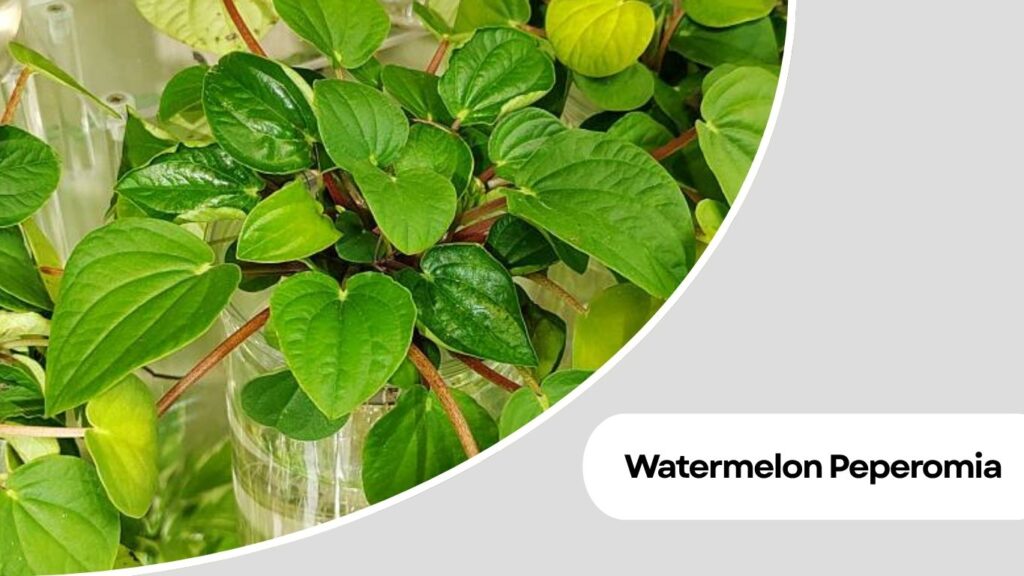
This is the Peperomia that stops conversations. When guests see the alternating silver and dark green stripes, they always ask, “Is that real?”
Detailed breakdown:
- Leaf size & shape: Round, slightly cupped, growing up to 4 inches across. They emerge from long, burgundy-red petioles (stems) that hold the leaves like little umbrellas.
- The pattern: Unlike painted plants, the watermelon pattern is natural. Silver bands radiate from a central dark green spine. The reverse side of the leaf is pale green with no stripes.
- Growth habit: Clumping and upright. It stays compact, usually maxing out at 8–10 inches tall, making it perfect for coffee tables or office desks.
- Flower appearance: Produces thin, greenish-white “rat tail” spikes that stand straight up. They are not showy, but they smell faintly sweet when touched.
Care specifics:
- Light: Medium indirect light only. Direct sun will bleach the silver stripes into a dull, faded green.
- Water: Keep it slightly drier than other Peperomias. The thick leaves store plenty of moisture. Water every 10–14 days in summer, every 3 weeks in winter.
- Humidity: Average room humidity is fine, but if leaf edges go crispy, give it a bathroom vacation (steam from a shower works wonders).
- Propagation trick: Cut a healthy leaf in half across the width. Stick the cut edge into damp soil. Each half will sprout baby plants from the veins.
Common problem: Lower leaves yellowing and dropping? You are likely overwatering. Let the soil go bone-dry for a full week before your next watering.
2. Baby Rubber Plant (Peperomia obtusifolia)
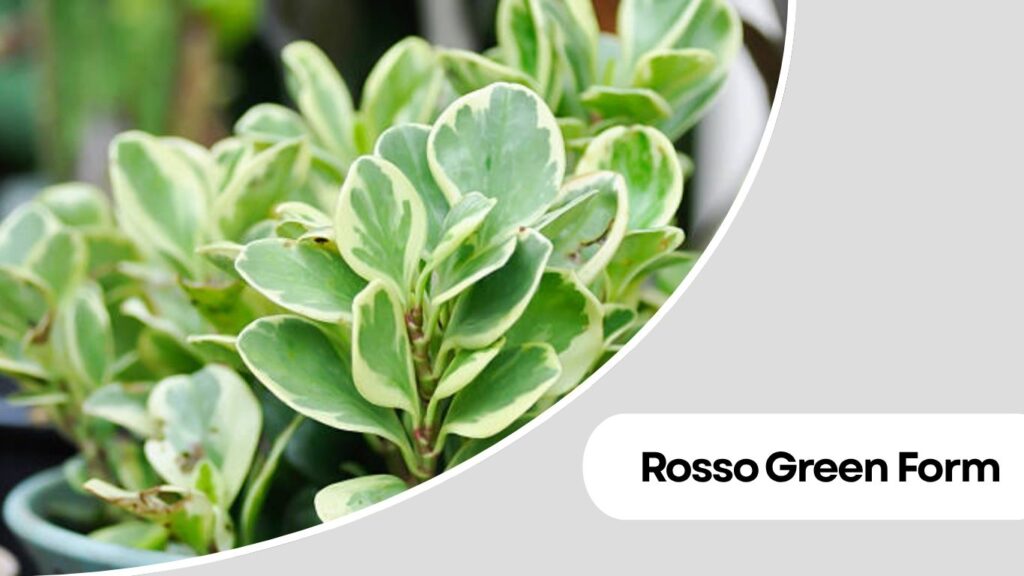
This is the ultimate “first plant.” It survives low light, missed waterings, and even a little dust. It has been passed down in families for generations because it refuses to die.
Detailed breakdown:
- Leaf texture: Thick, waxy, and completely smooth. The leaves feel like vinyl or a brand new playing card. They are so sturdy you can wipe them clean with a damp paper towel without fear of damage.
- Leaf color varieties:
- Green: Solid, deep emerald.
- Variegata: Green center with creamy white or yellow edges.
- Golden Gate: Marbled green, cream, and pale yellow with pink stems.
- Lemon Lime: Bright chartreuse and lime green (no dark green at all).
- Growth habit: Upright and bushy. Over years, it develops a woody, trunk-like stem at the base, looking like a tiny tree. It can reach 12–15 inches tall indoors.
- Flower appearance: Thick, white, fuzzy spikes that look like tiny cattails. They can last for months before browning.
Care specifics:
- Light: Tolerates low light (north-facing windows) but grows faster in medium light. Under low light, variegated varieties may lose their cream edges and revert to solid green.
- Water: Wait until the leaves feel slightly soft and pliable (like a deflated balloon) before watering. That is your signal. If leaves are firm and rigid, do not water.
- Soil: Use a cactus/succulent mix. Standard potting soil holds too much moisture and will cause root rot within weeks.
- Cleaning tip: Dust blocks light. Wipe leaves with a banana peel (inside of the peel) for a natural shine that also feeds the plant a tiny bit of potassium.
Common problem:
Black spots on leaves? That is often bacterial leaf spot from getting water on the leaves. Always water at the soil level, not from overhead.
3. Ripple Peperomia (Peperomia caperata)
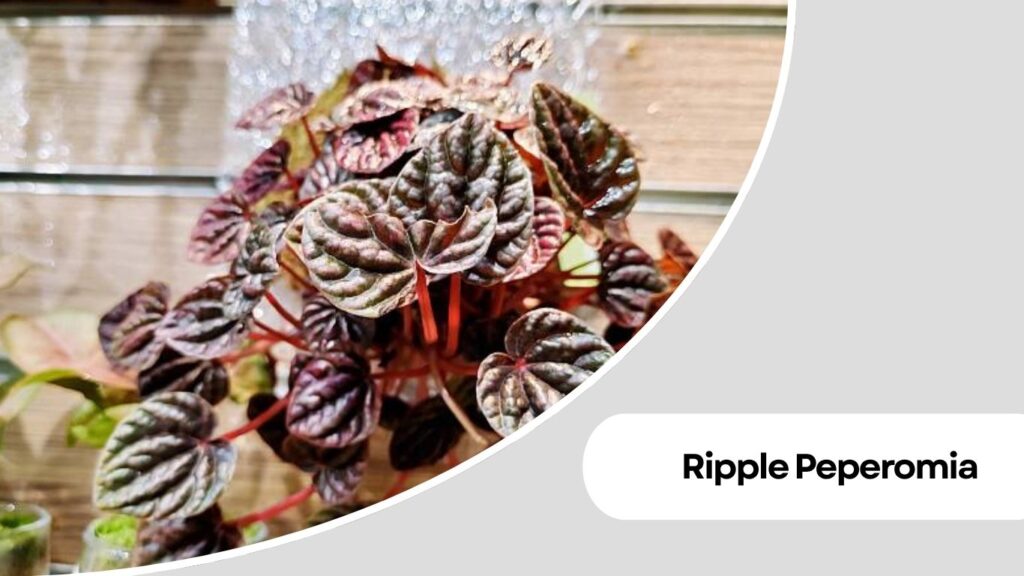
This is the plant for people who love texture. Run your finger across the leaf, and you will feel deep corduroy-like ridges. It is a tactile dream.
Detailed breakdown:
- Leaf texture & shape: Heart-shaped (cordate) with deep, puckered grooves running from the base to the tip. The surface is not flat at all—it looks like a crinkled piece of paper that was ironed halfway flat.
- Natural colors (beyond green):
- Standard: Dark green tops, pale green bottoms.
- Schumi Red: Burgundy-wine red on the underside and creeping into the top veins.
- Luna Red: Almost entirely ruby-red on top, with only a hint of green near the center.
- Abricos: A rare hybrid with apricot-pink young leaves that age to green.
- Growth habit: Low and mounding. Leaves emerge from a central crown, hugging the soil. Height rarely exceeds 6 inches.
- Flower appearance: This one has surprisingly odd flowers. Tall, thin, rat-tail spikes that are pure white (not green). They stand 2–3 inches above the leaves like little antennae.
Care specifics:
- Light: Bright indirect light is mandatory. Too little light, and the leaves will flatten out (the ripples disappear). Too much direct sun, and the edges burn.
- Water: Ripple Peperomias are thirstier than their waxy cousins because their leaves are thinner. Water when the top 1 inch of soil is dry. Do not let them dry out completely.
- Humidity: They love humidity. A pebble tray or grouping them with other plants makes them much happier. In dry air, the leaf edges curl inward and crack.
- Pruning: Remove old, wrinkled, or yellow lower leaves regularly to encourage fresh new growth from the center.
Common problem:
Flowers turning black and mushy? That is normal aging, but if it happens quickly, you have a fungus. Cut off the flower spike and increase airflow around the plant.
4. String of Turtles (Peperomia prostrata)
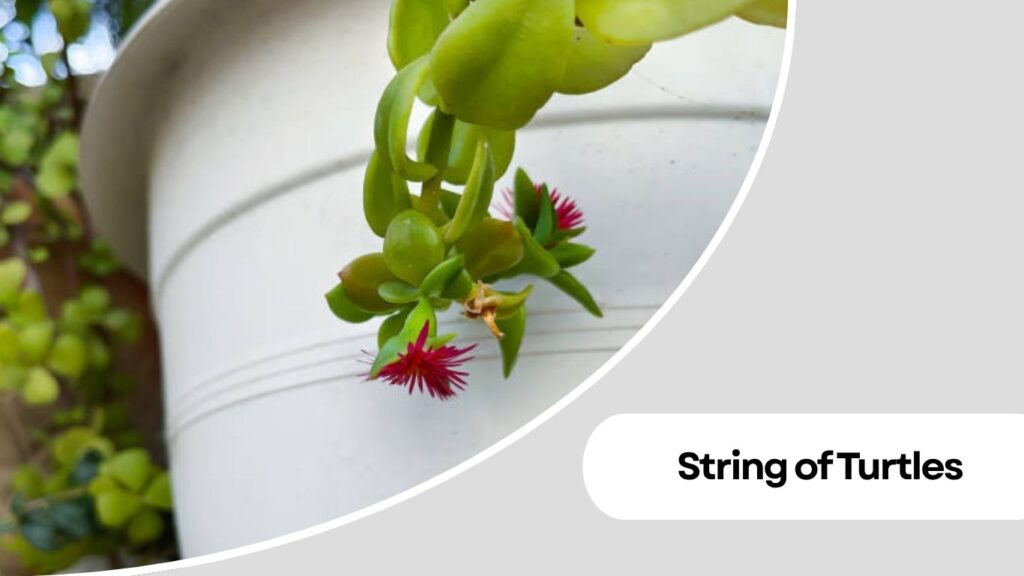
This is the cutest Peperomia, hands down. The leaves look like miniature turtle shells—complete with hexagonal brown-green patterns. Children and non-plant people alike will stop to stare.
Detailed breakdown:
- Leaf size & shape: Incredibly tiny, measuring only ¼ to ½ inch across. They are perfectly round when young, becoming slightly oval with age. The leaves grow in opposite pairs along thin, wiry vines.
- The turtle pattern: Each leaf has a light green background with a dark, netted pattern of veins that forms tiny hexagons. The edges of the leaf have a faint brownish rim, completing the shell illusion.
- Growth habit: Trailing and cascading. Vines can reach 12–18 inches long, but they grow slowly (1–2 inches per month). Perfect for a small hanging pot or a high shelf where the vines can dangle.
- Stems: The vines are reddish-purple and very delicate. Handle with care—they snap easily.
- Flower appearance: Rare indoors. If it does flower, you will see a single, thin, greenish spike that looks like a thread sticking out of the vine.
Care specifics:
- Light: Bright indirect light is non-negotiable. In low light, the spaces between leaves (internodes) stretch out, making the plant look bald and scraggly. An east-facing window is ideal.
- Water: This is the most sensitive to overwatering. The tiny stems rot instantly in wet soil. Use a moisture meter or a wooden skewer. Only water when the top 2 inches are completely dry. Bottom watering is recommended (set the pot in a saucer of water for 20 minutes, then remove).
- Soil: Extra chunky mix. Combine 2 parts succulent soil, 1 part perlite, and 1 part fine orchid bark. No moisture-retaining peat moss.
- Humidity: Moderate to high. If your home is dry (below 40% humidity), the leaves will curl into tiny cups and stop growing. A small humidifier nearby works wonders.
Common problem
Vines suddenly wilting and collapsing at the soil line. That is stem rot from too much moisture. Immediately take cuttings from healthy vine tips (2 inches long) and propagate them in damp sphagnum moss. Discard the original plant.
Propagation note: Do not try the “leaf cutting in half” method with this one. It rarely works. Instead, lay a long vine across damp soil and pin it down with paperclips. Each node will root separately.
5. Raindrop Peperomia (Peperomia polybotrya)
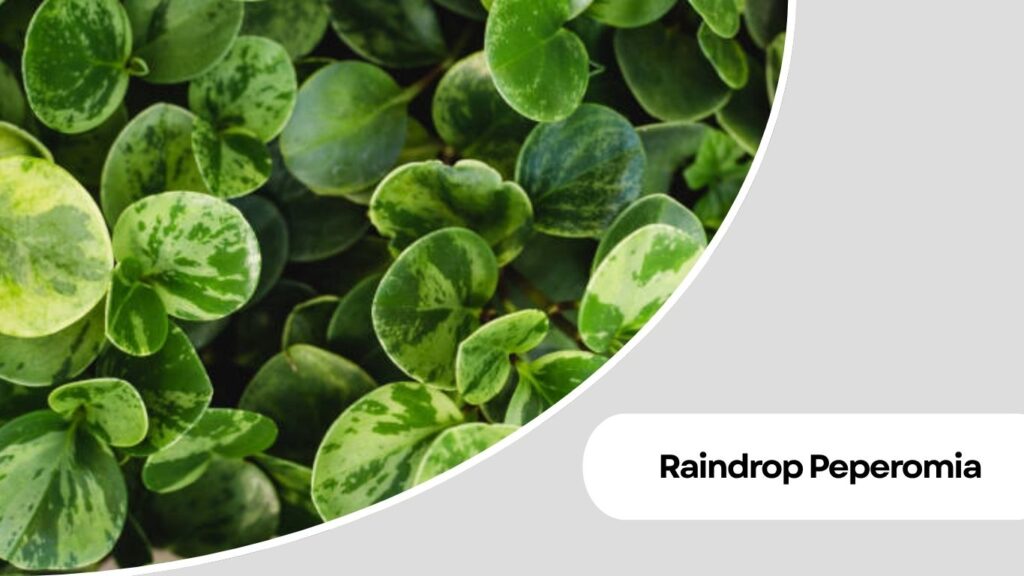
This is the Peperomia that gets mistaken for a Pilea (Chinese Money Plant) by everyone. But unlike the Pilea, the Raindrop Peperomia does not drop its lower leaves randomly. It stays full and beautiful year-round.
Detailed breakdown:
- Leaf shape: The leaf is a perfect teardrop—wide at the top, tapering to a point at the stem. No other Peperomia has this exact silhouette.
- Leaf size: Massive for a Peperomia. Mature leaves can reach 4–5 inches long and 3 inches wide. Each leaf is thick, stiff, and succulent-like.
- The “window” phenomenon: Hold a leaf up to a light source. You will see a translucent line running parallel to the leaf edge, about ¼ inch inside the margin. This is a natural adaptation for light absorption in the rainforest understory.
- Leaf color: Deep, glossy green on top, pale matte green underneath. Variegated forms exist (cream edges), but they are rare and expensive.
- Growth habit: Upright and tree-like. The main stem becomes woody with age, and leaves attach via long, pale green petioles (2–3 inches long). Mature height: 12–15 inches.
- Flower appearance: Tall, green-white spikes that grow in clusters of 2–4 from the same point. They look like small green candles.
Care specifics:
- Light: Adaptable. It grows well in medium indirect light (4–6 feet from a south window) but will tolerate low light (though growth will slow dramatically). Direct morning sun is fine; hot afternoon sun will cause white burn spots.
- Water: The “taco test.” Gently fold a leaf lengthwise. If it bends easily like a soft taco shell, water it. If it resists bending and feels crisp, wait a week. This is the most reliable watering method for this species.
- Fertilizer: This is a hungry grower. Use a balanced liquid fertilizer (10-10-10) diluted to half strength once a month during spring and summer. Do not fertilize in winter.
- Repotting: Only repot every 2–3 years. It likes being slightly root-bound. When you do repot, go up only 1 inch in pot size. A pot that is too large will hold excess water and kill it.
Common problem
Leaves pointing straight down (drooping but not soft). That means your plant is not getting enough light. It is flattening its leaves to capture more photons. Move it closer to a window. Within a week, the leaves will tilt back up to horizontal.
Pilea vs. Peperomia confusion: How to tell them apart quickly?
- Pilea leaves attach at the exact center of the leaf (peltate).
- Raindrop Peperomia leaves attach slightly off-center, near the bottom edge of the teardrop.
6. Emerald Ripple Red (Peperomia caperata ‘Schumi Red’)
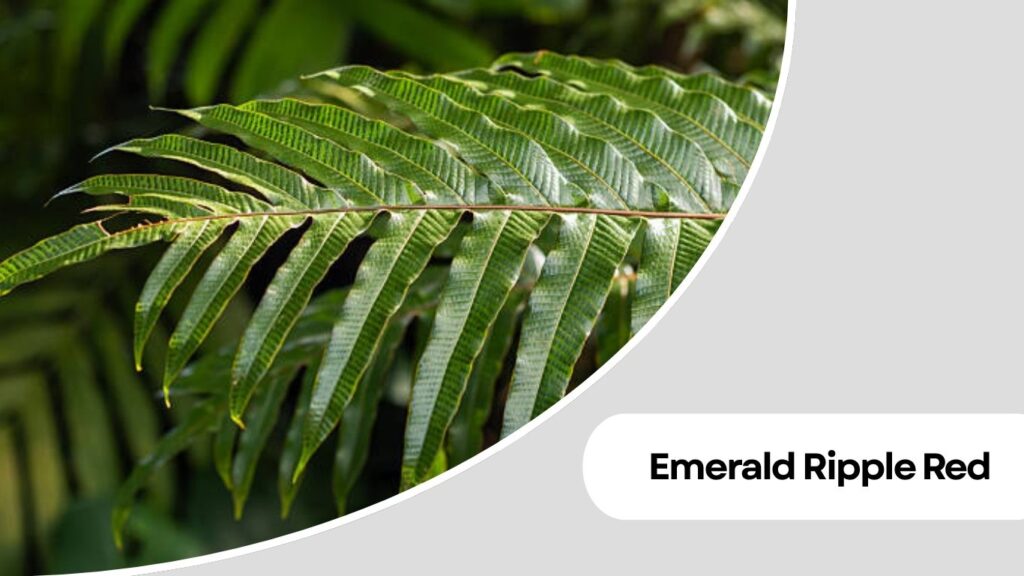
If the standard Ripple Peperomia is subtle, the ‘Schumi Red’ is a showoff. This cultivar takes the deep corduroy texture and adds a rich burgundy-wine color that bleeds from the leaf undersides into the veins on top. It is one of the darkest Peperomias you can buy, and it looks stunning against light-colored pots or white shelves.
Leaf Color & Texture
The top of each heart-shaped leaf is dark green with deep red veins running like rivers across the surface. The underside is solid burgundy, almost purple in low light. The texture is the same deep, puckered ripple as the standard caperata—rough like corduroy fabric. Leaves grow to about 2–3 inches wide and stay low to the soil in a dense rosette.
Growth Pattern & Flowers
This plant stays compact, rarely exceeding 6 inches tall. It spreads sideways slowly, filling a 4-inch pot within a year. The flowers are thin, white, rat-tail spikes that rise 2–3 inches above the leaves. Unlike the green flowers of other Peperomias, these are pure white and last for several weeks. Some growers remove them to direct energy back into leaf production.
Care Comparison Table
| Care Factor | Emerald Ripple Red | Standard Ripple |
|---|---|---|
| Light needed | Bright indirect (to keep red veins) | Medium indirect |
| Red color retention | Fades without enough light | Not applicable |
| Growth speed | Slow | Moderate |
| Best pot size | 4 inches | 4–6 inches |
| Humidity preference | 50-60% | 40-50% |
7. Peperomia Hope (Peperomia tetraphylla ‘Hope’)
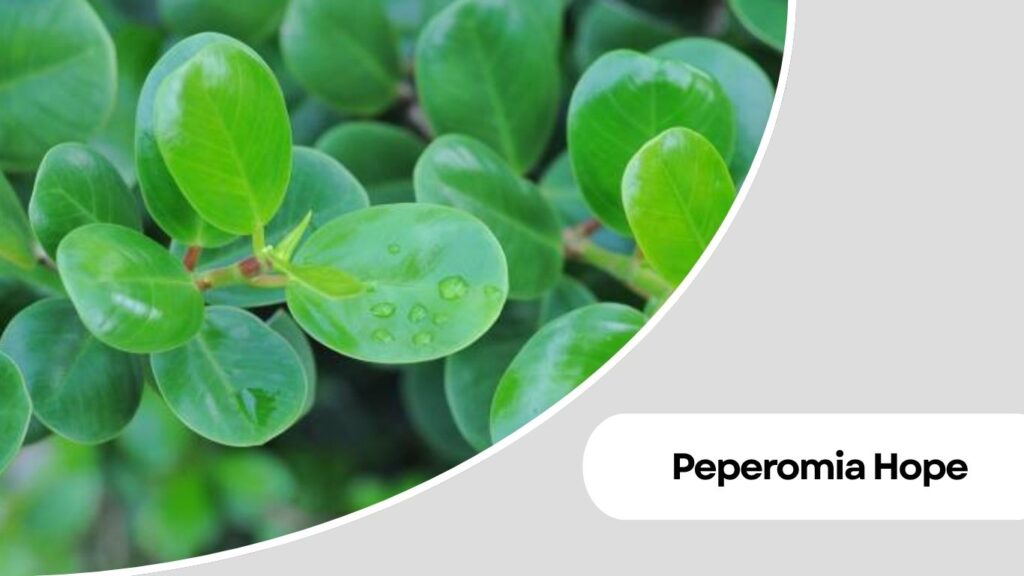
Peperomia Hope is a hybrid that combines trailing habit with adorable, coin-sized leaves. Unlike the delicate String of Turtles, this one is robust, fast-growing, and forgiving. The name ‘Hope’ suits it because even beginner plant owners can keep this one alive and thriving. It looks spectacular in hanging baskets or cascading over the edge of a bookshelf.
Leaf Arrangement (The “Four-Leaf” Clover)
The species name tetraphylla means “four leaves.” True to its name, leaves grow in whorls of three to four around thin, reddish-brown stems. Each leaf is perfectly round, about ¾ inch across, and thick like a succulent. The color is soft sage green with faint lighter veins and a subtle silvery sheen when young. As leaves age, they darken to a deeper green.
Trailing Habit & Growth Speed
This is one of the fastest-growing Peperomias. Vines can reach 12–18 inches in a single growing season (spring through summer). The stems are flexible but not brittle, making them easy to train along hooks or let hang freely. In ideal conditions, the plant becomes so full that you cannot see the pot. Pinch back the tips occasionally to encourage branching and a bushier look.
Quick Care Guide
- Watering: Only when soil is completely dry—stick your finger to the bottom of the pot.
- Light: Thrives in medium to bright indirect light. Low light creates gaps between leaves.
- Sun tolerance: Direct sun burns leaf edges. Morning sun only.
- Propagation: Cut vines into 2-inch sections with a few leaves. Stick into damp soil. Roots in 2 weeks.
- Speed: One of the fastest Peperomias. Vines grow 12–18 inches per season.
- Pinching: Trim tips in spring to encourage bushier growth.
8. Ginny Peperomia (Peperomia clusiifolia ‘Ginny’)
Also sold as ‘Jelly’ or ‘Tricolor,’ the Ginny Peperomia is a splash of pastel happiness. Each leaf is a gradient of green, cream, and pink. It looks like a watercolor painting. This variety grows upright and bushy, making it perfect for tabletops or desktops where you can admire the colorful leaf edges up close.
Tricolor Variegation Explained
The leaves are oval-shaped, thick, and waxy, measuring 2–3 inches long. The center of the leaf is dark green. A creamy white or pale yellow band runs along the edge, about ¼ inch wide. Between the green center and the cream edge, there is a soft blush of pink or magenta. The pink is strongest on new leaves and fades slightly as the leaf matures. The leaf undersides are pale pink.
Light Requirements for Color
The pink edges are the first thing to fade if the plant is unhappy. Ginny needs bright indirect light to keep its tricolor appearance. An east window with morning sun or a south window with a sheer curtain works best. In low light, the leaves turn solid dark green with no variegation at all. In too much direct sun, the pink burns to a crispy brown. Rotate the pot every week to ensure all sides get even light.
Growth & Pruning Reference
| Growth Feature | Detail |
|---|---|
| Mature height | 10–12 inches |
| Stem type | Thick, woody at base |
| Lower leaf drop | Normal over time |
| Pruning time | Early spring |
| Pinch amount | Top 2 inches |
| Result of pruning | Bushier side branches |
| Cutting propagation | Roots easily in water or soil |
9. Metallic Peperomia (Peperomia metallica)
This is the Peperomia for plant collectors who love dark, moody foliage. The Metallic Peperomia has leaves that look like they were hammered from iron and polished to a shine. The top surface is nearly black with a greenish-silver sheen, while the underside is a shocking ruby red. It is small, slow-growing, and utterly unique.
The “Metallic” Sheen
The leaf surface is smooth but not glossy. Instead, it has a matte, reflective quality that shifts between dark green, charcoal gray, and bronze depending on the light angle. This effect comes from microscopic leaf structures that scatter light. The leaves are small (1–1.5 inches long), narrow, and slightly cupped upward like tiny spoons. Red veins run underneath the dark surface, visible only when held up to light.
Compact Size & Ideal Placement
This plant stays tiny. Mature specimens reach only 4–5 inches tall and wide. It grows slowly, adding perhaps 2–3 new leaves per month. Because of its small size and dark color, it is best displayed in a bright spot where the sheen catches the light. A white pot or light-colored shelf creates contrast. Do not bury it among other plants—it will disappear visually.
Sensitive Care Requirements
- Humidity: Demands 60% or higher. Use a humidifier or pebble tray.
- Watering: Never let soil dry out completely, but also never soggy. Water when top half-inch is dry.
- Water type: Use distilled or rainwater. Tap water minerals cause leaf spotting.
- Light: Bright indirect light is essential. Low light kills the metallic sheen.
- Color warning: Without enough light, red undersides turn pale, and tops fade to dull green.
- Forgiveness level: Less forgiving than common Peperomias. Not for absolute beginners.
10. Rosso Peperomia (Peperomia caperata ‘Rosso’)
The ‘Rosso’ takes the classic Ripple Peperomia and gives it a dramatic, architectural twist. Instead of round, heart-shaped leaves, ‘Rosso’ produces long, narrow, pointed leaves that fold upward along the center vein like canoes. The top of each leaf is dark green with deep grooves. The underside is a vivid, glossy crimson red. When viewed from above, you see only the red undersides peeking out from beneath the green tops.
Unique Leaf Shape & Color
Each leaf is 2–3 inches long but only ¾ inch wide at the widest point. The leaves grow in a dense, upright cluster, reaching 6–8 inches tall. The deep red underside is visible because the leaves do not lie flat; they angle upward and outward, showing their red “bellies.” New leaves emerge entirely red and slowly develop green on top as they mature. The texture is the same deep ripple as all caperata varieties.
Light for Maximum Red
To keep the red underside intense, give ‘Rosso’ bright indirect light. An east window is perfect. In medium light, the red fades to a dull maroon. In low light, the leaves elongate, lose their ripple, and turn mostly green. Direct sun burns the leaf tips. If you want the reddest possible plant, consider a full-spectrum grow light for 10–12 hours daily.
Watering & Humidity Guide
| Need | Recommendation |
|---|---|
| Water frequency | Every 7–10 days in summer |
| Soil dryness trigger | Top 1 inch dry |
| Leaf thickness | Thinner than waxy types (needs more water) |
| Humidity preference | 50-60% |
| Low humidity sign | Brown, crispy leaf edges |
| Humidity solution | Small humidifier or pebble tray |
| Watering caution | Avoid getting water in leaf grooves (causes fungus) |
11. Cupid Peperomia (Peperomia scandens ‘Variegata’)
Named for its heart-shaped leaves, the Cupid Peperomia is a fast-growing trailing variety with a soft, romantic look. The leaves are green with wide, creamy white edges, and the vines can easily reach 3–4 feet long. Unlike many Peperomias that grow at a snail’s pace, Cupid actively climbs and trails, making it a great choice for macrame hangers or high shelves where vines can waterfall downward.
Heart-Shaped Leaves & Variegation
The leaves are true valentine hearts—broad at the base, tapering to a soft point. Each leaf is 1.5–2 inches long and about as wide. The variegation is stable and consistent: a dark green center surrounded by a thick, irregular cream border. Some leaves have white speckles bleeding into the green. The stems are pale green and slightly succulent. New leaves emerge with pinkish edges that fade to cream as they harden off.
Fast Growth & Training
Cupid is the speedster of the Peperomia family. In warm months, vines can grow 1–2 inches per week. It naturally wants to climb, so provide a small trellis or let it trail. If you want a bushier plant, cut the vines back by half every spring. Each cutting propagates easily in water. Within a month, you will have rooted plants ready to pot up. Pinch growing tips regularly to encourage side branching.
Light & Water Balance
- Light need: Bright indirect light. South or west window with sheer curtain is ideal.
- Low light result: New leaves revert to solid green (lose cream edges).
- Variegation rule: The more light, the wider the cream borders.
- Watering trigger: Water when top 2 inches of soil are dry.
- Leaf test: Thick leaves store water. Underwatering is safer than overwatering.
- Limp leaves: If leaves feel soft and limp, water immediately.
- Growth speed: 1–2 inches per week in warm months.
12. Isabella Peperomia (Peperomia hoffmannii)
Isabella is a miniature creeper that barely gets noticed in a big pot but becomes a star in terrariums and bottle gardens. The leaves are smaller than your pinky fingernail, pale green with prominent lighter veins, and the stems creep along the soil surface like tiny vines. It is one of the smallest Peperomias in existence and a must-have for fairy garden enthusiasts.
Miniature Proportions
Each leaf is only ¼ to ½ inch across, round to slightly oval, and very thin compared to other Peperomias. The color is a soft, pale mint green with a central vein and 4–6 side veins that are noticeably lighter, almost white. The stems are thin, reddish-brown, and root wherever they touch moist soil. The entire plant stays under 2 inches tall but can spread sideways to fill a 6-inch pot.
Terrarium Living
Isabella is one of the few Peperomias that genuinely thrives in a closed terrarium. It loves the high humidity (80–100%) and stable temperatures. The small size means it never outgrows its container. Plant it in a glass jar, old fishbowl, or purpose-built terrarium with a layer of charcoal and drainage rock at the bottom. Do not use a pot with a drainage hole—terrariums are meant to be self-watering closed systems.
Open Pot vs. Terrarium Care (Table)
| Care Factor | In a Closed Terrarium | In an Open Pot |
|---|---|---|
| Humidity needed | 80-100% (self-maintaining) | 60%+ with daily misting |
| Watering method | Condensation does the work | Fine mist spray every 2–3 days |
| Soil moisture | Consistently moist | Surface dry = water immediately |
| Root sensitivity | Low (protected environment) | High (shallow roots disturb easily) |
| Fertilizer | Not needed | Quarter strength, monthly in summer |
| Success rate | Very high | Moderate (requires attention) |
13. Teardrop Peperomia (Peperomia orba)
Often sold under the market name ‘Pixie Lime,’ the Teardrop Peperomia is a cheerful, bright green plant that looks like it is glowing from within. The leaves are small, teardrop-shaped, and dense along upright stems. It is one of the most affordable and widely available Peperomias, frequently found at grocery stores and big-box nurseries. Do not let its commonness fool you—it is a charming, easy-going plant.
Pixie Lime vs. Standard Orba – Intro
There are two common forms. The standard Peperomia orba has solid, deep green leaves. The ‘Pixie Lime’ cultivar has leaves that are bright chartreuse and lime green, especially on new growth. ‘Pixie Lime’ also stays smaller and more compact. Both forms have the same teardrop shape: wider at the tip, narrower at the stem. Leaves measure 1–1.5 inches long and grow in alternating pairs up a central stem.
Growth & Propagation
This plant grows upright to about 6–8 inches tall, then starts to sprawl sideways as the stems get heavy. It does not trail cleanly like Cupid or Hope—instead, it tumbles messily. Regular pruning keeps it tidy. Propagation is almost too easy. Any stem cutting with 2–3 leaves will root in water within a week. You can also pull off a single leaf, let it callus for a day, and stick it in damp soil. Success rate is near 100%.
14. Jelly Peperomia (Peperomia clusiifolia)
Similar to ‘Ginny’ but without the pink blush. The thick, fleshy leaves are a solid green with a creamy yellow-white edge. It is tougher and grows faster than its tricolor cousin, making it a better choice for lower-light rooms or beginner plant parents who want variegation without the fuss.
Leaf Characteristics
The leaves are oblong, thick, and waxy, measuring 2–3 inches long and 1–1.5 inches wide. The center is a deep, uniform green. The margin is a clean, creamy white or pale yellow band about ⅛ inch wide. No pink or magenta appears anywhere on the leaf. The underside is pale green. Leaf edges sometimes develop a subtle wave as the plant matures.
Growth Habit
Upright and bushy, reaching 10–12 inches tall. Stems are thick and succulent, branching readily without pruning. Lower leaves may drop as the stem ages, exposing a woody base. This is normal. New growth emerges from the top and sides. It fills a 6-inch pot completely within one growing season.
Growth & Hardiness Comparison
| Trait | Jelly Peperomia | Ginny Peperomia |
|---|---|---|
| Leaf edge color | Creamy white only | Cream + pink blush |
| Growth speed | Fast | Moderate |
| Low light tolerance | Good (keeps variegation) | Poor (loses pink, then fades) |
| Beginner friendly | Very | Moderate |
| Mature height | 10–12 inches | 10–12 inches |
| Stem branching | Self-branching | Needs pinching |
| Leaf drop | Normal with age | Normal with age |
15. Red Log Peperomia (Peperomia verticillata)
This plant grows tall and leggy with whorls of fuzzy, inverted leaves. The stems and undersides of the leaves are bright red. It looks almost like a tiny shrub and behaves more like a succulent than a typical Peperomia. The name “Red Log” comes from the red, woody stems that remain visible as the plant grows upward.
Leaf Arrangement & Texture
Leaves grow in whorls of four to six around a central stem. Each leaf is 1–1.5 inches long, oval-shaped, and folded slightly downward (inverted). The top surface is dark green with a soft, fuzzy (pubescent) texture. The underside is covered in fine red hairs, giving it a bright crimson appearance. Stems are thick, red, and become woody with age.
Growth Pattern
Unlike most Peperomias that stay short, Red Log grows vertically. It can reach 12–15 inches tall. Lower leaves naturally drop as the stem elongates, leaving the red stem exposed like a small log. This is desirable—it creates the “red log” effect. To prevent it from becoming too leggy, pinch the growing tip every few months. The plant will branch from the pinch point.
Care Requirements
- Light: Bright indirect light. Direct sun burns the fuzzy leaves.
- Water: Treat like a succulent. Water only when soil is completely dry.
- Leaf drop: Lower leaves falling off is normal and expected. Do not panic.
- Legginess prevention: Pinch growing tips every 2–3 months to encourage branching.
- Stem color: The red stems need light to stay red. Too little light = green stems.
- Soil: Cactus/succulent mix with extra perlite. Needs excellent drainage.
- Humidity: Low to average. Does not need misting or pebble trays.
16. Happy Bean Peperomia (Peperomia ferreyrae)
Looking like a cluster of green beans, this succulent-like Peperomia has folded, bean-shaped leaves with a translucent “window” stripe down the center. It is native to Peru and grows upright in a dense, branching cluster. The common name “Happy Bean” is perfect because the plant truly looks like a handful of joyful little beans sprouting from the soil.
Leaf Shape & The “Window”
Each leaf is 1–2 inches long, narrow, and folded along the center like a taco or a green bean. The leaf edges are almost touching. On the top fold, there is a translucent stripe called a “window” or “epidermal window.” This adaptation allows light to penetrate deeper into the leaf tissue. When backlit, the stripe glows bright green. The leaf color is bright lime to deep green, sometimes with reddish tips.
Growth Habit & Size
Upright and shrubby. Reaches 8–12 inches tall and spreads 6–8 inches wide. Branches freely from the base without pruning. The stems are thin, green, and woody with age. New growth emerges from the center and tips. Older plants look like small, bean-covered bushes. It rarely flowers indoors, but when it does, the spikes are pale green and extremely thin.
Quick Reference Table
| Feature | Detail |
|---|---|
| Common name origin | Looks like green beans |
| Leaf shape | Folded, taco-like |
| Leaf length | 1–2 inches |
| Unique feature | Translucent “window” stripe on top fold |
| Mature height | 8–12 inches |
| Mature width | 6–8 inches |
| Growth rate | Slow to moderate |
| Flower appearance | Pale green, very thin spikes (rare indoors) |
| Native region | Peru |
17. Vining Peperomia (Peperomia serpens)
A true creeper with small, shiny, heart-shaped green leaves. It is extremely forgiving and looks great in a macrame hanger. This species is often confused with Cupid Peperomia, but Vining Peperomia has solid green leaves (no variegation) and smaller, more delicate foliage. The name serpens means “creeping” or “serpent-like,” referring to the winding, snaking vines.
Leaf & Vine Characteristics
Leaves are heart-shaped, 1–1.5 inches across, smooth, and glossy bright green. The leaf surface is completely flat (no ripples or folds). Stems are thin, flexible, pale green, and root readily at the nodes. Vines can reach 2–3 feet long. Unlike Cupid, which has thick succulent stems, Vining Peperomia has thin, almost wire-like stems that feel delicate but are surprisingly strong.
Trailing vs. Climbing
This plant can do both. It will trail beautifully over the edge of a hanging basket. If given a moss pole or trellis, it will climb using its aerial roots. Climbing produces larger leaves (up to 2 inches). Trailing produces smaller leaves (1 inch). Indoors, most growers let it trail because the cascading effect is more dramatic.
Care Differences from Cupid
- Leaf color: Solid bright green. No cream edges or variegation.
- Stem thickness: Thin and wire-like (vs. Cupid’s thick succulent stems).
- Light tolerance: Handles lower light than Cupid. Does not revert or fade.
- Water need: Slightly thirstier because stems store less water.
- Propagation: Even easier than Cupid. Nodes root on contact with soil.
- Growth speed: Moderate. Slower than Cupid, faster than Hope.
- Best use: Hanging baskets, macrame hangers, or small trellises.
18. Peperomia ‘Napoli Nights’
A stunning cultivar bred for color. The leaves are silvery-blue-green with dark purple veins and a soft, powdery texture. ‘Napoli Nights’ is a hybrid within the caperata (Ripple) family, so it has the same deeply ridged, heart-shaped leaves. The color combination is unlike any other Peperomia—cool, moody, and almost ghostly.
Leaf Color & Texture
Each leaf is heart-shaped, 2–3 inches wide, with deep corduroy-like ripples. The background color is a cool, silvery blue-green, similar to sage or dusty miller. The veins are dark purple, almost black, creating high contrast against the pale leaf surface. The entire leaf has a powdery, matte finish—no gloss or shine. New leaves emerge pale silver and darken to blue-green within weeks.
Ripple Family Comparison
‘Napoli Nights’ has the exact same growth habit as other caperata varieties: low, mounding, and compact. It reaches 6 inches tall and 8–10 inches wide. The flowers are the standard white rat-tail spikes common to Ripple Peperomias. Unlike ‘Rosso’ or ‘Schumi Red,’ ‘Napoli Nights’ keeps its color even in medium light, though brighter light intensifies the purple veins.
Color Maintenance Table (Table)
| Light Level | Leaf Background | Vein Color | Overall Appearance |
|---|---|---|---|
| Bright indirect | Bright silver-blue | Deep purple-black | Maximum contrast, stunning |
| Medium indirect | Soft blue-green | Dark purple | Still attractive, slightly muted |
| Low light | Pale gray-green | Faded purple | Veins blend into background |
| Direct sun | Bleached, yellow spots | Brown | Damaged, unattractive |
| Grow light (10-12 hrs) | Intense silver | Almost black | Best possible color |
19. Puteolata Peperomia (Peperomia puteolata)
Also called “Parallel Peperomia.” It has pointy, lance-shaped green leaves with stark white stripes running parallel from the center vein to the edge. This species grows upright on stiff, red stems and can reach 12–15 inches tall. It is often mistaken for watermelon Peperomia, but the leaf shape is completely different (pointy vs. round) and the stripes are white, not silver.
Leaf Pattern & Shape
Leaves are lance-shaped (long, narrow, pointed at both ends), measuring 2–3 inches long and 1 inch wide. The color is deep green. White or pale cream stripes run perpendicular from the central vein to the leaf edge. The stripes are straight, evenly spaced, and do not curve. The leaf underside is solid red or dark pink. Stems are also red, creating a consistent red-and-green theme.
Upright Growth & Staking
This is one of the tallest Peperomias. It grows straight up on stiff, unbranched stems. Without support, taller stems may flop over. Use a small bamboo stake or let the plant lean naturally—it will still look attractive. It does not trail or spread sideways. Over time, it forms a cluster of vertical stems. If the plant becomes too tall, cut the top off. The cutting will root, and the original stem will sprout new growth below the cut.
Care Summary
- Light: Bright indirect light. Stripes fade in low light.
- Water: Water when top 2 inches of soil are dry. Red stems store moisture.
- Staking: Tall stems may need support. Use a thin bamboo stake.
- Pruning: Cut back when too tall. Both cutting and original stem regrow.
- Propagation: Stem cuttings root in water within 10–14 days.
- Common confusion: Not a watermelon Peperomia. Pointy leaves, white stripes, red undersides.
- Humidity: Average room humidity is fine. No special needs.
20. Ruby Cascade (Peperomia ‘Ruby Cascade’)
A rare trailing variety. The small, round green leaves turn deep burgundy-purple when stressed by bright light. The vines can grow several feet long. ‘Ruby Cascade’ is highly sought after by collectors because of its dramatic color shift and cascading habit. The name comes from the ruby-red undersides of the leaves and the way the vines “cascade” over the pot edge.
Leaf Color Shift (Green to Ruby)
New leaves emerge bright green. As they mature, the undersides turn deep ruby red. If the plant receives bright light, the red bleeds through to the top surface, creating a burgundy-purple leaf with green edges. In lower light, the leaves stay mostly green with only a hint of red underneath. This color flexibility means the same plant can look completely different in two different rooms.
Trailing Length & Density
Vines can reach 3–4 feet long. They are thin, reddish-purple, and produce leaves every ½ inch along the stem. This dense leaf spacing creates a “full” look even on long vines. Unlike String of Turtles, which has sparse, delicate vines, Ruby Cascade grows thick and lush. It is perfect for high shelves, hanging baskets, or macrame planters where the vines can waterfall down.
Light & Color Guide
| Light Condition | Top Leaf Color | Bottom Leaf Color | Vine Color |
|---|---|---|---|
| Bright indirect (east window) | Green with burgundy edges | Deep ruby red | Reddish-purple |
| High light (south window, sheer curtain) | Burgundy-purple (almost black-red) | Intense ruby | Bright red |
| Direct sun (no curtain) | Brown, scorched patches | Faded pink | Damaged |
| Medium indirect | Mostly green, slight red hints | Pale red | Green with red tint |
| Low light | Solid light green | Pale pink | Solid green |
Care Requirements
- Light: Bright indirect light is needed to trigger red color. Without enough light, it stays green.
- Water: Vines are delicate. Water when top 2 inches of soil are dry. Overwatering causes stem rot.
- Propagation: Cut 3–4 inch vine sections. Remove bottom leaves. Stick in water or damp soil. Roots in 2 weeks.
- Pruning: Trim vines back by half in spring to encourage fuller growth from the top.
- Rarity: This plant sells out quickly. If you find one, buy it.
- Best display: Hanging basket or high shelf where vines can hang freely.
- Density: Leaf spacing is tight (every ½ inch), creating a lush, full look.
21. Peperomia ‘Frost’
A hybrid of Peperomia caperata. The heart-shaped leaves look like they have been dusted with silver glitter or ice, with dark green veining. ‘Frost’ is one of the most striking Ripple Peperomias because the silver coating is so heavy that the leaves appear almost white from a distance. It thrives in the same conditions as other caperata varieties but needs brighter light to maintain its frosty sheen.
Leaf Appearance & Texture
Leaves are heart-shaped, 2–3 inches wide, with deep corduroy-like ripples. The surface is covered in a silvery-white, metallic sheen that obscures most of the green background. Dark green veins create a delicate, web-like pattern across the silver surface. The leaf edges are slightly curled. Undersides are pale green with a hint of pink. New leaves emerge pale green and develop the frosty coating over 2–3 weeks.
Comparison with ‘Napoli Nights’
‘Frost’ is often confused with ‘Napoli Nights’, but they are noticeably different side by side. ‘Frost’ is brighter, whiter, and more metallic. ‘Napoli Nights’ is bluer, softer, and more matte. ‘Frost’ also has darker, more prominent veins. Both have the same growth habit (low, mounding, 6 inches tall).
Light & Color Maintenance
| Light Condition | Leaf Color | Vein Contrast | Frost Effect |
|---|---|---|---|
| Bright indirect | Bright silver-white | Dark green-black | Maximum, dazzling |
| Medium indirect | Soft silver-gray | Medium green | Moderate, still pretty |
| Low light | Dull gray-green | Faint green | Minimal, frost fades |
| Direct sun | Bleached white with brown spots | Burnt | Damaged, irreversible |
| Grow light | Intense silver | Nearly black | Best possible |
22. Peperomia ‘Quito’
Known for its intensely ruffled edges and bi-color leaves. The center of the leaf is dark green, while the broad margin is a rich, creamy burgundy. ‘Quito’ is another caperata cultivar, but its leaf shape is more dramatically wavy than standard Ripples. The edges curl and undulate like lettuce, creating a three-dimensional effect. It is a showpiece plant for collectors who love texture and unusual color combinations.
Leaf Shape & Color Zones
Leaves are heart-shaped but heavily ruffled along the entire margin. The center (around the main vein) is dark forest green. A wide band (5–8 mm) around the edge is creamy burgundy or deep rose. The two colors blend in a wavy, irregular line rather than a sharp border. The underside is solid burgundy. Leaves measure 2–2.5 inches wide. The ripples are deeper than standard caperata, making the leaves feel almost crinkled like tissue paper.
Growth & Flowering
Same compact, mounding growth as other Ripple Peperomias: 6 inches tall, 8–10 inches wide. Flowers are the typical white rat-tail spikes, appearing in summer. ‘Quito’ grows slower than ‘Frost’ or standard green Ripple, adding only 3–4 new leaves per month. Patience is required, but the unique foliage makes it worth the wait.
Care Requirements
- Light: Bright indirect light to maintain the burgundy margin. In low light, the edge fades to pale green.
- Water: Water when top inch of soil is dry. Thinner leaves than waxy types need consistent moisture.
- Humidity: Needs 50-60% humidity. Dry air causes leaf edges to curl tighter and crack.
- Soil: Chunky, well-draining mix (2 parts potting soil, 1 part perlite, 1 part orchid bark).
- Fertilizer: Half-strength balanced fertilizer once a month in spring and summer.
- Ruffled edges: Natural, not a sign of stress. Do not try to flatten them.
- Propagation: Leaf cuttings work, but variegation may not come true. Stem cuttings are better.
23. Dwarf Watermelon (Peperomia verschaffeltii)
Like the larger Watermelon Peperomia (P. argyreia) but smaller and rounder. The distinct silver bands are still present, just on a more compact plant. This species is rarer in cultivation than the standard watermelon, but it is prized for its tiny size and perfect rosette form. It stays under 5 inches tall and fits comfortably on the smallest shelves or in terrariums.
Leaf Pattern & Size
Leaves are round to slightly oval, 1.5–2 inches across (about half the size of standard watermelon). The pattern is the same: alternating silver-gray and dark green stripes radiating from the center vein. The stripes are narrower and more numerous (10–12 bands per leaf vs. 6–8 on standard). The central vein is pale green. Leaf undersides are solid light green. Petioles (leaf stems) are short and pale green, not red like P. argyreia.
Growth Habit & Pot Size
Extremely compact and clumping. Leaves grow densely from a central crown, overlapping slightly like a rosette. Height: 4–5 inches. Width: 6–8 inches. It grows very slowly, adding 1–2 new leaves per month. Because of its small size, it can live in a 3–4 inch pot for years before needing repotting. It is an excellent choice for dish gardens, terrariums, or windowsills with limited space.
Comparison Table: Dwarf vs. Standard Watermelon
| Trait | Dwarf Watermelon (P. verschaffeltii) | Standard Watermelon (P. argyreia) |
|---|---|---|
| Leaf size | 1.5–2 inches across | 3–4 inches across |
| Leaf shape | Round to slightly oval | Round, distinctly cupped |
| Stripe count | 10–12 per leaf | 6–8 per leaf |
| Stripe color | Silver-gray | Bright silver |
| Petiole (stem) color | Pale green | Burgundy red |
| Mature height | 4–5 inches | 8–10 inches |
| Growth speed | Very slow | Moderate |
| Best use | Terrariums, small shelves | Tabletops, focal points |
24. Peperomia maculosa
Sometimes called “Cilantro Peperomia” because of its large, glossy, oval leaves that smell like cilantro when crushed. It has tall white flower spikes. This species is quite different from most Peperomias. It grows larger leaves (up to 6 inches long), has a more open, sprawling habit, and produces fragrant flowers. It is not as common in big-box stores but is beloved by collectors for its unique scent and architectural form.
Leaf Size, Scent & Texture
Leaves are oval to lance-shaped, 4–6 inches long and 2–3 inches wide, making them some of the largest in the Peperomia genus. The surface is smooth, glossy, and deep green with prominent lighter green veins. When crushed, the leaves release a strong, herbal scent exactly like fresh cilantro (coriander). The stems are thick, succulent, and pale green with purple speckles. Leaf undersides are pale green.
Growth Habit & Flowers
This plant grows upright but becomes top-heavy. Mature height: 12–18 inches. Stems may need staking. It does not branch readily, so multiple stems in one pot create a fuller look. The flowers are the main attraction: tall, white, candle-like spikes that can reach 8–10 inches above the foliage. They last for weeks and have a mild, sweet fragrance. Unlike the thin rat-tail spikes of other Peperomias, P. maculosa flowers are thicker and more substantial.
Care Summary
- Light: Bright indirect light. Needs more light than average Peperomia due to larger leaves.
- Water: Water when top 2 inches of soil are dry. Do not let it dry out completely.
- Scent: Crushed leaves smell like cilantro. Some people love it, others find it overpowering.
- Flowers: Tall white spikes appear in summer. Leave them on for fragrance, or cut for longer leaf growth.
- Staking: Tall stems need support. Use a bamboo stake or tomato cage.
- Humidity: Average to high. Crispy leaf edges mean dry air.
- Propagation: Stem cuttings in water. Roots in 3–4 weeks.
- Rarity: Harder to find than common varieties. Check specialty nurseries or online plant shops.
25. Peperomia ‘Piccolo Banda’
Perhaps the most intricately patterned Peperomia. It has silvery-green leaves with very thin, dark purple bands stretching between the veins. A true collector’s gem. ‘Piccolo Banda’ is a cultivar of Peperomia albovittata, a species native to Ecuador. The pattern is so precise and geometric that it looks like a printed design. It is slow-growing, compact, and absolutely worth seeking out.
Leaf Pattern & Banding
Leaves are round to slightly heart-shaped, 1.5–2 inches wide. The background is a soft, silvery-green with a matte, slightly fuzzy texture. Thin, dark purple-brown bands run horizontally from the center vein to the leaf edge. The bands are evenly spaced (2–3 mm apart) and extremely straight, resembling the stripes on a zebra or a pixelated pattern. The leaf margin has a faint purple edge. Undersides are pale purple-pink. Veins are sunken on the top surface, raised on the bottom.
Growth & Rarity
Growth habit: low, mounding, and very compact. Height: 4–5 inches. Width: 6–8 inches. Growth speed: extremely slow (1–2 new leaves per month). It is one of the slowest Peperomias, which contributes to its rarity and higher price. It is not commonly found in local nurseries. Online plant shops and specialty sellers are the best sources. A healthy 4-inch pot typically costs $15–25.
Special Care Requirements (Table)
| Care Factor | Requirement |
|---|---|
| Light | Bright indirect light. Pattern fades in low light. |
| Water | Water when top 1.5 inches of soil are dry. Consistent moisture is important. |
| Humidity | 50-60% ideal. Dry air makes leaves curl and bands fade. |
| Soil | Extra chunky mix. 2 parts potting soil, 2 parts perlite, 1 part orchid bark. |
| Fertilizer | Half-strength, every 6 weeks in summer. Do not overfeed. |
| Temperature | 65–80°F (18–27°C). Sensitive to cold drafts. |
| Repotting | Every 2–3 years only. Hates being disturbed. |
| Propagation | Stem cuttings only. Leaf cuttings rarely work. Roots in 4–6 weeks. |
Final Collector’s Note
- Why it’s special: The banded pattern is unique among all houseplants, not just Peperomias.
- Patience required: It grows so slowly that a mature plant is often several years old.
- Pattern fade prevention: Too little light = bands disappear. Too much direct sun = burnt leaves.
- Display tip: Place it alone on a small shelf or in a shallow, wide pot where the pattern can be admired up close.
- Watering warning: This plant is not forgiving of overwatering. When in doubt, wait 2–3 more days.
- Price range: 15–25forasmall4−inchpot.Largerspecimenscost40–60.
- Availability: Check Etsy, rare plant Facebook groups, or specialty online nurseries like The Peperomia Shop.

- 10 Best Stainless Steel Garden Hose For Home Use 2026 - October 17, 2026
- 10 Best Stainless Steel Garden Hose 2026 - October 17, 2026
- 10 Best Garden Hose For The Price 2026 - October 17, 2026