If you’re a gardener in Canada’s Zone 3 — places like Winnipeg, Saskatoon, Edmonton, Thunder Bay, or any community where winter temperatures plunge to -40°C or even colder — you’ve probably wondered whether those gorgeous, fluffy peony blooms you see in garden magazines could ever survive in your harsh climate. The answer is a resounding YES.
Peonies are not just tolerant of Zone 3’s extreme cold; they actually depend on it. Unlike many perennials that struggle when temperatures drop below freezing, peonies have evolved to thrive in regions with long, cold winters. In fact, the #1 complaint from peony growers in warmer climates (like Zone 6 or 7) is that their plants won’t bloom. The culprit? Not enough winter cold.
For Canadian Zone 3 gardeners, this is fantastic news. Your bitter January cold snap isn’t a threat to your peonies — it’s a promise of spectacular spring blooms.
Let me be perfectly clear about what Zone 3 means for your garden. According to the Canadian hardiness zone system, Zone 3 experiences average annual minimum temperatures between -40°C and -34.4°C (-40°F to -30°F). When you factor in wind chill, those numbers can feel even more extreme. Yet peonies — properly planted and cared for — will not only survive these conditions but will return year after year for decades. There are documented peony plantings in Canadian Zone 3 gardens that have been blooming faithfully for over 50 years, and some for more than a century.
Why Peonies Actually LOVE Cold Winters
Here’s something that surprises many northern gardeners: peonies require a period of winter dormancy with specific “chilling hours” to produce flowers. A chilling hour is any time the temperature drops below 4.4°C (40°F). Peonies need between 500 and 1,000 chilling hours to break dormancy properly and set flower buds for the coming spring.
Zone 3 delivers these chilling hours in abundance. From late October through March, your garden is accumulating those precious cold hours. Meanwhile, a gardener in Vancouver or Victoria (Zone 8) might struggle to give peonies even 200 chilling hours — which is why peonies often fail to bloom on Canada’s west coast despite the milder weather.
The extreme cold of Zone 3 — even those -40°C nights — does not harm peonies when the plants are correctly established. Why? Because the soil acts as an incredible insulator. While air temperature might plunge to -40°C, the soil temperature 4 to 6 inches below ground — exactly where your peony’s eyes (buds) are located — might only drop to -10°C or -15°C. The frozen ground, combined with natural snow cover, creates a protective barrier that keeps the root system and those precious eyes safe.
This is the fundamental difference between air hardiness and ground hardiness. Many plants can survive air temperatures that would kill them if their roots were exposed because the earth protects them. Peonies are masters at this survival strategy.
The Critical Mistake That Kills Zone 3 Peonies

Before you rush out to buy peonies, you need to understand the single biggest reason peonies die in Zone 3 gardens. It’s not the cold. It’s not the wind. It’s not even the length of the winter.
It’s poor drainage.
Let me repeat this because it’s that important: peonies in Zone 3 do not die from freezing. They die from rotting in wet, frozen soil. When soil stays saturated with water as winter arrives and temperatures drop, that water expands as it turns to ice. The expansion crushes root tissues. Then, as the ground thaws and refreezes through the winter (a cycle that happens frequently in Zone 3), the constant expansion and contraction physically tears roots apart. The peony doesn’t “freeze to death” — it suffocates and disintegrates in what gardeners call “wet winter kill.”
If you have heavy clay soil that stays soggy after rain or snowmelt, you absolutely must address drainage before planting a single peony. This isn’t optional advice; it’s the difference between a peony that lives 50 years and a peony that dies in its first winter. Build raised beds, amend your soil heavily with compost and coarse sand, or choose a naturally sloped location where water drains away. Your peonies will thank you with half a century of blooms.
The Second Most Common Mistake: Planting Depth
After drainage, the second biggest peony problem in Zone 3 is incorrect planting depth. Here’s the rule that every northern peony grower must memorize:
Plant your peony so the “eyes” (the pink or white buds on the root division) are exactly 2 inches (5 cm) below the soil surface.
Plant too deep — say, 4 inches down — and your peony will grow lush green foliage but will never produce a single flower. The plant is alive but refuses to bloom because the eyes are too far down for the stems to push flower buds through.
Plant too shallow — with eyes right at the soil surface or only 1 inch down — and those precious buds will be killed by Zone 3’s extreme freeze-thaw cycles. The eyes might survive a mild winter, but the first time you get a January thaw followed by a -35°C Arctic blast, shallow-planted eyes will be destroyed.
Two inches. Exactly. Not a guess, not “about this deep.” Get out your garden ruler. Measure it. In Zone 3, precision planting depth is the difference between a peony that thrives for generations and one that fails completely.
Best Peony Varieties for Zone 3 Canada
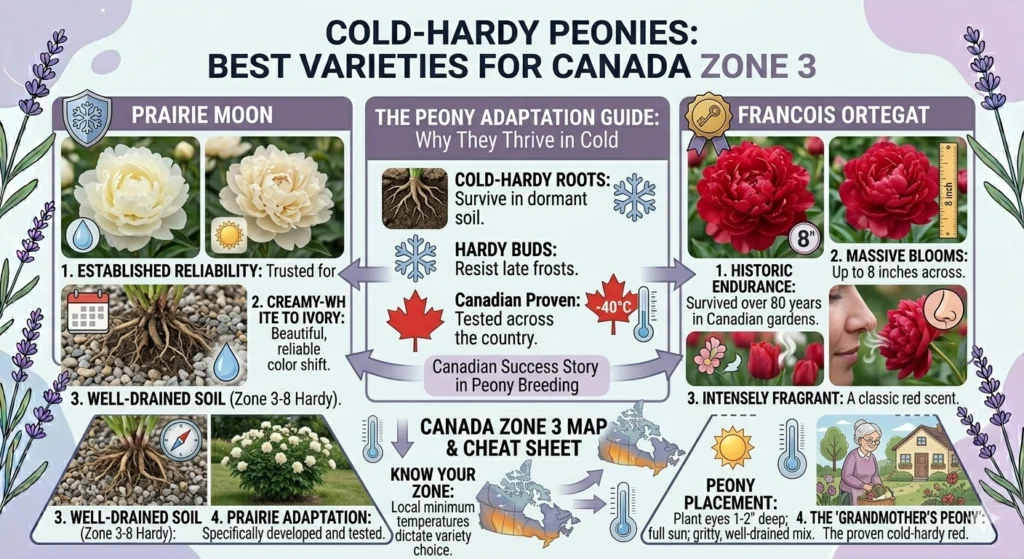
Not all peonies are created equal when it comes to extreme cold hardiness. While most peonies are rated for Zone 3 or lower, some cultivars have proven themselves exceptionally reliable in Canadian conditions. Here are the varieties that northern gardeners trust most:
Prairie Moon — This cultivar was developed and tested specifically for prairie conditions. It shrugs off -40°C winters and rewards you with creamy white blooms that age to soft ivory. It’s a Canadian success story in peony breeding.
Francois Ortegat — A classic double red peony that has survived in Canadian Zone 3 gardens for over 80 years. The blooms are massive — sometimes 8 inches across — and intensely fragrant. This is the peony your grandmother probably grew, and if she gardened in Zone 3, this is likely the variety that survived.
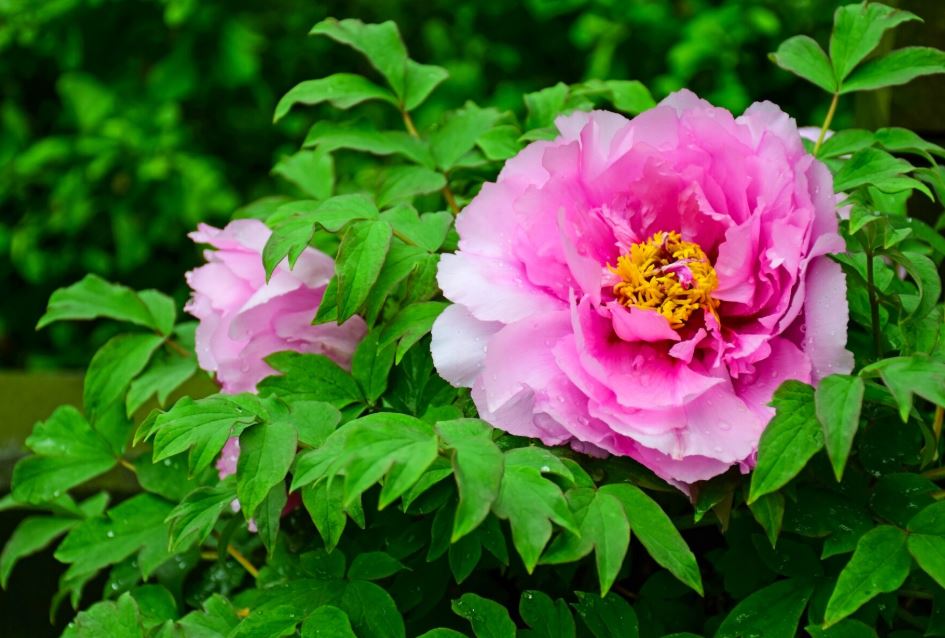
Cora Louise (Itoh Peony) — Itoh peonies are hybrids between herbaceous and tree peonies, and they offer the best of both worlds: the winter hardiness of herbaceous types with the bloom form and disease resistance of tree peonies. Cora Louise produces enormous semi-double blooms in soft lavender-pink with a deep burgundy center blotch. It blooms later than most herbaceous peonies, which actually helps it avoid late spring frosts.
Bowl of Beauty — One of the most reliable bloomers in Zone 3 gardens. This variety produces large, single to semi-double flowers with wide, rose-pink guard petals surrounding a creamy yellow center. It’s a heavy bloomer even in challenging conditions and has proven itself across Manitoba, Saskatchewan, and Alberta.
Old Rose Dandy — A Zone 3a specific cultivar that has been tested in the coldest parts of the zone. It produces semi-double blooms in soft rose-pink with excellent fragrance. Gardeners in Prince Albert, Saskatoon, and Winnipeg report this variety as one of the most reliable in their collections.
When purchasing peonies for Zone 3, always buy from Canadian nurseries that understand our climate. Avoid bargain peonies from big-box stores that may have been grown in warmer regions and never tested for extreme cold. Invest in proven cultivars from northern growers — your patience will be rewarded with peonies that outlive you.
Peony Types for Zone 3 Success
You’ll encounter three main types of peonies, and each behaves differently in Zone 3 winters:
Herbaceous Peonies are the classic garden peonies. They grow from underground roots, produce stems and leaves each spring, bloom in late spring or early summer, and then die completely back to the ground after the first hard frost. Everything above ground disappears for winter. These are the most reliable type for Zone 3 and the ones we recommend for most northern gardeners. In late fall, you can cut them to the ground — though as we’ll discuss in the winter protection section, some Zone 3 gardeners prefer to leave the standing stalks through winter.
Itoh (Intersectional) Peonies are hybrids that combine herbaceous and tree peony genetics. They behave like herbaceous peonies in winter — dying back to the ground — but produce flowers and foliage that resemble tree peonies. They’re fully hardy in Zone 3 and offer unique bloom colors (including yellows and golds) that herbaceous peonies rarely provide. They’re more expensive than herbaceous types but worth the investment for dedicated peony collectors.
Tree Peonies are the trickiest for Zone 3. Unlike herbaceous peonies, tree peonies develop woody stems that persist through winter. While many tree peonies are rated for Zone 4 or 5, Zone 3 is pushing their limits. The woody stems often die back to the ground in extreme winters, which defeats the purpose of growing a “tree” peony. If you want to try tree peonies in Zone 3, plant them in the warmest microclimate of your garden — against a south-facing wall, protected from wind — and be prepared to provide extra winter protection. Most Zone 3 gardeners stick with herbaceous and Itoh peonies for reliable results.
Additional Zone 3 Cold-Hardy Perennials (Companion Plants for Peonies)
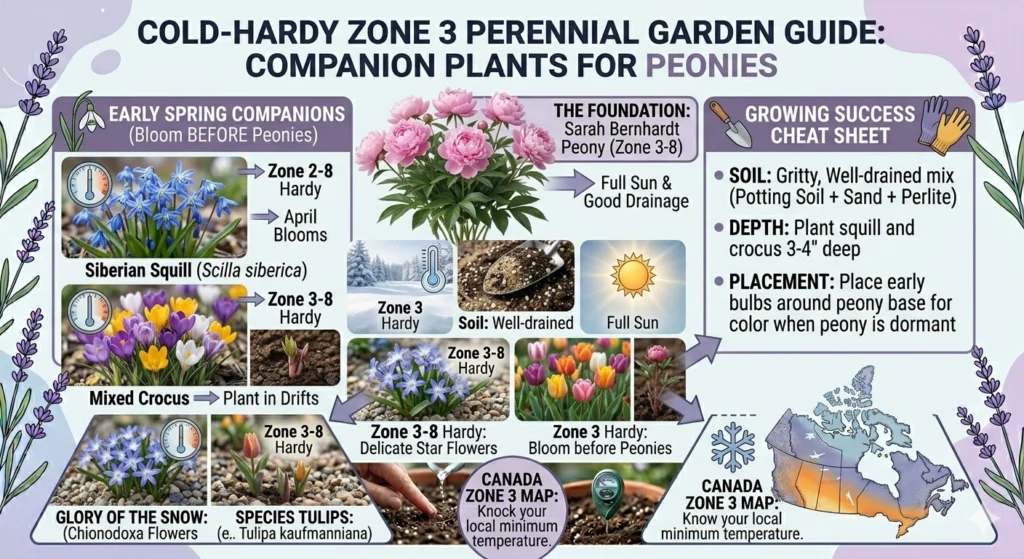
Want to build a complete Zone 3 perennial garden around your peonies? Here are proven companions that share the same hardiness and growing conditions:
Early Spring Companions (Bloom Before Peonies)
- Siberian Squill (Scilla siberica) — Zone 2-8, brilliant blue flowers in April
- Crocus (various species) — Zone 3-8, plant in drifts around peony bases
- Glory of the Snow (Chionodoxa) — Zone 3-8, star-shaped blue flowers
- Early Tulips (species tulips) — Many are Zone 3 hardy, bloom before peonies emerge
Mid-Spring Companions (Bloom WITH Peonies)
- Siberian Iris (Iris sibirica) — Zone 3-9, elegant blue flowers, same height as peonies
- Bleeding Heart (Dicentra spectabilis) — Zone 3-9, classic shade-tolerant companion
- Allium (ornamental onions) — Zone 3-9, globe-shaped flowers add vertical interest
- Columbine (Aquilegia) — Zone 3-8, delicate spurred flowers in many colors
Summer Companions (Bloom After Peonies)
- Daylilies (Hemerocallis) — Zone 3-9, the ultimate peony companion. They fill the gap when peonies finish blooming
- Rudbeckia (Black-eyed Susan) — Zone 3-9, sunshine-yellow blooms from July to frost
- Phlox paniculata (Garden Phlox) — Zone 3-8, fragrant summer blooms
- Liatris (Blazing Star) — Zone 3-9, purple spikes that attract butterflies
- Sedum (Stonecrop) — Zone 3-9, late summer/fall blooms, succulent foliage
Foliage Companions (Season-Long Interest)
- Hosta (many varieties) — Zone 3-9, shade-tolerant, dramatic leaves
- Heuchera (Coral Bells) — Zone 3-8, colorful foliage in purple, lime, amber
- Fern (Ostrich or Lady) — Zone 3-8, textural contrast under peonies
Design Tips for Zone 3 Peony Companions
- Consider bloom timing: Peonies have a relatively short bloom period (2-3 weeks). Surround them with plants that bloom before (early spring bulbs) and after (daylilies, rudbeckia) to maintain interest.
- Respect peony root space: Peonies have extensive root systems. Plant companions at least 18 inches away from peony crowns.
- Match light requirements: All recommended companions need full sun to partial shade — same as peonies.
- Consider fall cleanup: Unlike peonies (where you may leave standing stalks), companions like daylilies and hostas need fall cleanup. Plan your maintenance accordingly.
Sources & Additional Resources
Canadian Hardiness Zone References
- Brecks Bulbs Canada — Offers peony varieties rated for Zone 3-9 with Canadian-specific ratings
- Trochu Arboretum & Gardens (Alberta) — Maintains Zone 3 perennial trial gardens; publishes annual results
- World Plants.ca — Comprehensive Canadian Hardiness Zone database (Zone 1a through 8a ratings)
- Canadale Nurseries (Ontario) — Zone 3a specific cultivar recommendations with Canadian growing trials
- Prairie Garden (annual publication) — Manitoba-based gardening annual with Zone 3 peony features
Regional Gardening Expertise
- Prairie Trees (www.prairietrees.ca) — Western Canadian nursery with documented Zone 3 peony trials
- Saskatchewan Perennial Society — Publishes prairie gardening expertise, including peony variety recommendations
- Manitoba Master Gardener Association — Regional advice specific to Zone 3 conditions
- Edmonton Horticultural Society — Northern Zone 3 expertise (Edmonton is Zone 3b/4a transition)
Online Communities for Zone 3 Gardeners
- r/Zone3Gardening (Reddit) — Active community of northern gardeners sharing real-world results
- Canadian Gardening Forum (GardenWeb) — Search “Zone 3 peonies” for decades of archived discussions
- Prairie Garden Enthusiasts (Facebook) — Manitoba-focused group with peony experts
Recommended Reading
- The Prairie Garden (annual) — Zero-excuses gardening for Canadian zones 2-3
- Perennials for the Prairies by Sara Williams — The definitive Zone 3 perennial reference
- Creating the Prairie Xeriscape by Sara Williams — Includes peony-specific advice
- Peonies: The Complete Guide by Allan Rogers — General peony knowledge applicable to Zone 3
Where to Buy Zone 3 Hardy Peonies in Canada
Canadian Nurseries (reliable cold-hardy stock):
- Prairie Garden Seeds (Saskatchewan) — Specializes in Zone 3 hardy perennials
- T&T Seeds (Manitoba) — Extensive peony selection, prairie-tested
- Veseys (Prince Edward Island) — Ships nationwide, Zone 3 ratings clearly marked
- Botanus (British Columbia) — Wide selection, accurate hardiness ratings
- Hardy Plants for Prairies (Alberta) — Small nursery with exceptional Zone 3 expertise
What to avoid:
- American mail-order nurseries using USDA hardiness zones (USDA Zone 3 is warmer than Canadian Zone 3)
- Big-box store peonies in spring — Often grown in warmer climates and not hardened for Zone 3 winters
- “Mixed peony roots” sold by weight — No variety name means no hardiness guarantee
Final Thoughts: Why Zone 3 Gardeners Should Grow Peonies
After reading all of this, you might think peonies are complicated. They’re not — once you understand the few critical rules (drainage, planting depth, delayed mulching), peonies are among the lowest-maintenance perennials you can grow in Zone 3.
Here’s what makes them so rewarding for northern gardeners:
They’re practically immortal. Plant a peony today, and your grandchildren will be cutting blooms from the same plant.
They ask for almost nothing. No staking (if you choose sturdy varieties), no dividing (for decades), no spraying (few pests or diseases in Zone 3). Just sun, well-drained soil, and patience.
They reward you extravagantly. For 2-3 weeks every summer, your garden will be filled with dinner-plate-sized blooms in colors from pure white to deep burgundy. The fragrance of a heirloom peony on a warm June evening is one of life’s simple, unforgettable pleasures.
They connect you to gardening history. Peonies have been grown in cold climates for centuries. When you plant a Francois Ortegat or a Bowl of Beauty in your Zone 3 garden, you’re continuing a tradition that has brought joy to northern gardeners for generations.
So go ahead. Buy that peony root. Dig that hole. Measure carefully — two inches to the eyes. Water it in. Then wait.
Come late June, when those massive blooms finally open after surviving -40°C and six months of winter, you’ll understand why Zone 3 gardeners love peonies.
They’re not just hardy. They’re heroes.

- 10 Best Garden Hose Without Kinks 2026 - October 15, 2026
- 10 Best Garden Hose For Kids 2026 - October 15, 2026
- 10 Best Garden Hose For High Pressure 2026 - October 15, 2026