How to Taper Tomato Watering Schedule: A Practical Guide
Tomatoes need consistent moisture throughout the growing season, but their watering needs can change as the plants mature and fruit begins to ripen. Learning how to taper a tomato watering schedule can help you avoid overwatering, reduce problems such as cracked fruit, and maintain healthy plants during the final stages of growth. Tapering does not mean suddenly stopping water. Instead, it means gradually adjusting how often and how much you water according to the plant’s growth stage, weather, soil moisture, and fruit development.
The goal is to keep the root zone evenly moist without leaving the soil constantly saturated. Tomatoes generally perform best when they receive deep, consistent watering rather than frequent shallow watering. As harvest approaches, you can carefully reduce irrigation when conditions allow, while still providing enough moisture to prevent severe plant stress.
What Does Tapering Tomato Watering Mean?
Tapering tomato watering means gradually reducing irrigation as the plant approaches maturity or harvest rather than stopping water suddenly.
A tomato plant’s water requirement is affected by several factors:
- Plant size and leaf coverage
- Fruit development and ripening
- Soil type and drainage
- Temperature and rainfall
- Container or in-ground growing
- Humidity and wind
- Stage of the growing season
The purpose of tapering is not to deliberately dry out the plant. Instead, you adjust watering so the soil remains appropriately moist while avoiding unnecessary irrigation.
For example, a large tomato plant producing many fruits during hot weather may still require regular deep watering. A smaller plant experiencing cooler weather and approaching the end of its production may need less frequent irrigation.
Taper Gradually Instead of Stopping Suddenly
Suddenly withholding water can cause tomato plants to wilt and become stressed. Severe fluctuations between very dry and very wet soil can also contribute to fruit problems.
A gradual reduction is usually easier on the plant. Instead of changing from daily watering to no water, you might gradually increase the time between watering sessions while checking the soil moisture.
The plant and soil should determine the adjustment rather than the calendar alone.
When Should You Start Tapering Tomato Watering?
There is no single date when every gardener should begin tapering tomato watering. The best time depends on fruit maturity, weather, soil moisture, and plant condition.
If the plant is still actively flowering and setting lots of fruit, it may continue to need substantial water. If most fruits are mature and the plant is nearing the end of its productive season, you may be able to reduce irrigation.
Look for these signs:
- Most fruits have reached mature size.
- Fruits are beginning to change color.
- New fruit production has slowed.
- Temperatures are becoming cooler.
- The plant is producing less new foliage.
- The growing season is approaching its end.
However, hot or dry conditions can override the need to taper. A tomato plant still loses water through transpiration even when fruit is ripening.
How to Taper a Tomato Watering Schedule
The safest approach is to make small adjustments instead of making a dramatic change.
Step 1: Check the Soil Before Watering
Before reducing or increasing irrigation, check the moisture in the root zone.
Do not judge soil moisture only by its surface. The top layer can look dry while deeper soil remains moist.
Push your finger several inches into the soil or use another method to check moisture around the roots. If the root zone is still adequately moist, you may not need to water immediately.
This simple check helps prevent a rigid watering schedule from causing overwatering.
Step 2: Reduce Frequency First
When conditions allow, reduce the frequency of watering before making major reductions in the amount supplied during each irrigation.
For example, if you normally water every day, you could gradually move toward watering every other day when weather and soil conditions permit.
The exact schedule depends on your soil and climate.
Sandy soil generally loses water faster, while heavier soil can retain moisture longer. Containers can also dry out much faster than garden beds.
Step 3: Continue Deep Watering
Tapering does not necessarily mean giving tiny amounts of water every time.
When the plant needs water, deep irrigation encourages moisture to reach the root zone. Shallow watering can encourage roots to remain near the surface, where soil moisture changes quickly.
A useful approach is:
Check soil → determine whether watering is needed → water deeply → allow the soil to partially dry → check again.
This creates a more stable moisture pattern than frequent light watering.
Step 4: Adjust According to Weather
Weather is one of the most important factors when tapering.
During a cool, cloudy period, tomato plants may use less water. During a hot, windy period, they can lose moisture rapidly.
Rain also changes the schedule. If the soil has received substantial rainfall, additional irrigation may be unnecessary.
Do not reduce watering simply because fruits are ripening if the plant is experiencing hot, dry conditions.
Tomato Watering Schedule by Growth Stage
Tomato watering requirements change as plants move from establishment to harvest.
| Growth stage | General watering approach |
|---|---|
| Seedling | Keep soil consistently moist without saturation |
| Newly transplanted | Water regularly while roots establish |
| Vegetative growth | Deep, consistent watering |
| Flowering and fruit set | Maintain steady soil moisture |
| Fruit development | Avoid major moisture fluctuations |
| Ripening | Gradually adjust watering based on weather and soil |
| End of season | Reduce irrigation as plant activity declines |
This table should be treated as a framework rather than a fixed calendar. Soil, temperature, rainfall, and growing conditions can significantly change how often tomatoes need water.
Should You Reduce Water When Tomatoes Start Ripening?
You can sometimes reduce watering as tomatoes begin to ripen, but you should not intentionally allow the plant to become severely dry.
During ripening, consistent soil moisture remains important. A sudden change from very dry soil to heavy watering can create rapid changes in water availability to the fruit.
This is one reason experienced gardeners focus on consistency rather than simply giving tomatoes less water.
If the weather is cool and the soil remains moist, the plant may naturally need less irrigation. If conditions are hot and dry, reducing water too aggressively can stress the plant.
How Much Should You Water Tomatoes Near Harvest?
There is no universal number of gallons or liters that works for every tomato plant.
Water demand depends on:
- Plant size
- Container size
- Soil type
- Temperature
- Rainfall
- Wind
- Humidity
- Plant spacing
- Root development
Instead of following a fixed volume, monitor the soil and plant.
A mature tomato should have enough moisture available in its root zone to avoid severe wilting, while excess water should be able to drain away.
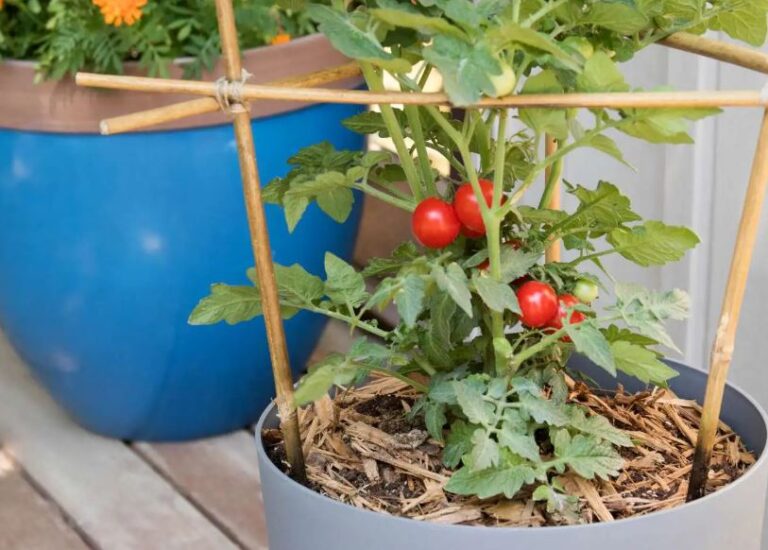
Tapering Water for Tomatoes in Containers
Container tomatoes require special attention because pots have a limited amount of soil and can dry quickly.
A container may need watering more frequently than an in-ground tomato, particularly during hot weather.
When tapering container tomatoes:
- Check moisture below the surface.
- Consider the weather before watering.
- Do not let the entire root ball become extremely dry.
- Reduce frequency only when the plant and soil indicate it is appropriate.
- Make sure the container has adequate drainage.
A small container can dry much faster than a large container, so two tomato plants may have completely different watering requirements even if they are growing in the same garden.
Tapering Water for Tomatoes in Raised Beds
Raised beds usually provide more soil volume than containers, but drainage can vary considerably.
A raised bed filled with organic-rich, moisture-retentive soil may hold water longer than a shallow bed with sandy soil.
Check the soil around the tomato’s root zone before watering. Mulch can also help reduce evaporation and maintain more consistent moisture.
When tapering, consider rainfall carefully. A raised bed that received several days of rain may require little additional irrigation.
Can Tapering Water Prevent Tomato Cracking?
Consistent moisture management can help reduce conditions associated with tomato cracking, although it cannot guarantee crack-free fruit.
Fruit cracking often becomes more noticeable when tomatoes experience significant changes in water availability. For example, a plant that becomes quite dry and then receives a large amount of water may suddenly take up more moisture while the fruit skin cannot expand at the same rate.
A better strategy is to avoid extreme swings:
Very dry soil → heavy watering → very dry soil → heavy watering
Instead, aim for:
Moderate moisture → consistent watering → moderate moisture
This is also why tapering should be gradual rather than an abrupt shutdown of irrigation.
Common Mistakes When Tapering Tomato Watering
Stopping Water Completely
One of the biggest mistakes is assuming that ripening tomatoes no longer need water.
Tomato plants continue to lose water through their leaves, and the roots still need moisture. Severe drought stress can cause wilting and reduced plant performance.
Following a Fixed Calendar
A schedule such as “water every Tuesday and Friday” may not work in every garden.
Rain, temperature, soil type, and plant size can change water requirements.
Use a schedule as a starting point, but let soil moisture guide your decisions.
Watering Only the Surface
Lightly wetting the top layer of soil may not provide enough moisture to the deeper root zone.
Deep watering is generally more useful than frequent surface sprinkling.
Ignoring Containers
Container tomatoes can dry out rapidly. Applying the same tapering schedule used for an in-ground tomato can leave a container plant severely stressed.
Overwatering After Dry Soil
If the soil becomes very dry, avoid creating a repeated cycle of extreme dryness followed by excessive irrigation.
Instead, return to a more consistent moisture pattern and adjust gradually.
How to Know If You Are Tapering Too Quickly
Your tomato plant can provide useful warning signs.
Watch for:
- Persistent wilting
- Drooping leaves
- Very dry soil around the roots
- Premature leaf decline
- Poor fruit development
- Increased plant stress during hot weather
Temporary midday wilting can occur during very hot conditions, but persistent wilting is a stronger indication that the plant is under water stress.
If the plant is showing significant stress, reassess the tapering plan instead of continuing to reduce water.
A Simple Tomato Watering Tapering Plan
A practical approach is to divide the process into three stages.
Stage 1: Normal watering
Maintain consistent moisture while the plant is actively growing and producing fruit.
Stage 2: Begin tapering
As fruit production slows and weather becomes less demanding, gradually increase the interval between watering sessions if the soil remains adequately moist.
Stage 3: End-of-season reduction
When the plant is clearly declining and the growing season is ending, irrigation can be reduced further according to weather and soil conditions.
This approach is more flexible than using a fixed number of days.
How Mulch Helps During the Tapering Period
Mulch can help stabilize soil moisture as you adjust watering.
Organic materials such as straw or wood chips can reduce evaporation from the soil surface. This can make moisture levels more stable and reduce the speed at which the soil dries.
Keep mulch from being packed directly against the tomato stem. Leave some space around the base of the plant to improve airflow and reduce excess moisture against the stem.
Mulch is especially useful during hot periods when evaporation is high.
Frequently Asked Questions
Should I stop watering tomatoes when they start turning red?
No. Turning red does not automatically mean you should stop watering. Reduce irrigation only when plant growth, soil moisture, weather, and the approaching end of the season indicate that less water is needed.
How quickly should I taper tomato watering?
Make gradual changes rather than stopping suddenly. Start by increasing the time between watering sessions while checking soil moisture and plant condition.
Can too much water affect tomato flavor?
Excessive water can contribute to softer, less concentrated fruit in some growing conditions. However, deliberately stressing plants by withholding water is not a reliable way to improve flavor. Consistent plant care is generally the better strategy.
Should container tomatoes be watered differently?
Yes. Container tomatoes often dry out faster because they have less soil volume. Check container moisture more frequently and taper only when conditions allow.
Do tomatoes need water every day?
Not necessarily. Daily watering may be appropriate under some hot, dry conditions, especially for containers, but other gardens may need watering less frequently. Soil moisture and weather are better guides than a fixed daily schedule.
Conclusion
Learning how to taper tomato watering schedules is mainly about making gradual, condition-based adjustments rather than suddenly withholding water. As tomatoes mature and the growing season winds down, you can reduce watering when soil moisture, weather, and plant activity indicate that the plant needs less water.
Start by checking the root-zone moisture, then gradually increase the interval between watering sessions when appropriate. Continue providing deep watering when the soil actually needs it, and pay close attention to heat, rainfall, containers, raised beds, and signs of plant stress.
The key principle is simple: taper gradually, keep moisture reasonably consistent, and let the plant and soil guide your schedule.

- 10 Best Garden Hose For Hose End Sprinklers 2026 - October 25, 2026
- 10 Best Garden Hose For Smart Irrigation Controllers 2026 - October 25, 2026
- 10 Best Garden Hose For Automatic Watering Systems 2026 - October 25, 2026