Tomatoes are hungry, deep-rooted plants, and they’re fussier about soil than most vegetables. The good news is that they don’t need one perfect soil. They grow well in several types, as long as the soil drains, holds some moisture, and has plenty of organic matter.
Below are ten soil types that work for tomatoes, from natural garden soils to raised-bed and container mixes. Each one covers what it is, how tomatoes do in it, how to prepare it, and what to watch for. Whatever you have, aim for a pH of roughly 6.2 to 6.8, and test before you add lime or sulfur.
1. Loam Soil
What Is Loam Soil?
Loam is a balanced mix of sand, silt and clay. It’s dark, crumbly, and holds a loose ball when squeezed that falls apart when you poke it. If you’ve ever dug in a well-kept vegetable garden and thought “this is lovely,” you were probably in loam.
Why Tomatoes Thrive in Loam
Loam drains well enough to keep roots from sitting in water, yet holds enough moisture and nutrients to feed a big plant all season. Roots push down easily, so the deep-planting trick works properly. If you’re asking which soil is best for tomatoes, this is the usual answer.
How to Prepare Loam for Tomatoes
- Test the pH and aim for about 6.2 to 6.8
- Spread 5 to 8 cm (2 to 3 inches) of finished compost each spring
- Loosen the top 20 cm (8 inches) with a garden fork
- Mulch after the soil warms to hold moisture steady
- Rotate crops so tomatoes don’t return to the same spot for three years
- Stay off the bed when it’s wet so it doesn’t compact
Best Fit and What to Watch
Loam suits almost every tomato type, from cherry to beefsteak. The one trap is complacency. Tomatoes use up a lot of nutrients, so even great loam needs compost added every year.
2. Sandy Loam Soil
What Is Sandy Loam?
Sandy loam is mostly sand with enough silt and clay to hold together. It feels gritty but forms a weak ball that breaks apart easily. It’s lighter and looser than true loam.
Why Tomatoes Do Well in Sandy Loam
It warms up early in spring, which matters in a short season, and it drains fast, so roots rarely rot. Gardeners in cool climates often get earlier tomatoes from sandy loam than from heavier ground. The trade-off is that water and nutrients move through quickly, so plants can run dry or hungry between waterings.
How to Prepare Sandy Loam for Tomatoes
- Mix in 5 to 8 cm (2 to 3 inches) of compost before planting
- Mulch with straw or shredded leaves to slow evaporation
- Water deeply rather than lightly, and check moisture often in summer
- Use drip irrigation or a soaker hose for steady watering
- Feed with a balanced fertilizer at planting, then again after fruit sets
- Add compost every spring to keep building the soil
Best Fit and What to Watch
Sandy loam is great for early crops and container-friendly varieties. Watch for uneven watering, which is a common cause of blossom end rot and split fruit.
3. Clay Loam Soil
What Is Clay Loam?
Clay loam has a bigger share of clay than regular loam but still contains sand and silt. It feels smooth and a bit sticky, and forms a short ribbon when squeezed between your fingers. It’s heavier than loam but more workable than pure clay.
Why Tomatoes Grow in Clay Loam
Clay loam is rich in nutrients and holds water well, so plants stay fed and hydrated with less effort. Tomatoes can do very well in it. The downside is slower drainage and a later spring warm-up, which can stall young plants if the weather stays cold and wet.
How to Prepare Clay Loam for Tomatoes
- Don’t dig or till when the soil is wet, because it will clod
- Mix in compost every year to open up the structure
- Plant on low mounds or ridges so excess water runs off
- Wait until the soil reaches about 15°C (60°F) before transplanting
- Mulch only after the soil has warmed
- Water less often but deeply, and let the surface dry slightly between waterings
Best Fit and What to Watch
Clay loam suits most tomatoes once it’s warm. Watch for waterlogged roots in rainy spells, and keep the bed from crusting or compacting.
4. Silt Loam Soil
What Is Silt Loam?
Silt loam has a lot of silt, the fine, floury particles between sand and clay. When dry it feels like soft powder, and when damp it feels smooth and slightly slippery. It’s often found in river valleys and old floodplains.
Why Tomatoes Like Silt Loam
Silt loam is naturally fertile and holds moisture and nutrients well. Tomatoes tend to grow vigorously in it. It’s easy to dig and warms up more readily than heavy clay.
How to Prepare Silt Loam for Tomatoes
- Add compost each spring to keep the soil open
- Keep foot traffic off the bed, since silt compacts easily
- Mulch to protect the surface from pounding rain and crusting
- Break up any crust before seedlings or transplants go in
- Check drainage with a simple water-fill test in a 30 cm (12 inch) hole
- Use raised rows if water sits after heavy rain
Best Fit and What to Watch
Silt loam is excellent for productive beds. The main risk is surface crusting and compaction, which limit air to the roots.
5. Sandy Soil (Amended)
What Is Sandy Soil?
Sandy soil is coarse and gritty. It won’t hold a shape when squeezed and runs through your fingers when dry. On its own it’s low in organic matter and nutrients.
Why Tomatoes Can Work in Sandy Soil
Sandy ground warms fast and drains freely, which tomatoes appreciate, and roots get plenty of oxygen. But without help, it dries out and loses nutrients quickly. With enough compost, though, it becomes a productive, easy-to-work tomato bed.
How to Prepare Sandy Soil for Tomatoes
- Work in 8 to 10 cm (3 to 4 inches) of compost, plus leaf mold if you have it
- Mulch thickly with straw or shredded leaves
- Use drip irrigation or a soaker hose, and water more often than in other soils
- Split fertilizer into smaller, more frequent feedings so nutrients don’t wash away
- Plant a fall cover crop such as rye to add organic matter
- Retest the pH every year or two
Best Fit and What to Watch
Sandy soil is ideal for early plantings once it’s improved. Watch for drought stress and yellowing leaves, which often mean it’s time to water or feed.
6. Clay Soil (Amended)
What Is Clay Soil?
Clay soil is heavy, dense and sticky when wet, and hard and cracked when dry. Squeezed, it forms a long, smooth ribbon. It’s rich in minerals but tight on air space.
Why Tomatoes Struggle Unless You Amend It
Roots in unimproved clay can sit in cold, waterlogged soil in spring, which slows growth and invites root problems. In summer it can bake hard. But with steady improvement, clay becomes a nutrient-rich bed that holds moisture through dry spells.
How to Prepare Clay Soil for Tomatoes
- Add several inches of compost every season and keep doing it for years
- Never work the soil while it’s wet
- Build a raised bed 30 to 45 cm (12 to 18 inches) deep for faster results
- Don’t add sand unless it’s a very large amount, because it can make clay harder
- Plant on mounds to improve drainage around the root zone
- Use deep-rooted cover crops in fall to open the soil
Best Fit and What to Watch
Clay works well after a few seasons of improvement, or immediately in a raised bed. Watch for cold, wet spring soil, and delay planting until it warms up.
7. Peaty Soil
What Is Peaty Soil?
Peaty soil is dark, spongy and full of partly decomposed plant material. It’s very high in organic matter and holds a lot of water. It’s often acidic and is found in low, formerly wet areas.
Why Tomatoes Can Grow in Peaty Soil
Peat holds moisture well and stays loose, so roots move through it easily. The concern is acidity, since tomatoes prefer a pH near 6.2 to 6.8, and peaty soil can fall below that. It can also drain poorly in low spots and be short on some nutrients.
How to Prepare Peaty Soil for Tomatoes
- Test the pH first and add lime only in the amount the test recommends
- Improve drainage with raised rows or a raised bed
- Use a balanced fertilizer that includes potassium
- Mix in some mineral soil or coarse material if it stays too soggy
- Don’t let it dry out completely, since dry peat can repel water
- Retest each year, because pH can shift
Best Fit and What to Watch
Peaty soil suits growers who can correct the pH and manage drainage. Watch for slow growth in cold, wet ground and for nutrient shortages.
8. Chalky (Alkaline) Soil
What Is Chalky Soil?
Chalky soil is pale, stony and often shallow, sitting over limestone or chalk. It tends to be alkaline, with a pH above about 7.5. It drains freely and can be low in organic matter.
Why Tomatoes Need Help in Chalky Soil
High pH locks up nutrients such as iron, manganese and phosphorus, even when they’re present. The typical sign is yellow leaves with green veins. Plants may also grow slowly. But tomatoes can succeed here with organic matter and a little pH management.
How to Prepare Chalky Soil for Tomatoes
- Test the pH before you do anything else
- Work in generous compost to buffer the soil and improve structure
- Use elemental sulfur only as directed by a soil test, since it works slowly
- Apply chelated iron for a quick fix if leaves are yellowing
- Mulch to keep moisture steady
- Consider raised beds or large containers filled with better soil if the ground is very alkaline
Best Fit and What to Watch
Chalky soil works best for growers willing to amend or build up. Watch for yellowing new leaves and shallow soil that dries quickly.
9. Raised Bed Soil Mix
What Is a Raised Bed Mix?
A raised bed mix is a blend you build yourself, or buy in bulk, to fill a bed above ground. A reliable recipe is about 60% quality topsoil or loam, 30% finished compost and 10% coarse material such as perlite, pine bark fines or coarse builder’s sand.
Why Tomatoes Love Raised Beds
The soil drains well, warms early and stays loose because no one walks on it. That makes it a great answer for clay, cold or compacted ground. You control exactly what goes in, so you can hit the right pH and fertility from day one.
How to Prepare a Raised Bed Mix for Tomatoes
- Make the bed at least 30 cm (12 inches) deep, and 45 cm (18 inches) is better
- Ask your supplier what’s in any bulk soil, and avoid mixes full of fresh wood chips
- Mix the compost through the soil instead of layering it on top
- Top up with 2 to 5 cm (1 to 2 inches) of compost every spring as the soil settles
- Test the pH once the bed is filled
- Mulch and water evenly, since raised beds dry out faster than in-ground soil
Best Fit and What to Watch
Raised bed mix is the best choice for poor native soil and short seasons. Watch for the bed drying out in summer and for a mix that’s too low in compost.
10. Potting Mix (for Containers)
What Is Potting Mix?
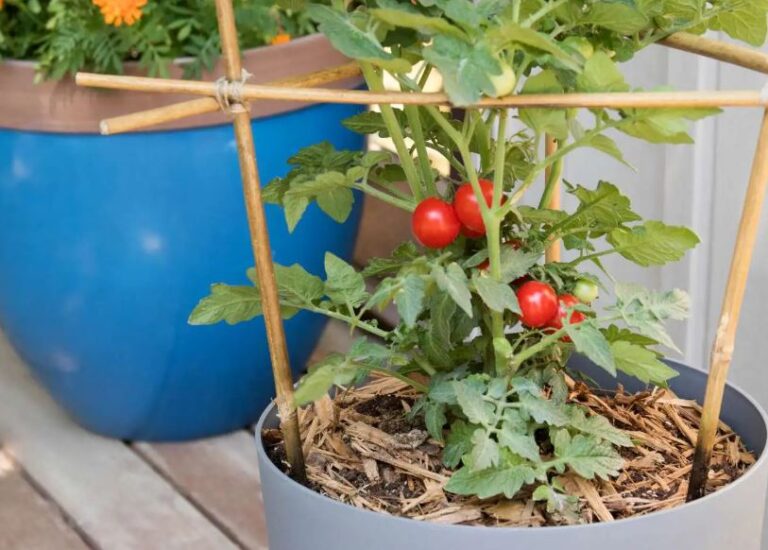
Potting mix is a light, soilless blend, usually made of peat or coir, perlite or vermiculite, and some compost. It’s designed for containers and is not the same as garden soil or bagged topsoil.
Why Tomatoes Grow Well in Potting Mix
It drains freely, stays loose, and doesn’t bring weeds or soil-borne disease into a confined pot. Roots get plenty of air. It’s the right choice for patios, balconies and anywhere you have no garden bed.
How to Prepare Potting Mix for Tomatoes
- Choose a quality mix labelled for vegetables or containers, not garden soil
- Use a big enough pot: roughly 19 litres (5 gallons) for a bush variety, larger for vining types
- Make sure the container has drainage holes
- Mix in a bit of compost or slow-release fertilizer at planting
- Feed regularly through the season, because frequent watering washes nutrients out
- Refresh or replace the mix each year to avoid carrying over disease
Best Fit and What to Watch
Potting mix is best for containers and small spaces. Watch for fast drying in hot weather and for nutrient depletion, and water often once plants are large.
Final Thoughts
Whatever soil you’re working with, tomatoes respond to the same basics: good drainage, steady moisture, plenty of organic matter, and a pH in the right range. Loam and sandy loam are the easy paths, while clay, sand, peat and chalk need some help but can all produce great tomatoes. And if your ground is really difficult, a raised bed or a big pot with good mix gets you there fastest.
Start with a simple soil test, add compost, and match your watering to your soil type. Which one are you growing in? Tell me in the comments and I’ll help you pick the best way to improve it.
Want this converted to WordPress block format, with a meta title and description?

- How to Grow Microgreens Without Soil Indoors: Easy Home Method - October 5, 2026
- Microgreens vs. Sprouts: Key Differences, Nutrition, Safety, and Which One to Eat - October 5, 2026
- 10 Best Garden Tools For Weed Removal 2027 - October 3, 2026