Pruning tomatoes confuses a lot of gardeners. Some swear by removing every sucker. Others never touch their plants and still get buckets of fruit. Both approaches can work, but the results depend on the type of tomato you’re growing, your climate and what you want from the plant.
This guide covers what pruning does, when it helps, when it hurts and exactly how to do it.
Why Prune Tomatoes at All?
Left alone, a tomato plant puts energy into growing leaves and stems as well as fruit. Pruning redirects some of that energy and improves the conditions around the plant. Here’s what you gain:
Better airflow. Dense foliage traps moisture. Thinning it out helps leaves dry faster after rain or watering, which lowers the risk of fungal diseases like early blight and leaf spot.
Easier disease control. Removing lower leaves stops soil splashing onto the plant, which is a common way blight and other pathogens spread.
Larger fruit, sometimes earlier. With fewer stems competing, the plant can put more energy into ripening fruit. You’ll often get bigger tomatoes, though not always a bigger total harvest.
Manageable plants. Pruned tomatoes are easier to stake, tie, inspect and pick.
Better pest spotting. Hornworms and other pests hide in thick foliage. A tidier plant makes them easier to find.
First, Know Your Tomato Type
This is the most important step. Pruning advice depends on whether your plant is determinate or indeterminate.
Indeterminate tomatoes keep growing all season. They flower and set fruit along the stem until frost or disease stops them. Most heirlooms, beefsteaks and cherry tomatoes are indeterminate. Examples include Brandywine, Sungold and Cherokee Purple. These plants respond well to regular pruning.
Determinate tomatoes grow to a set size, usually 3 to 4 feet, then flower and ripen most of their fruit within a few weeks. Many paste and patio types are determinate, such as Roma and Celebrity. These need very little pruning. Cutting too much removes flowering shoots and reduces your harvest.
Semi-determinate types fall in between, and you can prune them lightly.
Check the plant tag or seed packet. If it just says “vine,” it’s likely indeterminate. If it says “bush” or “compact,” it’s likely determinate.
Understanding Suckers
The shoots you’ll hear about most are called suckers. A sucker grows in the “V” between the main stem and a side branch. If you leave it, it becomes a new stem with its own leaves, flowers and fruit.
To identify one, look at where a branch meets the main stem. A small shoot growing out of that joint, pointing upward, is a sucker. You can tell it apart from a flower cluster because suckers have leaves, while flower trusses come from the stem or branch itself.
Not all suckers are bad. Some gardeners keep the first one below the lowest flower cluster to grow a second main stem. But on indeterminate plants, leaving all of them creates a jungle.
When to Start Pruning
Start once the plant is established, usually two to three weeks after transplanting, when it’s about 12 to 18 inches tall and the first flower clusters appear.
Prune in the morning on a dry, sunny day. Cuts heal faster in dry weather, and morning gives wounds hours to seal before evening moisture arrives.
Avoid pruning when leaves are wet, since that helps spread disease.
Tools You’ll Need
You don’t need much.
- Clean, sharp pruners or scissors for thicker stems
- Your fingers for small suckers
- Rubbing alcohol or a diluted bleach solution to sterilize tools
- Gloves if tomato foliage irritates your skin
Wipe your tools between plants, especially if you suspect disease. Tomatoes spread bacteria and viruses easily through cutting tools.
How to Prune Indeterminate Tomatoes Step by Step
1. Remove Suckers
Pinch small suckers off with your fingers when they’re 2 to 4 inches long. Snap them sideways, and they’ll break cleanly. Larger ones over half an inch thick are better cut with pruners, since tearing can leave a ragged wound.
Check plants once a week. Suckers grow quickly in warm weather, so a plant can look tidy on Sunday and messy by Saturday.
2. Strip the Lower Leaves
Once the plant has fruit set on the first cluster, remove leaves and branches below it, or at least the bottom 12 inches. This helps airflow and keeps soil-borne disease from splashing up.
Don’t remove more than about a third of the plant’s foliage at once. Leaves feed the fruit, and heavy stripping can stress the plant.
3. Thin Crowded Foliage
If the plant is a dense wall of leaves, remove a few interior leaves to let air and light in. Focus on leaves that are yellowing, spotted or shading fruit clusters. Don’t overdo it. Fruit still needs some cover to avoid sunscald in hot weather.
4. Decide on a Training Method
Most gardeners use one of these:
- Single stem: Remove all suckers and train one main stem up a stake or string. This gives the tidiest plant, the earliest fruit and the largest tomatoes, but fewer of them overall.
- Double stem: Keep one strong sucker below the first flower cluster and train two main stems. You get more fruit than a single stem while keeping a manageable plant.
- Minimal pruning: Remove only the lowest leaves and any suckers that crowd or shade fruit. You get more fruit, though it can be smaller and more prone to disease in humid areas.
There’s no single right answer. Hot, dry climates often favor lighter pruning, since foliage shades fruit. Humid regions favor more thinning for airflow.
5. Prune Off Dead and Diseased Growth
Remove yellow, spotted or damaged leaves as soon as you see them. Bag them and throw them away rather than composting if disease is suspected.
6. Top the Plant Near the End of the Season
About four to six weeks before your first expected frost, cut the growing tip of each main stem. This is called topping. It stops the plant from making new flowers that won’t have time to ripen and sends energy into the existing fruit.
Also remove any new flower clusters that appear late. They won’t mature before cold weather arrives.
How to Prune Determinate Tomatoes
Keep it simple.
- Remove leaves and branches below the first flower cluster to improve airflow.
- Take off any dead, diseased or yellowing foliage.
- Skip sucker removal. Determinate plants set fruit on those side shoots, and cutting them reduces your crop.
- Never top a determinate plant, because the growing tip is where flowers form.
If your plant looks healthy and has decent spacing, you can do very little.
Should You Remove Tomato Flowers?
Usually not. But there are a few cases where it makes sense.
- Early flowers on very small transplants: If a seedling flowers when it’s only a few inches tall, pinching off the first blooms lets the plant put its energy into roots and leaves before fruiting.
- Late-season blooms: As noted above, they won’t ripen in time.
- Overloaded clusters: Some gardeners thin big-fruited varieties to three or four tomatoes per cluster to get larger fruit.
Common Mistakes to Avoid
Pruning determinate tomatoes like indeterminate ones. This is the most common error and can cut your harvest in half.
Removing too much foliage. Leaves make the sugars that fill your tomatoes. Heavy pruning in hot weather can also expose fruit to sunscald.
Working with wet plants. Wet leaves and tools spread disease quickly.
Skipping tool cleaning. One infected plant can pass a problem to the rest of your row.
Pruning too late. Waiting until suckers are thick, woody branches leaves big wounds and stresses the plant.
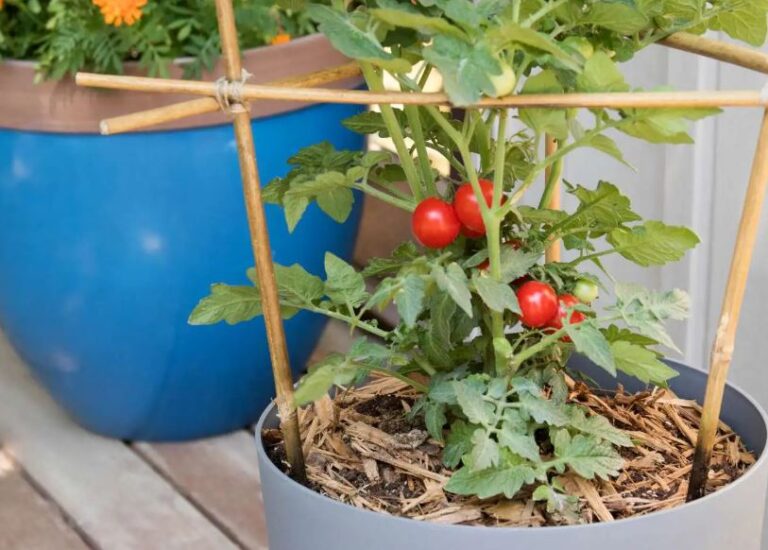
Ignoring support. Pruned plants grow upward, so they need stakes, cages or string from the start. Install them at planting time.
Can You Grow New Plants From Suckers?
Yes, and it’s a nice bonus. A sucker that’s 4 to 6 inches long can be rooted in water or moist potting mix. Remove the lower leaves, place the stem in water and wait a week or two for roots. Then plant it out.
It’s a free way to add plants or start a late crop. Just keep in mind that plants rooted this way start later, so they may not fruit until the season is well underway.
A Simple Weekly Pruning Routine
If you want an easy habit, follow this routine once a week:
- Check for new suckers and remove them from indeterminate plants.
- Tie the main stem to its support.
- Remove any yellow or diseased leaves.
- Take off leaves that touch the soil.
- Peek inside the plant and thin any overly dense areas.
- Clean your tools and wash your hands.
It takes about five minutes per plant and prevents most problems.
Final Thoughts
Pruning is a tool, not a rule. Learn your tomato type first, then decide how much to cut. Indeterminate varieties benefit from regular sucker removal, lower leaf stripping and end-of-season topping. Determinate varieties need only light cleanup.
Start gently, watch how your plants respond and adjust from there. A little attention each week will give you healthier plants, easier harvests and better fruit.

- How to Grow Microgreens Without Soil Indoors: Easy Home Method - October 5, 2026
- Microgreens vs. Sprouts: Key Differences, Nutrition, Safety, and Which One to Eat - October 5, 2026
- 10 Best Garden Tools For Weed Removal 2027 - October 3, 2026