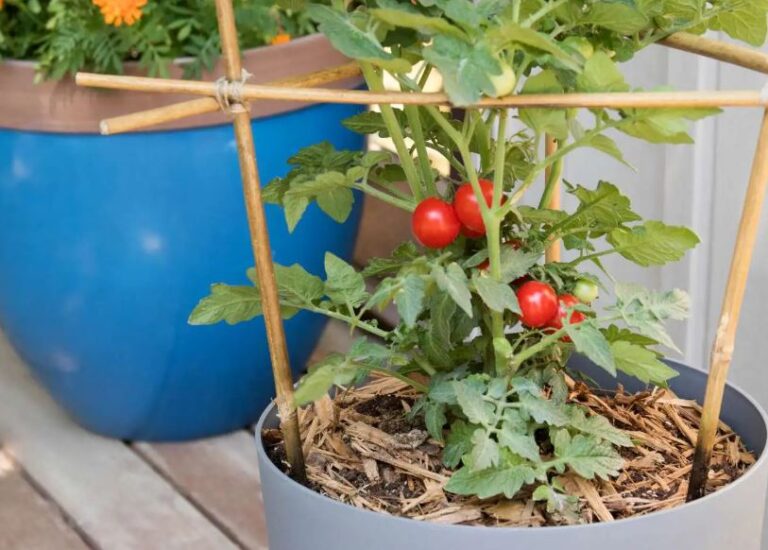
To grow tomatoes in pots, plant one seedling per container of at least 5 gallons (19 liters) for compact varieties, or 10 gallons (38 liters) or more for vining types. Use a quality potting mix, bury the stem deeply, place the pot in 6 to 8 hours of direct sun, water when the top 2 inches of mix feels dry and feed every one to two weeks once flowers appear.
Tomatoes in Pots at a Glance
| Factor | What tomatoes need |
|---|---|
| Pot size | 5+ gallons (compact), 10+ gallons (vining) |
| Sunlight | 6 to 8 hours of direct sun daily |
| Soil | Well-draining potting mix, pH 6.2 to 6.8 |
| Water | Deeply, when the top 2 inches feel dry |
| Feeding | Every 1 to 2 weeks after flowering starts |
| Temperature | Daytime 70 to 85°F (21 to 29°C); plant out when nights stay above 50°F (10°C) |
| Time to harvest | Roughly 55 to 85 days after transplanting, depending on variety |
Can You Grow Tomatoes in Pots?
Yes. Tomatoes grow well in containers if the pot is large enough, the mix drains well and the plant gets enough sun. Container growing suits balconies, patios, rooftops and small yards, and it lets you move plants to follow the light or shelter them from cold.
Step 1: Choose the Right Tomato Variety
Variety choice affects everything else, so start here.
- Determinate (bush) tomatoes stay compact, usually 3 to 4 feet tall, and ripen most of their fruit over a few weeks. Examples: Roma, Celebrity, Patio Princess.
- Indeterminate (vining) tomatoes keep growing and fruiting until frost. They need tall support and bigger pots. Examples: Sungold, Brandywine, Better Boy.
- Dwarf and micro varieties such as Tiny Tim or Tumbling Tom stay under 2 feet and can thrive in pots as small as 2 to 3 gallons.
For beginners, cherry tomatoes and compact determinate types are the most forgiving.
Step 2: Pick the Right Pot Size
Pot size determines how much water and root space the plant has. A pot that’s too small dries out quickly and stunts growth.
| Tomato type | Minimum pot size |
|---|---|
| Dwarf/micro | 2 to 3 gallons (8 to 11 liters) |
| Determinate | 5 to 7 gallons (19 to 26 liters) |
| Indeterminate | 10 to 20 gallons (38 to 76 liters) |
Material matters. Terracotta breathes but dries fast. Plastic holds moisture longer. Fabric grow bags promote healthy roots but need more frequent watering. Dark pots heat up in full sun, so choose lighter colors in hot climates.
Drainage is non-negotiable. Every pot needs holes at the base. Standing water causes root rot.
Step 3: Use the Right Soil
Never fill a pot with garden soil. It compacts in containers and drains poorly. Use a high-quality potting mix, ideally one labeled for vegetables or containers.
A simple homemade blend:
- 1 part peat moss or coco coir (holds moisture)
- 1 part perlite or pumice (improves drainage)
- 1 part compost or worm castings (supplies nutrients)
Mix in a slow-release vegetable fertilizer according to the package directions. Aim for a soil pH between 6.2 and 6.8.
Step 4: Plant Your Tomatoes Correctly
- Wait for warmth. Plant outdoors once nighttime temperatures stay above 50°F (10°C) and frost risk has passed.
- Harden off seedlings for 7 to 10 days by giving them gradually longer outdoor time.
- Fill the pot with moistened mix, leaving 1 to 2 inches below the rim.
- Strip the lower leaves from the seedling.
- Bury the stem deeply, up to the first set of true leaves. Tomatoes grow extra roots along buried stems, which makes plants stronger.
- Water thoroughly until it drains from the bottom.
- Install support now, before roots spread. Use a cage, stake or trellis.
Plant only one tomato per pot. Crowding lowers yield.
Step 5: Give Tomatoes Enough Sun and Warmth
Tomatoes need 6 to 8 hours of direct sunlight daily. Less light means leggy plants and fewer fruit. Place pots in the sunniest spot you have, such as a south- or west-facing wall in the Northern Hemisphere.
In very hot weather above 90°F (32°C), flowers may drop without setting fruit. Afternoon shade and consistent watering help. In cool climates, a sheltered spot against a wall or a dark-colored pot will warm roots earlier.
Step 6: Water Tomatoes the Right Way
Inconsistent watering causes most container tomato problems.
- Check daily. Push a finger 2 inches into the mix. If it’s dry, water.
- Water deeply until liquid flows from the drainage holes.
- Water at the base, not the leaves, to reduce disease.
- Expect daily watering in summer, sometimes twice in hot spells for small pots.
- Keep moisture even. Swings between dry and soaked cause blossom end rot and split fruit.
Adding 2 inches of mulch such as straw or shredded bark slows evaporation. A self-watering pot or drip line with a timer helps if you’re often away.
Step 7: Feed Regularly
Frequent watering washes nutrients out of containers, so tomatoes need steady feeding.
- At planting: mix in slow-release fertilizer or compost.
- After the first flowers appear: feed every 1 to 2 weeks with a liquid tomato fertilizer (lower nitrogen, higher phosphorus and potassium).
- Avoid too much nitrogen. It produces lush leaves and few tomatoes.
Yellow lower leaves can signal hunger or overwatering, so check soil moisture before you add fertilizer.
Step 8: Support and Prune
Support prevents broken stems and keeps fruit off the soil.
- Cages work for determinate types.
- Stakes or strings suit indeterminate vines. Tie the stem loosely as it grows.
- Prune suckers (shoots between the stem and a branch) on indeterminate plants to focus energy on fruit. Do not remove suckers from determinate varieties, since they carry fruit.
- Remove lower leaves that touch the soil, plus any yellowing or diseased foliage.
- Top the plant about a month before first frost by cutting the growing tip, so remaining fruit can ripen.
Common Problems When Growing Tomatoes in Pots
| Symptom | Likely cause | Fix |
|---|---|---|
| Dark, sunken patch on fruit bottoms | Blossom end rot from uneven watering | Water consistently, mulch |
| Cracked fruit | Sudden watering after dry spell | Keep moisture steady |
| Yellow lower leaves | Nitrogen shortage or overwatering | Check soil moisture, then feed |
| Wilting despite wet soil | Root rot or poor drainage | Improve drainage, repot if needed |
| Flowers dropping | Heat over 90°F, cold nights or stress | Shade, water evenly, be patient |
| Spots on leaves | Early blight or septoria leaf spot | Remove affected leaves, water at base, improve airflow |
| Chewed leaves and droppings | Tomato hornworm | Pick off by hand |
| Curling leaves | Heat, water stress or herbicide drift | Identify cause; often temporary |
Best Tomato Varieties for Pots
- Sungold (cherry, indeterminate): very sweet, heavy producer
- Tiny Tim (dwarf cherry): compact, ideal for small pots
- Patio Princess (determinate): bred for containers
- Roma (determinate paste): good for sauce
- Celebrity (determinate slicer): reliable and disease-resistant
- Better Boy (indeterminate slicer): classic large fruit
When and How to Harvest
Pick tomatoes when they’ve reached full color and feel slightly soft when gently squeezed. They come off easily with a gentle twist. If frost threatens, pick green fruit and ripen it indoors at room temperature. Regular harvesting encourages more production.
Frequently Asked Questions
What size pot is best for tomatoes?
A 5-gallon pot works for compact varieties, and 10 gallons or larger suits vining tomatoes. Bigger pots hold more water and buffer against heat.
How often should I water tomatoes in pots?
Check daily and water when the top 2 inches feel dry. In hot weather, that often means once a day.
Can I grow more than one tomato plant in a pot?
Generally no. One plant per pot gives better yields. Very large containers of 20 gallons or more can host two compact plants, but competition reduces fruit size.
Do tomatoes in pots need full sun?
Yes, at least 6 to 8 hours of direct sun. Less light leads to weak growth and poor fruiting.
Why are my potted tomatoes not producing fruit?
Common causes include too little sun, too much nitrogen, extreme heat or cold at flowering and a lack of pollination. Adjust light and feeding, and gently shake flowers to help pollen move.
Can I reuse the soil for next year’s tomatoes?
Only if plants stayed healthy. Refresh it with compost and new mix, or grow a different crop in it first to reduce disease risk.
How long do tomatoes take to grow in pots?
Most varieties produce ripe fruit 55 to 85 days after transplanting, depending on type and weather.
Final Thoughts
Growing tomatoes in pots comes down to a few fundamentals: a large enough container with drainage, quality potting mix, plenty of sun, consistent watering and regular feeding. Choose a variety suited to your space, support it early and check it daily. With those basics in place, container tomatoes can match, and often beat, garden-grown plants.

- How to Grow Microgreens Without Soil Indoors: Easy Home Method - October 5, 2026
- Microgreens vs. Sprouts: Key Differences, Nutrition, Safety, and Which One to Eat - October 5, 2026
- 10 Best Garden Tools For Weed Removal 2027 - October 3, 2026