When I planted my first balcony container garden, I assumed growing food required acres of land and years of experience. My initial attempts were full of trial and error: I planted full-sized heirloom tomatoes in shallow 6-inch window boxes and expected fruit trees to thrive in heavy lawn topsoil.
Once I switched to foolproof container crops—specifically compact fruit and vegetable varieties bred for pots—my yields exploded.
Growing edible plants in containers gives you total control over soil quality, moisture levels, and sun exposure. Whether you have a sunny patio, a small balcony, or just a bright windowsill, here is my direct, hands-on guide to the easiest fruits and vegetables you can successfully cultivate in pots.
At a Glance: Easiest Potted Crops Quick Reference
| Crop | Type | Recommended Container Size | Sun Needed | Time to Harvest | Key Care Requirement |
| Strawberries | Fruit | 8–10 Inches (or Tiered Tower) | 6+ Hours | 60–90 Days (Everbearing) | Keep soil moist; protect crown from sinking |
| Dwarf Blueberries | Fruit | 5–7 Gallon Pot | 6–8 Hours | 1st–2nd Season | Needs acidic soil ($\text{pH } 4.5–5.5$) |
| Cherry Tomatoes | Fruit/Veg | 5 Gallon Pot or Fabric Smart Pot | 8 Hours | 50–65 Days | Cage/stake for support; consistent watering |
| Sweet & Hot Peppers | Fruit/Veg | 3–5 Gallon Pot | 6–8 Hours | 60–75 Days | Warm temperatures ($70^\circ\text{F}+$); well-draining mix |
| Bush Figs | Fruit | 7–10 Gallon Pot | 8 Hours | 1st–2nd Season | Protect roots from freezing in winter |
| Loose-Leaf Lettuce | Veg | 6–8 Inches Deep | 4–6 Hours | 30–40 Days | Harvest outer leaves (cut-and-come-again) |
| Radishes | Veg | 6 Inches Deep | 6 Hours | 21–28 Days | Thin early to 2-inch spacing |
| Bush Snap Beans | Veg | 10–12 Inches Deep | 6 Hours | 45–50 Days | Pick daily once pods form |
| Spinach & Kale | Veg | 6–8 Inches Deep | 4–5 Hours | 30–35 Days | Thrives in cool weather and partial shade |
| Green Onions | Veg | 6 Inches Deep | 4–6 Hours | 14–21 Days | Regrow easily from kitchen scraps |
5 Easy Fruits to Grow in Pots
Growing fruit in containers used to be tricky, but modern dwarf and bush cultivars make harvest-worthy fruiting plants accessible even in small spaces.
1. Strawberries (Fragaria × ananassa)
Strawberries are hands-down the most rewarding fruit for beginners to grow in containers. Their roots are shallow, making them ideal for traditional pots, hanging baskets, or vertical strawberry towers.
My Growing Blueprint for Potted Strawberries
-
Best Varieties: Pick Everbearing (like ‘Seascape’ or ‘Albion’) or Day-Neutral types (‘Tribute’). Unlike June-bearing varieties that produce one quick burst, these yield sweet berries continuously from early summer through autumn.
-
Pot Selection: An 8- to 10-inch deep pot per plant, or a tiered strawberry planter.
-
Planting Depth: Ensure the central “crown” (where the leaves meet the roots) rests right at the soil line. Burying the crown leads to rot, while leaving it too exposed dries out the roots.
-
Watering: Strawberries have shallow roots that dry out quickly. Water whenever the top inch of soil feels dry to the touch.
2. Dwarf & Patriot Blueberries (Vaccinium corymbosum)
Blueberries are naturally pest-resistant and produce white flowers in spring, sweet berries in summer, and bright red foliage in autumn. Growing them in pots is actually easier than in the ground because blueberries require strict acidic soil ($\text{pH } 4.5\text{ to } 5.5$), which is simple to maintain inside a container.
My Growing Blueprint for Potted Blueberries
-
Best Varieties: Look for dwarf cultivars like ‘Tophat’, ‘Jelly Bean’, or ‘Peach Sorbet’. They stay under 2 to 3 feet tall while producing full-sized fruit.
-
Soil Requirements: Fill your pot with a 50/50 mix of peat moss and acid-loving potting mix (like an azalea or camellia mix). Avoid standard garden lime.
-
Watering Tip: Water with rainwater or tap water treated to be slightly acidic, as hard municipal tap water can raise soil $\text{pH}$ over time.
3. Dwarf Cherry Tomatoes (Solanum lycopersicum)
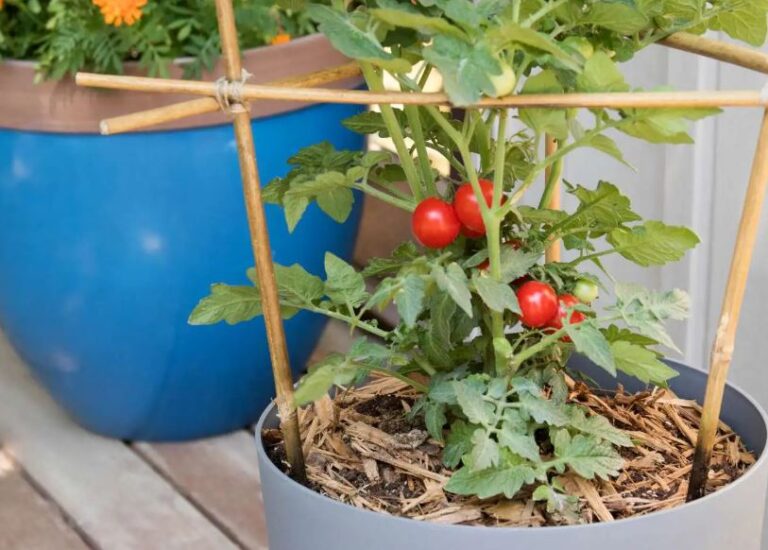
Botanically a fruit, cherry tomatoes are a staple of patio gardens. While full-sized beefsteak tomatoes struggle in small containers, dwarf cherry varieties produce hundreds of sweet, bite-sized tomatoes on compact vines.
My Growing Blueprint for Potted Cherry Tomatoes
-
Best Varieties: ‘Tiny Tim’ (grows just 12–15 inches tall), ‘Tumbler’ (ideal for hanging baskets), and ‘Super Sweet 100’.
-
Container Size: Minimum 5-gallon capacity (a standard 12-inch wide by 12-inch deep pot) per plant.
-
Support Structure: Place a small tomato cage or bamboo stakes in the pot at planting time to support heavy fruit clusters.
4. Sweet & Hot Peppers (Capsicum annuum)
Peppers are compact, self-pollinating, and love the extra heat that container pots absorb on sunny decks and patios.
My Growing Blueprint for Potted Peppers
-
Best Varieties: ‘Jalapeño’, ‘Shishito’, ‘Mini Sweet Bell’, and ‘Cayenne’.
-
Container Size: 3 to 5 gallons per plant.
-
Temperature Control: Peppers hate cold soil. Wait until night temperatures consistently stay above $55^\circ\text{F}$ before moving your pepper pots outdoors.
5. Dwarf Patio Figs (Ficus carica)
Fig trees thrive when their roots are slightly restricted, making them surprisingly well-suited for container life. Dwarf varieties produce rich, sweet fruit within their first two seasons.
My Growing Blueprint for Potted Figs
-
Best Varieties: ‘Little Miss Figgy’ or ‘Petite Negra’. Both stay under 4 to 6 feet tall and yield heavily.
-
Container Size: Start in a 5-gallon pot and scale up to a 10-gallon container over 2 to 3 years.
-
Overwintering: If you live in a cold zone (USDA Zone 6 or lower), move the dormant fig pot into an unheated garage or basement once it drops its leaves in late autumn.
5 Easy Vegetables to Grow in Pots
1. Loose-Leaf Lettuce & Salad Greens
Leaf lettuce grows rapidly, requires minimal depth, and yields continuously through the “cut-and-come-again” method.
-
Container Depth: 6 inches.
-
Harvest Technique: Use clean shears to cut outer leaves 1 inch above the crown. The plant regenerates new leaves from the center within days.
2. Crisp Radishes
Radishes offer the fastest turn-around in container gardening, going from seed to harvestable root in as little as 3 weeks.
-
Container Depth: 6 inches.
-
Key Step: Thin seedlings early so plants are spaced 2 inches apart. Crowding causes lush leaves without proper root development.
3. Bush Snap Beans
Unlike pole beans that require tall trellises, bush beans stay low and sturdy (12–18 inches) while producing dense clusters of crunchy bean pods.
-
Container Depth: 10 to 12 inches.
-
Harvest Secret: Pick pods daily as soon as they reach pencil thickness to encourage the plant to set continuous new blossoms.
4. Baby Spinach & Kale
Both spinach and kale are hardy, shade-tolerant crops that perform exceptionally well in cooler spring and autumn temperatures.
-
Container Depth: 6 to 8 inches.
-
Sunlight: They thrive on just 4 hours of sun per day, making them excellent choices for partially shaded balconies.
5. Green Onions & Scallions
Green onions take up virtually no horizontal room, allowing you to interplant them along the edges of pots containing larger plants like tomatoes or peppers.
-
Kitchen Scrap Trick: Submerge the white root ends of store-bought scallions in water for 3 days until roots sprout, then transfer them directly into container soil.
Step-by-Step Guide to Setting Up Container Pots
To ensure consistent growth, set up your container ecosystem using this simple step-by-step workflow:
Common Container Gardening Pitfalls to Avoid
-
Under-potting: Planting large crops in small pots leads to root binding, frequent wilting, and stunted growth. Check minimum container requirements before planting.
-
Overwatering: Saturated soil starves roots of oxygen and triggers yellowing leaves. Always let the top layer of soil dry slightly between waterings.
-
Placing Pots on Hot Concrete: In high summer, dark concrete can overheat container roots. Elevate pots on simple plant risers or wooden caddies to allow airflow underneath.
Frequently Asked Questions
What is the easiest fruit to grow in a pot for a beginner?
Strawberries are the easiest fruit for beginners. They grow quickly in small pots, thrive in hanging baskets or vertical containers, and yield sweet fruit throughout the warm months.
How often should I water edible crops in pots?
Check your pots daily. During mild weather, watering 2 to 3 times per week is usually sufficient. In peak summer heat, small or porous containers may need daily watering.
Do container plants need extra fertilizer?
Yes. Because container pots are watered frequently, soil nutrients wash out through the drainage holes over time. Feeding every 10 to 14 days with a mild organic liquid fertilizer keeps plants healthy and productive.

- How to Grow Microgreens Without Soil Indoors: Easy Home Method - October 5, 2026
- Microgreens vs. Sprouts: Key Differences, Nutrition, Safety, and Which One to Eat - October 5, 2026
- 10 Best Garden Tools For Weed Removal 2027 - October 3, 2026