Determinate vs. Indeterminate Cherry and Grape Tomatoes: Which Growth Type Fits Your Garden?
If you are growing cherry or grape tomatoes, the fruit type is only part of the decision. The plant’s growth habit also matters. A tomato can be determinate, indeterminate, or sometimes semi-determinate, and each type behaves differently in the garden.
Determinate cherry and grape tomatoes tend to form a more compact plant with a concentrated harvest. Indeterminate varieties keep producing new stems, flowers, and fruit as the growing season continues. This difference affects plant size, pruning, support, containers, harvest timing, and garden space.
Understanding the relationship between tomato type, growth habit, plant size, and fruit production makes it easier to choose a variety that matches your garden.
| Plant type | General growth habit | Harvest pattern |
|---|---|---|
| Determinate cherry or grape tomato | More compact and naturally limited growth | More concentrated |
| Indeterminate cherry or grape tomato | Continues producing new growth | Extended harvest |
Determinate Cherry Tomatoes: Growth and Fruit Production
Determinate cherry tomatoes develop according to a more limited growth pattern. The plant eventually reaches its natural size and focuses more energy on flowering and fruit development.
Compact growth habit
A determinate cherry tomato usually has a more controlled shape than a continuously growing vine. This can make the plant easier to manage in smaller gardens.
The relationship is simple: determinate growth → limited stem extension → more compact plant structure.
Fruit production pattern
Determinate plants tend to produce a large portion of their crop around the same period. After the main fruiting cycle, the plant gradually slows down.
This makes the growth habit useful for gardeners who want a harvest that is easier to collect at once.
Support requirements
Determinate does not mean completely unsupported. Fruit-loaded branches can still become heavy.
- A tomato cage can help hold branches upright.
- A stake can provide extra stability.
- Support also keeps fruit away from wet soil.
- Strong support is useful during heavy fruiting.
Container suitability
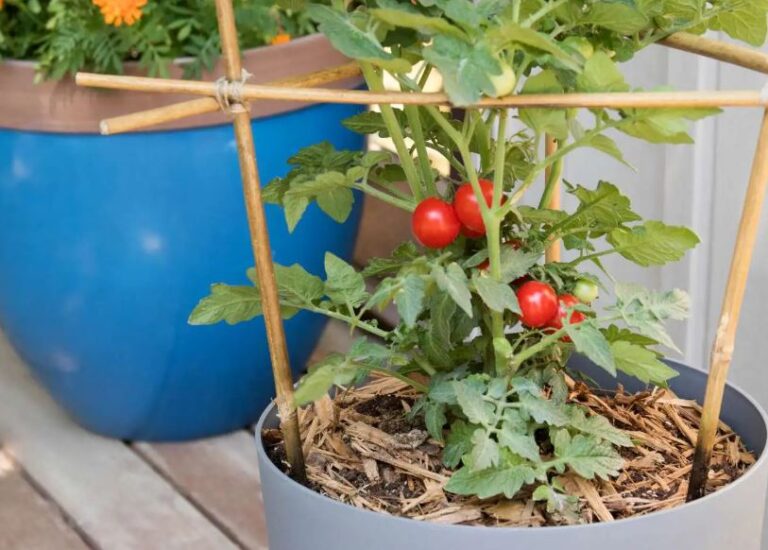
Compact determinate cherry tomatoes can work well in containers when the variety has a naturally manageable habit. The container still needs adequate drainage, sunlight, soil, and consistent moisture.
Indeterminate Cherry Tomatoes: Long-Season Growth
Indeterminate cherry tomatoes behave differently because the main growing stems can continue extending throughout the season.
Continuous vine growth
An indeterminate cherry tomato keeps producing new leaves, stems, flowers, and fruit when growing conditions remain favorable.
This creates the relationship indeterminate growth → continued vine development → repeated flowering and fruiting.
Extended harvest
Because new growth can continue, an indeterminate cherry tomato may provide fruit over a longer portion of the growing season.
The actual harvest period depends on variety, weather, disease pressure, sunlight, and general plant care.
Strong support is important
Long vines need reliable support.
- Use a sturdy cage, trellis, or tomato stake.
- Tie growing stems when necessary.
- Check support as the plant becomes heavier.
- Keep developing fruit off the ground.
Pruning considerations
Indeterminate cherry tomatoes can become crowded if side shoots are allowed to grow freely. Some gardeners prune selectively to improve airflow and make harvesting easier.
Heavy pruning is not always necessary. The goal is to manage the plant rather than remove healthy growth without a reason.
Determinate Grape Tomatoes: What Makes Them Different?
Determinate grape tomatoes combine the elongated fruit shape associated with grape tomatoes with a more limited growth habit.
Compact plant structure
A determinate grape tomato generally stays more controlled than an indeterminate vine. This can make it easier to fit into smaller garden spaces.
Concentrated fruiting
The plant’s limited growth pattern is closely related to its harvest behavior. Once the plant reaches its natural growth stage, much of its fruit production becomes concentrated.
This can be useful for gardeners who prefer to harvest a larger amount within a shorter period.
Easier garden management
A smaller plant can be easier to inspect, water, support, and harvest.
The relationship between plant architecture and maintenance matters here. A naturally compact plant usually requires less space for spreading vines.
Container growing
Some determinate grape tomatoes are suitable for container growing, especially when the variety has a compact structure.
Choose a container large enough for the root system and provide strong support if the fruiting branches become heavy.
Indeterminate Grape Tomatoes: Vining Growth Explained
Indeterminate grape tomatoes can become vigorous plants because their growing stems continue developing throughout favorable conditions.
Long-growing vines
The plant continues creating new growth rather than stopping after reaching a fixed mature structure.
This makes indeterminate grape tomatoes useful for gardeners who have vertical growing space.
Repeated flowering and fruiting
New flowers can appear along developing stems, followed by new clusters of grape-shaped fruit.
Good sunlight, adequate water, healthy soil, and appropriate nutrition all support this growth relationship.
Trellis and cage support
Support becomes especially important as the vine grows.
- Trellises guide the plant upward.
- Cages help contain spreading branches.
- Stakes provide vertical stability.
- Tying stems can prevent them from falling over.
Managing vigorous growth
An indeterminate grape tomato may need regular attention as the season progresses. Remove damaged growth, monitor crowded areas, and guide stems onto their support.
The goal is good airflow and accessible fruit rather than forcing every plant into the same shape.
Determinate vs. Indeterminate Tomato Size
Plant size is one of the clearest differences between determinate and indeterminate tomatoes, but variety matters too.
Determinate plants stay more limited
Determinate plants naturally stop extending their main growth after reaching their genetic growth pattern.
That does not mean every determinate variety is tiny. Some can still become substantial garden plants.
Indeterminate plants keep extending
Indeterminate plants can continue growing upward and outward while conditions remain suitable.
Their final size is therefore strongly influenced by variety, support, climate, pruning, and growing season length.
Variety controls plant architecture
Cherry and grape describe fruit characteristics, not automatically the plant’s growth habit.
Two cherry tomato varieties can have very different growth patterns. The same is true for grape tomatoes.
Garden space matters
Consider available space before choosing a tomato plant.
A compact determinate variety may fit a small bed or container more easily, while an indeterminate vine may need vertical support and more room for training.
Harvest Differences Between Determinate and Indeterminate Tomatoes
The growth habit influences not only plant structure but also how the harvest develops.
Determinate harvest window
Determinate tomatoes often produce a more concentrated crop. This can be convenient for gardeners who want to collect fruit for fresh meals, preserving, or sharing.
Indeterminate harvest window
Indeterminate tomatoes generally continue producing while the plant keeps growing and flowering.
This can provide a steady supply of fresh cherry or grape tomatoes rather than one concentrated harvest.
Fruit clusters and ripening
Cherry and grape tomatoes commonly develop in clusters. The exact cluster structure depends on the variety.
Fruit ripens according to variety and growing conditions rather than simply being determined by whether the tomato is cherry or grape.
Picking encourages regular harvest
Regular harvesting helps keep ripe fruit from remaining on the plant too long.
Pick fruit when it reaches the desired ripeness and handle it gently to avoid bruising.
Pruning and Support Needs
Pruning and support should match the tomato’s growth habit rather than follow a one-size-fits-all approach.
Pruning determinate tomatoes
Determinate plants usually need less aggressive pruning because their natural growth is already limited.
Removing damaged leaves and overcrowded growth may be enough for many gardeners.
Pruning indeterminate tomatoes
Indeterminate plants can benefit from selective pruning and training.
Removing unnecessary suckers can help control growth, although practices vary by variety and gardening system.
Supporting heavy fruit clusters
Cherry and grape tomatoes can produce many fruit clusters. Even relatively compact plants can develop heavy branches.
Good support reduces the chance of stems bending or breaking.
Airflow around foliage
Proper spacing and selective pruning can improve airflow through dense foliage.
Better airflow helps leaves dry more quickly after watering or rain and makes the plant easier to inspect.
Water, Soil, and Sunlight for Both Types
Growth habit changes the way a plant develops, but basic growing needs remain important for both determinate and indeterminate tomatoes.
Sunlight supports growth
Tomatoes need strong sunlight for photosynthesis and fruit development. A plant receiving insufficient light may become weak and produce less effectively.
Soil supports roots
Healthy soil provides the root environment needed for water and nutrient uptake.
Good drainage is especially important because constantly waterlogged roots can create serious growing problems.
Consistent moisture matters
Both cherry and grape tomatoes perform better when soil moisture is relatively consistent.
- Check the soil before watering.
- Water deeply rather than relying only on shallow surface watering.
- Avoid repeatedly soaking already wet soil.
- Mulch can help reduce rapid moisture loss.
Nutrition affects fruit production
Tomatoes need access to essential nutrients throughout the growing season. Excessive fertilizer can encourage unwanted leafy growth, while poor nutrition can limit overall plant development.
Growing Determinate and Indeterminate Tomatoes in Containers
Both growth types can be grown in containers, but the plant’s natural architecture should guide your choice.
Compact varieties save space
Determinate cherry or grape tomatoes can be easier to manage where horizontal and vertical space is limited.
A compact plant can also make harvesting more convenient.
Indeterminate plants need training
An indeterminate tomato can grow successfully in a container, but it usually needs reliable support and regular training.
The container does not stop an indeterminate plant from wanting to grow.
Container size and drainage
Use a container that provides enough room for healthy root development and has effective drainage.
A small container can dry quickly, especially during hot weather.
Watering needs can change
Container tomatoes often need closer moisture monitoring than plants growing in a larger garden bed.
Sun exposure, container material, weather, plant size, and soil mix all affect how quickly moisture is lost.
Which Growth Habit Fits Your Garden?
There is no single growth habit that works for every garden. The right choice depends on how you want the plant to grow and how you plan to use the harvest.
Choose based on available space
A compact determinate tomato can be practical for smaller spaces. An indeterminate variety may be better suited to gardeners who have vertical support available.
Think about harvest timing
If you prefer a more concentrated harvest, determinate plants may match that goal. If you want fruit over a longer growing period, an indeterminate variety may better match that preference.
Consider maintenance
Determinate plants can be easier to contain, while indeterminate plants often require more training and support.
Your available time should therefore influence the choice.
Read the variety description
The most useful information often comes from the specific seed packet or plant label.
Look for terms such as determinate, indeterminate, semi-determinate, compact, dwarf, or vigorous. These attributes tell you more about plant behavior than the words cherry or grape alone.
FAQs About Determinate vs. Indeterminate Cherry and Grape Tomatoes
Are cherry tomatoes determinate or indeterminate?
Cherry tomatoes can be either determinate or indeterminate. Cherry describes the fruit type, while determinate and indeterminate describe the plant’s growth habit.
Are grape tomatoes determinate or indeterminate?
Grape tomatoes can also have either growth habit. Check the specific variety description to know whether the plant is determinate, indeterminate, or semi-determinate.
Which grows taller, determinate or indeterminate tomatoes?
Indeterminate tomatoes generally continue extending their vines, while determinate tomatoes have a more limited growth pattern. Actual plant size still varies by variety.
Do indeterminate cherry tomatoes need a trellis?
Many indeterminate cherry tomatoes benefit from strong support because their vines continue growing and their fruit clusters can become heavy.
Are determinate tomatoes better for containers?
Some determinate cherry and grape varieties are well suited to containers because of their more compact growth. However, container suitability depends on the individual variety.
Do determinate tomatoes produce more fruit at once?
Their fruit production is generally more concentrated than that of indeterminate plants. The actual harvest depends on the variety and growing conditions.
Can grape tomatoes be indeterminate?
Yes. Many grape tomato varieties have an indeterminate growth habit and can continue producing new vines, flowers, and fruit during suitable growing conditions.
Final Thoughts
Determinate and indeterminate describe how a tomato plant grows, while cherry and grape describe the characteristics of the fruit. Keeping these concepts separate makes tomato selection much easier.
A determinate cherry or grape tomato tends to have a more limited growth pattern and a more concentrated harvest. An indeterminate plant continues developing vines and can provide fruit over a longer period.
The best match depends on your garden space, support system, container plans, maintenance routine, and preferred harvest pattern. Always check the specific variety because two cherry or grape tomatoes can have very different growth habits.

- 10 Best Garden Hose For Year Round Greenhouse Use 2026 - October 21, 2026
- 10 Best Garden Hose For Dusty Environments 2026 - October 21, 2026
- 10 Best Garden Hose For Muddy Conditions 2026 - October 21, 2026