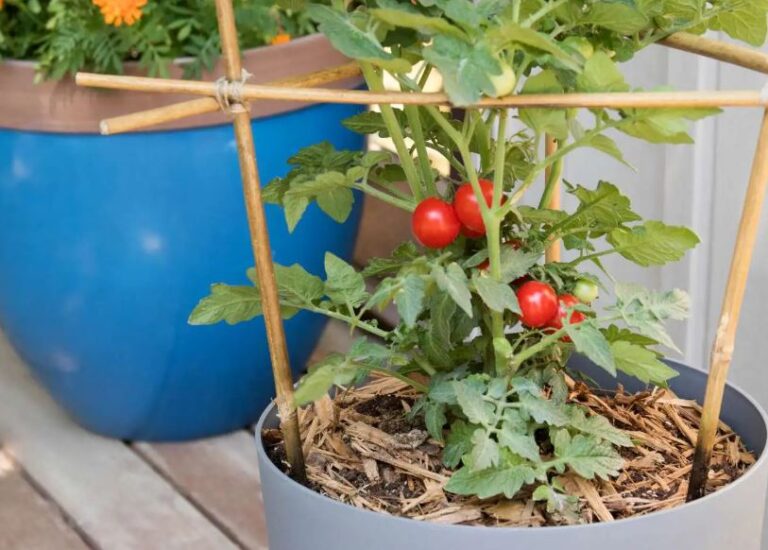
Growing tomatoes in outdoor pots can be surprisingly productive when you start with the right soil. Unlike garden beds, containers have limited space for roots, water, and nutrients. That makes the growing mix especially important.
The best soil for tomatoes in pots should drain well, hold enough moisture, allow air to reach the roots, and provide enough nutrition for steady growth. Heavy garden soil is usually not a good choice for containers because it can become compacted.
Below are 10 potting soil options worth considering for outdoor tomato plants, along with their key features, benefits, maintenance needs, and potential drawbacks.
1. Miracle-Gro Performance Organics All Purpose Container Mix
Miracle-Gro Performance Organics All Purpose Container Mix is designed for growing plants in containers. It can be used for outdoor vegetables, herbs, and flowers, making it a practical choice if you grow more than tomatoes.
Key Features
- Designed for indoor and outdoor containers
- Contains aged compost
- Uses organic and natural ingredients
- OMRI Listed for organic gardening
- Provides nutrients for up to three months
- Suitable for vegetables and herbs
Why It’s Best for Tomatoes
Tomatoes need a growing medium that provides moisture without staying soggy. This container mix is designed for that type of environment and includes organic materials that provide nutrients as plants establish.
It can be particularly useful for gardeners who want a ready-to-use mix rather than making their own blend.
Visual Impact & Maintenance
The dark, loose texture looks neat in outdoor tomato pots. It is easy to work with when filling containers and transplanting seedlings.
Because tomatoes can use water quickly, check the moisture regularly during hot weather. Additional feeding may also be needed later in the season.
Pros
- Organic ingredients
- Designed for containers
- Suitable for vegetables
- Includes starter nutrition
- Easy to use
Cons
- May require additional fertilizer later
- Can dry quickly in hot weather
Overall Verdict
This is a convenient choice for beginners who want an organic-oriented container mix that can be used straight from the bag.
2. FoxFarm Ocean Forest Potting Soil
FoxFarm Ocean Forest is a rich potting soil made for container gardening. Its formula combines several organic ingredients and is designed to create a loose environment for plant roots.
Key Features
- Contains sphagnum peat moss
- Includes aged forest products
- Contains earthworm castings
- Includes bat guano
- Contains fish emulsion and crab meal
- Designed for container plants
Why It’s Best for Tomatoes
Tomatoes are heavy feeders, particularly once they become large and begin producing fruit. Ocean Forest provides a nutrient-rich starting medium with several organic ingredients.
Its relatively loose structure also gives roots room to develop inside containers.
Visual Impact & Maintenance
The dark, rich-looking soil works nicely in large patio pots and raised containers. Its texture is easy to handle during planting.
Because it is already nutrient-rich, avoid automatically adding large amounts of fertilizer at planting. Monitor the plant and feed according to its needs later.
Pros
- Rich growing medium
- Contains organic ingredients
- Good root environment
- Designed for containers
- Suitable for vegetables
Cons
- Premium-priced option
- Can be too nutrient-rich for some young plants
- Additional feeding may eventually be needed
Overall Verdict
Ocean Forest is worth considering if you want a rich, ready-to-use potting soil for large outdoor tomato containers.
3. Miracle-Gro Organic Potting Mix
Miracle-Gro Organic Potting Mix is designed for container gardening and uses organic ingredients. It can be used for vegetables, herbs, flowers, and other plants grown in pots.
Key Features
- OMRI Listed
- Peat-based formula
- Contains compost
- Suitable for indoor and outdoor containers
- Provides nutrients for up to two months
- Suitable for vegetables
Why It’s Best for Tomatoes
Tomatoes grown in pots need more than simple dirt. They need a growing medium that provides good drainage while retaining enough moisture around the roots.
This mix provides a convenient starting point for gardeners who want an organic container soil without making their own recipe.
Visual Impact & Maintenance
Its lightweight texture makes it easy to place in large pots without creating an excessively heavy container.
Keep an eye on moisture during hot weather. Once the initial nutrients are used, tomato plants will usually need additional feeding to maintain vigorous growth.
Pros
- Organic formula
- Container-friendly
- Suitable for vegetables
- Easy to use
- Includes nutrients
Cons
- Nutrients are not permanent
- Can dry relatively quickly outdoors
Overall Verdict
A simple option for gardeners who want an organic potting mix for outdoor tomato containers.
4. FoxFarm Happy Frog Potting Soil
FoxFarm Happy Frog is another container-friendly option with a mixture of organic materials and beneficial components. It is designed to support plant roots while providing a fertile growing environment.
Key Features
- Designed for container gardening
- Contains earthworm castings
- Includes bat guano
- Contains aged forest products
- Includes peat moss
- Contains beneficial microbes
Why It’s Best for Tomatoes
Tomatoes need a growing medium that supports strong root development. Happy Frog provides an airy texture along with organic nutrient sources.
It can be useful for gardeners who want a nutrient-rich soil while still maintaining good root aeration.
Visual Impact & Maintenance
The loose texture is easy to spread into large tomato pots. It also gives containers a rich, natural appearance.
As with other container soils, moisture needs to be monitored regularly. Outdoor tomatoes can dry quickly when temperatures rise.
Pros
- Rich organic ingredients
- Good aeration
- Beneficial microbes
- Container-friendly
- Suitable for vegetables
Cons
- More expensive than basic potting mixes
- Additional fertilizer may eventually be required
Overall Verdict
Happy Frog is a good choice for gardeners looking for a rich container mix with organic ingredients and a focus on root health.
5. Black Gold All Purpose Potting Soil
Black Gold All Purpose Potting Soil is a versatile option for gardeners who want one growing medium for several container plants. It can be used for vegetables, flowers, and other outdoor plants.
Key Features
- General-purpose container soil
- Suitable for outdoor pots
- Designed to provide moisture retention
- Supports root aeration
- Suitable for vegetables
- Easy to use
Why It’s Best for Tomatoes
A tomato potting mix does not necessarily need to be labeled specifically for tomatoes. What matters most is whether it provides good drainage, moisture retention, and a suitable environment for roots.
This type of all-purpose mix can work well when paired with an appropriate tomato fertilizer.
Visual Impact & Maintenance
It provides a clean and simple base for patio containers. The soil is easy to handle when transplanting tomato seedlings.
Regular watering is important, especially when pots sit in direct sunlight. Additional fertilizer may also be necessary as the plants mature.
Pros
- Versatile
- Suitable for vegetables
- Container-friendly
- Beginner-friendly
- Useful for multiple plants
Cons
- Not tomato-specific
- May need additional feeding
Overall Verdict
A practical choice if you want a versatile potting soil that can be used for tomatoes and other outdoor container plants.
6. PRO-MIX Premium Potting Mix
PRO-MIX potting mixes are designed to provide a lightweight growing environment for container plants. Their airy texture can be useful for gardeners who want to encourage healthy root development.
Key Features
- Lightweight growing medium
- Designed for containers
- Good air space
- Moisture-retaining properties
- Suitable for vegetables
- Useful for outdoor gardening
Why It’s Best for Tomatoes
Tomato roots need oxygen as well as moisture. A lightweight potting medium can help maintain air spaces around the roots while allowing excess water to drain.
This is especially useful when growing tomatoes in large containers where compacted soil could restrict root growth.
Visual Impact & Maintenance
Its lightweight texture makes large pots easier to fill and handle before planting.
Outdoor containers still require regular moisture checks. Windy or hot locations may cause the growing medium to dry faster than expected.
Pros
- Lightweight
- Good root aeration
- Container-friendly
- Easy to handle
- Suitable for vegetables
Cons
- Fertilizer may be needed
- Can dry quickly in hot conditions
Overall Verdict
A useful option for gardeners who want a lightweight growing medium with good air space for container tomato roots.
7. Coast of Maine Organic Potting Soil
Coast of Maine offers organic-focused potting products designed for container gardening. These mixes can provide a useful growing environment for vegetables when used with proper watering and fertilization.
Key Features
- Organic-focused formula
- Designed for container plants
- Contains organic matter
- Suitable for vegetables
- Designed for outdoor containers
- Ready to use
Why It’s Best for Tomatoes
Tomatoes need plenty of organic matter and nutrients to support their large root systems and fruit production.
A quality organic potting mix can provide a good foundation, especially when the tomato is grown in a large container with proper drainage.
Visual Impact & Maintenance
The natural-looking mix works well in patio pots and vegetable containers. It is easy to use during transplanting.
You should still monitor moisture carefully. Outdoor tomato containers can lose water quickly, particularly during periods of high heat.
Pros
- Organic-focused
- Suitable for vegetables
- Container-friendly
- Good for outdoor gardening
- Easy to use
Cons
- Availability may vary
- Additional fertilizer may be required
Overall Verdict
A good option for gardeners who prefer organic-style growing materials for outdoor tomato containers.
8. Dr. Earth Potting Soil
Dr. Earth offers potting soil designed for container-grown plants, including vegetables. It is aimed at gardeners who prefer organic ingredients and a nutrient-rich growing environment.
Key Features
- Designed for container plants
- Organic ingredients
- Suitable for vegetables
- Nutrient-rich growing medium
- Suitable for outdoor containers
- Ready-to-use format
Why It’s Best for Tomatoes
Cherry and larger tomato varieties both need a reliable root environment. A quality container mix should retain enough moisture while allowing excess water to escape.
This type of potting soil can provide a useful base for tomato plants when combined with a suitable container and regular care.
Visual Impact & Maintenance
The soil works well in decorative patio containers and larger vegetable pots. Its ready-to-use format also makes planting simple.
Tomatoes will eventually use the available nutrients, so watch plant growth and provide additional fertilizer when necessary.
Pros
- Organic ingredients
- Vegetable-friendly
- Container-focused
- Easy to use
- Suitable for outdoor pots
Cons
- Can be more expensive
- Supplemental feeding may be needed
Overall Verdict
A suitable option for gardeners looking for an organic-oriented potting soil for outdoor vegetables.
9. Burpee Organic Premium Potting Mix
Burpee Organic Premium Potting Mix is designed for container gardening and can be used for vegetables grown in outdoor pots.
Key Features
- Designed for container gardening
- Organic-focused formula
- Suitable for vegetables
- Works well in outdoor containers
- Ready to use
- Suitable for patio gardening
Why It’s Best for Tomatoes
Tomatoes can grow successfully in containers when the soil drains well and the container is large enough. Burpee recommends using potting soil for container tomatoes rather than ordinary garden soil.
A suitable potting mix gives roots a better environment for spreading and accessing moisture and nutrients.
Visual Impact & Maintenance
This type of mix creates a clean base for patio tomato containers. It is easy to handle and spread when planting seedlings.
Keep the growing medium consistently moist without keeping it saturated. During hot weather, check the pot more frequently.
Pros
- Suitable for vegetables
- Container-focused
- Organic option
- Easy to use
- Good for patio gardens
Cons
- Availability can vary
- Additional feeding may be required
Overall Verdict
A convenient option for gardeners who prefer an organic-focused potting mix for outdoor tomato pots.
10. Miracle-Gro Potting Mix
Miracle-Gro Potting Mix is a widely available container-growing option designed for indoor and outdoor plants. It is formulated to provide moisture retention while maintaining air space and drainage.
Key Features
- Designed for indoor and outdoor containers
- Supports aeration
- Helps with drainage
- Contains nutrients
- Available in different bag sizes
- Suitable for vegetables
Why It’s Best for Tomatoes
Container tomatoes need a balance between moisture and drainage. This mix is designed for container plants and can provide a practical growing environment for tomatoes.
It is particularly useful for gardeners who want an easy-to-find potting mix that can also be used for other vegetables.
Visual Impact & Maintenance
The loose potting texture makes it easy to fill tomato pots and transplant young plants.
Because outdoor tomatoes can be heavy feeders, monitor growth throughout the season. Once the initial nutrients have been used, regular tomato fertilizer may be necessary.
Pros
- Easy to find
- Suitable for containers
- Good drainage and aeration
- Convenient
- Available in multiple sizes
Cons
- Not designed exclusively for tomatoes
- Additional feeding may be needed
Overall Verdict
A convenient all-purpose choice for gardeners who want a readily available potting mix for tomatoes and other container vegetables.
What Is the Best Soil for Tomatoes in Pots Outdoors?
The best soil for outdoor potted tomatoes is not simply the richest soil you can find. Tomatoes need a balanced growing medium that holds moisture while allowing excess water to escape.
A good container mix should also provide enough air space for roots. Ordinary garden soil can become dense inside a pot, which may restrict roots and create drainage problems.
What to Look For
- Quality potting mix
- Good drainage
- Moisture retention
- Lightweight texture
- Plenty of organic matter
- Adequate nutrients
- Good root aeration
- Suitable pH for tomatoes
Can You Use Garden Soil in Tomato Pots?
It is generally better to avoid using garden soil as the main growing medium in outdoor tomato pots. Garden soil is designed to work in the ground, where there is much more space for drainage and root growth.
Inside a container, it can become compacted and heavy. This may reduce air circulation around the roots and make drainage less predictable.
Better Container Alternatives
- Use a quality potting mix
- Choose a vegetable-friendly mix
- Add compost when appropriate
- Avoid heavy clay soil
- Do not fill containers with soil dug directly from the garden
- Make sure the pot has drainage holes
How Much Soil Does a Tomato Plant Need?
The amount of soil depends on the tomato variety. Compact determinate tomatoes can grow in smaller containers, while large indeterminate varieties need considerably more room for their roots.
A larger container also holds more moisture and nutrients, which can make plant care easier during hot weather.
Container Size Tips
- Small varieties can use smaller containers
- Large indeterminate tomatoes need large containers
- Use a sturdy pot that will not tip easily
- Choose containers with drainage holes
- Avoid overcrowding multiple large plants in one pot
How Often Should You Water Tomatoes in Outdoor Pots?
Container tomatoes generally need more frequent watering than plants growing in the ground because pots have a limited volume of soil.
Check the growing medium regularly instead of following a rigid watering schedule. Hot, dry, windy conditions can increase water loss.
Watering Tips
- Check soil moisture before watering
- Water thoroughly
- Allow excess water to drain
- Avoid keeping soil constantly saturated
- Use mulch to reduce evaporation
- Check containers more often during hot weather
Should You Fertilize Tomatoes Grown in Pots?
Yes. Tomatoes grown in containers have access to a limited amount of nutrients. Even a nutrient-rich potting mix eventually runs low as the plant grows and produces fruit.
The exact feeding schedule depends on the soil and fertilizer you use.
Fertilizing Tips
- Follow the fertilizer label
- Avoid excessive nitrogen
- Feed more as plants mature when needed
- Watch for pale leaves or weak growth
- Consider a tomato-specific fertilizer
- Avoid combining several fertilizers unnecessarily
Final Thoughts
Choosing the best soil for tomatoes in pots outdoors starts with understanding what tomato roots need. The growing medium should hold enough moisture to prevent rapid drying while allowing excess water to escape.
For most gardeners, a quality potting mix is a better starting point than ordinary garden soil. Products such as Miracle-Gro, FoxFarm, Black Gold, PRO-MIX, Coast of Maine, Dr. Earth, and Burpee offer different approaches depending on your budget and preference.
Remember that good soil is only one part of successful container tomato growing. Use a large enough pot, provide strong sunlight, maintain consistent moisture, fertilize when needed, and give tall varieties adequate support.
With those basics in place, even a patio, balcony, or small outdoor space can produce a healthy crop of homegrown tomatoes.
Frequently Asked Questions
What is the best soil for tomatoes in pots?
A quality potting mix designed for containers is generally a good choice. Look for a mix that provides drainage, moisture retention, aeration, organic matter, and nutrients.
Can I use Miracle-Gro potting soil for tomatoes?
Yes. Miracle-Gro offers several potting and container mixes that can be used for vegetable plants, including tomatoes. Choose a container-friendly product and follow its feeding and watering recommendations.
Is FoxFarm Ocean Forest good for tomato plants?
Ocean Forest is designed for container gardening and contains several nutrient-rich ingredients. It can provide a fertile growing environment for tomatoes, although additional feeding may eventually be necessary.
Can I use compost as tomato potting soil?
Compost is useful for tomatoes, but pure compost is generally not the ideal container growing medium. It is better used as part of a balanced growing mix rather than as the only material surrounding tomato roots.
How big should a pot be for a tomato plant?
The appropriate container size depends on the tomato variety. Large indeterminate plants generally need much more root space than compact varieties. Larger containers also hold moisture longer and provide more room for roots.
Why are my potted tomato leaves turning yellow?
Yellow leaves can result from overwatering, underwatering, nutrient deficiencies, pests, disease, or natural aging. Check soil moisture and inspect the leaves before adding fertilizer or applying a treatment.
Do tomatoes grow better in pots or in the ground?
Both methods can work well. Containers give you more control over the growing medium and are useful where garden space is limited. In-ground plants generally have access to a larger root zone and may require less frequent watering.
Should I add fertilizer to potting soil for tomatoes?
Many commercial potting mixes contain starter nutrients, but container tomatoes can eventually use those nutrients. Follow the soil manufacturer’s instructions and use an appropriate tomato fertilizer when additional feeding is needed.

- How to Grow Microgreens Without Soil Indoors: Easy Home Method - October 5, 2026
- Microgreens vs. Sprouts: Key Differences, Nutrition, Safety, and Which One to Eat - October 5, 2026
- 10 Best Garden Tools For Weed Removal 2027 - October 3, 2026