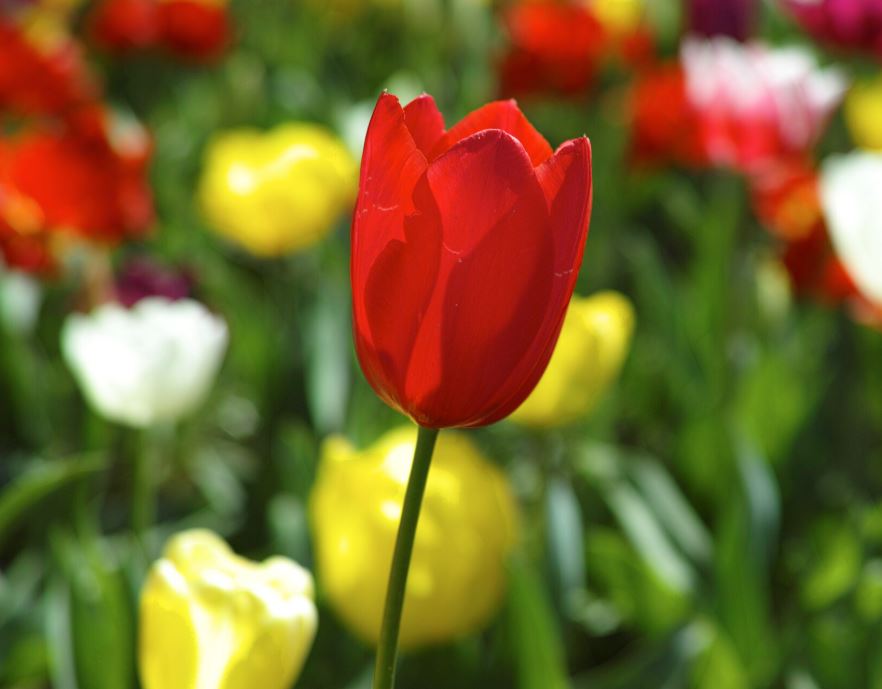
Tulips are one of the most iconic spring flowers, bringing bright color to gardens after long Canadian winters. But many gardeners ask the same question every year: are tulips perennial in Canada? The answer is yes—tulips are technically perennials. However, in Canadian climates, they don’t always behave like true perennials. Some varieties return reliably year after year, while others bloom once and fade away.
Understanding why this happens—and how to fix it—can help you enjoy tulips that come back every spring instead of replanting them every fall. In this guide, you’ll learn how tulips behave in Canada, which types perform best, and what you need to do to get consistent blooms.
What Does “Perennial” Mean for Tulips?
In gardening, a perennial is a plant that lives for multiple years and regrows each season. Tulips fall into this category because their bulbs store energy underground and can produce new growth every spring.
However, not all perennials are long-lived or reliable. Tulips are often considered short-lived perennials, especially in climates with variable weather like Canada.
Why Tulips Don’t Always Act Perennial
- Hybrid tulips are bred for large, showy blooms—not long-term survival
- Bulbs can lose energy after the first year
- Environmental stress (soil, moisture, temperature) affects regrowth
Because of this, many gardeners treat tulips as annuals, replanting new bulbs each year for the best display.
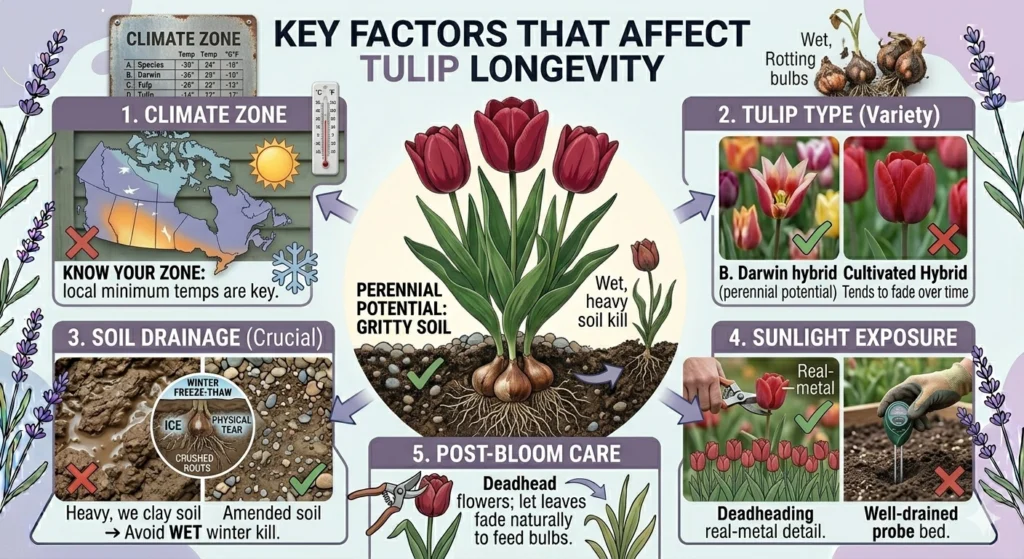
Key Factors That Affect Tulip Longevity
Several important elements determine whether tulips will behave like true perennials in Canada:
- Climate zone
- Type of tulip (variety)
- Soil drainage
- Sunlight exposure
- Post-bloom care
In colder Canadian regions, tulips benefit from winter chill, which is essential for proper blooming. However, excess moisture, poor soil conditions, or improper care after flowering can prevent bulbs from returning the following year.
The Reality for Canadian Gardeners
- Some tulips can return for 3–5 years or longer
- Others bloom strongly in the first year, then gradually decline
- Many hybrid varieties fade quickly if not properly maintained
Do Tulips Come Back Every Year in Canada?
Many gardeners expect tulips to bloom every spring, but the reality is more complex. While tulips can return annually, not all varieties are reliable repeat bloomers.
Types of Tulip Behavior
- Reliable Perennials: Return consistently with proper care
- Short-Term Perennials: Bloom for a few years before weakening
- One-Season Performers: Best treated as annuals
Why Tulips Stop Coming Back
- Bulbs use most of their stored energy during the first bloom
- Leaves are removed too early, preventing energy storage
- Poor soil conditions weaken bulbs over time
When Tulips Are Most Likely to Return
- Planted in well-drained soil
- Grown in full sunlight
- Leaves allowed to die back naturally
- Planted deep enough to protect from temperature fluctuations
Canadian Hardiness Zones and Tulip Survival
Canada’s cold climate can actually support tulip growth, provided the right conditions are in place. Understanding hardiness zones helps determine how well tulips will perform in your region.
Ideal Zones for Tulips
- Zone 3–7: Suitable for growing tulips successfully
- Cold winters help bulbs develop properly
Benefits of Canadian Winters
- Provide the chilling period required for blooming
- Help reset bulbs for the next growing season
Main Risks in Canada
- Freeze-thaw cycles can damage bulbs
- Wet soil can lead to bulb rot
- Poor drainage is the most common issue
Tulips prefer cold, dry winters rather than cold, wet conditions.
Best Tulip Types That Come Back Every Year in Canada
Choosing the right tulip variety is essential if you want consistent blooms over multiple years. Some types are naturally better suited to Canadian climates.
1. Darwin Hybrid Tulips (Best Overall)
- Strong stems and large blooms
- Known for reliable reblooming
- Well-suited to Canadian conditions
2. Species (Wild) Tulips
- Smaller but extremely hardy
- Naturalize easily and return yearly
- Require minimal maintenance
3. Fosteriana Tulips
- Early blooming varieties
- Good perennial performance
- Tolerant of colder temperatures
Tulips That Often Don’t Return Well
- Double tulips
- Parrot tulips
- Highly hybridized varieties
These types are bred for visual appeal rather than long-term durability, making them less reliable as perennials.
Why Tulips Fail to Come Back (Common Problems + Fixes)
Tulips may fail to return for several reasons, but most issues can be corrected with proper care.
Problem 1: Tulips Bloom Once Then Disappear
Cause: Bulbs lose energy after the first bloom
Fix:
- Allow foliage to remain until fully yellow
- Apply light fertilizer after blooming
Problem 2: Bulbs Rot in Winter
Cause: Poor drainage or waterlogged soil
Fix:
- Improve soil with sand or organic matter
- Use raised beds for better drainage
Problem 3: Leaves Grow but No Flowers
Cause: Insufficient sunlight or weakened bulbs
Fix:
- Ensure full sun exposure
- Replace older bulbs if necessary
Problem 4: Small or Weak Flowers
Cause: Overcrowded bulbs
Fix:
- Dig up and divide bulbs every few years
How to Plant Tulips for Perennial Growth in Canada
Proper planting techniques play a major role in whether tulips return each year.
When to Plant Tulips
- Plant in fall before the ground freezes
- Ideal when soil temperature drops below 10°C
Planting Depth Matters
- Plant bulbs 6–8 inches deep
- Deeper planting protects from temperature fluctuations
Spacing
- Space bulbs 4–6 inches apart
- Avoid overcrowding
Planting Tips for Success
- Place bulbs with the pointed end facing upward
- Water lightly after planting
- Avoid soaking the soil
Soil Requirements for Tulips in Canada
Soil quality is one of the most critical factors for successful tulip growth.
Ideal Soil Conditions
- Well-drained soil
- Sandy or loamy texture
- Neutral to slightly acidic pH
Soil to Avoid
- Heavy clay soil
- Areas that retain water after rainfall
How to Improve Soil
- Add sand or gravel to improve drainage
- Use raised beds if natural drainage is poor
Poor soil conditions are one of the main reasons tulips fail to return.
Sunlight and Watering Needs
Tulips are relatively easy to care for, but they still require proper light and moisture conditions.
Sunlight
- Full sun (at least 6 hours daily) is ideal
- Partial shade can reduce flowering
Watering
- Water after planting
- Minimal watering needed during dormancy
- Avoid overwatering at all stages
Excess moisture is far more harmful than dry conditions for tulips.
How Climate Affects Tulip Growth in Canada
Tulips are naturally suited to colder climates, but certain environmental factors can impact their performance.
What Helps Tulips Thrive
- Cold winters
- Dry soil conditions
- Consistent seasonal changes
What Hurts Tulips
- Sudden temperature fluctuations
- Excess moisture during winter
- Poor soil drainage
How to Care for Tulips After Blooming (Most Important Step)
What you do after tulips finish flowering determines whether they return next year. This stage is often overlooked, but it is the most critical part of tulip care in Canada.
Let the Foliage Die Back Naturally
After the flowers fade, the leaves remain green for several weeks. During this time, the plant is actively photosynthesizing and sending energy back into the bulb.
- Do not cut or tie the leaves
- Allow them to turn yellow and dry out completely
- This process usually takes 4–6 weeks
Cutting foliage too early prevents the bulb from storing enough energy, which leads to weak or no blooms the following year.
Deadheading Spent Flowers
Once the flower petals fall, remove the flower head.
- This prevents seed production
- Helps the plant conserve energy
- Directs nutrients back into the bulb
Simply snip off the top of the stem, leaving the leaves intact.
Fertilizing After Bloom
Tulips benefit from light feeding after blooming.
- Use a balanced or low-nitrogen fertilizer
- Apply once after flowers fade
- Avoid over-fertilizing
This step helps recharge the bulb for next season’s growth.
How to Make Tulips Come Back Every Year
If you want tulips to behave like true perennials in Canada, you need to create the right conditions and follow a consistent care routine.
Choose Perennial-Friendly Varieties
Not all tulips are equal. Select varieties known for reblooming, such as Darwin hybrids or species tulips.
Plant in the Right Location
- Full sun exposure is essential
- Avoid shaded areas
- Ensure good air circulation
Improve Soil Drainage
- Use sandy or well-drained soil
- Avoid heavy clay
- Consider raised beds if needed
Plant Bulbs Deeply
- Depth of 6–8 inches helps protect bulbs from temperature fluctuations
- Deep planting also encourages stronger root systems
Allow Proper Post-Bloom Care
- Let leaves die naturally
- Fertilize lightly
- Avoid cutting back too soon
Divide Bulbs When Needed
Over time, bulbs can become crowded.
- Dig up bulbs every 2–3 years
- Separate and replant
- This improves flowering and plant health
Optional: Lift and Store Bulbs
In some regions, gardeners dig up bulbs after the foliage dies.
- Store bulbs in a cool, dry place
- Replant in fall
- Helps prevent rot in wet climates
Should You Treat Tulips as Annuals or Perennials?
This is a practical decision many Canadian gardeners face. While tulips are technically perennials, treating them as annuals can sometimes produce better results.
When to Treat Tulips as Perennials
- You are growing hardy varieties
- Soil drains well
- You follow proper post-bloom care
- Your climate supports consistent growth
When to Treat Tulips as Annuals
- You prefer large, perfect blooms every year
- You are using hybrid varieties that don’t rebloom well
- Your soil or climate conditions are less than ideal
Pros and Cons
Perennial Approach:
- Lower long-term cost
- Less planting work each year
- More natural garden look
Annual Approach:
- Bigger, more vibrant blooms
- More consistent display
- Requires replanting each fall
Many gardeners use a mixed strategy—planting reliable perennial types while adding new bulbs each year for maximum impact.
Growing Tulips in Pots in Canada
Container gardening is an excellent option, especially in colder regions or areas with poor soil drainage.
Choosing the Right Container
- Use pots with drainage holes
- Larger containers provide better insulation
- Materials like terracotta help prevent excess moisture
Soil Mix for Containers
- Use well-draining potting mix
- Add sand or perlite to improve drainage
- Avoid heavy or compacted soil
Planting Tulips in Pots
- Plant bulbs at the same depth as in the ground
- Space them slightly closer for a fuller display
- Water lightly after planting
Winter Care for Potted Tulips
Tulip bulbs in containers are more exposed to cold than those in the ground.
Options for protection:
- Move pots to a garage or shed
- Insulate pots with mulch or wrap
- Place containers against a sheltered wall
Bringing Pots Indoors
In some cases, pots can be brought indoors for early blooms.
- Keep in a cool, dark place first
- Move to light once growth begins
- Water sparingly
Container growing gives you more control but requires careful winter management.
FAQs and Expert Tips
Do tulips need to be dug up every year?
No, tulips do not need to be dug up annually. However, lifting and dividing bulbs every few years can improve performance.
Why did my tulips not bloom this year?
Common reasons include:
- Cutting leaves too early the previous year
- Poor soil conditions
- Lack of sunlight
- Old or overcrowded bulbs
How long do tulip bulbs last in Canada?
Depending on the variety and care, tulip bulbs can last from 2 to 5 years or more. Species tulips often last longer than hybrid types.
Can tulips survive harsh Canadian winters?
Yes, tulips are well adapted to cold climates. They require winter chilling, but must be protected from excess moisture and poor drainage.
What is the best way to ensure strong blooms every year?
- Choose reliable varieties
- Plant in full sun
- Maintain well-drained soil
- Follow proper post-bloom care
Final Thoughts
Tulips can be a rewarding addition to Canadian gardens, but their success depends on understanding how they grow and what they need after blooming. The most important step is allowing the plant to recharge its bulb by keeping the foliage intact until it naturally dies back.
By combining proper planting techniques, good soil management, and thoughtful aftercare, you can significantly improve the chances of tulips returning year after year. Whether you choose to grow them as perennials or replant them annually, the key is to match your approach with your garden conditions and expectations.
With the right strategy, you can enjoy vibrant tulip displays every spring while getting the most value from your bulbs over time.

- 10 Best Garden Hose For Farm 2026 - October 15, 2026
- 10 Best Garden Hose For Filling Pool 2026 - October 15, 2026
- 10 Best Garden Hose For Flexibility 2026 - October 15, 2026