When to Cover Grapes With Netting in California
If you grow grapes in California, the best time to cover grapevines with netting is usually when the grapes begin to change color and soften, shortly before they become fully ripe. However, the exact timing depends on the grape variety, local climate, and the main pests in your area.
Birds, wasps, raccoons, squirrels, and other animals can quickly damage a nearly ripe crop. Putting netting on too early can make vineyard work more difficult, while waiting too long may allow pests to reach the fruit.
This guide explains when to cover grapes with netting in California, how to install it, which type of netting to use, and when to remove it.
When Should You Cover Grapes With Netting in California?
For most California home gardens, start checking your grape clusters 2–4 weeks before your expected harvest. This is often when berries are approaching their mature size and beginning to soften or develop their final color.
For red, purple, or black grapes, watch for color change (veraison). For green grapes, look for berries becoming softer, less intensely green, and more translucent.
A good rule is:
- Early season: No netting is usually necessary.
- Fruit development: Monitor birds and other pests.
- Around veraison: Prepare your netting.
- As grapes approach ripeness: Cover the vines.
- During ripening: Keep the netting securely attached.
- After harvest: Remove and store the netting.
The timing is not exactly the same throughout California. Grapes in hot inland areas may ripen much earlier than grapes in cooler coastal locations.
Why Is Timing So Important?
Grape netting is mainly used to protect fruit when it becomes attractive to pests.
Unripe grapes are generally less appealing to birds because they are hard and acidic. As grapes mature, they become sweeter, softer, and easier to eat.
That creates a short period when the crop can go from looking perfect to heavily damaged.
Covering the vines at the right time helps:
- Protect ripe and ripening grapes from birds.
- Reduce fruit loss before harvest.
- Prevent animals from pecking and opening berries.
- Keep wasps and other pests away from damaged fruit.
- Allow grapes to finish ripening naturally.
- Reduce the need to constantly chase birds away.
For many backyard growers, bird pressure is the biggest reason to use netting.
California Grape Ripening Can Vary by Region
California has many different climates, so there is no single calendar date that works for every vineyard or backyard grapevine.
Northern California
In cooler areas, grapes may ripen later in the summer or early fall. Coastal conditions can slow ripening compared with warmer inland locations.
Watch the berries rather than relying only on the calendar.
Central California
Warm inland areas can have an earlier harvest. Grapes may reach the netting stage during summer, depending on the variety and growing conditions.
Regularly inspect the clusters as they approach maturity.
Southern California
Some grape varieties can mature relatively early in warm areas. Strong bird pressure may also make earlier protection worthwhile.
The key is to cover the grapes before birds discover that they are sweet and ready to eat.
Should You Cover Grapes at Veraison?
Veraison is an important signal that it is time to prepare for netting.
Veraison is the stage when grapes begin transitioning toward maturity. Red and purple varieties start developing their characteristic color, while berries begin to soften. Green varieties may become lighter and more translucent.
You do not necessarily need to cover every vine the moment veraison starts.
Instead, use it as a warning:
Veraison begins → monitor pests → prepare netting → cover before significant ripening damage occurs.
If birds are already attacking the clusters, don’t wait for the grapes to become fully ripe before installing the net.
How to Know Your Grapes Are Ready for Netting
Look at the fruit rather than following a fixed date.
Signs that netting should go on include:
- Berries have reached most of their mature size.
- Colored grapes are developing their final color.
- Grapes are beginning to soften.
- The fruit is becoming noticeably sweeter.
- Birds are showing interest in the vines.
- Some berries are already being pecked.
- Harvest is approaching.
If you notice birds repeatedly visiting the grapevine, protecting the fruit immediately is usually better than waiting for perfect ripeness.
What Type of Grape Netting Should You Use?
For backyard grapevines, choose purpose-made bird netting with a mesh size designed to keep birds from reaching the fruit.
The net should be strong enough to withstand outdoor conditions but manageable enough to install and remove.
A good grape netting should:
- Cover the entire fruiting area.
- Be large enough to reach below the lowest clusters.
- Have mesh openings small enough to prevent birds from entering.
- Be durable enough for the entire season.
- Be easy to secure.
- Avoid creating large gaps around the edges.


Avoid using damaged netting with large holes. Small birds can sometimes find surprisingly small openings, and loose sections can allow them to reach the grapes.
How to Put Netting Over Grape Vines
Installing netting correctly is just as important as choosing the right time.
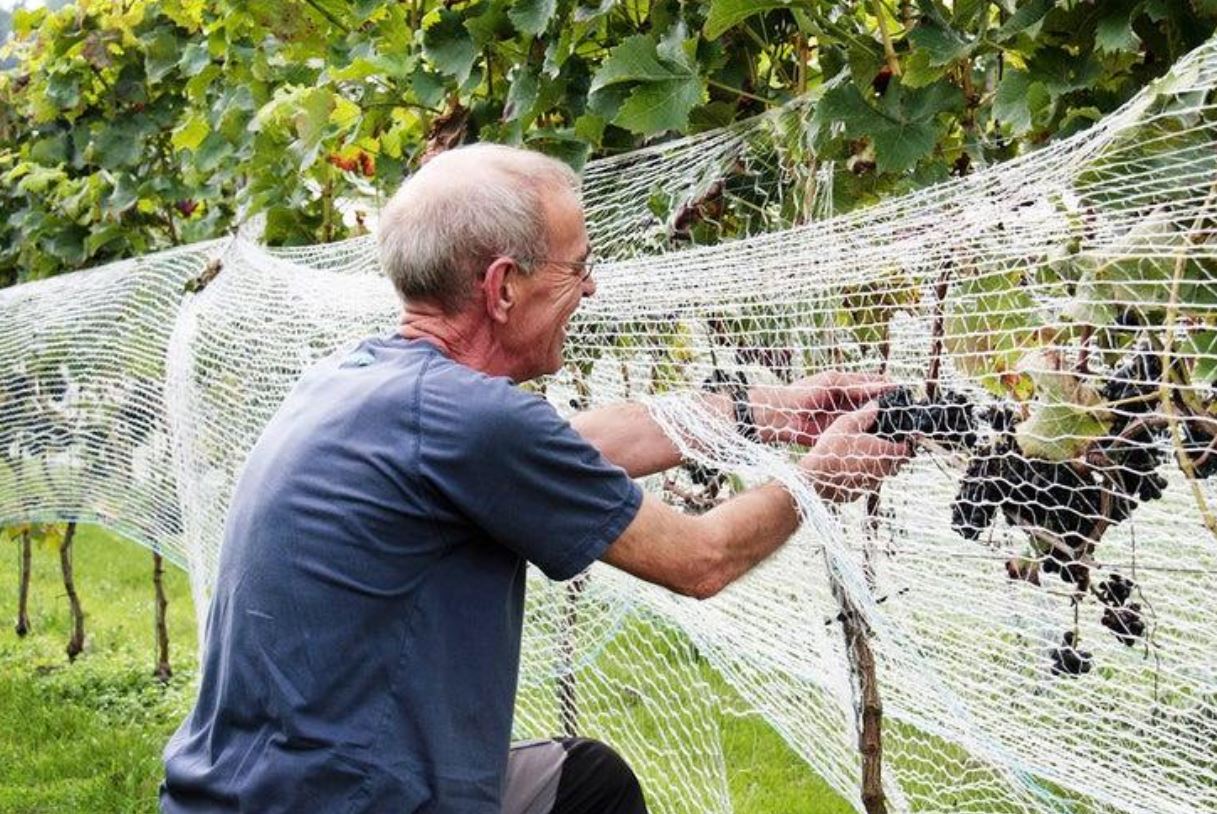
First, estimate how much netting you need to cover the entire fruiting zone. Do not stretch a small piece tightly over the vine if it leaves fruit exposed.
Spread the net carefully over the vine and allow enough material to reach below the fruit clusters.
Secure the Bottom and Sides
This is where many netting installations fail.
Birds don’t necessarily need to enter from the top. They can find gaps along the sides or bottom.
Secure the edges around the vine using suitable clips, ties, or other garden fasteners.
Check for:
- Openings underneath the net.
- Gaps along the sides.
- Loose corners.
- Fruit touching the outside of the net.
- Areas where birds could push through.
The goal is to create a physical barrier between the animals and the grapes.
Should the Net Touch the Grapes?
Ideally, keep the netting away from the grape clusters when practical.
If the net is lying directly against the fruit, birds may still be able to peck through the mesh. Physical support structures can help keep the net slightly away from the clusters.
A simple frame, trellis, or other support can make installation easier and provide additional protection.
However, you do not always need a complicated structure for a small backyard vine. A properly sized net secured around the whole fruiting area can work well.
Protect Grapes From Wasps and Other Pests
Birds are not the only animals attracted to ripening grapes.
Wasps and yellowjackets can become interested in damaged or overripe berries. Netting may reduce access by some flying pests, but it is primarily a bird-protection method.
Inspect the grapes regularly.
Remove badly damaged or rotting berries when practical because damaged fruit can attract additional pests.
If you have a serious wasp problem, netting alone may not solve it.
What About Squirrels and Raccoons?
Netting can be less effective against larger animals if they can reach, tear, or push through it.
If squirrels or raccoons are a major problem, consider combining netting with a sturdy support system and other appropriate physical barriers.
Make sure the net is securely attached to the trellis or surrounding structure rather than simply draped loosely over the vine.
For larger animals, strong installation matters as much as the netting itself.
When Should You Remove Grape Netting?
Keep the netting in place until the grapes have been harvested.
Once harvesting is finished, remove the net rather than leaving it on the vine unnecessarily.
Removing it after harvest makes several things easier:
- Pruning and vine maintenance.
- Inspection of the plant.
- Cleanup.
- Preventing old netting from becoming tangled.
- Protecting wildlife from becoming trapped.
Before storing it, inspect the net for tears and repair or replace damaged sections.
Fold it carefully and store it somewhere dry for the next season.
Common Mistakes When Netting Grapes
Covering Too Late
Waiting until every grape is completely ripe can be risky. Birds may discover the fruit before you finish installing the net.
Leaving Gaps
A beautiful net installation is useless if birds can enter through a large opening at the bottom.
Using Damaged Netting
Old netting with large holes may provide little protection.
Installing It Too Tightly
Tight netting can press against clusters and make harvesting more difficult.
Forgetting to Check the Vine
Netting doesn’t mean you can ignore the grapes. Check the vine regularly for ripening, pests, damage, and trapped animals.
California Grape Netting: Best Timing at a Glance
| Grape stage | What to do |
|---|---|
| Green, hard berries | Monitor the vine |
| Veraison begins | Prepare netting |
| Berries soften and sweeten | Install netting |
| Birds start feeding | Cover immediately |
| Grapes fully ripe | Keep protected until harvest |
| After harvest | Remove and store netting |
Frequently Asked Questions
What month should I put netting on grapes in California?
There is no single month for the entire state. Depending on the grape variety and location, netting may be needed during summer or early fall. Use grape maturity and bird activity as your main indicators.
Should I net grapes before they ripen?
Yes. It is generally better to install netting before the grapes become fully ripe, particularly if birds are already visiting the vine.
Can I leave grape netting on all season?
You can use netting for an extended period, but it is usually unnecessary when grapes are still small and unappealing to birds. Install it when protection is needed and remove it after harvest.
Does grape netting stop birds completely?
Properly installed netting can provide excellent physical protection, but effectiveness depends on the mesh, coverage, and installation. Any openings can allow birds to reach the fruit.
What is the most important sign that grapes need netting?
Bird activity combined with approaching ripeness is one of the strongest signs. If birds are beginning to investigate your grape clusters, don’t wait until harvest is only a few days away.
Final Thoughts
For California grape growers, the best time to cover grapevines with netting is generally as the fruit approaches ripeness, often around veraison and roughly 2–4 weeks before harvest. But the exact timing varies with the grape variety, growing region, weather, and pest pressure.
The safest approach is simple: watch the grapes, watch the birds, and install the net before significant damage begins.
Use a properly sized net, cover the entire fruiting zone, secure the edges carefully, and inspect the vine regularly. Once you’ve harvested the grapes, remove the netting and store it properly so it is ready for the next growing season.

- 10 Best Garden Hose For Washing Suvs 2026 - October 25, 2026
- 10 Best Garden Hose For Garden Irrigation Manifolds 2026 - October 25, 2026
- 10 Best Garden Hose For Hose End Sprinklers 2026 - October 25, 2026