Tomato plants can look healthy one week and suddenly develop brown spots, yellow leaves, or wilting the next. Fungal diseases are often behind these changes, especially when the weather is warm, wet, or humid. Some diseases stay on the leaves, while others damage stems, roots, or fruit. The good news is that you do not always need to identify every disease perfectly before taking action. Learning the common signs can help you catch a problem early and protect the rest of the plant. So, what fungal diseases do tomatoes get? Early blight, late blight, Septoria leaf spot, anthracnose, powdery mildew, and several wilt diseases are among the main problems gardeners encounter.
1. Early Blight Is One of the Most Common Tomato Diseases
Early blight is a familiar problem in home tomato gardens. It usually starts on older leaves near the bottom of the plant. Small dark spots gradually become larger and may develop a distinctive bullseye pattern.
What Does Early Blight Look Like?
Look closely at the lower leaves. You may see dark brown spots with rings inside them. The affected area can develop yellow tissue around the spot.
As the disease progresses, more leaves become affected. The leaves may turn yellow, dry out, and eventually fall from the plant.
The disease can slowly move upward if conditions remain favorable.
What Causes Early Blight?
Early blight is caused by Alternaria solani. Moisture on foliage can help the disease spread.
Crowded tomato plants are also more likely to have problems because air moves poorly between the leaves.
Water splashing from the soil onto lower leaves can spread disease-causing material onto the plant.
How Can You Manage Early Blight?
Start by removing badly affected leaves. Avoid throwing diseased plant material into your regular compost unless you know your composting system can destroy pathogens.
Keep foliage as dry as practical when watering. Water around the base instead of spraying the entire plant.
Fungicides can also be used according to the product label. The key is to act early rather than waiting until most of the plant is covered with spots.
Early Blight Signs to Remember
- Dark brown or black leaf spots
- Concentric rings inside the spots
- Yellow tissue around some spots
- Lower leaves affected first
- Gradual leaf drop as the disease advances
The concentric-ring pattern is especially useful when comparing early blight with other causes of leaf damage. The supplied garden source also points out that circles within circles and a yellow halo can indicate an active fungal problem.
2. Late Blight Can Spread Very Quickly
Late blight is different from the slow, gradual appearance that gardeners may see with some leaf-spot diseases. It can move rapidly through tomato plants when conditions are favorable.
What Does Late Blight Look Like?
Late blight can produce large gray-brown or greasy-looking patches on leaves and stems. The affected tissue may appear water-soaked.
Under cool and wet conditions, the disease can develop quickly. Leaves can collapse, and stems may also become damaged.
This is a disease worth taking seriously because an outbreak can progress rapidly.
What Causes Late Blight?
Late blight is caused by Phytophthora infestans. Despite its name, it is not a typical true fungus, but it is commonly discussed alongside fungal diseases because it produces similar disease-management concerns.
Cool, wet conditions favor its development.
Long periods of leaf wetness can make the problem worse.
How Do You Manage Late Blight?
Remove heavily infected plant material where practical. Avoid handling healthy plants immediately after working with infected material.
Improve air movement around plants by giving tomatoes enough room to grow.
Water at the base of the plant and avoid unnecessary wetting of leaves.
If using a fungicide, choose a product labeled for the disease and tomatoes. Always follow the label for mixing, application, harvest intervals, and safety precautions.
Why Early Detection Matters
Late blight can move much faster than many gardeners expect. Checking your tomato plants regularly gives you a better chance of noticing suspicious patches before the entire plant is affected.
Do not wait for a tomato plant to look completely sick before inspecting it. A quick check every few days can make a big difference.
3. Septoria Leaf Spot Causes Many Small Spots
Septoria leaf spot is another common tomato problem. It often begins on the lower leaves and produces many small spots rather than a few very large patches.
What Does Septoria Leaf Spot Look Like?
The spots are usually small and circular. They often have darker borders with lighter centers.
As more spots appear, the affected leaves may turn yellow and eventually drop.
The lower portion of the plant can look increasingly thin as infected leaves are lost.
How Does Septoria Spread?
Moisture plays an important role in the spread of Septoria leaf spot.
Water droplets can move disease-causing material from soil or infected foliage onto healthy leaves.
Crowded plants also create a humid environment where leaves stay wet for longer.
This is why spacing and watering habits matter so much.
How Can You Prevent Septoria Leaf Spot?
Give tomato plants enough space for air to move between them.
Remove lower leaves that are touching the soil or are very close to the ground. This is also consistent with the supplied source, which recommends removing lower foliage to improve airflow and reduce disease pressure.
Water near the base of the plant rather than using overhead irrigation whenever possible.
Clean up fallen diseased leaves around the plant.
Is Every Brown Spot a Fungus?
No. Insects can also leave spots and damaged areas on tomato leaves.
The supplied garden source makes an important distinction: insect damage can appear as lighter tan areas or feeding marks, while fungal leaf spots may form recognizable circular patterns.
So, look at the pattern instead of assuming every damaged leaf has a fungal disease.
4. Anthracnose, Powdery Mildew, and Wilt Diseases
Not every tomato fungal disease looks the same. Some attack fruit, some cover leaves with a powdery growth, and others interfere with the plant’s ability to move water.
Anthracnose Attacks Ripening Tomato Fruit
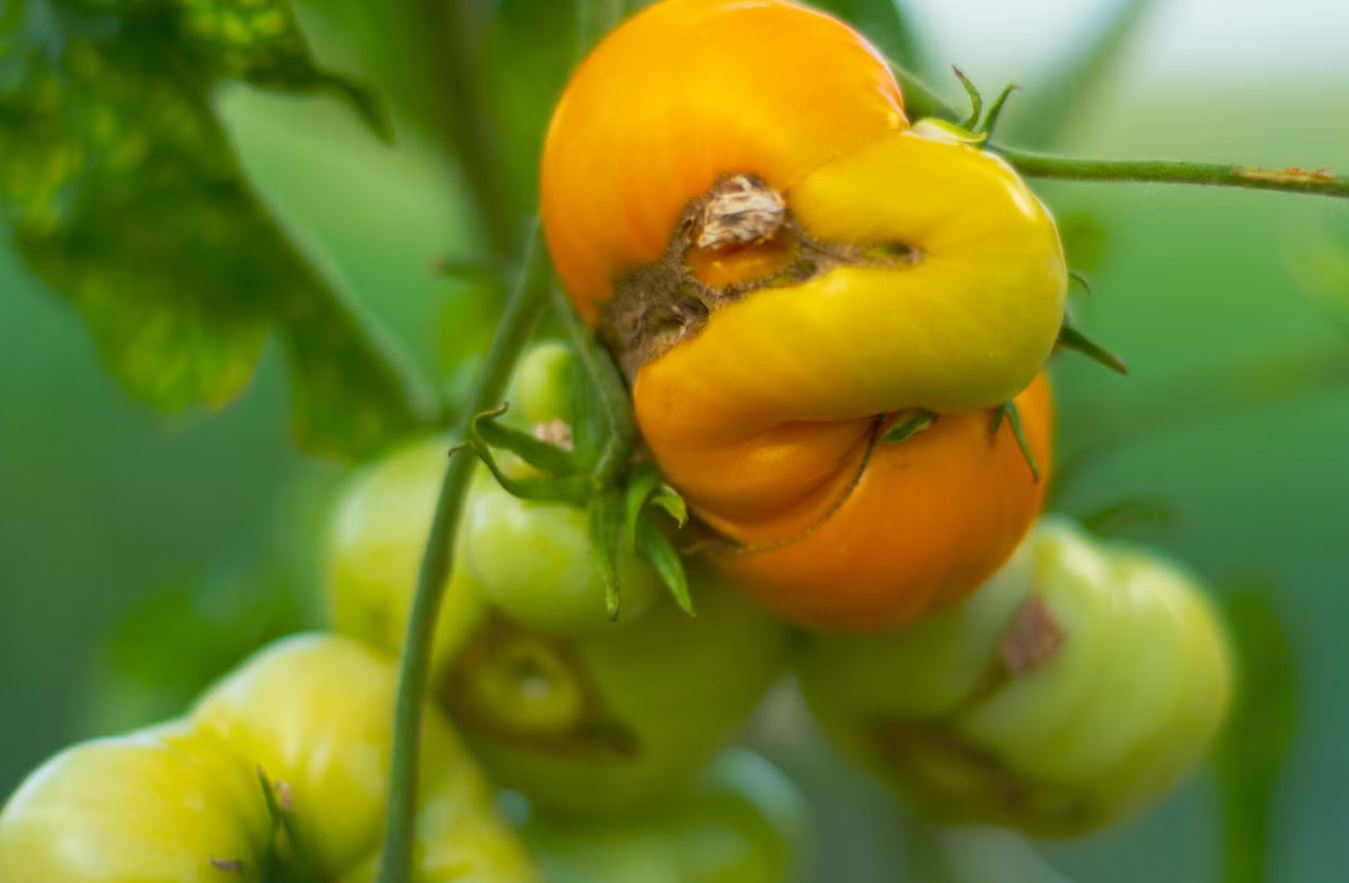
Anthracnose can be especially frustrating because the fruit may look fine while it is still green.
As tomatoes ripen, small sunken spots can develop. These spots may become darker and larger.
The disease is associated with soil and moisture. Fruit that touches wet soil can be more vulnerable.
Good garden sanitation helps reduce disease pressure. Avoid allowing ripe tomatoes to sit on the ground.
Powdery Mildew Looks Like White Dust
Powdery mildew has a very different appearance from early blight or Septoria.
Instead of dark circular spots, you may notice a white or gray powdery coating on the leaves.
The affected leaves can eventually become distorted, dry, or shriveled.
Good airflow is helpful because crowded, poorly ventilated plants create conditions that favor many foliar problems.
Check both sides of leaves when inspecting your tomatoes. Catching the problem early gives you more management options.
Fusarium and Verticillium Wilt Cause Yellowing and Wilting
Fusarium wilt and Verticillium wilt are soil-borne diseases.
They interfere with the plant’s water-conducting system. Affected plants may wilt during the day even when the soil appears to have enough moisture.
Leaves can also become yellow.
Unlike a simple watering problem, these diseases may continue causing symptoms even after the plant receives adequate water.
What Should You Do About Wilt Diseases?
- Remove severely affected plants when necessary.
- Avoid moving contaminated soil around the garden.
- Clean tools after working with diseased plants.
- Choose resistant tomato varieties when available.
- Rotate crops where practical.
- Avoid planting susceptible tomatoes repeatedly in the same problem area.
Wilt diseases can be difficult to manage once they become established in soil. Prevention and resistant varieties can therefore be more useful than trying to rescue a severely infected plant.
How to Prevent Fungal Diseases on Tomato Plants
You cannot always prevent every fungal or fungus-like disease from appearing. Weather, soil, plant variety, and local disease pressure all matter.
However, your daily gardening routine can reduce the chances of serious damage.
Water Tomatoes at the Base
Avoid regularly spraying water over the foliage.
Instead, direct water toward the soil around the plant. Morning watering gives moisture a chance to dry during the day.
Try not to splash soil onto the lower leaves.
Give Tomato Plants Enough Space
Tomatoes need room to breathe.
When plants are packed together, leaves can stay wet longer after rain or watering.
Follow the spacing recommendation for the variety you are growing. Good airflow can help reduce the conditions that encourage many leaf diseases.
Remove Diseased and Lower Leaves
Lower leaves are often among the first to develop problems because they are close to wet soil and may receive less airflow.
Remove leaves that are badly infected or touching the ground.
Do not strip the entire plant unnecessarily. Tomatoes still need healthy foliage for photosynthesis and fruit production.
Keep a Simple Disease Journal
A small garden notebook can be surprisingly useful.
Write down when you first notice spots, what the weather was like, and which part of the plant was affected.
The supplied source recommends keeping a garden journal because different fungal problems can appear at different times and under different weather conditions.
After a season or two, you may start noticing patterns in your own garden.
How to Treat Fungal Diseases on Tomatoes
Treatment depends on the disease, how severe the infection is, and which products are appropriate for the crop.
Remove Severely Damaged Foliage
If a leaf is heavily covered with disease, removing it can reduce the amount of infected material around the plant.
Use clean pruning tools and avoid touching healthy plants immediately after handling infected material.
Do not remove so many leaves that the tomato plant is left exposed and unable to support normal growth.
Consider a Labeled Fungicide
Copper-based and sulfur-based fungicides are commonly used for managing various plant diseases, but they do not all work against every disease.
Always read the product label before use.
The supplied source emphasizes testing a new spray on a small number of leaves first and waiting to see whether the plant reacts before treating the whole plant.
That is a useful precaution because even products intended for garden use can damage plants when used incorrectly.
Treat Early Rather Than Waiting
Fungicides generally work better as part of a management program than as a last-minute rescue after a plant is severely damaged.
Inspect tomatoes regularly.
When you notice a suspicious pattern, identify the likely cause and choose a treatment that is specifically labeled for that problem.
Don’t Spray the Whole Garden Automatically
Finding fungal disease on one tomato plant does not automatically mean every plant in the garden needs treatment.
The supplied source specifically advises gardeners not to spray unrelated crops simply because tomatoes have a fungal problem.
Focus on the affected crop and follow the directions for the product you use.
Final Thoughts
So, what fungal diseases do tomatoes get? The main problems include early blight, late blight, Septoria leaf spot, anthracnose, powdery mildew, Fusarium wilt, and Verticillium wilt. They do not all look alike.
The easiest way to stay ahead is to inspect your plants often. Look for circular spots, yellow halos, white coatings, wilting, or sunken fruit lesions. Also pay attention to where the symptoms begin.
Good spacing, careful watering, pruning of low leaves, garden cleanup, and timely treatment can reduce disease pressure. You may not be able to keep every fungal disease out of the garden, but you can often prevent a small problem from becoming a season-ending one.

- 10 Best Garden Hose For Watering Lawn 2026 - October 16, 2026
- 10 Best Garden Hose For Lawn 2026 - October 16, 2026
- 10 Best Garden Hose For Large Yard 2026 - October 16, 2026