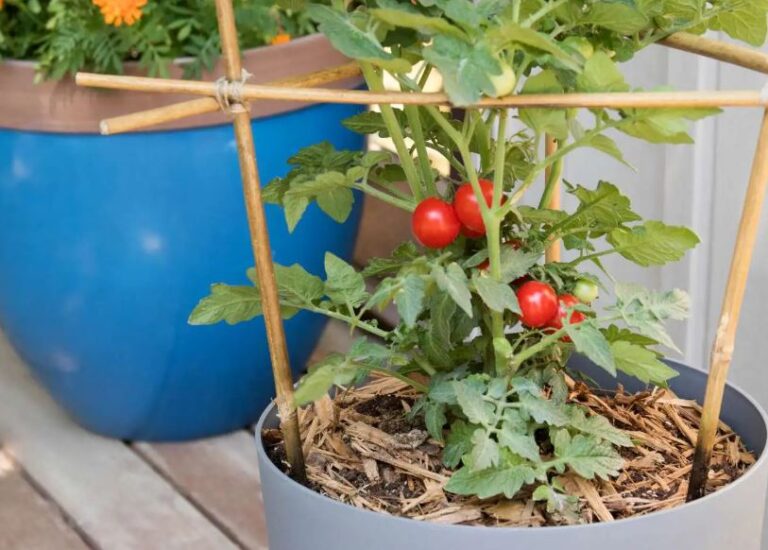
Tomato grow bags look too simple to be effective. They are fabric containers filled with soil, often with handles sewn on. But the way they are made changes how roots grow, how water moves and how much fruit a plant can produce. This guide explains the mechanics, then shows how to set up, feed and water tomatoes in grow bags.
What Is a Tomato Grow Bag?
A tomato grow bag is a breathable fabric container used to grow tomato plants in potting mix instead of garden soil or a rigid plastic pot. Most are made from non-woven polypropylene felt or woven geotextile fabric, and sizes usually run from 5 to 30 gallons. Handles, a flat base and sometimes a side flap for harvesting root crops are common features.
Grow bags are sometimes called fabric pots, smart pots (a brand name) or breathable planters. They suit patios, balconies, rooftops, driveways and small yards, and they work equally well as an addition to a raised-bed vegetable garden.
Not all products sold as grow bags are the same. Traditional British “grow bags” are flat plastic sacks of compost laid on the ground. This article covers fabric grow bags, which are reusable, upright and designed for long-term container gardening.
The Core Principle: How Grow Bags Work
Grow bags work through three connected processes: air pruning, drainage and temperature regulation. Together they create a healthier root environment than most plastic pots provide.
1. Air Pruning Creates a Denser, Healthier Root System
In a plastic pot, roots grow outward until they hit the wall, then curl and circle around the container. This is called root circling or being pot-bound. Circling roots can girdle themselves, restrict uptake of water and nutrients and stunt the plant.
In a fabric bag, the wall is porous. When a root tip reaches the fabric, it meets air and dries out. The plant responds by stopping growth at that tip, a natural process called air pruning. Instead of circling, the root branches behind the tip and sends out new lateral roots throughout the root zone.
The result is a fibrous, dense root ball with far more feeder roots than a plant grown in plastic. More feeder roots mean greater surface area for absorbing water, oxygen and nutrients. For tomatoes, which are heavy feeders and drinkers, this translates into stronger growth and better fruit set.
2. Aeration Keeps Roots Oxygenated
Roots respire. They need oxygen to convert sugars into energy, and waterlogged soil deprives them of it. Fabric walls let air move through the sides of the container, so the root zone stays oxygenated even when you water generously.
Better oxygen supply supports beneficial soil microbes, helps roots take up nutrients such as calcium and phosphorus and reduces the risk of root rot from oversaturation.
3. Drainage Prevents Waterlogging
Excess water leaves a grow bag through the fabric itself as well as the base. This makes overwatering much harder than in a solid pot with a few drainage holes. It also means grow bags dry out faster, so watering becomes the main management task. More on that below.
4. Heat Regulation
Plastic pots, especially dark ones in full sun, can overheat the root zone, sometimes past the temperature at which tomato roots stop working efficiently. Fabric breathes and evaporates moisture through its walls, which cools the medium. Evaporative cooling helps roots in hot climates.
On the other side, fabric offers little insulation. In cool weather or on cold nights, the medium can chill faster than in a thick pot. Position and season matter, which we cover below.
Why Tomatoes Suit Grow Bags
Tomatoes have deep, vigorous root systems and a high demand for water, calcium and potassium. They also respond strongly to root health. That makes them one of the best crops for fabric containers.
Benefits specific to tomatoes include:
- Stronger root systems that support heavy fruit loads
- Reduced risk of soil-borne diseases such as Fusarium and Verticillium wilt, because you start with fresh potting mix
- Mobility. You can move plants to catch sun, shelter them from storms or bring them under cover when frost threatens
- Control over soil quality. You choose the mix, pH and nutrients
- Accessibility. Bags can sit at a comfortable height on a bench or stand, reducing bending
Choosing the Right Size Grow Bag
Bag size determines root volume, water reserve and how often you must water.
| Tomato type | Recommended bag size |
|---|---|
| Dwarf and patio varieties | 5 to 7 gallons |
| Determinate (bush) varieties | 7 to 10 gallons |
| Indeterminate (vining) varieties | 10 to 20 gallons |
| Large heirlooms and beefsteaks | 15 to 25 gallons |
Determinate tomatoes grow to a set height, flower and fruit over a concentrated period. Indeterminate tomatoes keep growing and producing until frost, and they need more root space and support.
A bigger bag holds more moisture and nutrients, which buffers the plant against heat and missed waterings. If you’re unsure, size up.
Best Potting Mix for Tomato Grow Bags
Do not fill a grow bag with garden soil. It compacts, drains poorly in containers and may carry pathogens. Use a high-quality potting mix with good structure.
A reliable blend looks like this:
- Peat moss or coco coir for moisture retention
- Perlite or pumice for drainage and aeration
- Compost or worm castings for slow-release nutrition and microbial life
Many gardeners use roughly one-third each of coir or peat, perlite or bark fines, and compost. Ready-made mixes labeled for containers or vegetables also work, especially if you supplement with fertilizer.
Because fabric bags dry quickly, moisture-retentive ingredients like coco coir matter more than they do in plastic pots.
How to Plant Tomatoes in Grow Bags
- Fill the bag about two-thirds full with moistened potting mix. Slightly damp mix settles evenly and avoids dry pockets.
- Strip the lower leaves from your tomato transplant. Tomatoes grow roots along buried stems, so deep planting builds a stronger root system.
- Bury the stem up to the first set of true leaves, or lay it sideways in a shallow trench if the plant is leggy.
- Backfill and firm gently. Leave 1 to 2 inches of space below the rim so water doesn’t spill over.
- Water thoroughly until it drains from the fabric.
- Add support. Stake, cage or trellis at planting time so you don’t damage roots later.
Set the bag on a hard surface, a rack or a stand to promote airflow underneath. Avoid placing bags directly on soil where roots may grow through the fabric and anchor.
Watering Tomatoes in Grow Bags
Watering is the biggest difference between grow bags and other containers. Because air moves through the walls, moisture evaporates faster.
General rules:
- Check daily in warm weather. Push a finger 2 inches into the mix. If it feels dry, water.
- Water deeply until you see drainage at the base and sides.
- Expect daily watering in hot summers, and sometimes twice a day for small bags in strong sun.
- Keep moisture consistent. Swings between very dry and very wet cause blossom end rot and fruit cracking.
To reduce watering frequency, use larger bags, add a 2-inch mulch layer of straw or shredded leaves, group bags together so they shade each other’s sides or install drip irrigation with a timer.
Wilting in the afternoon can be normal in heat, but if leaves stay limp in the morning, the bag is too dry.
Feeding Tomatoes in Fabric Containers
Frequent watering flushes nutrients from the mix, so container tomatoes need regular feeding.
- At planting: mix in a slow-release organic fertilizer or well-rotted compost.
- After the first flowers: begin feeding every 1 to 2 weeks with a liquid fertilizer formulated for tomatoes (lower nitrogen, higher phosphorus and potassium).
- Watch calcium. Consistent watering plus a calcium source such as gypsum or crushed eggshell meal in the mix helps prevent blossom end rot, though irregular watering is usually the root cause.
- Do not over-fertilize with nitrogen. Too much creates lush foliage and few fruit.
Yellowing lower leaves can signal nitrogen shortage or overwatering. Purple tints may point to phosphorus problems or cold roots.
Sunlight, Temperature and Placement
Tomatoes need 6 to 8 hours of direct sun daily. Place bags where they receive maximum light, ideally against a south- or west-facing wall in the Northern Hemisphere.
In very hot climates, afternoon shade or lighter-colored bags reduce stress. In cool climates, black or dark-gray fabric bags absorb heat and warm the root zone earlier in spring. Because bags are portable, you can adjust as seasons change.
Pruning, Staking and Training
Grow bags don’t change how you prune tomatoes, but the container’s limited root space makes structure more important.
- Indeterminate types: stake or trellis tall, and remove suckers (shoots between the stem and branch) to concentrate energy on fruit.
- Determinate types: support with a cage and prune lightly, since heavy pruning cuts yield.
- Anchor supports deeply, or attach them to a wall or frame. A large plant in a lightweight bag can tip in wind.
Common Problems and How to Fix Them
Blossom end rot. Dark, sunken patches on the fruit bottoms. Usually caused by inconsistent watering that blocks calcium uptake. Water evenly and mulch.
Fruit cracking. Caused by a sudden flush of water after drought. Keep moisture steady.
Slow growth. Roots may be cold or the bag too small. Move to warmth or size up.
Root escape. Roots poking through fabric, common when bags sit on soil. Lift them onto a hard surface.
Salt and mineral buildup. Heavy fertilizing can leave white crusts on fabric. Flush with plain water occasionally.
Pests and disease. Aphids, hornworms and blight can appear as in any garden. Container growing reduces soil-borne problems but doesn’t eliminate foliar diseases, so water at the base and give plants airflow.
Grow Bags vs. Plastic Pots vs. Raised Beds
| Factor | Fabric grow bag | Plastic pot | Raised bed |
|---|---|---|---|
| Root health | Air pruning, dense roots | Prone to circling | Excellent, if soil is good |
| Drainage | Very good | Depends on holes | Good |
| Watering needs | High | Moderate | Lower |
| Portability | Easy | Moderate to heavy | Fixed |
| Storage when not in use | Folds flat | Bulky | Permanent |
| Lifespan | 3 to 5+ years | Long | Long |
Grow bags win on root quality and portability. Raised beds win on water retention and scale. Plastic pots sit in between and can work well if you choose large sizes and good drainage.
End of Season: Cleaning and Storing Grow Bags
At season’s end:
- Remove plants and old roots. Compost healthy material and discard diseased plants.
- Empty the mix. Some gardeners refresh it with compost and fertilizer for the next year, but avoid reusing mix from diseased plants.
- Rinse and scrub the bag, or soak in a diluted vinegar or mild bleach solution to remove pathogens, then rinse thoroughly.
- Dry completely in the sun before folding and storing to avoid mildew.
Well-made bags can last several seasons.
Are Tomato Grow Bags Worth It?
For most gardeners, yes. They deliver healthier roots, forgiving drainage, mobility and reusability at a modest price. The tradeoff is watering: you must stay on top of it, particularly in summer. If you can commit to a regular watering routine, or automate it, grow bags can outperform plastic containers and rival in-ground plantings.
Frequently Asked Questions
How many tomato plants fit in one grow bag?
One plant per bag for most varieties. In a large 20-gallon bag, two compact determinate plants can work, but competition reduces yield.
How often should I water tomatoes in grow bags?
Check daily. In hot weather, expect to water every day, sometimes twice.
Can I reuse potting mix from last year?
Yes, if plants were healthy. Refresh it with compost, fertilizer and some new mix to restore structure and nutrients.
Do grow bags need drainage holes?
No. The fabric drains naturally.
Are grow bags safe for food crops?
Quality fabric bags made from polypropylene are widely used for vegetables. Choose products that state they are food-safe and UV-stabilized.
What’s the best grow bag size for cherry tomatoes?
A 7- to 10-gallon bag suits most cherry types, though vigorous indeterminate cherries do better in 10 to 15 gallons.
Final Thoughts
Tomato grow bags work because the breathable fabric prunes roots with air, keeps oxygen flowing, drains excess water and moderates heat. Combine that with the right bag size, a quality potting mix, consistent watering and regular feeding, and you set up your tomatoes for strong roots and heavy harvests.

- How to Grow Microgreens Without Soil Indoors: Easy Home Method - October 5, 2026
- Microgreens vs. Sprouts: Key Differences, Nutrition, Safety, and Which One to Eat - October 5, 2026
- 10 Best Garden Tools For Weed Removal 2027 - October 3, 2026