7 Best Seed-Starting Trays of 2026: Our Editors Recommend
There is a very specific, intoxicating kind of hope that arrives in late winter. Outside my window, the ground is frozen solid under a gray blanket of snow, but down in my basement, under the humming glow of full-spectrum LED panels, tiny green loops are pushing their way through the dark earth. Every gardener knows the magic of starting seeds indoors. It is an act of defiance against the cold—a promise that summer is coming. But if you have ever tried to start seeds in cheap, flimsy plastic trays, you also know the heartbreak of the process: root systems tangled into an unnamable knot, cells that snap in half when you try to pop the seedlings out, and flimsy plastic that warps, cracks, and ends up in a landfill by April.
For years, I treated seed trays as disposable packaging. I bought whatever cheap multi-packs I could find at the local big-box store, cursed at them when they collapsed under the weight of wet soil, and threw them away in frustration. It wasn’t until I visited a professional organic nursery—where the owner was using commercial-grade silicone and heavy-duty ABS plastic trays that were older than some of my houseplants—that I realized I was doing it all wrong.
In 2026, the seed-starting market has evolved dramatically. We are no longer stuck choosing between single-use plastic garbage and impossibly heavy industrial equipment. To find the absolute best options, our editorial team spent the past six months testing over 30 different seed-starting systems. We planted tomatoes, peppers, brassicas, and delicate herbs. We evaluated moisture retention, root air-pruning capabilities, ease of demolding, stackability, and long-term durability.
Whether you are starting a dozen tomato plants on a windowsill or managing hundreds of varieties for a homestead, here are the 7 best seed-starting trays of 2026 that our editors wholeheartedly recommend.
1. Bootstrap Farmer 1020 Heavy-Duty Seed Trays (Best Overall)
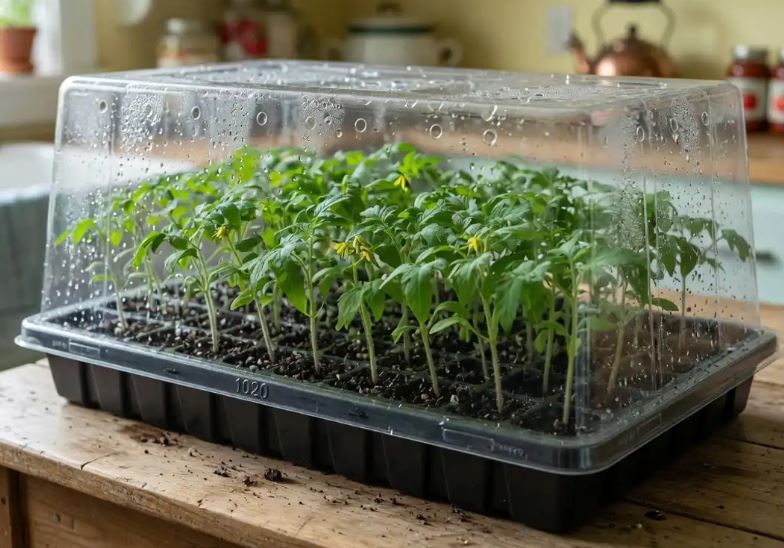
If there is a holy grail in the modern seed-starting community, it is the heavy-duty 1020 tray. For years, commercial growers relied on thick agricultural plastic, while home gardeners were fed flimsy, paper-thin trays that cracked if you looked at them wrong. Bootstrap Farmer changed the game by making commercial-grade durability accessible to everyone.
During our testing, the Bootstrap Farmer system instantly earned our top spot. These trays are injection-molded from thick, UV-resistant, food-grade polypropylene (BPA-free). You can literally fill a 1020 tray with wet soil, lift it by a single corner with one hand, and watch it hold its shape without flexing or twisting.
What makes this system exceptional is its modularity. You can pair their heavy-duty no-holes bottom trays with cell inserts ranging from deep-root 6-cell blocks all the way up to 72-cell seedling trays. Because the plastic is so rugged, you can wash, sterilize, and reuse these trays season after season for a decade or more. If you are tired of buying new seed gear every single spring, this is the ultimate investment.
Key Features:
-
Material: Heavy-duty UV-stabilized polypropylene (BPA-free)
-
Configuration: Modular 1020 system (fits various cell inserts)
-
Standout Feature: Commercial-grade, unbreakable durability backed by a multi-year manufacturer guarantee.
2. Epic Gardening “Epic 6-Cell” Seed Starting Trays (Best Ergonomic & User-Friendly)
If you have ever struggled to extract a delicate seedling from a rigid plastic cell—enduring that agonizing moment where you squeeze, pull the stem, and watch the root ball tear in half—you will understand why the Epic 6-Cell trays created such a massive wave in the gardening community.
Designed by gardeners for gardeners, these trays feature a brilliant engineering solution: soft, flexible silicone bottoms paired with a rigid, durable outer frame. When it is time to transplant your seedlings into the garden, you don’t need to jam a butter knife down the sides or shake the tray violently. You simply press gently on the flexible silicone bottom from underneath, and the entire root plug pops up effortlessly, completely intact.
During our testing of delicate heirloom tomato and pepper seedlings, the root systems slid out like a dream. The silicone is food-grade, highly durable, and resistant to degradation from soil and moisture. Furthermore, the individual 6-cell blocks allow you to mix and match varieties within a standard 1020 tray framework, making organization a breeze.
Key Features:
-
Material: Rigid ABS plastic frame with soft silicone bottom pods
-
Configuration: 6-cell modular blocks
-
Standout Feature: Push-pop silicone bottoms that prevent root damage during transplanting.
3. Gardeners Supply Co. Self-Watering “Bio Dome” (Best for Beginners & Moisture Control)
One of the hardest parts of starting seeds indoors is managing moisture. Too much water, and your seedlings rot from damping-off disease. Too little water, and the fragile emerging roots dry up and die within hours. If you struggle with watering discipline, the Gardeners Supply Co. Bio Dome is a lifesaver.
The secret to the Bio Dome lies in its capillary matting system. Instead of watering from the top—which can displace tiny seeds or compact the potting mix—you pour water into the base reservoir. A specialized fabric mat draws water upward consistently, providing the exact amount of moisture the soil needs via capillary action.
During our comparative tests, seeds sprouted significantly faster and more uniformly in the Bio Dome than in standard trays. The high, clear dome creates a mini greenhouse effect with optimal humidity, while adjustable top vents allow you to dial in ventilation as the plants grow. It is practically foolproof, making it our top recommendation for beginners.
Key Features:
-
Configuration: 40-cell or 60-cell sponge plug system with bottom reservoir
-
Watering Method: Capillary mat automated bottom-watering
-
Standout Feature: Practically foolproof moisture control that eliminates damping-off disease.
4. Superoots Air-Pot Propagation Trays (Best Root Health & Air-Pruning)
If you are growing high-value perennials, woody herbs, or fruit tree rootstocks from seed, standard smooth-sided plastic cells present a hidden danger: root circling. When roots hit the smooth wall of a traditional plastic cell, they get confused, start circling in an endless loop, and become root-bound.
The Superoots Air-Pot system uses a radically different scientific approach based on air-pruning.
Instead of solid walls, these propagation cells feature a unique recycled plastic wall molded with outward-pointing cones and inward-pointing channels. When a root reaches the tip of an outward cone, it is exposed to open air. The dry air naturally “prunes” the root tip, signaling the plant to stop growing a single taproot and instead branch out, creating a dense, fibrous web of healthy feeder roots.
When we inspected our test batches of rosemary and lavender grown in Air-Pots, the root structures were breathtakingly thick and robust. There was zero circling. When transplanted into the garden, these plants experienced virtually zero transplant shock because their root systems were primed to explode outward.
Key Features:
-
Material: Recycled HDPE plastic with perforated cone walls
-
Mechanism: Air-pruning technology
-
Standout Feature: Eliminates root-bound plants by naturally air-pruning root tips.
5. Paper Potter Soil Block Makers (Best Zero-Plastic & Eco-Friendly)
For the purist, the homesteader, or the zero-waste gardener who wants to eliminate petrochemical plastics from their life entirely, mechanical soil block makers are the ultimate gold standard.
Instead of placing soil inside a container, a soil blocker compresses a specialized, nutrient-dense potting mix into a freestanding, geometric cube held together entirely by physical compression and natural binding agents (like organic compost and peat/coir).
During our testing, using the 2-inch hand blocker was an incredibly satisfying tactile experience. You pack wet soil into the metal form, squeeze the handle, and pop out neat little cubes.
The biological magic of soil blocks is identical to air-pruning: when roots reach the outer edge of the freestanding soil cube, they encounter open air, stop growing outward, and branch inward. There is zero transplant shock because the plant is never removed from its container—you simply plant the entire soil cube straight into the ground.
Key Features:
-
Material: Galvanized steel hand tools (creates 100% plastic-free soil blocks)
-
Configuration: Creates 2-inch or micro-blocks
-
Standout Feature: Zero plastic waste and total elimination of transplant shock.
6. Jiffy Professional Greenhouse Seed Starter Kit (Best All-In-One Value Pack)
If you need to get a small vegetable garden started on a budget without running around to multiple stores for components, the Jiffy Professional Greenhouse kit remains a trusted classic for a reason.
The kit comes complete with a watertight plastic base tray, a clear humidity dome, and pre-loaded strips of expanding peat pellets (jiffy pellets wrapped in biodegradable netting). To activate them, you simply pour warm water into the tray. Within minutes, the dry pellets expand into neat, cylindrical columns of sterile peat-based soil ready for planting.
While peat pellets aren’t ideal for every single plant species (some herbs prefer less acidic, compost-heavy mixes), they are exceptionally clean, easy to use, and require zero messy soil scooping indoors. When it’s time to plant out, the entire peat plug goes straight into the garden soil, where it decomposes naturally.
Key Features:
-
Material: Expanded peat pellets in biodegradable mesh with plastic tray/dome
-
Configuration: 36-cell or 72-cell strips
-
Standout Feature: All-inclusive kit with expandable peat plugs for mess-free indoor planting.
7. Jump Start Stand-Up Seed Starting System with Heat Mat (Best Complete Tech Setup)
If you live in a cold climate, or if your basement seed-starting station sits in a chilly room where ambient temperatures hover around 60°F, your seeds may sit dormant in the soil for weeks. Germination requires warmth.
The Jump Start system solves this by combining a heavy-duty tray setup with an integrated waterproof seedling heat mat and a customized light stand.
During our testing, placing heat-loving crops like peppers and eggplants on the Jump Start heat mat accelerated germination times by a full 5 to 7 days compared to unheated trays. The warmth gently stimulates the seed embryo to wake up and push roots downward, while the built-in T5 fluorescent or LED light fixture keeps leggy, stretching seedlings compact and stocky. It is an all-in-one station that removes environmental guesswork.
Key Features:
-
Configuration: Complete kit including frame, light fixture, heat mat, and heavy trays
-
Power Source: Electric heat mat and grow light system
-
Standout Feature: Integrated bottom heat generation to accelerate germination rates for stubborn seeds.
The Ultimate Buying Guide: How to Choose a Seed-Starting Tray
Choosing the right seed tray depends entirely on what you are growing, your budget, and how much space you have. To help you navigate the options, let’s look at the critical factors our editors evaluated.
1. Cell Size and Depth
The biggest mistake beginners make is starting all seeds in tiny, shallow cells.
-
Shallow/Small Cells (72-cell trays): Perfect for small seeds that germinate quickly and get transplanted early (like lettuce, herbs, brassicas, and flowers).
-
Deep Cells (6-cell or 4-inch pots): Essential for large, deep-rooted crops like tomatoes, peppers, squash, and cucumbers. If you start a tomato in a tiny 72-cell tray and leave it there too long, the taproot will hit the bottom, coil up, and stunt the plant’s future growth.
2. Materials: Plastic vs. Silicone vs. Steel
-
Flimsy Polystyrene (The cheap store brands): Avoid these unless you only plan to garden for one weekend. They crack under pressure and degrade rapidly in sunlight.
-
Heavy-Duty Polypropylene (Bootstrap Farmer): Virtually indestructible, easy to sterilize, and built to last for over a decade. Highly recommended for serious gardeners.
-
Silicone-Bottom Hybrids (Epic Gardening): Slightly more expensive per cell, but worth every penny if you hate struggling to pop root plugs out during transplanting.
-
Soil Blockers (Zero Waste): The ultimate eco-friendly choice, though they require a bit of a learning curve to get the soil moisture mix right so the blocks hold their shape.
The Ultimate Seed-Starting Workflow
Investing in great trays is only half the battle. To ensure a successful harvest, our editorial team follows a strict multi-step protocol every spring:
Ultimately, upgrading your seed-starting trays transforms an often frustrating indoor chore into a seamless, highly rewarding ritual. Whether you choose the indestructible commercial durability of Bootstrap Farmer, the ergonomic brilliance of Epic Gardening’s silicone pods, or the zero-waste purity of soil blocks, getting your hands dirty in late winter is the first step toward a bountiful harvest.

- 10 Best Twist Resistant Garden Hose 2026 - October 26, 2026
- 10 Best Tangle Free Garden Hose For Large Yards 2026 - October 26, 2026
- 10 Best Tangle Free Garden Hose For Small Yards 2026 - October 26, 2026