25 Creative Recycled Planter Ideas to Transform Your Home and Garden
Have you ever looked at an empty plastic bottle, an old tin can, or a broken basket and wondered whether it could become something useful? If you enjoy gardening, the answer might be sitting right in front of you.
Recycled planter ideas offer a creative way to turn everyday waste into attractive plant containers while making your home, balcony, patio, or garden greener. Instead of throwing away materials that could serve another purpose, you can transform them into practical planters for flowers, herbs, succulents, and even some vegetables.
The best part is that you do not need expensive gardening supplies or professional crafting skills to get started. Many DIY recycled planters require only a few basic tools, some potting mix, suitable plants, and a little imagination.
Whether you live in a small apartment or have a spacious backyard, recycled planters can help you make the most of your available space. Hanging plastic bottle planters work well on balconies, old wooden pallets can become vertical gardens, and unused ceramic cups can bring a charming touch to a kitchen windowsill.
Beyond their decorative appeal, upcycled planters can also support more responsible gardening habits. Reusing suitable materials may reduce waste, extend the useful life of household items, and make gardening more affordable.
In this guide, you will discover 25 creative recycled planter ideas, learn how to make them, explore the best plants for different containers, and find practical tips for keeping your recycled garden healthy and attractive.
What Are Recycled Planters?
Recycled planters are plant containers made from materials or objects that would otherwise be discarded, stored unused, or sent for recycling. These items are repurposed to hold potting mix and support plant growth.
Common examples include plastic bottles, metal cans, wooden crates, old buckets, worn-out shoes, unused kitchenware, and suitable discarded furniture.
The idea is simple: give an existing item a second purpose instead of purchasing a new planter every time you want to grow something.
Recycled Planters vs. Upcycled Planters
The terms recycled and upcycled are often used interchangeably, but there is a small difference.
Recycling generally involves processing materials into new raw materials or products. Upcycling means creatively reusing an existing object, often with minimal processing, to create something useful or attractive.
For example, an empty plastic bottle transformed into a hanging herb container is an upcycled planter. Plastic processed into new material and manufactured into a garden pot is an example of recycling.
Both approaches can contribute to more sustainable gardening when the materials, production methods, and eventual disposal are considered carefully.
Benefits of Using Recycled Planters
Before exploring the ideas, it helps to understand why recycled planters have become popular among home gardeners, DIY enthusiasts, and people interested in sustainable living.
1. Save Money on Gardening Supplies
New planters can become expensive, especially when you want to grow several plants at once. Reusing suitable containers already available at home can reduce the initial cost of starting a garden.
Plastic bottles, old buckets, wooden boxes, and unused containers may cost little or nothing to repurpose.
You can spend the money you save on quality potting mix, seeds, compost, and other supplies that directly support plant growth.
2. Reduce Household Waste
Many everyday items have a useful life beyond their original purpose. Repurposing them as planters can delay disposal and encourage more thoughtful consumption.
However, not every material is suitable for reuse. Items contaminated with chemicals, unsuitable treated wood, and containers that may release harmful substances should not be used for growing edible plants.
Choose safe materials and follow local recycling guidance for anything that cannot be reused.
3. Make Gardening More Accessible
You do not need a large garden or a substantial budget to grow plants. Recycled containers can make gardening possible on balconies, windowsills, rooftops, and small patios.
A few appropriately sized containers are enough to begin growing herbs, flowers, or compact vegetables.
4. Add Personality to Your Home
Store-bought planters often look similar, but DIY recycled planters can reflect your personal style.
Painted tin cans, rustic wooden boxes, colorful bottle planters, and vintage kitchen containers can all become decorative features.
You can coordinate colors with your home, create a themed balcony garden, or make playful planters for children.
5. Encourage Creative and Sustainable Habits
Making planters from discarded materials can be a fun family activity. Children can learn about plant growth, resource conservation, and the importance of caring for living things.
It is also an opportunity to experiment with design and discover which plants grow best in different spaces.
25 Creative Recycled Planter Ideas for Your Home and Garden
The following ideas range from simple projects that take only a few minutes to more elaborate garden features that can transform an entire outdoor area.
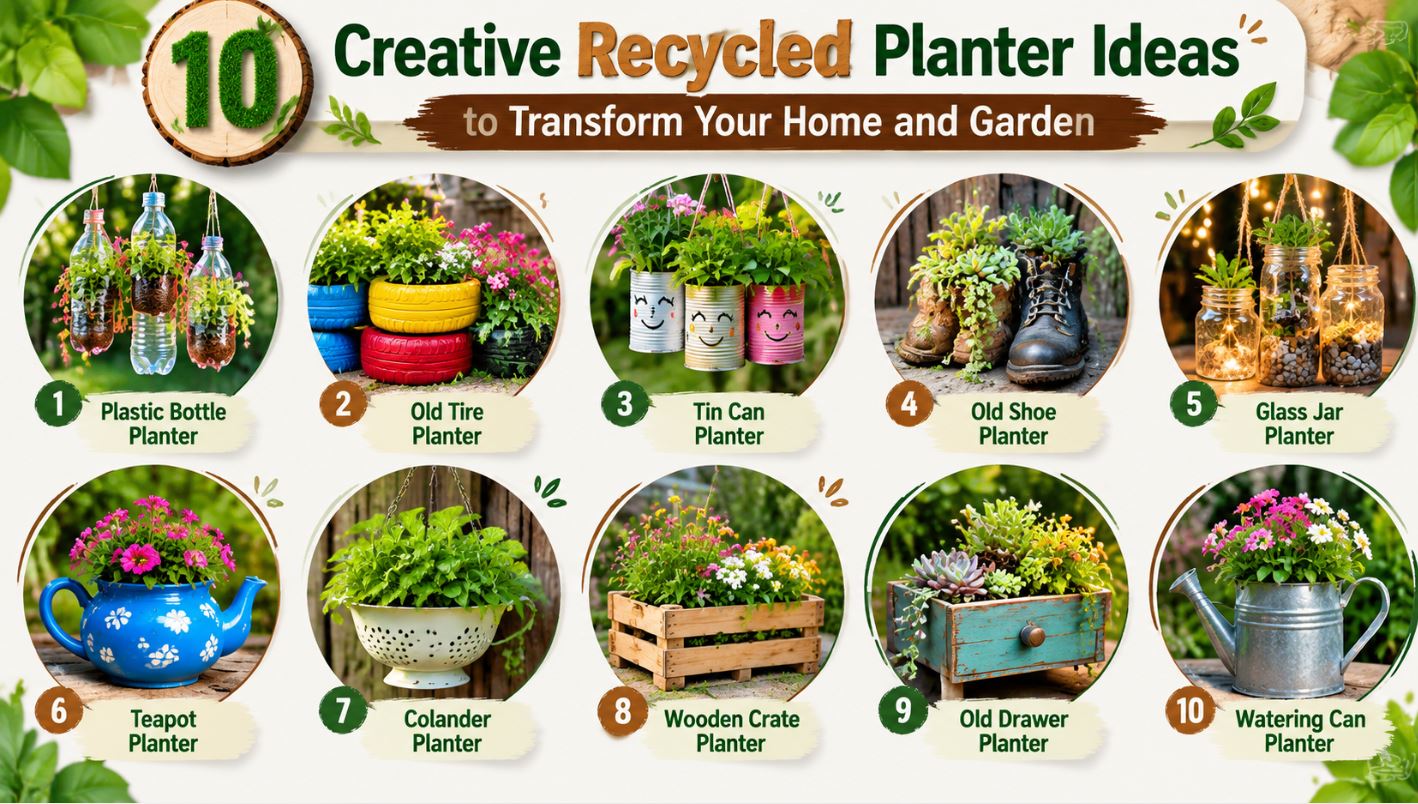
1. Plastic Bottle Planters
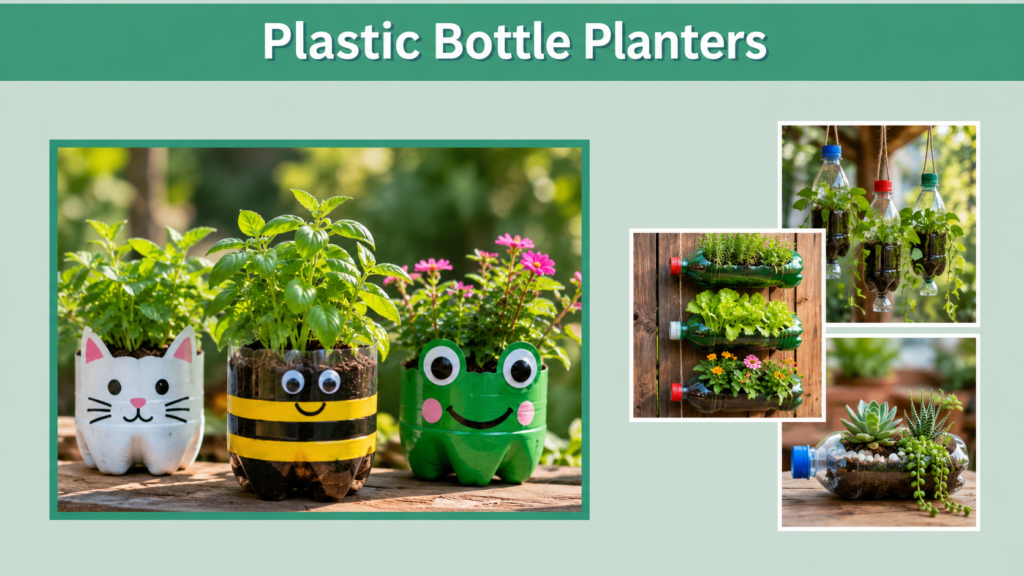
Plastic bottles are among the easiest materials to repurpose into DIY planters. They are lightweight, widely available, and suitable for small plants when prepared correctly.
How to make them:
- Wash an empty plastic bottle thoroughly and remove its label.
- Cut an opening along the side or cut off the top, depending on your design.
- Make several drainage holes in the bottom.
- Smooth or cover sharp cut edges.
- Fill with a suitable potting mix and add your plant.
You can hang the bottles horizontally, arrange them vertically, or attach them securely to a garden structure.
Best plants: Small herbs, compact flowers, and shallow-rooted ornamental plants.
Design tip: Paint the exterior with a suitable outdoor paint or decorate the bottle with simple geometric patterns. Keep coatings away from the growing medium and avoid painting surfaces that could leach unwanted substances into the soil.
2. Hanging Plastic Bottle Gardens
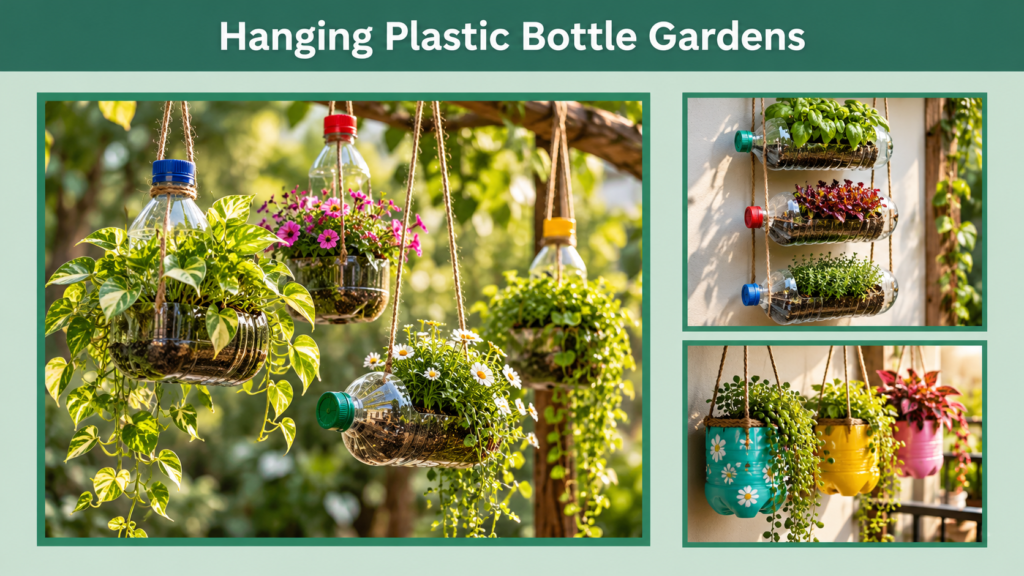
If your balcony has limited floor space, hanging bottle planters can help you grow plants vertically.
Cut openings into clean bottles, add drainage, and secure them to a sturdy frame using suitable fasteners. Position the containers so water can drain without damaging walls or affecting people below.
A vertical arrangement can create an attractive green feature while making efficient use of a small area.
Best plants: Small herbs, trailing ornamental plants, and compact flowers.
Important: Do not overload railings or hangers. Consider the combined weight of wet soil, water, containers, and mature plants.
3. Tin Can Planters
Old food cans can make simple, attractive planters for windowsills, patios, and small garden spaces.
Remove labels, wash the cans thoroughly, and check for sharp edges. Add drainage holes using appropriate tools and protect any exposed sharp metal.
You can paint the outside, wrap it with suitable decorative material, or leave the metal visible for an industrial look.
Best plants: Basil, parsley, small succulents, and compact flowering plants.
Choose cans large enough for the plant’s roots. Small cans dry out quickly, so monitor soil moisture carefully.
4. Old Buckets as Vegetable Planters
Cracked buckets and unused plastic pails can sometimes be reused as practical containers for larger plants.
A sufficiently large, clean bucket can accommodate one cucumber plant, a compact tomato plant, or certain leafy vegetables, depending on its volume and depth.
Drill appropriate drainage holes and place the bucket somewhere that allows excess water to escape.
Best plants: Tomatoes, cucumbers, peppers, and leafy vegetables, provided the container is appropriately sized.
Only use buckets made from materials suitable for the intended use. Avoid containers that previously held pesticides, industrial chemicals, fuels, or other hazardous substances.
5. Wooden Pallet Vertical Planters
Wooden pallets can be transformed into vertical gardens for balconies, patios, and backyard walls.
First, inspect the pallet for rot, nails, chemical contamination, and signs of treatment that may be unsuitable for gardening. Choose clean, structurally sound wood and avoid pallets with uncertain contamination histories, especially when growing edible plants.
Attach suitable planter pockets or secure containers to the structure. Position the pallet so that the containers receive enough sunlight and can drain freely.
Best plants: Herbs, shallow-rooted ornamentals, and compact flowers.
A pallet garden looks especially attractive when different plants create a combination of textures and colors.
6. Old Tires as Garden Planters
Worn-out tires are sometimes used as outdoor decorative planters because they are sturdy and can accommodate relatively large quantities of growing medium.
However, tires contain materials that may release unwanted substances as they weather. Their suitability depends on the intended use, condition, and local environmental guidance.
For edible crops, a safer choice is to place a suitable, food-safe container inside a tire used only as an outer decorative surround, ensuring the growing medium does not contact the tire.
Best use: Decorative outer surrounds for flowers or suitable non-edible displays.
Design tip: If you use tires decoratively, keep them stable, prevent standing water, and avoid using them where runoff could reach edible garden beds.
7. Broken Ceramic Pots
A cracked ceramic pot does not always need to be discarded. If it remains structurally stable, it can become a charming container for small plants.
For a pot with a large missing section, use the remaining structure to create a miniature garden with rocks, small plants, and decorative features.
Handle broken ceramic carefully because the edges can be sharp.
Best plants: Small succulents, compact flowers, and miniature ornamental plants.
If the pot cannot safely hold soil, use the pieces for decoration or drainage-compatible garden edging instead.
8. Old Teacups and Coffee Mugs
Unused teacups and coffee mugs can become attractive mini planters for indoor spaces.
They work particularly well for small plants, but most mugs do not have drainage holes. Without drainage, excess water can collect at the bottom and damage roots.
You can carefully drill a drainage hole in suitable ceramic using the correct bit and protective equipment, or use the mug as a decorative outer container for a smaller pot with drainage.
Best plants: Small succulents, compact foliage plants, and miniature herbs.
Design tip: Group cups of different sizes on a windowsill to create a small indoor garden with a coordinated appearance.
9. Old Shoes and Boots
Worn-out rain boots, rubber boots, and sturdy shoes can become playful decorative planters.
Clean the footwear thoroughly, add drainage holes where appropriate, and fill it with a suitable growing medium. Because footwear is often shallow or narrow, choose plants with modest root requirements.
Best plants: Small flowers, compact ornamental plants, and shallow-rooted displays.
Place shoe planters outdoors or in an area where excess water can drain safely.
This idea is especially useful for creating a whimsical garden near a doorway, fence, or children’s play area.
10. Wooden Crates as Rustic Planters
Old wooden crates can create a rustic look in gardens, patios, and balconies.
Inspect the wood for chemical treatments, splinters, rot, and unstable joints. Line the interior with a suitable planter liner that still allows water to drain, or place smaller nursery pots inside the crate.
Large crates can hold a collection of herbs or seasonal flowers, while smaller ones are ideal for compact arrangements.
Best plants: Herbs, lettuce, flowers, and other plants suited to the crate’s dimensions.
Use a sturdy base and avoid placing waterlogged wooden planters directly against surfaces that could be damaged by persistent moisture.
11. Old Colanders as Hanging Planters
A discarded colander already has drainage holes, making it a convenient starting point for a hanging planter.
Clean it, check for sharp edges, and line it with a suitable porous liner if needed to keep the potting mix in place.
Attach strong hanging supports and ensure the colander can safely carry the weight of wet soil.
Best plants: Trailing flowers, compact ornamentals, and herbs.
Colanders can dry out quickly because of their open design, so check moisture regularly during warm weather.
12. Broken Baskets as Decorative Planters
Worn-out baskets can be reused as decorative containers for plants.
If the basket is still strong enough to hold its contents, line it with a suitable liner and provide drainage. Alternatively, place a separate plastic nursery pot inside the basket to protect the woven material.
Natural fibers may deteriorate when constantly exposed to moisture, so this arrangement often works best when the basket is used as an outer decorative cover.
Best plants: Seasonal flowers, foliage plants, and compact herbs.
This is an easy way to add texture to a patio or covered porch.
13. Old Drawers as Garden Planters
An unused drawer can become a distinctive planter for a balcony or outdoor garden.
Check that the drawer is structurally sound and free from unsuitable coatings, lead-containing paint, or chemical contamination. If its materials are uncertain, use separate clean containers inside rather than placing edible plants directly in it.
Add drainage where appropriate and protect the wood from excessive moisture.
Best plants: Shallow-rooted flowers, herbs, and compact ornamental plants.
Arrange several drawers at different heights to create a layered garden display.
14. Repurposed Wooden Ladder Planter
An old wooden ladder can provide several levels for displaying potted plants.
Instead of filling the ladder itself with soil, place secure containers on its steps. This approach protects the structure and makes individual pots easier to remove for watering and maintenance.
Check the ladder’s stability, especially if it will stand outdoors in windy conditions.
Best plants: Small herbs, flowering pots, and trailing ornamentals.
The result is a vertical display that works well in courtyards, patios, and covered balconies.
15. Old Wheelbarrow Planter
A worn-out wheelbarrow can become a mobile decorative planter for a backyard or spacious patio.
Clean the wheelbarrow, check its structure, and ensure it can safely hold the intended load. Add drainage holes if suitable, or place containers inside it to avoid direct contact between plants and potentially unsuitable metal or coatings.
Best plants: Seasonal flowers, ornamental grasses, and mixed garden displays.
The wheelbarrow’s rustic appearance makes it an attractive focal point in cottage-style gardens.
16. Empty Food Tins and Large Cans
Larger food tins can accommodate more growing medium than small cans and may work well for compact herbs or flowers.
Remove sharp edges, wash the container, and create suitable drainage holes. Check the metal for rust and structural deterioration before use.
Best plants: Chives, parsley, small flowers, and compact ornamental plants.
Arrange cans in a row or place them on a sturdy shelf to create a neat, organized garden display.
17. Reused Glass Jars
Glass jars are useful for displaying small plants, but they generally lack drainage and can easily become waterlogged.
For ordinary container gardening, use the jar as a decorative outer cover around a smaller pot with drainage holes. Remove the inner pot for watering and allow excess water to drain before returning it.
Glass can also heat up in direct sunlight, so avoid leaving plants in hot, sun-exposed jars.
Best plants: Small indoor foliage plants and temporary decorative displays.
For long-term plant health, choose species and containers suited to the available light, root space, and watering routine.
18. Old Cooking Pots and Pans
Unused cooking pots and pans can become distinctive garden containers when they are clean, structurally sound, and made from suitable materials.
Check for rust, peeling coatings, sharp edges, and any history of hazardous contamination. Provide drainage or use a removable inner planter.
Best plants: Flowers, herbs, and compact decorative plants.
A collection of old pots in different sizes can create a relaxed, informal garden style.
19. Broken Bathtubs as Large Garden Planters
An old bathtub can hold a substantial volume of growing medium and create a raised garden feature in a spacious outdoor area.
Before repurposing one, assess its weight, surface coating, structural condition, and drainage. Large bathtubs can become extremely heavy when filled with wet soil, so place them on a stable surface that can support the load.
Avoid growing edible plants directly in surfaces with unknown coatings or contamination histories. Suitable separate growing containers inside the bathtub can reduce direct contact.
Best plants: Ornamental flowers, suitable shrubs in individual pots, and decorative mixed displays.
This option is best for gardens with adequate space rather than small balconies.
20. Plastic Storage Bins as Large Planters
Unused storage bins may be suitable for growing larger plants if they are clean, sturdy, and made from appropriate materials.
Check the container’s intended use and condition. Add enough drainage holes, and make sure the bin can support the weight of wet potting mix.
Large bins can offer generous root space for compact vegetables and herbs.
Best plants: Leafy greens, herbs, compact tomatoes, and selected larger vegetables.
Avoid bins previously used to store chemicals or materials that could contaminate the growing medium.
21. Repurposed Birdcage Planters
An old decorative birdcage can become a hanging garden feature for small plants.
Use a structurally sound cage with no sharp protrusions. Place individual nursery pots inside rather than filling the cage directly with soil.
Secure the cage from a strong support and ensure it does not swing excessively in the wind.
Best plants: Small foliage plants, trailing ornamentals, and compact flowering varieties.
A birdcage planter can add a vintage or cottage-inspired touch to a covered patio.
22. Old Suitcases as Decorative Planters
A damaged suitcase can become an unusual garden display when used carefully.
Suitcases are generally not designed for constant moisture, and their linings may deteriorate. Keep the suitcase as an outer decorative feature and place suitable, independently drained containers inside.
This approach also allows you to remove the pots for watering.
Best plants: Small flowers, compact foliage plants, and temporary seasonal arrangements.
Use this idea in a sheltered area to protect the suitcase from rain and excessive sun.
23. Repurposed Gutter Planters
Sections of unused guttering can be adapted into narrow planters for small spaces.
Use clean materials that are suitable for gardening, provide drainage holes, and mount the gutters securely on a wall or frame. Avoid old guttering with unknown coatings or contamination, particularly for edible crops.
Because gutters are shallow, they are best for plants with relatively small root systems.
Best plants: Lettuce, shallow-rooted herbs, and small ornamental plants.
Do not overcrowd the gutter, and monitor soil moisture because shallow containers dry out quickly.
24. Old Plastic Laundry Baskets
A sturdy plastic laundry basket can be adapted into a large planter, especially when its existing holes are suitable for drainage.
Line the basket with an appropriate porous material if necessary to retain potting mix while allowing excess water to escape.
Check the plastic’s condition and suitability for the intended use, particularly if you plan to grow edible plants.
Best plants: Compact vegetables, herbs, and flowers suited to the basket’s size.
A laundry basket can provide a lightweight alternative to some large commercial planters, although the filled container may still be heavy.
25. Broken Terracotta Pots for Miniature Gardens
Small pieces of broken terracotta can become the foundation of a miniature garden display.
Use a stable, intact container as the main planter, then arrange clean terracotta fragments to create small steps, decorative borders, or miniature pathways.
Combine the design with suitable plants and a few natural stones to create a miniature landscape.
Best plants: Small succulents and compact ornamental plants.
Handle broken pieces carefully, and avoid using sharp fragments where children or pets may come into contact with them.
How to Choose the Best Recycled Material for Your Plants
Not every recycled object is suitable for every plant. The right choice depends on root depth, drainage, container size, exposure to sunlight, and the material’s safety.
Consider root space
Small containers are appropriate for plants with modest root systems, but they can restrict the growth of larger vegetables.
Cucumbers and tomatoes generally need more root space than small succulents or compact herbs. If you want to grow vegetables, choose a sufficiently large container rather than selecting one only because it looks attractive.
Check drainage
Most container-grown plants need excess water to escape. Containers without drainage can cause waterlogging and root damage if they are watered directly without a suitable inner pot or alternative drainage arrangement.
If you use glass jars, mugs, baskets, or decorative objects without drainage, consider placing a removable nursery pot inside.
Prioritize material safety
This is particularly important when growing food.
Avoid containers that previously held pesticides, solvents, fuels, industrial chemicals, or other hazardous substances. Be cautious with old painted wood, unknown coatings, deteriorating plastics, and materials that may release contaminants.
For edible plants, use clean containers made from materials appropriate for gardening or food contact, and use a separate food-safe inner pot when the outer material is uncertain.
Think about the final weight
Wet potting mix is much heavier than dry material. Large recycled planters may become difficult to move after planting.
Before placing a heavy container on a balcony, rooftop, shelf, or wall-mounted structure, confirm that the location can safely support the load.
Best Plants for Recycled Planters
Choosing suitable plants will help your recycled garden look attractive and remain easy to maintain.
Herbs
Basil, mint, parsley, and chives can grow well in appropriately sized containers.
Herbs are useful for kitchen gardens because you can harvest small quantities as needed. Mint spreads readily, so growing it in its own container is often a good idea.
Succulents
Many succulents thrive in relatively small containers when the potting mix drains well and the plants receive suitable light.
They are useful for decorative displays in teacups, broken pots, and other small containers, provided excess water does not accumulate around their roots.
Flowering plants
Compact marigolds, petunias, and other suitable flowering plants can brighten tin cans, wooden crates, buckets, and balcony planters.
Select varieties based on the amount of sunlight available and the container’s size.
Leafy vegetables
Lettuce and certain other leafy greens can grow in shallow but sufficiently spacious containers.
Gutter planters, wooden boxes, and larger storage bins can work when they offer enough root space, drainage, and sunlight.
Compact vegetables
Dwarf tomatoes, peppers, and some cucumber varieties can grow in large recycled containers.
Always check the cultivar’s recommended container size and provide a suitable trellis or other support when necessary.
How to Make a Recycled Planter Step by Step
Although every project is different, the following basic process works for many recycled planter ideas.
Step 1: Select a suitable container
Choose an item that is clean, stable, and appropriate for the plant you want to grow.
Consider its depth, width, material, and ability to support wet potting mix.
Step 2: Clean the container thoroughly
Remove dirt, food residue, old labels, and other debris.
Use an appropriate cleaning method and allow the container to dry. Do not reuse containers with unknown chemical contamination.
Step 3: Prepare drainage
Make drainage holes if the material and design allow it safely.
Use suitable tools, wear appropriate protective equipment, and smooth sharp edges. If the container cannot be modified safely, use a removable inner pot with drainage holes.
Step 4: Decorate the exterior
You can paint, wrap, stencil, or otherwise decorate the outside of your planter.
Choose finishes appropriate for outdoor exposure and avoid materials that may contaminate the soil or growing medium.
Step 5: Add potting mix
Use a high-quality potting mix suitable for the plant you are growing.
Avoid filling containers with heavy garden soil that may compact and restrict drainage.
Step 6: Plant carefully
Place the plant at the appropriate depth and gently firm the mix around its roots.
Avoid burying stems or crowns that should remain above the growing medium.
Step 7: Water and position
Water according to the plant’s needs and allow excess water to drain.
Place the planter in a location with suitable sunlight, airflow, and protection from extreme weather.
Step 8: Maintain the planter
Check moisture, remove dead leaves, inspect for pests, and provide fertilizer when necessary.
Remember that small recycled containers may require more frequent watering than larger pots.
Common Mistakes to Avoid With Recycled Planters
Choosing appearance over plant health
An attractive container is not necessarily a suitable growing environment. Root space, drainage, sunlight, and material safety should come first.
Forgetting drainage holes
Excess water can damage roots and contribute to fungal problems. Plan drainage before planting.
Using contaminated materials
Containers with unknown chemical histories may be unsuitable, especially for edible plants. When in doubt, choose another material or use a safe, separate inner pot.
Overcrowding plants
Placing too many plants in one container increases competition for water, nutrients, and space.
Follow the spacing recommendations for each plant variety.
Ignoring weather conditions
Lightweight recycled planters may tip over in strong winds, while small containers can dry out rapidly during hot weather.
Secure the containers and adjust watering to the conditions.
Using unstable structures
Large pallet gardens, hanging containers, and stacked planters need appropriate support. Inspect mounting points and connections regularly.
Tips for Making Recycled Planters Look More Attractive
A recycled garden can look carefully designed rather than improvised. Small choices in color, arrangement, and plant selection make a noticeable difference.
Choose a consistent color palette
Use two or three complementary colors for painted containers. White, earthy brown, soft green, and neutral shades can create a calm look, while brighter colors can add a playful touch.
Group containers by size
Arrange smaller planters together and place larger containers at the back or along the edges of your garden space.
This creates a more balanced display and makes individual plants easier to access.
Combine different plant textures
Pair plants with contrasting leaf shapes, colors, and growth habits.
For example, upright herbs can look attractive beside trailing flowers, while succulents can create an interesting contrast with smooth ceramic or metal containers.
Use vertical space
Hanging bottles, pallet gardens, wall-mounted containers, and ladder displays can help maximize limited space.
Ensure every plant receives suitable light and can be watered without creating a safety hazard.
Keep the design practical
Leave enough space to inspect plants, remove dead leaves, and harvest vegetables. A beautiful garden should also be easy to maintain.
Frequently Asked Questions About Recycled Planter Ideas
1. What are the best recycled planter ideas for beginners?
Plastic bottles, tin cans, wooden crates, unused buckets, and decorative baskets are good starting points. They are relatively easy to prepare and can be adapted for different plants. Always check material safety and provide suitable drainage.
2. Can I use plastic bottles as plant pots?
Yes. Clean plastic bottles can be reused for small plants when they have enough root space, appropriate drainage, and a suitable growing medium. Keep them away from excessive heat and replace them if the plastic becomes brittle or damaged.
3. What plants grow best in recycled containers?
Herbs, compact flowers, succulents, lettuce, and selected small vegetables can grow well in suitable recycled containers. The best choice depends on the container’s size, drainage, sunlight, and the plant’s root requirements.
4. Do recycled planters need drainage holes?
Most conventional container-grown plants benefit from drainage holes because they allow excess water to escape. For containers that cannot be drilled safely, use a removable inner pot with drainage holes.
5. Are recycled planters safe for growing vegetables?
They can be, provided the materials are clean and suitable for growing edible plants. Avoid containers that held hazardous chemicals or have uncertain contamination histories. Use food-safe inner containers when the outer material is unsuitable or unknown.
6. Can I use old tires as vegetable planters?
Because tires contain materials that can release unwanted substances as they weather, using them as direct-contact containers for edible crops is not the preferred option. A separate suitable growing container inside the tire can reduce direct contact with the growing medium.
7. How do I make recycled planters waterproof?
Waterproofing is not always necessary and should not compromise drainage. For wooden decorative containers, an appropriate exterior finish may help protect the wood, but use a separate safe growing container if the coating is unsuitable for direct contact with the growing medium.
8. Can recycled planters be used indoors?
Yes. Mugs, glass jars used as outer covers, decorative tins, and other suitable containers can work indoors. Protect furniture from water, provide proper drainage, and choose plants suited to the available light.
9. How often should I water plants in recycled containers?
Watering frequency depends on plant type, container size, material, temperature, and sunlight. Check the moisture in the growing medium rather than following a fixed schedule. Small containers and porous materials often dry out more quickly.
10. Are recycled planters environmentally friendly?
They can be a more resource-conscious option when they extend the useful life of existing materials and reduce the need to buy new products. Their overall environmental impact depends on material safety, preparation, durability, water use, and eventual disposal.
11. Can I make recycled planters without spending money?
Yes. Many projects use items already available at home, such as clean bottles, old buckets, wooden boxes, or unused kitchenware. You may still need to purchase potting mix, seeds, and tools, depending on what you already have.
12. How long do recycled planters last?
Their lifespan depends on the material and exposure to sunlight, rain, temperature changes, and physical wear. Metal may rust, wood may deteriorate, and plastic may become brittle. Inspect containers regularly and replace them when they are no longer safe or stable.
Final Thought: Give Everyday Objects a Second Life
Recycled planter ideas prove that a beautiful garden does not need to begin with expensive pots or a large outdoor space. Sometimes, the most creative gardening projects start with an ordinary object that would otherwise be forgotten or discarded.
From hanging plastic bottle gardens and rustic wooden crates to colorful tin cans and vertical pallet displays, there are countless ways to turn suitable household materials into useful plant containers. Each project offers an opportunity to express your creativity, save money, and make better use of available resources.
The key is to balance creativity with practicality. Choose safe materials, provide enough room for roots, ensure excess water can drain, and select plants suited to your growing conditions. These simple decisions will help your recycled planters remain attractive while supporting healthy plant growth.
You do not need to complete all 25 projects at once. Start with one or two easy ideas, observe how your plants respond, and gradually expand your collection as your confidence grows.
Your next garden project might already be sitting in your recycling bin. Before throwing something away, consider whether it could become a useful planter, a decorative garden feature, or the beginning of your own small green space.
A little imagination can turn everyday waste into something beautiful, practical, and rewarding.

- 10 Best Saltwater Resistant Garden Hose 2026 - October 20, 2026
- 25 Tiny Backyard Patio Garden Ideas to Create a Beautiful Small Outdoor Space - October 20, 2026
- 21 Shade Garden Ideas for Small Backyards That Look Beautiful All Year - October 20, 2026