10 Best Garden Pump For Micro Irrigation 2026
Finding the right garden pump for micro irrigation often feels like chasing the wrong problem. You might assume bigger pressure is better, but that can blow out delicate emitters, clog lines, and turn your watering schedule into a repair session.
A useful pump balances pressure, flow, power source, and control. Small gardens benefit from simple startup, decent filtration, and parts that don’t require a plumbing degree to replace. What matters most is picking something that fits your setup, not just your wishlist.
⚡ Quick Verdict
List of Best Garden Pump For Micro Irrigation
| Image | Product | Score | Link |
|---|---|---|---|
 |
CYBERNOVA DC12V 4-6L / min 131 PSI High Pressure Diaphragm P 🏆 Editor’s Pick |
8.8/10 |
View on Amazon Free Shipping & 30-Day Returns |
 |
RAINPOINT Easy-Setup Solar,Rechargeable,USB-C Powered Automa 🥈 Runner-Up |
8.5/10 |
View on Amazon Free Shipping & 30-Day Returns |
 |
Drip Irrigation System 230FT Quick-Connect Drip Irrigation K 💰 Best Value |
8.2/10 |
View on Amazon Free Shipping & 30-Day Returns |
 |
Keaiduoa DC 12V 3.5L/Min 0.48MPa 70 PSI Diaphragm High Press | 7.9/10 |
View on Amazon Free Shipping & 30-Day Returns |
 |
RAINPOINT Drip Irrigation Pump Extended Driplines Accessorie | 7.7/10 |
View on Amazon Free Shipping & 30-Day Returns |
 |
50 Pack Adjustable Atomizing Nozzles, 1/4 Inch Drip Irrigati | 7.4/10 |
View on Amazon Free Shipping & 30-Day Returns |
 |
AEDIKO 4pcs Micro Submersible Mini Water Pump DC 3V 5V for A | 6.9/10 |
View on Amazon Free Shipping & 30-Day Returns |
 |
Pack Micro Diaphragm Pump Rebuild Repair Kit, Agricultural P | 6.8/10 |
View on Amazon Free Shipping & 30-Day Returns |
 |
Munyonyo Garden Pump Sprayer,68oz/34oz Hand-held Pressure Sp | 6.3/10 |
View on Amazon Free Shipping & 30-Day Returns |
 |
huicouldtool 304 Stainless Steel Net Filter Garden Micro Irr 🥈 Runner-Up |
6.1/10 |
View on Amazon Free Shipping & 30-Day Returns |
📋 How We Evaluated
Products were evaluated for build quality, stated performance, practical compatibility, and overall value. Amazon rating signals were unavailable for every listing, so specifications and feature clarity received greater weight. Suitability depends on whether buyers need a pump, complete irrigation system, replacement part, or small accessory.
Detailed Reviews
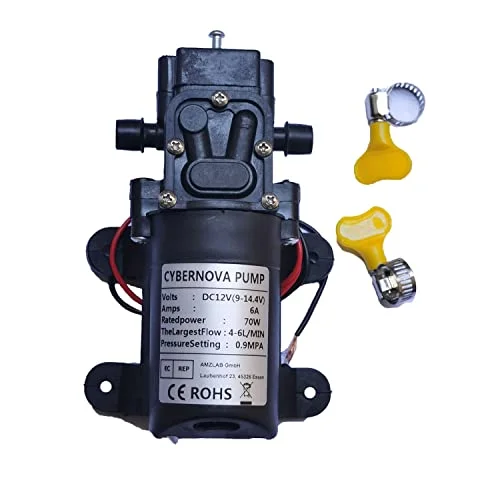
CYBERNOVA DC12V 4-6L / min 131 PSI High Pressure Diaphragm P🏆 Editor’s Pick
| Voltage | DC 12V |
| Flow Rate | 4-6 L/min |
| Maximum Pressure | 131 PSI |
| Continuous Runtime | Up to 1 hour |
What We Found
The CYBERNOVA stands out as the strongest standalone pump in this group, hitting 131 PSI with a 12-volt diaphragm design. It pushes 4 to 6 liters per minute and handles automatic priming, which helps with water pickup from tanks or remote sources.
The return valve is a smart touch, letting water circulate when flow gets restricted so pressure doesn’t spike too far. It’s built for garden irrigation, misting, vehicle cleaning, and mobile setups like RVs. Continuous run time maxes at one hour, which matters for automated schedules.
Normal draw sits around 2 to 3 amps, with a 6-amp ceiling. It lacks price and rating data, so value is uncertain. Specs are otherwise solid for systems using adjustable micro emitters.
💬 My Take
This is the most capable standalone pump here. The one-hour runtime keeps it from being perfect, but scheduled micro irrigation works well with it.
Who It’s For
This pump works if you’re building a custom 12-volt irrigation system powered by a battery, tank, or vehicle. Raised beds, greenhouse misting, and mobile watering rigs are fair game with automatic priming smoothing out startup. Fresh water only, so plan on adding filtration if your source is dirty.
One-hour runtime favors scheduled cycles, not constant flow. You’ll need matching tubing, fittings, and a power source already on hand. This isn’t plug-and-spray.
✅ Pros
- High stated pressure supports misting, adjustable emitters, and longer irrigation runs.
- Automatic priming reduces setup complexity when drawing from an appropriate fresh-water source.
- The return valve helps protect the pump when outlets become restricted.
❌ Cons
- The one-hour continuous runtime limits applications requiring uninterrupted circulation.
- No price, rating, or detailed construction information is provided.
- Buyers must supply compatible electrical protection, filtration, tubing, and connectors.
RAINPOINT Easy-Setup Solar,Rechargeable,USB-C Powered Automa🥈 Runner-Up
| Plant Capacity | Approximately 10-20 plants |
| Power Options | Solar, rechargeable battery, or USB-C |
| Battery Runtime | Up to 20 days under stated conditions |
| Control Method | Dial scheduling with manual watering button |
What We Found
The RAINPOINT automatic kit targets small gardens, balconies, and indoor setups like grow tents. Programming is dial-based, avoiding menu overload, and a manual button adds watering without resetting the schedule. Solar charging backs a rechargeable battery, with USB-C flexibility indoors.
They claim up to 20 days of cordless run on a 5-minute daily cycle. Root-level watering can cut waste compared to surface methods. An anti-backflow valve helps prevent siphoning. Covers roughly 10 to 20 plants, making it more complete than most pumps.
Missing are flow rate, pressure, tank specs, price, and ratings. Still, it feels like the most plug-and-play entry point.
💬 My Take
This is the easiest complete option for small spaces. It trades pressure and expansion potential for daily convenience.
Who It’s For
This system fits busy plant owners wanting scheduled watering without plumbing. Containers, grow areas, balconies, and compact greenhouses all work. The dial and manual button keep things approachable for beginners. Solar and USB-C options adapt to light changes and indoor stays.
Big gardens or long tubing runs might need more pump-driven power. Best when convenience outweighs max pressure.
✅ Pros
- Simple dial controls make scheduled watering accessible for first-time users.
- Solar, battery, and USB-C power options support indoor and outdoor placement.
- An anti-backflow valve and root-directed watering improve system consistency.
❌ Cons
- The listing omits pressure, flow rate, price, and rating information.
- Its stated plant capacity may not suit larger beds or extensive irrigation networks.
- Battery performance depends heavily on watering duration and available charging light.
Drip Irrigation System 230FT Quick-Connect Drip Irrigation K💰 Best Value
| Total Tubing Length | 230 feet |
| Quarter-Inch Tubing | 197 feet |
| Half-Inch Tubing | 33 feet |
| Emitter Types | Four watering patterns |
What We Found
The 230-foot ABAKUKU kit delivers the most physical irrigation coverage here. It brings 197 feet of quarter-inch tubing, 33 feet of half-inch, connectors, a faucet adapter, emitters, and misting nozzles. Quick-connect fittings cut install effort and skip heating tubing. Four emitter styles cover drip, spray, mist, and adjustable patterns.
Tubing length fits raised beds, greenhouses, flower gardens, and mixed layouts. No pump, timer, filter spec, or pressure regulator comes included. Water pressure and quality drive performance since none are specified. No price or rating shows. But the component range looks practically complete.
💬 My Take
Best distribution kit for hands-on gardeners. Pair it with a solid pump and filtration for a full system.
Who It’s For
This kit works if you already have pressurized water from a faucet or pump and just need distribution hardware. Raised beds, garden rows, small orchards, and greenhouse benches all fit well. Adjustable emitters help different plants along one zone. Do-it-yourself installers benefit from the quick-connect design.
Add filtration and pressure control when using pumps or muddy water. Strong value when lengths match your garden.
✅ Pros
- The long tubing supply supports extensive layouts across beds, rows, and greenhouse spaces.
- Four emitter styles provide useful flexibility for different plants and locations.
- Quick-connect fittings simplify installation without specialized heating tools.
❌ Cons
- The kit does not include a pump, timer, pressure regulator, or stated filter.
- Performance depends on sufficient incoming pressure and clean water.
- The large component assortment may exceed the needs of very small gardens.
Keaiduoa DC 12V 3.5L/Min 0.48MPa 70 PSI Diaphragm High Press
| Voltage | DC 12V |
| Flow Rate | 3.5 L/min |
| Maximum Pressure | 70 PSI |
| Pump Type | Diaphragm |
What We Found
The Keaiduoa is a compact 12-volt diaphragm pump rated at 3.5 LPM and 70 PSI. Pressure-limiting design aims to protect the pump and connected gear. Low power use favors mobile installs. Markets include home gardens, caravans, campers, and marine setups.
Lower pressure and flow than CYBERNOVA but often better for smaller networks. Runtime, current draw, priming behavior, connection size, and wiring aren’t stated. No price or rating shows. Firm structure and pressure claims sound good, but tech specs run thin.
💬 My Take
Decent compact pump when 70 PSI covers your needs. Thin specs keep it behind the CYBERNOVA.
Who It’s For
This pump works if you need moderate pressure from a 12-volt source. Containers, compact greenhouse lines, or mobile watering fit. Lower output can ease control on short runs. Confirm self-priming and fitting match. Less ideal for long networks or heavy misting. Value lands where 70 PSI meets real need.
✅ Pros
- Moderate pressure may suit compact irrigation networks and delicate emitters.
- The 12-volt format works with mobile, caravan, camper, and garden power systems.
- Pressure-limiting behavior may help protect connected equipment.
❌ Cons
- Its 70 PSI rating trails the higher-pressure CYBERNOVA pump.
- Priming, runtime, current draw, and fitting details are not stated.
- Limited flow may restrict longer lines or multiple spray emitters.
RAINPOINT Drip Irrigation Pump Extended Driplines Accessorie
| Added Plant Capacity | 10 plants |
| Main Tubing | 32.81 feet of 1/6-inch tubing |
| Branch Tubing | 9.84 feet of 1/8-inch tubing |
| Included Emitters | 10 micro drip emitters |
What We Found
The RAINPOINT extension kit grows compatible systems for another 10 plants. Box contents cover 32.81 feet of 1/6-inch main tubing, 9.84 feet of 1/8-inch branch tubing, a filter, 10 emitters, 10 T-barb fittings, one cross, and zip ties. Structured expansion without separate part hunting.
Compatibility limits to RAINPOINT models HTP115FRF, HTP149FRF, ITP138, and IT153. No pump or controller in the pack. Verify your base unit before ordering. No price or rating shows. Matched parts beat mixing generic tubing.
💬 My Take
Smart expansion buy for the right RAINPOINT system. Effective, but compatibility narrows its appeal.
Who It’s For
This kit helps existing RAINPOINT owners add another 10 pots or plants. Container gardens, indoor plant shelves, balconies, and small greenhouses fit well. Included filter protects emitters from gunk. Pre-matched parts reduce connection guesswork. Minimal value outside the listed models. Measure plant placement since branch length can constrain layouts.
✅ Pros
- The kit adds ten plants with matched tubing, emitters, fittings, and a filter.
- Preselected components simplify expansion for owners of compatible RAINPOINT systems.
- Included zip ties help secure tubing during installation.
❌ Cons
- Compatibility is restricted to specific RAINPOINT system models.
- The kit adds capacity but does not include a pump or controller.
- Short branch tubing may limit spacing in larger container arrangements.
50 Pack Adjustable Atomizing Nozzles, 1/4 Inch Drip Irrigati
| Pack Size | 50 nozzles |
| Tubing Compatibility | 4 mm inner diameter, 7 mm outer diameter |
| Material | POM plastic |
| Adjustment | Spray pressure and diameter |
What We Found
This 50-pack of adjustable atomizing nozzles adds distribution control for quarter-inch lines. Each unit adjusts spray pressure and spread, giving per-plant control across a zone. Tubing specs call for 4mm inner and 7mm outer diameter. POM plastic resists corrosion and outdoor wear.
Garden, greenhouse, patio, balcony, roof cooling, and humidity uses are viable. Needs existing pressure, tubing, and filtration. Flow rate, operating pressure, spray radius, and punch tools aren’t covered. No price or rating shows. Useful scale, but incomplete specs.
💬 My Take
A flexible nozzle pack for established systems, but missing performance data makes precise design and purchasing harder.
Who It’s For
These nozzles help if you need flexible coverage across many plants. Greenhouse benches, patio containers, seedling zones, and cooling setups all work. Per-unit adjustment balances varied locations in one zone. Verify tubing fit and pump pressure first. A filter is smart since tiny passages clog. Great scale for larger layouts.
Standalone use is out.
✅ Pros
- Individual adjustment allows more precise spray balancing across multiple plants.
- The 50-piece pack supports extensive greenhouse, patio, or garden layouts.
- POM construction offers useful resistance to corrosion and outdoor aging.
❌ Cons
- The nozzles require a compatible pump, tubing, filter, and installation tools.
- Flow rate, pressure range, and spray radius are not specified.
- Atomizing passages may clog without clean water and adequate filtration.
AEDIKO 4pcs Micro Submersible Mini Water Pump DC 3V 5V for A
| Pack Quantity | 4 pumps |
| Operating Voltage | 3V or 4.5V |
| No-Load Flow | 100 L/h |
| Maximum Noise | 40 dB |
What We Found
The AEDIKO four-pack holds tiny submersible pumps for low-voltage water work. Voltage runs 3V or 4.5V with up to 100 LPH unloaded. Load draw stays low at 0.18 amps. Noise clocks in around 40 dB, suitable for indoor builds, aquariums, and decor. Submersion required, so it differs from self-priming diaphragms.
Four-meter tubing and wire ends help basic builds. Tiny hydroponics or indoor experiments might use these. Head height, duty cycle, filtration needs, and connector type are missing. No price or rating shows. Hobbyist territory through and through.
💬 My Take
Nifty for experiments, but short on pressure for serious micro irrigation demands.
Who It’s For
Best for hobbyists chasing small fountains, aquariums, hydroponics, or indoor water tests. Extra units give spares or separate mini builds. Low voltage eases battery runs. Never fit for pressurized drip networks, long runs, or outdoor lift work. Keep them submerged while running. Head height and clean water drive results.
✅ Pros
- The four-pack provides multiple low-voltage pumps for small DIY projects.
- Quiet operation suits aquariums, indoor features, and office environments.
- Included tubing and wire ends simplify basic experimental installations.
❌ Cons
- The submersible design cannot replace a pressurized diaphragm irrigation pump.
- Head height, runtime, connector details, and filtration requirements are omitted.
- No-load flow does not reveal useful output under irrigation resistance.
Pack Micro Diaphragm Pump Rebuild Repair Kit, Agricultural P
| Included Pieces | 15 replacement components |
| Diaphragm Size | 36 x 40 mm |
| Materials | ABS, PP, and iron |
| Pump Body | Not included |
What We Found
This 15-piece rebuild kit keeps compatible pumps alive rather than starting new installs. It drops in two diaphragms, one connecting rod, four valve seats, four spool valves, and four springs. The listed 36x40mm diaphragm size gives one solid compatibility checkpoint. ABS, polypropylene, and iron make a mixed-material replacement set.
It targets agricultural sprayers, greenhouse gear, flower beds, and veggie applications. No pump body included, and supported models aren’t named. You need to match dimensions and internal layouts carefully. No price or rating shows. Value hinges on reviving an existing pump.
💬 My Take
Handy for compatible equipment, but its niche purpose leaves most new installs looking elsewhere.
Who It’s For
This kit suits technically able owners servicing compatible diaphragm pumps. Valve, spring, or diaphragm wear gets cheaper to fix with this bundle. Agricultural sprayer types and greenhouse operators may appreciate the parts variety. New irrigation projects gain nothing here. Internal fit varies across similar pumps, so verify first.
Clean workspaces and disassembly skills help. Not a casual fix.
✅ Pros
- The 15-piece assortment covers several commonly worn diaphragm pump components.
- Clearly stated diaphragm dimensions help buyers perform an initial compatibility check.
- Replacement parts may extend the service life of an existing irrigation pump.
❌ Cons
- The kit cannot operate independently because it excludes the pump body.
- No supported pump models or complete compatibility chart is provided.
- Installation requires mechanical skills and accurate component matching.
Munyonyo Garden Pump Sprayer,68oz/34oz Hand-held Pressure Sp
| Capacity Options | 68 oz or 34 oz |
| Operation | Handheld pressure sprayer |
| Nozzle | Adjustable |
| Safety Feature | Safety valve |
What We Found
The Munyonyo is a handheld pressure sprayer, not automated irrigation. Bottles come in 68oz and 34oz sizes with a safety valve and adjustable nozzle. Use cases include lawn watering, weed spraying, cleaning, and car washing. Manual pressurization delivers short bursts without electricity. Great for spot treatment or small container jobs.
But material, spray range, pressure rating, runtime, and nozzle detail are missing. Scheduled watering or multi-emitter flow won’t happen here. No price or rating shows. Portability wins, but relevance drops fast.
💬 My Take
Solid as a handheld utility sprayer, but a poor match for anyone wanting true irrigation automation.
Who It’s For
This sprayer works for occasional targeted watering or cleanup around the house. Seedlings, individual plants, or hose-free spots benefit. Manual design skips batteries and pump installs. No good for unattended watering or raised-bed networks. Smaller bottles mean more refills. Choose based on portability needs.
✅ Pros
- Portable manual operation works without electricity, batteries, or plumbing.
- An adjustable nozzle supports watering, cleaning, and other household tasks.
- The compact bottle format suits occasional spot watering.
❌ Cons
- It cannot automate watering or supply a multi-emitter irrigation network.
- Pressure consistency depends on manual pumping and bottle fill level.
- The listing omits materials, pressure details, and long-term durability information.
huicouldtool 304 Stainless Steel Net Filter Garden Micro Irr🥈 Runner-Up
| Component Type | Garden water connector filter |
| Material | Stainless steel |
| Connection Size | 10 mm |
| Standard | DIN listed |
What We Found
The huicouldtool item is a stainless steel mesh filter, not a pump. Its build suggests better corrosion resistance than flimsy plastic screens. The 10mm size may suit certain garden connectors, though compatibility details are thin. Filtration matters for emitters, especially with sediment-heavy sources.
But without mesh fineness, pressure tolerance, or flow data, you’re guessing on performance. No price or rating shows either. It’s a supporting part with real purpose, but it won’t move water on its own.
💬 My Take
Useful filtration protects irrigation systems, but this listing hides too many details for a confident buy.
Who It’s For
This filter helps if you already have a pump and need basic sediment protection. Narrow micro irrigation lines, nozzles, and emitters benefit from the debris blocking. Confirm the 10mm fit before ordering since mismatched connections kill projects. Performance is hard to predict without mesh specs.
It works best as a replacement or extra filter in a known-compatible setup. Not a full solution by any stretch.
✅ Pros
- Stainless steel construction should resist corrosion better than many low-cost plastic screens.
- A mesh filter can reduce emitter clogging caused by sediment and debris.
- The compact connector format may fit space-limited irrigation assemblies.
❌ Cons
- This product is a filter rather than a pump or complete irrigation system.
- Mesh size, pressure rating, and filtration performance are not stated.
- Compatibility remains uncertain without clearer dimensions and connection details.
What to Look For Before Buying
Picking a micro irrigation pump means syncing output with your tubing, emitters, source, and routine. Pressure alone doesn’t carry a system. You also need filtration, realistic power, maintenance sense, and future plans. A complete kit can beat piecemeal parts when time costs more than cash.
Check Match Pressure And Flow
Pressure and flow both matter when sizing a pump. Too much pressure can pop weak tubing or flood delicate emitters. Too little flow leaves far-off plants dry. Match pump ratings to your system length, elevation, emitter count, and nozzle type. Adjustable emitters help when plant thirst varies.
Think balance, not brute force.
Value Account For Filtration And Maintenance
Micro emitters clog fast, so filter your water early. Pick a filter rated for your source and clean it often. Pond or tank water needs more screening than treated tap. Diaphragm pumps benefit from checking valves and diaphragms too. Replacement kits only help when dimensions and layouts truly align.
Rating Interpret Ratings Carefully
Ratings guide decisions, but missing reviews or ratings mean extra caution. Take max flow as optimistic, not guaranteed. No-load figures mislead, especially with submersibles. Look for runtime, current, priming behavior, and pressure clarity. Sparse specs hurt confidence, even on paper.
Verify Confirm Power And Compatibility
Voltage, current draw, tubing size, and connector style must align before you plug in. Twelve-volt pumps need proper wiring and protection. Solar setups require realistic charging windows and battery depth. Extension kits usually depend on exact controllers or pump models. Map your layout before committing to lengths.
Frequently Asked Questions
What pressure does micro irrigation usually need?
Micro irrigation pressure shifts by emitter, tubing length, elevation, and maker specs. Most drip parts thrive on regulated moderate pressure. Atomizing nozzles may demand more than basic drip. Always check what each component tolerates before linking a high-pressure pump. Guessing leads to broken fittings and dry spots.
Is a diaphragm pump better than a submersible pump?
Diaphragm pumps suit pressurized networks and longer runs. Submersible units win for small tanks, fountains, and indoor features. Diaphragm models often carry more pressure and easier mounting. Submersibles can run quieter with less setup. Your scale, lift needs, and water source should decide. Neither answers every case.
Does every irrigation pump need a filter?
Filters matter even with clean water. Tank, pond, or sediment-heavy sources depend on them. Emitters clog fast without protection. Pick a filter sized for your flow and connection. Clean it by water condition, not just season. Skipping filters risks the whole system.
Can a 12-volt pump run from a solar system?
Yes, with the right solar setup. You need a charge controller, battery, wiring, and protection. Battery size must match pump draw and daily runs. Voltage and amp hours matter more than panel watts alone. Direct solar only works when sunlight stays steady. Plan for cloudy days.
Which product suits a small balcony garden?
The RAINPOINT automatic kit works well on small balconies, handling 10 to 20 plants with scheduling and manual override. Power options span solar and USB-C for flexibility. Its extension kit adds another 10 plants if you own a compatible model. Standalone pumps demand more parts and effort.
For balcony scale, convenience beats raw power every time.
🎯 Final Verdict
CYBERNOVA claims the top spot with strong 131 PSI output, automatic priming, and smart return valve behavior. Its 12-volt design fits tanks, vehicles, and greenhouses. One-hour runtime pushes toward scheduled cycles, and filtration stays essential. RAINPOINT’s automatic kit makes sense for small indoor or balcony setups needing simple timing.
Grab CYBERNOVA for pressure and expansion. Pick RAINPOINT for ease and compact coverage. Match fittings and power before you buy.

- 10 Best Garden Pump For Micro Irrigation 2026 - November 22, 2026
- 10 Best Garden Pump For Surface Irrigation 2026 - November 22, 2026
- 10 Best Garden Pump For Above Ground Irrigation 2026 - November 22, 2026