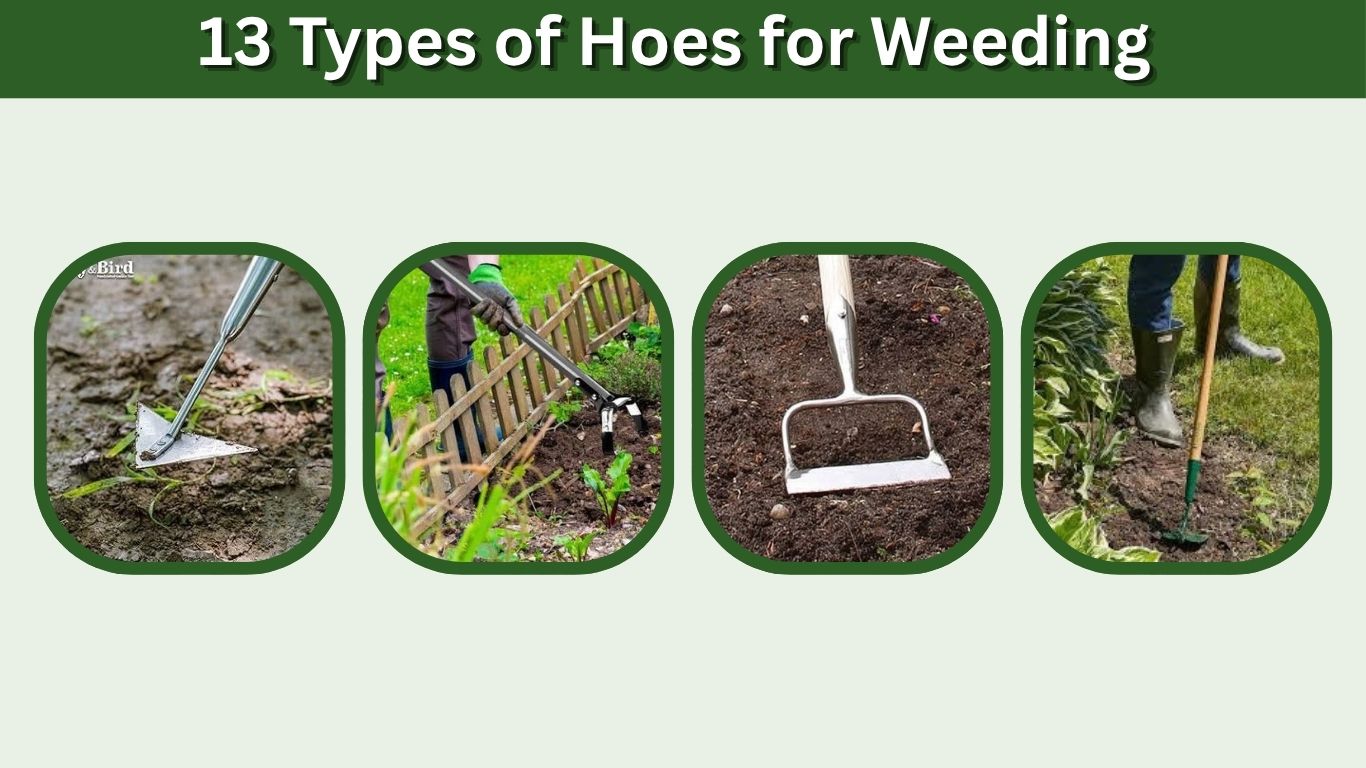
13 Types of Hoes for Weeding: A Complete Guide
Weeding is one of those garden chores that never really ends, but the right hoe can turn it from a backbreaking task into a quick, almost satisfying job. Not every hoe works the same way, though. Some are built to slice weeds just below the soil surface, others to chop through tough roots, and a few are designed for tight spaces between rows of vegetables. Knowing which type suits your garden, your soil, and your back can save you hours of unnecessary effort.
This guide walks through 13 types of hoes for weeding, what each one does best, and how to use it effectively.
1. Draw Hoe
What It Is
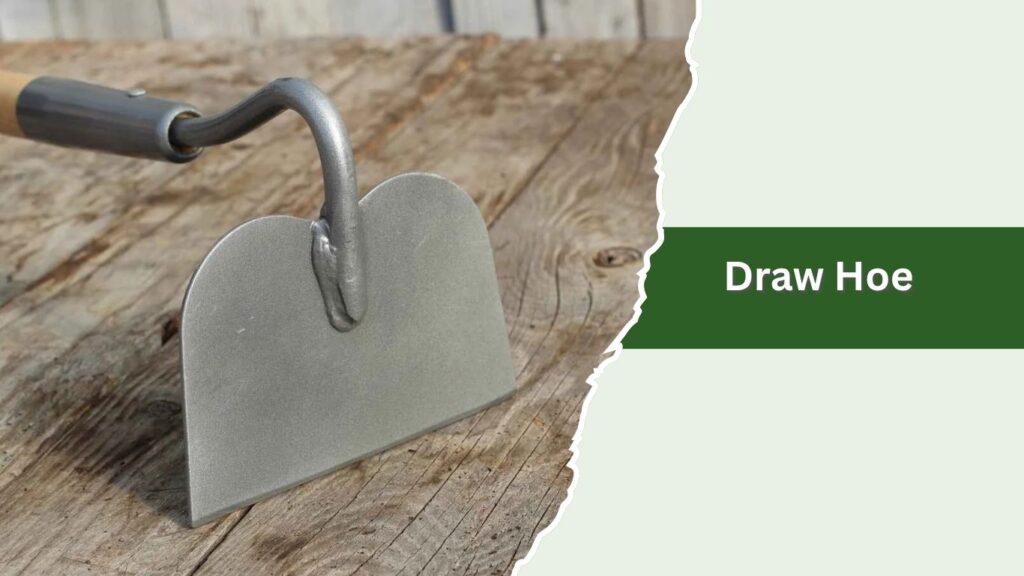
The draw hoe is the classic garden hoe most people picture when they hear the word “hoe.” It has a flat, rectangular blade set at an angle to a long handle, designed to be pulled toward the user rather than pushed.
Best For
Draw hoes work well for chopping weeds, breaking up compacted soil, and forming furrows or mounds for planting. They’re a strong all-purpose choice for general garden maintenance, especially in vegetable beds where the soil needs occasional turning.
Pros and Cons
- Pro: Versatile enough for weeding, mounding, and light digging
- Pro: Widely available and inexpensive
- Con: Chopping motion can disturb plant roots if used carelessly
- Con: Heavier and more tiring for long weeding sessions than lighter hoe styles
How to Use It Effectively
Swing the blade downward and slightly toward yourself in short, controlled strokes, letting the weight of the head do most of the work. Keep strokes shallow when weeding near crops to avoid slicing into nearby roots.
2. Dutch Hoe (Push Hoe)
What It Is
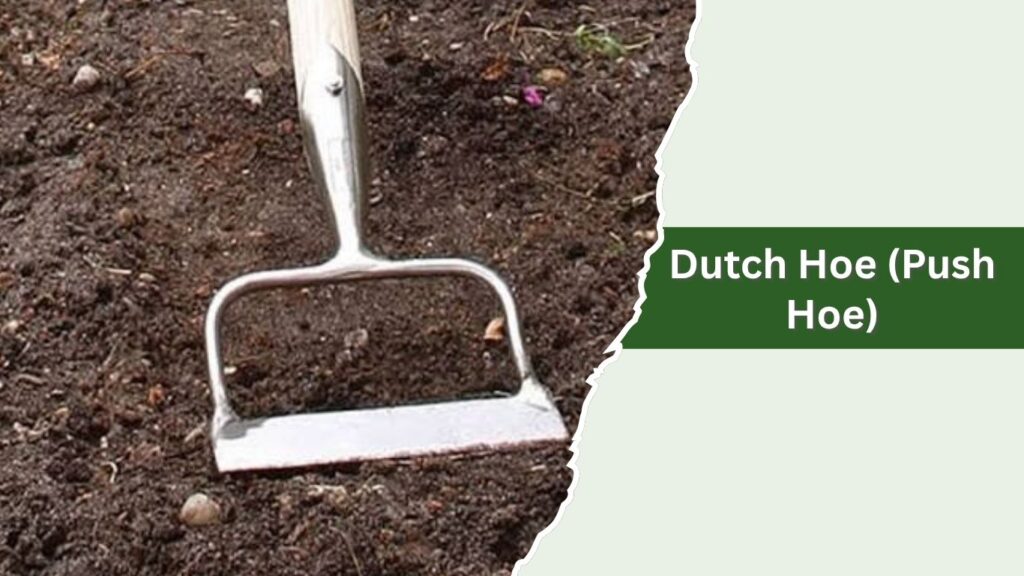
The Dutch hoe has a flat blade attached in line with the handle, allowing it to be pushed forward through the soil rather than pulled. It’s sometimes called a push hoe for this reason.
Best For
This hoe excels at shallow, fast weeding across open ground, particularly for young weeds that haven’t developed deep roots. It’s a favorite for maintaining large vegetable beds efficiently.
Pros and Cons
- Pro: Fast for covering large areas of bare soil
- Pro: Comfortable, upright working posture reduces back strain
- Con: Less effective on established or deep-rooted weeds
- Con: Needs a flat, obstacle-free surface to work smoothly
How to Use It Effectively
Hold the hoe at a low angle and push it just beneath the soil surface in a smooth, sweeping motion, severing weed stems from their roots as you go. Working on a dry day makes cut weeds easier to clear away afterward.
3. Stirrup Hoe (Hula Hoe)
What It Is
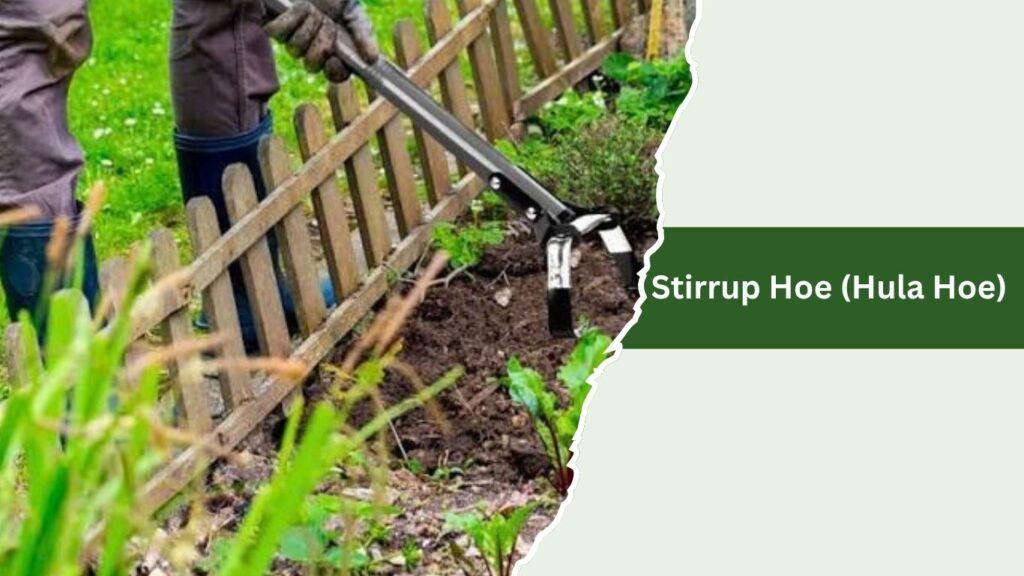
Also known as a hula hoe or scuffle hoe, this tool has a stirrup-shaped, double-edged blade that pivots slightly on the handle, cutting on both the push and pull strokes.
Best For
Stirrup hoes are ideal for quickly clearing shallow-rooted weeds in loose or sandy soil, and they’re especially popular among gardeners maintaining large beds who want to move fast without switching tools.
Pros and Cons
- Pro: Cuts on both forward and backward strokes for efficiency
- Pro: Lightweight design reduces fatigue during long sessions
- Con: Struggles with compacted soil or thick, woody weeds
- Con: Blade can dull faster than heavier hoe styles
How to Use It Effectively
Glide the blade just under the soil surface in a smooth back-and-forth motion, keeping the tool nearly parallel to the ground. This shallow angle is what lets it slice weed roots without digging too deep.
4. Collinear Hoe
What It Is
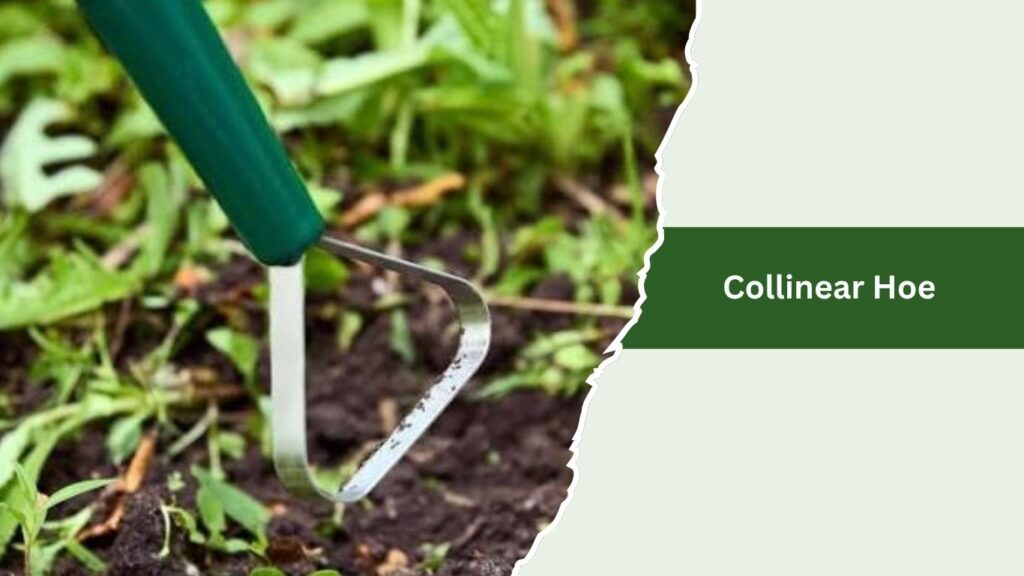
Developed by farmer Eliot Coleman, the collinear hoe has a thin, razor-like blade set at an angle that keeps the cutting edge aligned with the direction of the stroke, hence the name “collinear.”
Best For
This hoe is best suited for precise, shallow weeding around closely spaced seedlings and young vegetable rows, where accuracy matters more than raw power.
Pros and Cons
- Pro: Excellent precision for weeding near delicate plants
- Pro: Thin blade requires minimal effort to cut through soil
- Con: Not designed for tough, established weeds or hard soil
- Con: Narrow blade means slower coverage of large areas
How to Use It Effectively
Stand upright and use a light, sweeping motion just below the soil surface, similar to sweeping a floor. The goal is to sever weed stems without disturbing the surrounding soil or nearby crop roots.
5. Warren Hoe
What It Is
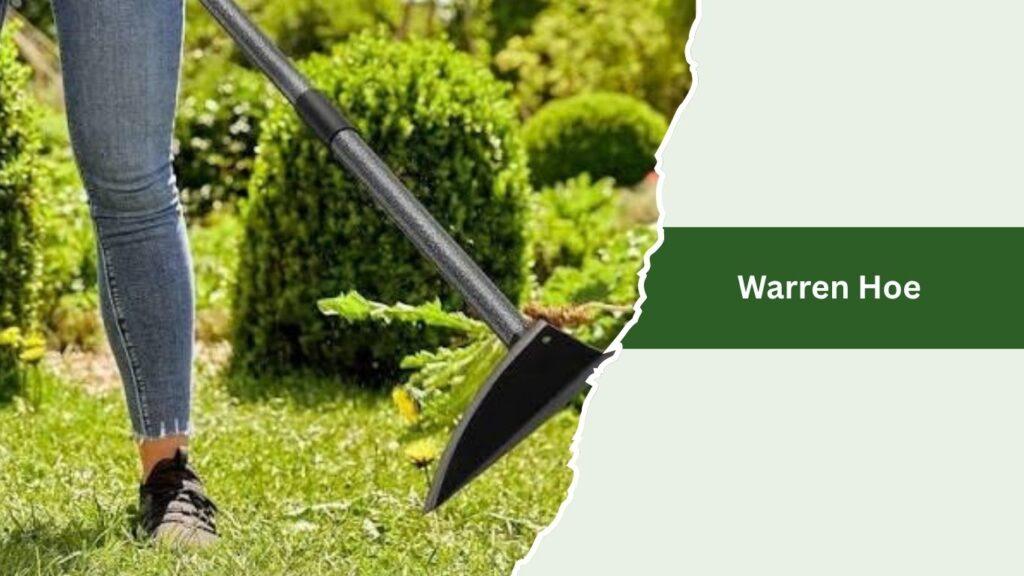
The Warren hoe features a distinctive heart- or arrow-shaped blade, pointed at the tip, that can both dig furrows and chop weeds depending on how it’s angled.
Best For
It works well for creating seed furrows, cultivating between rows, and tackling weeds in tighter spaces where a pointed tip offers more control than a flat blade.
Pros and Cons
- Pro: Pointed tip allows precise furrowing and detail work
- Pro: Doubles as both a planting and weeding tool
- Con: Less efficient for clearing wide, open areas quickly
- Con: Takes some practice to master the angled cutting motion
How to Use It Effectively
Use the pointed edge to draw furrows for seeds, then flip to a chopping motion with the flat sides to slice through weeds growing between rows.
6. Onion Hoe
What It Is
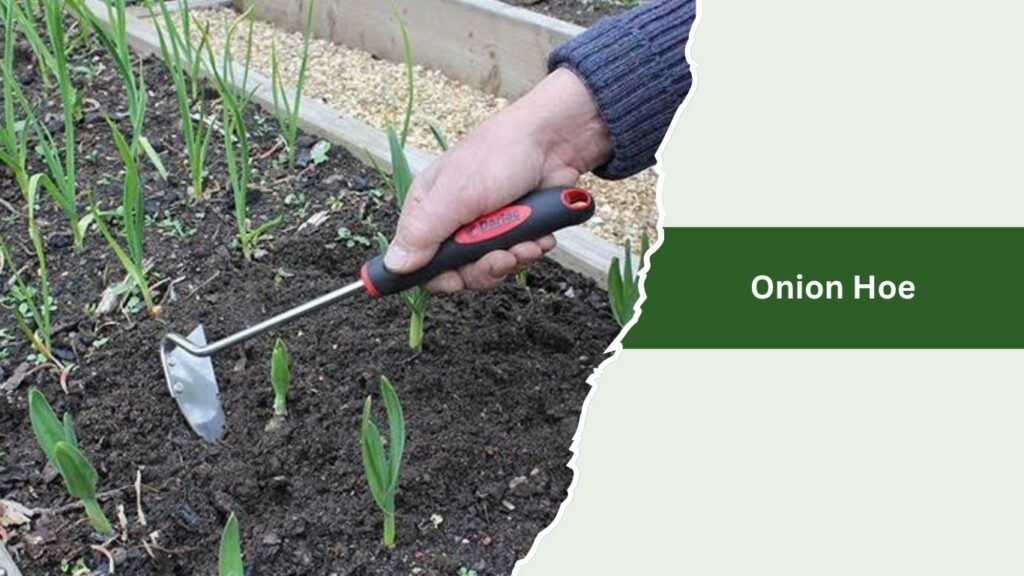
The onion hoe is a small, short-handled hoe with a compact blade, originally designed for weeding tightly spaced onion rows without damaging the bulbs.
Best For
It’s ideal for close, detailed weeding around small or delicate plants like onions, garlic, carrots, and lettuce, where a full-sized hoe would be too clumsy.
Pros and Cons
- Pro: Compact size allows precise work in tight spaces
- Pro: Short handle gives better control for detail weeding
- Con: Requires kneeling or bending, which can strain the back
- Con: Not practical for weeding large garden areas
How to Use It Effectively
Kneel or crouch close to the row and make short, shallow chopping or scraping motions around each plant, staying close to the soil surface to avoid nicking bulbs or roots.
7. Winged Weeder
What It Is
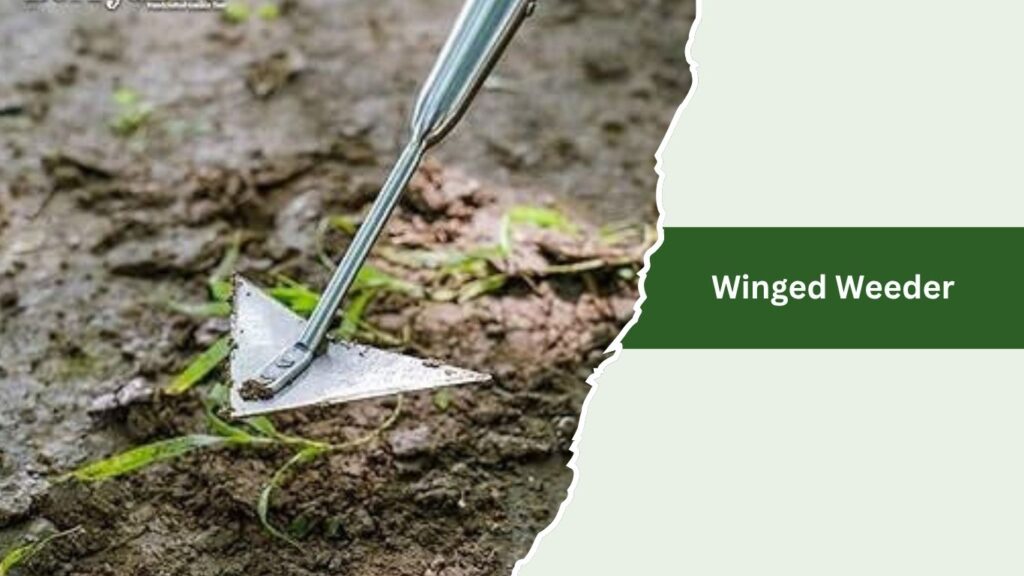
The winged weeder has a distinctive arrow-shaped blade with two “wings” that cut on both sides, allowing it to be pushed and pulled through soil in either direction.
Best For
This tool is well suited for fast, shallow cultivation across open beds and works especially well in loose, well-worked garden soil.
Pros and Cons
- Pro: Cuts efficiently in both directions to save time
- Pro: Lightweight and easy to maneuver around plants
- Con: Less effective in heavy clay or compacted soil
- Con: Blade shape can be harder to sharpen than a flat edge
How to Use It Effectively
Push and pull the blade in a steady sawing motion just under the soil surface, letting the winged edges slice through weed roots on every pass.
8. Diamond Hoe
What It Is
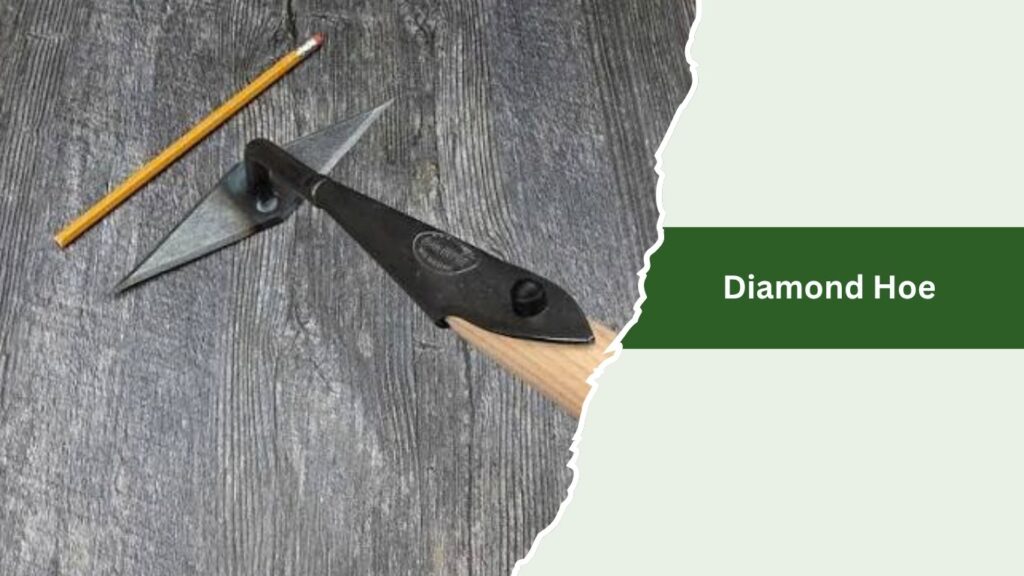
The diamond hoe has a small, diamond-shaped blade attached at an angle, offering a pointed tip on one end and angled edges on the sides.
Best For
It’s particularly useful for weeding in tight corners, along garden edges, and between closely spaced plants where a wider blade wouldn’t fit.
Pros and Cons
- Pro: Pointed shape reaches into corners and narrow gaps
- Pro: Multi-directional cutting edges add versatility
- Con: Smaller blade means more passes needed for large areas
- Con: Can be less stable in very loose or sandy soil
How to Use It Effectively
Angle the point into tight spaces and use short push-pull strokes, letting the diamond shape cut on the sides as well as the tip for detailed edging work.
9. Grub Hoe (Mattock)
What It Is
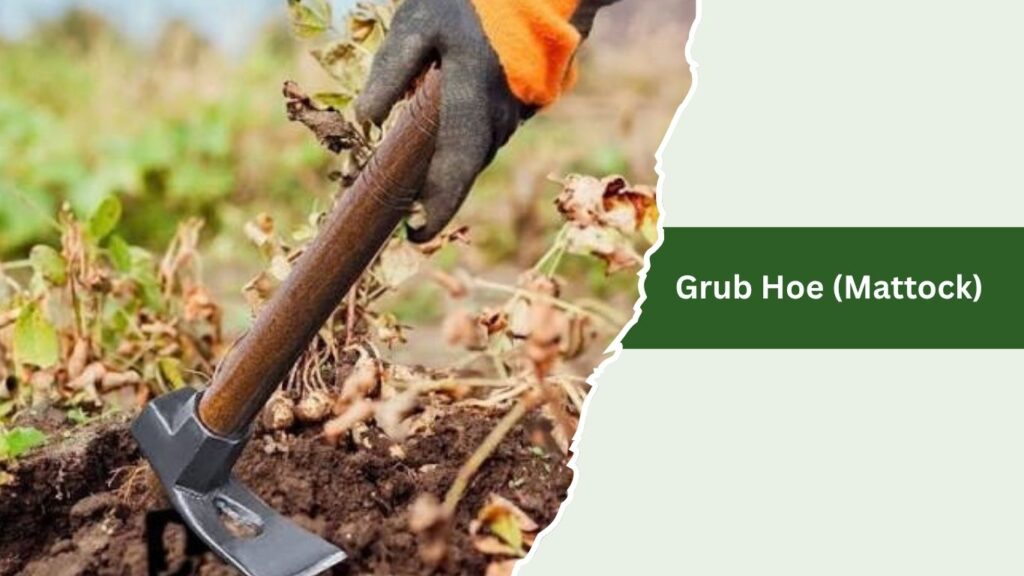
The grub hoe, often called a mattock, has a heavy, thick blade designed for chopping through tough soil, roots, and even small rocks rather than fine surface weeding.
Best For
This is the tool to reach for when clearing new ground, digging out established weeds with deep roots, or breaking up hard, compacted, or rocky soil.
Pros and Cons
- Pro: Powerful enough to remove deep-rooted weeds and small roots
- Pro: Doubles as a digging tool for tough ground
- Con: Heavy and tiring for extended use
- Con: Too aggressive for delicate weeding around seedlings
How to Use It Effectively
Swing the blade down with control, using the weight of the tool to chop through roots and compacted soil, then use the hoe’s edge to pry out stubborn root systems.
10. Swan Neck Hoe
What It Is
The swan neck hoe gets its name from the curved, gooseneck-shaped junction between the blade and handle, which improves cutting angle and reduces strain compared to straight-necked hoes.
Best For
It’s a strong general-purpose choice for chopping and shallow cultivation, and the curved neck makes it more comfortable for longer weeding sessions.
Pros and Cons
- Pro: Curved neck reduces wrist and back strain over time
- Pro: Good balance between cutting power and control
- Con: Bulkier than lightweight scuffle or collinear hoes
- Con: Less precise for detail work around small plants
How to Use It Effectively
Use a rhythmic chopping motion, letting the curved neck naturally guide the blade at an efficient angle into the soil without excessive wrist bending.
11. Wheel Hoe
What It Is
A wheel hoe is a larger, wheel-mounted tool with interchangeable blades, pushed like a small cart to cultivate and weed long rows quickly.
Best For
It’s best suited for large vegetable gardens or small farm plots where speed matters and rows are long enough to justify the extra equipment.
Pros and Cons
- Pro: Covers long rows far faster than a hand hoe
- Pro: Interchangeable attachments add versatility for different soil tasks
- Con: Expensive compared to standard hand hoes
- Con: Bulky to store and less practical for small or raised beds
How to Use It Effectively
Walk at a steady pace while pushing the wheel hoe along the row, keeping the blade at a consistent shallow depth to sever weeds without over-tilling the soil.
12. Torpedo Hoe
What It Is
The torpedo hoe has a narrow, pointed, torpedo-shaped blade that cuts on both the push and pull strokes, similar in concept to a stirrup hoe but with a more tapered profile.
Best For
This hoe is well suited for weeding in raised beds, container gardens, and tight rows where a narrower blade offers better access than wider hoe designs.
Pros and Cons
- Pro: Narrow shape fits easily between closely planted rows
- Pro: Cuts efficiently in both directions
- Con: Limited digging or furrowing capability
- Con: Not ideal for large open areas due to its narrow width
How to Use It Effectively
Use short, controlled back-and-forth strokes just beneath the soil surface, guiding the narrow blade carefully around plant bases to avoid root damage.
13. Eye Hoe (Adze-Eye Hoe)
What It Is
The eye hoe, sometimes called an adze-eye hoe, has a heavy, angled blade attached through an “eye” socket rather than a shaft collar, giving it extra durability for heavy-duty work.
Best For
It’s commonly used for breaking new ground, deep weeding of tough or woody weeds, and general soil cultivation in gardens with dense or clay-heavy soil.
Pros and Cons
- Pro: Sturdy eye construction withstands heavy, repeated use
- Pro: Effective on tough soil and well-established weeds
- Con: Heavier weight makes it tiring for prolonged sessions
- Con: Overkill for light, routine surface weeding
How to Use It Effectively
Swing with a controlled chopping motion, letting the blade’s angle and weight do the work of breaking up soil and cutting through deep roots in a single pass.
Choosing the Right Hoe for Your Garden
The best hoe for weeding depends less on brand and more on matching the tool to the job. Lightweight options like the collinear, stirrup, and torpedo hoes suit gardeners doing frequent, shallow weeding around delicate plants. Heavier tools like the grub hoe and eye hoe are better reserved for clearing new ground or fighting deep-rooted, established weeds. For large-scale rows, a wheel hoe saves time, while compact tools like the onion and diamond hoe handle the tight spots a full-sized hoe can’t reach.
Most gardeners end up keeping two or three types on hand — one for fast, everyday weeding and one or two for heavier, occasional tasks — rather than relying on a single all-purpose tool.

- 10 Best Garden Hose For Hose End Sprinklers 2026 - October 25, 2026
- 10 Best Garden Hose For Smart Irrigation Controllers 2026 - October 25, 2026
- 10 Best Garden Hose For Automatic Watering Systems 2026 - October 25, 2026