10 Best Garden Pump Sprayer For Nursery 2026
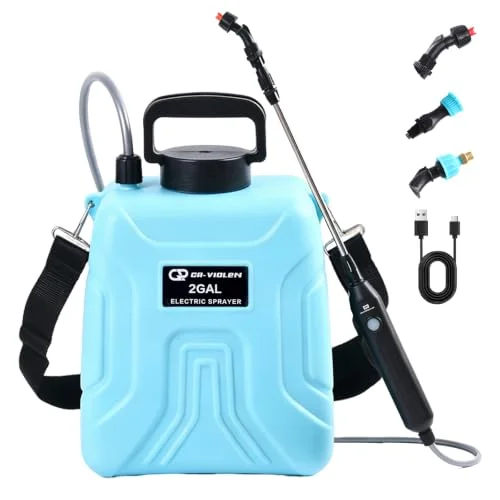
Shopping for best garden pump sprayer for nursery gets messy because the listings rarely compete on one clean spec. In this set, 2 Gallon Electric Sprayer Battery Powered 3 leans on 【Long-Lasting Battery & Powerful Motor】 Boasting a 2500mAh battery and powerful motor, it sprays continuously 2-2.
This review contrasts handheld misters with larger backpack units. I highlight key differences in battery runtime, wand reach, and spray patterns to help you choose between spot-treatment precision and broad-coverage efficiency for your specific nursery layout and plant types.
⚡ Quick Verdict
List of Best Garden Pump Sprayer For Nursery
| Image | Product | Score | Link |
|---|---|---|---|
 |
2 Gallon Electric Sprayer Battery Powered 3 Nozzles Wand Var 🏆 Editor’s Pick |
9.1/10 |
View on Amazon Free Shipping & 30-Day Returns |
 |
KIMO 4.3 Gal Battery Powered Backpack Sprayer 2x20V 2.0Ah Ba 🥈 Runner-Up |
8.7/10 |
View on Amazon Free Shipping & 30-Day Returns |
 |
Kwazar Neptune 15L Commercial Backpack Pump Sprayer w/Gauge 👑 Premium Pick |
8.4/10 |
View on Amazon Free Shipping & 30-Day Returns |
 |
Battery Powered Backpack Sprayer 5.2 Gallon, Compatible with | 7.8/10 |
View on Amazon Free Shipping & 30-Day Returns |
 |
2L Handheld Garden Pump Sprayer with Adjustable Nozzle,Blue | 7.5/10 |
View on Amazon Free Shipping & 30-Day Returns |
 |
Smith Performance Sprayers 48 oz. Industrial and Contractor 🥈 Runner-Up |
7.3/10 |
View on Amazon Free Shipping & 30-Day Returns |
 |
FarmTek Lightweight Hand Pump Sprayer | 7.0/10 |
View on Amazon Free Shipping & 30-Day Returns |
 |
Smith Performance Sprayers 48 oz. Industrial and Contractor | 6.6/10 |
View on Amazon Free Shipping & 30-Day Returns |
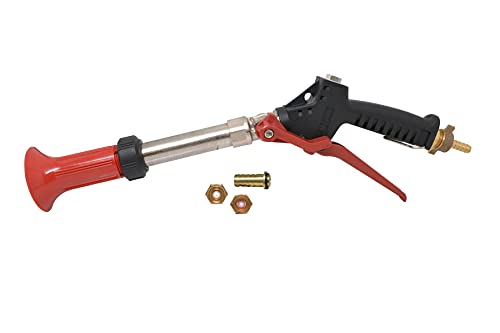 |
Valley Industries Adjustable Flash Spray Gun – Up to 5.5GPM, | 6.4/10 |
View on Amazon Free Shipping & 30-Day Returns |
📋 How We Evaluated
Evaluation weighed build quality, spray performance, and day-to-day value for nursery work. Amazon rating signals were unavailable, so feature lists and stated durability claims carried more weight. Suitability covered tank size, nozzle control, reach, and comfort for bench, lawn, and greenhouse tasks.
Detailed Reviews
2 Gallon Electric Sprayer Battery Powered 3 Nozzles Wand Var🏆 Editor’s Pick
| Tank Capacity | 2 gallons |
| Battery | 2500mAh USB rechargeable |
| Runtime | 2-2.5 hours per charge |
| Wand And Nozzles | 31-inch wand, 3 nozzles, 5 modes |
What We Found
This two-gallon electric sprayer targets nursery aisles without a heavy load. The 2500mAh pack runs about two to two and a half hours per charge. A sealed handle and spray lock reduce hand strain. Three nozzles cover five patterns, including a soft mist for young plants.
The fan and shower heads handle broader leaf canopies. A 31-inch wand reaches high benches. HDPE and ABS resist common garden chemicals. The 2.8-inch mouth and filter speed filling and cut clogs. A dip tube limits leftover mix at the tank bottom.
At 2.5 pounds empty, the strap spreads weight across the shoulder. Factory leak and battery tests plus a one-year warranty support daily use.
💬 My Take
This is the most nursery-ready electric option in the set. Light weight and a true soft mist outweigh the modest tank.
Who It’s For
This sprayer suits propagation teams that mist plugs, liners, and bench crops for hours. The light body helps staff move between tight tables without a cart. Soft mist protects tender leaves better than a hard jet. Herbicide, pesticide, and nutrient mixes fit the stated material list.
Home nurseries with medium yards also gain from the USB charge and lock trigger. It is less ideal when one fill must cover several acres. Crews that already own tool batteries may prefer a platform pack instead.
✅ Pros
- Soft mist mode treats delicate nursery plants without a blasting jet.
- The spray lock and 2.5-pound body ease long bench sessions.
- A wide mouth, filter, and dip tube simplify mixing and cleanup.
❌ Cons
- Two gallons still means refills on a large production floor.
- No published Amazon rating leaves real-world durability unproven.
- USB charging may be slower than a swappable tool battery.
KIMO 4.3 Gal Battery Powered Backpack Sprayer 2x20V 2.0Ah Ba🥈 Runner-Up
| Tank Capacity | 4.3 gallons |
| Pressure | 0-73 PSI stepless |
| Batteries | Two 20V 2.0Ah packs |
| Wand And Nozzles | 35-inch telescopic wand, 6 nozzles |
What We Found
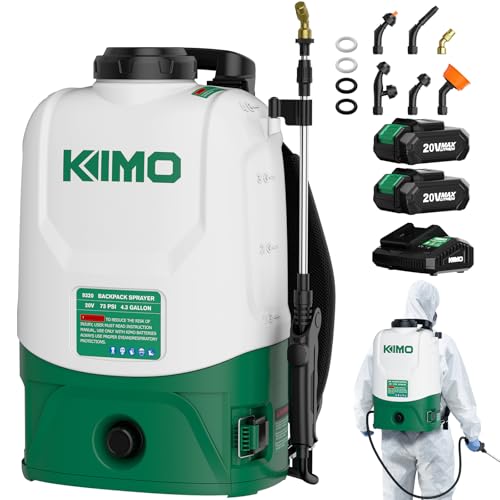
The KIMO backpack brings a 4.3-gallon tank to longer nursery runs. Clear markings show volume without lifting the pack. Two 20V 2000mAh batteries and a fast charger support swap-and-go work. Claimed runtime is four to six hours, or about ten tanks per full charge cycle across both packs.
A sealed battery bay suits damp houses. Six nozzles cover fan, jet, and cone patterns. Pressure adjusts from zero to 73 PSI on a rotary knob. That range can stay gentle or push into dense canopy. A 35-inch telescopic wand reaches tall stock. Padded straps help on long walks.
Stepless control is the feature that matters most on mixed plant sizes.
💬 My Take
Choose this when coverage time matters more than minimum weight. Dial pressure down and it covers most nursery jobs well.
Who It’s For
This pack fits nurseries that spray multiple houses in one shift. Dual batteries cut downtime when a charger sits in the headhouse. Stepless pressure lets one tool mist plugs, then rise for shrubs. Six tips cover benches, paths, and leaf undersides.
The 4.3-gallon load is heavier than a two-gallon unit, so shorter staff may feel it. Waterproofing helps in wet aisles. It is a strong main sprayer when area, not ultra-fine seedling care, drives the day.
✅ Pros
- Two batteries and a sub-hour charger keep long spray days moving.
- Stepless pressure and six nozzles match mixed nursery crops.
- A large marked tank reduces guesswork and refill stops.
❌ Cons
- A full 4.3-gallon load can fatigue smaller operators.
- 73 PSI is easy to overdo on soft seedlings.
- No customer rating data is available to confirm pump life.
Kwazar Neptune 15L Commercial Backpack Pump Sprayer w/Gauge👑 Premium Pick
| Capacity | 15 liters |
| Lance | Fiberglass, 24 to 47 inches |
| Tank Warranty | 5 years |
| Included Extra | Herbicide shield and pressure gauge |
What We Found
The Kwazar Neptune is a 15-liter commercial backpack pump sprayer with a pressure gauge. The fiberglass lance extends from 24 to 47 inches for tall stock and wide benches. A visible fluid strip shows level during the route. The ergonomic harness targets long wear.
An herbicide shield comes in the box for directed sprays. The tank carries a five-year guarantee, which is the strongest durability claim in this group. Pumping is manual, so there is no battery runtime. Fifteen liters is heavy when full, near four gallons.
Commercial parts and the gauge help repeatable output. It favors crews that accept pumping in exchange for a serviceable tank.
💬 My Take
The Neptune is the durability pick for crews who will pump. Electric models still win on speed for daily nursery misting.
Who It’s For
This sprayer suits commercial nurseries that want a repairable pump rig. The long lance clears high grafts and deep beds. The shield helps keep herbicide off wanted plants along paths. A gauge supports consistent pressure from user to user.
Manual pumping will slow a large crew compared with the KIMO or the two-gallon electric. Weight is real at a full 15 liters. It earns a place where warranty length and parts matter more than push-button spray.
✅ Pros
- Five-year tank guarantee stands out for commercial duty.
- Long lance and shield support precise, tall-plant work.
- Gauge and fluid strip improve control during a route.
❌ Cons
- Manual pumping adds fatigue versus battery backpacks.
- A full 15-liter load is heavy in narrow aisles.
- No battery option limits speed on big spray days.
Battery Powered Backpack Sprayer 5.2 Gallon, Compatible with
| Tank Capacity | 5.2 gallons (20 L) |
| Pressure | 0-100 PSI variable |
| Battery Platform | Milwaukee 18V compatible |
| Nozzles | 4 interchangeable nozzles |
What We Found
This 5.2-gallon backpack targets big nursery and lawn jobs with up to 100 PSI. Four nozzles change the pattern for plants, weeds, and cleaning. A telescopic gun and continuous trigger reach awkward spots without a cramped hand. The wide mouth and filter ease filling and reduce clogs.
A thickened tank, waist support, and accessory pocket aim at all-day carry. The title cites an included 18V battery, while a feature line says the battery is not included. A separate line claims a 4Ah pack can spray three to four hours.
Confirm the box contents before counting on all-day power. High pressure needs a careful hand around seedlings.
💬 My Take
Strong capacity if the battery question is settled first. Otherwise the spec sheet creates more risk than confidence.
Who It’s For
This backpack fits crews that already run Milwaukee 18V tools and spray large outdoor nursery blocks. Waist support helps when the 5.2-gallon tank is full. Continuous trigger and a long gun speed weeding and cleanup between houses. Indoor plug work needs the lowest pressure and a soft pattern.
Battery confusion is a real buying risk. Confirm inclusion and amp-hour size before purchase. Owners without that battery platform should price a pack first.
✅ Pros
- Large tank and 100 PSI cover big outdoor nursery jobs.
- Waist support and a continuous trigger improve long sessions.
- Filter and wide mouth simplify filling and reduce clogs.
❌ Cons
- Listing text conflicts on whether a battery is included.
- 100 PSI can be too aggressive for young plants.
- Platform lock-in adds cost if no Milwaukee pack is owned.
2L Handheld Garden Pump Sprayer with Adjustable Nozzle,Blue
| Capacity | 2 liters |
| Nozzle | Adjustable mist to water column |
| Body | PP and PE with level scale |
| Handle | Anti-slip with auto spray knob |
What We Found
This 2-liter handheld pump sprayer is built for close plant work. One nozzle turns from mist to a water column, so seedlings and mature plants share one bottle. The body uses PP and PE and includes a water-level scale. An anti-slip handle steadies the grip while pumping.
An automatic spray knob holds output steady. The metal rod and blue body stay compact for balcony, office, and hotel plants as well as nursery trays. Fill, pump, and spray is the whole routine. There is no backpack, battery, or long hose.
Two liters disappear quickly on anything beyond a few benches. It excels at bonsai, ferns, and tray edges.
💬 My Take
A handy tray tool with the right spray range for small plants. Do not ask a 2-liter bottle to run the nursery.
Who It’s For
This bottle fits hobby growers, bonsai keepers, and nursery staff doing final touch-ups. The mist mode is gentle on ferns and new leaves. A water column helps wet tray edges and lawn borders. The scale prevents surprise empty moments mid-row. It will not carry a greenhouse through a spray day.
Commercial crews should treat it as a personal tool, not the house sprayer. Low bulk also helps retail nursery counters where a backpack is awkward.
✅ Pros
- One nozzle covers mist and a direct water column.
- Clear scale and anti-slip grip aid short watering rounds.
- Compact size suits trays, bonsai, and retail counters.
❌ Cons
- Two liters force frequent refills in any real nursery.
- Manual pressure is tiring across many benches.
- No hose or wand limits overhead and deep-bed reach.
Smith Performance Sprayers 48 oz. Industrial and Contractor 🥈 Runner-Up
| Capacity | 48 oz (1.5 L) |
| Pressure | Up to 25 PSI |
| Nozzle | Brass, stream to fine spray |
| Pump | Compression pump in the handle |
What We Found
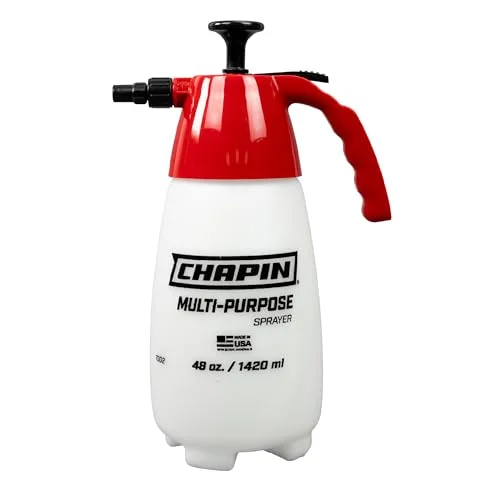
The Smith 48-ounce mister is a compact industrial handheld, not a backpack. A 1.5-liter tank favors tight coverage and spot work. The handle hides a compression pump rated to 25 PSI. That pressure is enough for a controlled stream or fine spray through the brass nozzle.
A weighted dip tube keeps flow going at odd angles around pots. A pressure release valve vents the tank before the pump comes off. The white body stays easy to spot on a bench. There is no shoulder strap and no long wand.
Coverage stays local, so large blocks take many refills. Build quality targets contractors who need a precise mister.
💬 My Take
Keep this mister for precise spots, not whole-house coverage. The brass tip is the real strength.
Who It’s For
This mister fits growers who treat single benches, sample plants, or pest hotspots. The small tank is easy to carry between greenhouses. Brass adjustment helps match a fine film on foliage or a short stream into a pot. Angled spraying helps under leaves and along tray edges.
It is a poor main tool for full nursery rows. Staff will refill often during fertilizer rounds. Keep it as a backup or for careful spot work beside a larger sprayer.
✅ Pros
- Brass nozzle shifts from stream to fine spray with simple adjustment.
- Weighted dip tube supports spraying at awkward pot angles.
- Pressure release valve adds a safer opening step.
❌ Cons
- A 48-ounce tank demands constant refills in a working nursery.
- No wand or strap limits reach and comfort.
- Manual pumping slows crews during long treatment days.
FarmTek Lightweight Hand Pump Sprayer
| Empty Weight | 5 lb |
| Hose | 4 feet |
| Wand | 20 inches with adjustable nozzle |
| Tank Material | High-impact polyethylene |
What We Found
The FarmTek hand pump sprayer stays light at five pounds empty. A strap supports hands-free walking along beds and property lines. A four-foot hose and a 20-inch wand with an adjustable nozzle reach low beds and overhead leaves. The tank uses high-impact polyethylene.
No metal or rubber internal parts touch the chemical, which helps with fertilizers and treatments. The design aims at precise liquid placement rather than raw pressure. Exact gallon capacity is not stated in the listing. Assembly looks simple for small farms and orchards. Manual pumping remains part of every session.
It fills a middle role between a bottle mister and a powered backpack.
💬 My Take
A sensible manual pick when the block stays small. Missing capacity data keeps it from a higher score.
Who It’s For
This sprayer suits small nurseries, home propagators, and orchard edges where power is optional. The strap and hose let one person treat rows while walking. Chemical-safe internals make sense for nutrient drenches and light pest mixes. The short wand still reaches many bench heights.
Unknown tank size is a planning problem for commercial schedules. Users who hate pumping should pick a battery model. It works best on modest blocks where weight matters more than speed.
✅ Pros
- Five-pound empty weight and a strap limit shoulder fatigue.
- Hose and wand combo reaches beds and overhead foliage.
- Chemical contact stays off metal and rubber internals.
❌ Cons
- Tank capacity is not listed, so planning is guesswork.
- Hand pumping slows larger nursery routes.
- No pressure rating makes output hard to compare.
Smith Performance Sprayers 48 oz. Industrial and Contractor
| Pack Count | 4 handheld misters |
| Capacity Each | 48 oz (1.5 L) |
| Pressure Each | Up to 25 PSI |
| Dip Tube | Weighted, multi-angle spray |
What We Found
This listing is four Smith 48-ounce handheld misters sold together. Each unit holds 1.5 liters and uses a handle-mounted pump rated to 25 PSI. A weighted dip tube allows angled spraying around containers. A pressure release valve vents pressure before pump removal.
The per-pack note means specs describe one mister, not a combined tank. Brass nozzle detail appears on the single listing but is absent here, so tip metal is less clear. Four units can station one mister per greenhouse zone. They do not add reach, straps, or battery power.
Storage and chemical labeling become part of the setup. The pack raises cost if only one operator works.
💬 My Take
Useful as a station kit, wasteful as a solo purchase. Capacity limits never go away just because the box holds four.
Who It’s For
Buy the four-pack only when several people spray at once. A nursery with separate misting stations can park one bottle per house. Spot treatments, sanitation touches, and trial mixes stay isolated that way. A solo grower gains little beyond spare units. Each bottle still holds just 48 ounces.
Training staff on the release valve matters before opening a pressurized handle. Pair the set with a backpack sprayer for real row work.
✅ Pros
- Four misters can cover separate houses without shared residue.
- Each unit stays light for quick spot passes.
- Release valves support safer depressurizing before opening.
❌ Cons
- Buying four small tanks does not replace one large sprayer.
- Nozzle material is less clearly specified than on the single unit.
- Manual pumps remain slow for full nursery schedules.
Valley Industries Adjustable Flash Spray Gun – Up to 5.5GPM,
| Max Pressure | 400 PSI |
| Flow Rate | Up to 5.5 GPM |
| Nozzles | 3 interchangeable nozzles |
| Pattern Control | Thumb lever, stream to mist |
What We Found
This Valley unit is a spray gun, not a self-contained garden pump sprayer. It reaches up to 400 PSI and 5.5 gallons per minute. A thumb lever moves output from a steady stream to an atomized mist. Three nozzles support consistent high flow.
A no-drip shutoff sits at the barrel end. The quick grip works with one hand. The maker points it at orchards, vineyards, tall trees, and livestock. That duty cycle is far above plug trays. Nursery buyers still need a separate pump, tank, and hose.
High volume can drown media and knock over small pots. Treat it as an attachment for an existing high-pressure rig.
💬 My Take
Skip this gun unless a high-pressure rig is already in the yard. It solves reach, not everyday bench spraying.
Who It’s For
This gun fits nurseries that already run a pump for tall trees, liners in the field, or wash-down work. One-handed control helps on a tractor or cart. The mist setting can cover canopy when pressure is managed with care. It is a mismatch for indoor benches and seedling trays.
There is no tank, strap, or battery in the box. Buyers shopping for a complete sprayer should look elsewhere. Orchard and livestock crews get more from the flow rate than propagation teams do.
✅ Pros
- High flow and 400 PSI suit trees and open blocks.
- Thumb control moves from stream to mist without a nozzle swap.
- No-drip shutoff limits mess at the end of each pass.
❌ Cons
- It is only a gun and needs a full pumping system.
- Extreme pressure can damage young nursery plants.
- No tank or rating data makes value hard to judge.
What to Look For Before Buying
Nursery spraying fails when pressure, tank size, or chemistry is wrong. Match the tool to plant stage before chasing peak PSI. A seedling house needs mist and light carry. A field block needs volume, reach, and reliable seals.
Check Match Pressure To Plant Stage
Seedlings and liners want a soft mist, not a 100 PSI jet. Look for stepless control or a dedicated mist nozzle. High-flow guns belong on trees and wash-down, not plug trays. Test the lowest setting on a few pots first.
If leaves bruise or media blasts out, the tool is too coarse.
Value Size The Tank To The Route
A two-liter bottle is a touch-up tool. Two gallons suits medium houses and tight aisles. Four to five gallons cuts refills on long outdoor rows. Remember that liquid weight adds about eight pounds per gallon. A lighter incomplete pass often beats a painful full pack.
Rating Read Ratings And Claim Gaps
None of these listings showed Amazon rating data. Treat runtime, PSI, and warranty lines as claims, not proof. Favor brands that publish a tank guarantee or test notes. Watch conflicts, such as a battery that is both included and excluded. Ask recent buyers about leaks before a big order.
Verify Confirm Chemistry, Reach, And Power
Check that tank plastic tolerates the herbicide, pesticide, or fertilizer in use. A filter and wide mouth save time and stop clogs. Measure wand length against the tallest bench. Battery models need a real charger plan. Manual pumps need staff who can keep pressure even all day.
Frequently Asked Questions
What pressure is safe for nursery seedlings?
Most plug and liner work stays in a soft mist range. High settings near 70 to 100 PSI can tear leaves and blow media from cells. Start at the lowest stable pattern and raise pressure only for woody stock.
A dedicated mist nozzle is safer than hoping a jet tip behaves.
Is a backpack or a handheld better in a greenhouse?
Handheld bottles win for single benches, bonsai, and retail touch-ups. Backpacks win when one person covers many tables or outdoor rows. Aisle width and shoulder comfort decide the cutoff. If the tank bumps plants, drop to a smaller pack.
Can one sprayer handle fertilizer and herbicide?
Many of these plastics are rated for both, but residue is the risk. Herbicide left in a fertilizer tank can injure crops. Use separate sprayers or a documented rinse routine. A shield wand helps only during the spray, not after a dirty tank.
How long should a battery sprayer run?
Listed runtimes here span about two hours to six hours. Real time drops with high pressure, thick mixes, and worn packs. Dual batteries or a fast charger matter more than a single big claim. Confirm whether the battery is actually in the box.
What wand length helps on nursery benches?
A 20-inch wand covers many low trays. Benches and tall liners benefit from 30 inches or more. The Neptune lance reaches 47 inches for high stock. Extra length needs a stable tip so the spray stays on the plant.
🎯 Final Verdict
The two-gallon electric sprayer is the top pick for nursery work. A soft mist nozzle, light 2.5-pound body, and spray lock fit tender plants and long bench shifts. The 31-inch wand and filter address everyday reach and clog issues.
The KIMO 4.3-gallon backpack is the alternative when rows are long and two batteries can rotate. Its stepless pressure covers more ground if the load stays comfortable. Skip the bare spray gun unless a pump system already exists.
Check current price, battery contents, and return terms, then match tank size to the route before ordering.

- 10 Best Abrasion Resistant Garden Hose 2026 - October 20, 2026
- 10 Best Garden Hose For Gravel Driveways 2026 - October 20, 2026
- 10 Best Cordless Garden Pump Sprayer 2026 - October 20, 2026