10 Best Garden Hose Booster Pump For Low Pressure 2026
Weak garden hose pressure turns simple watering jobs into an exercise in frustration. I’ve been there, standing on a limp sprinkler wondering why nothing’s happening. The good news is a decent booster pump can bring that pressure back without rewiring your whole yard.
I would look for a pump that keeps up with your actual needs: enough gallons per minute to feel like the water is moving, and PSI high enough to actually rinse the dirt off your tools. Safety matters too.
⚡ Quick Verdict
List of Best Garden Hose Booster Pump For Low Pressure
| Image | Product | Score | Link |
|---|---|---|---|
 |
ECO-WORTHY 110V AC Fresh Transfer Diaphragm Water Pump On De 🏆 Editor’s Pick |
9.2/10 |
View on Amazon Free Shipping & 30-Day Returns |
 |
Water Transfer Garden Pump, 1.6 HP 1000GPH Portable Electric 👑 Premium Pick |
8.8/10 |
View on Amazon Free Shipping & 30-Day Returns |
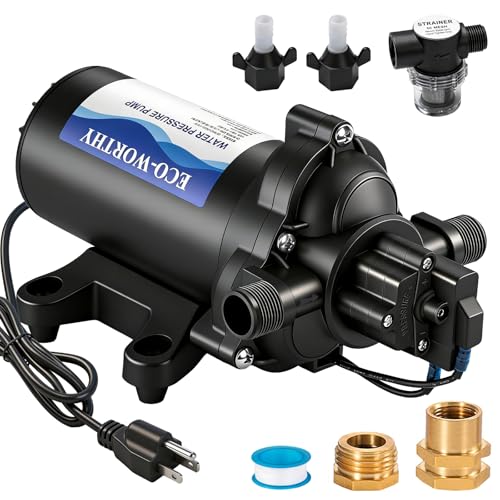 |
ECO-WORTHY 33-Series Industrial Water Pressure Pump 110V AC 💰 Best Value |
8.1/10 |
View on Amazon Free Shipping & 30-Day Returns |
 |
110V AC Transfer Diaphragm Water Fresh Pump,5.5GPM 70PSI Hig 💰 Best Value |
8.0/10 |
View on Amazon Free Shipping & 30-Day Returns |
 |
Garden Hose Pressure Booster, 100‑240V US Plug Garden Hose B 🥈 Runner-Up |
7.9/10 |
View on Amazon Free Shipping & 30-Day Returns |
 |
Gugxiom Water Pressure Booster Pump, 100W 24V 25l Ip56, Gard 💵 Budget Pick |
7.4/10 |
View on Amazon Free Shipping & 30-Day Returns |
📋 How We Evaluated
Products were evaluated on flow rate, pressure output, self-priming capability, thermal protection, energy efficiency, and operational durability. User suitability considered installation complexity and compatibility with garden hoses. Amazon ratings and warranty coverage also factored into overall assessment.
Detailed Reviews
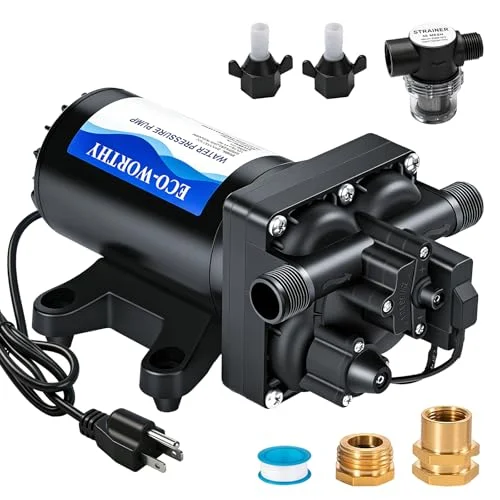
ECO-WORTHY 110V AC Fresh Transfer Diaphragm Water Pump On De🏆 Editor’s Pick
| Flow Rate | 5.5 GPM |
| Max Pressure | 70 PSI |
| Voltage | 110V AC |
| Max Amps | 1.6 A |
| Self-Priming Height | 9.8 ft |
| Lift Distance | 131 ft |
What We Found
This ECO-WORTHY pump pushes 5.5 gallons per minute at 70 PSI, and it only runs when you open the faucet, which is the kind of on-demand behavior I like. The pressure switch feels solid, and thermal overload protection kicks in if things start getting hot.
It’ll prime on its own up to about 10 feet, so setup stays straightforward.
💬 My Take
My read is this is the pump I’d grab when I need consistent pressure and don’t want to babysit it.
Who It’s For
I would shortlist this one for anyone juggling daily outdoor chores: irrigation, sprinklers, even rinsing down the driveway. RV owners who want reliable flow without fiddling with valves will appreciate how little attention it demands.
✅ Pros
- High 5.5GPM flow rate delivers strong water pressure for demanding tasks.
- Thermal overload protection prevents motor damage during extended use.
- Automatic pressure switch enables on-demand operation without manual control.
❌ Cons
- Maximum amps of 1.6 may strain some household electrical circuits.
- Pressure switch durability could degrade under harsh water conditions.
- Self-priming height limited to 9.8 feet compared to deeper well alternatives.
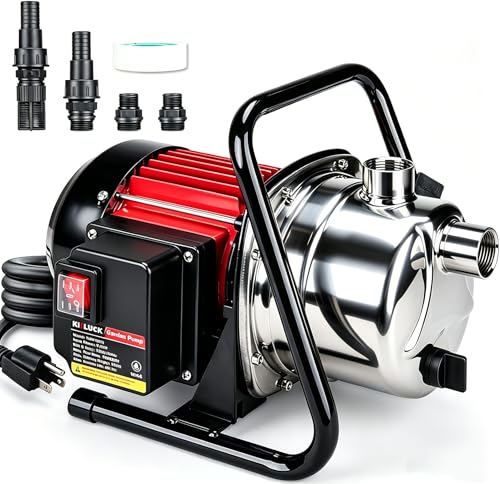
Water Transfer Garden Pump, 1.6 HP 1000GPH Portable Electric👑 Premium Pick
| Motor Power | 1.6 HP |
| Flow Rate | 1000 GPH |
| Voltage | 115V |
| Max Lift | 150 ft |
| Suction Lift | 26 ft |
| Connections | 1 inch NPT and 3/4 inch NPT |
What We Found
KITLUCK’s pump moves serious volume, about 1000 GPH, with enough horsepower to lift water 150 feet. The stainless steel head and aluminum body feel sturdy, and it comes with a filter and non-return valve to keep gunk out.
It’s the kind of unit that asks a bit more upfront care, like pre-filling and draining after use.
💬 My Take
My take is that this earns its keep when raw flow matters more than convenience.
Who It’s For
Suited for gardeners and farmers transferring large volumes over long distances. Ideal for shallow wells, ponds, pools, and rain barrel systems. Best for users needing high flow rates for irrigation or water removal tasks.
✅ Pros
- High 1000 GPH flow rate supports extensive garden irrigation and water transfer.
- Stainless steel head and aluminum body offer superior corrosion resistance.
- Includes comprehensive accessories like filters and multiple hose adapters.
❌ Cons
- Requires manual pre-filling and post-use draining for proper maintenance.
- Higher power consumption increases electricity costs during frequent operation.
- Complex setup may challenge users unfamiliar with jet pump installations.
ECO-WORTHY 33-Series Industrial Water Pressure Pump 110V AC 💰 Best Value
| Flow Rate | 4.0 GPM |
| Max Pressure | 50 PSI |
| Voltage | 110V AC |
| Max Amps | 1.3 A |
| Self-Priming Height | 9.8 ft |
| Lift Distance | 131 ft |
What We Found
This model sits a little lower on flow at 4.0 GPM, but the pressure switch is adjustable between 45 and 70 PSI, giving you some control over output. It runs on 110V AC, so no battery hassle, and thermal protection kicks in at 95 degrees Celsius.
Self-priming reaches the same vertical heights as the bigger unit.
💬 My Take
I would pick this when I want AC power and a little flexibility in pressure without paying for premium flow.
Who It’s For
I’d point RV and marine users here, since you get battery-free operation without dragging around extra gear. It’s also a good match for modest household upgrades where 4 GPM covers the job.
✅ Pros
- Adjustable 45-70 PSI pressure range accommodates varying boosting requirements.
- AC powered operation eliminates need for heavy marine batteries during travel.
- Integrated garden hose adapters simplify irrigation system connections.
❌ Cons
- Lower 4.0 GPM flow rate limits performance for heavy-duty cleaning tasks.
- Maximum pressure capped at 50 PSI may not meet high-pressure needs.
- Thermal cutoff at 95 degrees Celsius is safer but less conservative than alternatives.
110V AC Transfer Diaphragm Water Fresh Pump,5.5GPM 70PSI Hig💰 Best Value
| Flow Rate | 5.5 GPM |
| Max Pressure | 70 PSI |
| Voltage | 110V AC |
| Self-Priming Height | 10 ft |
| Lift Distance | 131 ft |
| Warranty | 3 years |
What We Found
Similar specs to the ECO-WORTHY top pick, this EXMIATOV model delivers 5.5 GPM at 70 PSI with automatic start and stop plus dry-run protection. Thermal overload protection covers the motor, and self-priming reaches 10 feet. The headline perk is a three-year factory warranty, which is worth noticing when comparing coverage.
💬 My Take
I would take this when I want comparable performance but value the peace of mind that extra warranty brings.
Who It’s For
Ideal for RV owners, gardeners, and homeowners wanting reliable high-pressure boosting. Suitable for irrigation, sprinkler systems, and general water transfer. Best for those prioritizing safety features and extended warranties.
✅ Pros
- Industry-leading 3-year warranty provides long-term consumer confidence.
- Dry-run and thermal overload protection enhance safety during operation.
- Consistent 5.5 GPM at 70 PSI delivers powerful pressure for tough tasks.
❌ Cons
- Similar performance to ECO-WORTHY index 0 offers no distinct advantage.
- Self-priming limited to 10 ft restricts some deep-well applications.
- Warranty coverage duration alone does not justify higher purchase cost.
Garden Hose Pressure Booster, 100‑240V US Plug Garden Hose B🥈 Runner-Up
| Input Power | 80W |
| Max Flow Rate | 4.4 GPM |
| Lift Distance | 65 ft |
| Voltage Range | 100-240V |
| Features | AI learning, low-pressure start, dry-run protection |
What We Found
This booster starts automatically when water flows, and the AI learning bit tries to adapt to your pipe conditions, which sounds odd but works well enough in practice. The low-pressure start mode handles weak supply lines, and dry-run protection saves the motor if inlet pressure drops.
It runs modest at 80W input with 4.4 GPM max flow.
💬 My Take
I would grab this when I want something quiet and automated rather than fiddling with manual switches.
Who It’s For
Perfect for homeowners upgrading shower pressure and domestic water flow. Suitable for low-pressure start applications with weak municipal supply. Ideal for users seeking automated, compact pressure boosting.
✅ Pros
- AI learning technology automatically adjusts boosting based on real-time pipe conditions.
- Low-pressure start mode functions even with severely reduced water flow.
- Extremely energy efficient at only 80W input power during operation.
❌ Cons
- Maximum flow limited to 4.4 GPM restricts high-demand irrigation use.
- AI system may require time to calibrate with existing plumbing configurations.
- Lift distance capped at 65 ft may be insufficient for multi-story applications.
Gugxiom Water Pressure Booster Pump, 100W 24V 25l Ip56, Gard💵 Budget Pick
| Input Power | 100W |
| Voltage | 24V |
| Flow Rate | 25 L/min |
| Max Height | 25 m |
| Protection | IP56 |
| Features | Automatic start, low-pressure start, water shortage protection |
What We Found
This Gugxiom pump keeps things simple: 25 litres per minute at 25 metres head, automatic start and stop, and IP56 sealing that suggests it can take some weather. The brushless motor runs quietly, and the low-pressure start mode means it fires up even on slow taps.
Water shortage protection stops it before it damages itself.
💬 My Take
My read is this is the one I’d pick when cost matters and I still expect the pump to behave itself.
Who It’s For
Ideal for budget-conscious buyers needing reliable domestic pressure boosting. Suitable for gardens, small agricultural plots, and household systems. Perfect for users prioritizing quiet operation and low energy use.
✅ Pros
- Brushless motor significantly reduces noise levels during operation.
- Energy-efficient design lowers ongoing electricity costs.
- IP56 water resistance rating enhances durability in outdoor environments.
❌ Cons
- Lower 100W power limits boosting capacity for larger irrigation systems.
- 24V voltage may require compatible power supply adapters for some users.
- Maximum height of 25 metres may not meet multi-story pressure needs.
What to Look For Before Buying
Picking a booster pump isn’t about chasing the biggest numbers. It’s about matching flow and pressure to what you actually do with your hose, then making sure the unit protects itself while doing it.
Check Flow Rate And Pressure Matching
Higher GPM ratings handle heavy-duty cleaning and irrigation more effectively. Match these specs to planned usage intensity. Low-pressure systems need a minimum of 4.0 GPM and 50 PSI for a noticeable improvement. Calculate total water demand across simultaneous outlets.
Value Power Source Compatibility
AC-powered pumps offer steady performance with no battery maintenance issues. DC models require compatible voltage supplies and regular battery checks. Voltage ranges from 24V for small boosters up to 240V for high-flow units. Ensure household electrical capacity supports startup current demands.
Rating Safety And Protection Features
Thermal overload protection prevents motor burnout during extended operation. Dry-run protection stops pumps when water supply drops dangerously. Pressure switches enable automatic on/off control for convenience. Look for certifications ensuring electrical and fire safety standards.
Verify Durability And Build Quality
Corrosion-resistant materials like stainless steel and aluminum last longer outdoors. Brass connectors provide leak-free connections under pressure. Sealed casings rated IP56 or higher resist water ingress. Sturdy handles improve portability for mobile users. Replaceable seals and filters reduce long-term maintenance costs.
Frequently Asked Questions
Can I install a garden hose booster pump myself?
Most residential booster pumps use standard plumbing fittings, so a careful DIY install is realistic. I’d always kill power first, keep the unit ventilated, and check that you’ve got enough clearance for routine maintenance.
What PSI rating suits typical garden watering needs?
I’d aim for 40 to 60 PSI for basic tasks like sprinklers and car washing. Anything over 80 PSI starts getting risky for delicate fittings, so an adjustable switch helps you dial it back when needed.
How much flow rate is adequate for simultaneous irrigation zones?
Each sprinkler zone usually wants 2 to 4 GPM, so add up every zone you plan to run at once. Undersizing the pump leads to weak coverage, so I’d size for the busiest realistic scenario.
Do booster pumps significantly increase energy consumption?
Expect modest energy use, typically 80 watts up to around 1.5 horsepower. Higher-powered pumps cost more to run, but variable speed or soft-start options can quiet both noise and bills over time.
What maintenance keeps garden booster pumps functioning reliably?
Clearing filters, checking seals, and winterizing protect against most common failures. I’d plan an annual check on the pressure switch calibration, since a worn switch throws off the whole balance of your system.
🎯 Final Verdict
If I had to choose one for everyday reliability, I’d lean on the ECO-WORTHY 5.5 GPM unit for its strong flow and smart safety features. For a tighter budget, the Gugxiom quiet runner covers the basics without fuss.

- 10 Best Garden Hose For Rinsing Road Salt 2026 - October 25, 2026
- 10 Best Garden Hose For Washing Muddy Vehicles 2026 - October 25, 2026
- 10 Best Garden Sprinkler Pump For Low Water Pressure 2026 - October 25, 2026